Category: Redefining Every Stage Investments (RESI)
The Redefining Every Stage Investments (RESI) Conference is an ongoing conference series that provides an international venue for life science companies across Biotech, Medtech, Diagnostics and Healthcare IT and to source investors from around the globe, create relationships, and eventually, secure funding.
By Dennis Ford, Founder & CEO, Life Science Nation; Creator of RESI Conference Series
LSN’s Redefining Early Stage Investments (RESI) conference series is a unique one-of-a-kind partnering conference. RESI is a 100% dedicated investor and channel partner conference. By leveraging LSN’s best-in-class Investor Database, RESI regularly delivers highly qualified global early stage life science investors with vetted investment mandates to a bevy of early stage CEOs seeking capital for the latest drugs, devices, diagnostics and digital health technologies (RESI is cross domain) that they are developing. The RESI conference series has created a unique format that runs every few months, allowing both the fundraising CEOs and the investors to incorporate RESI into their month-to-month business schedules as a vehicle to start and continue dialogues and relationships, making RESI very sticky. LSN employs a high-touch partnering system, allowing investors and companies to search for partners who are a fit for them based on multiple citeria, making RESI partnering meetings extremely compelling and efficient for both the buy-side and sell-side.
Here are the key attributes of a RESI conference:
RESI Innovation Challenge – LSN has developed an expert system that stack-ranks technology assets, assessing their ‘investibility’ based on multiple criteria across many areas. Those who apply, and are selected, are featured in the exhibit hall of our RESI conference and tend to get amazing exposure with the investors and partners that attend. As a matter of fact, more than 50% of the RESI Innovation Challenge winners have been funded!
Partnering is key. RESI is a dedicated partnering conference and will have 1400 meeting in one day. What is the salient difference between RESI and other conferences when it comes to partnering? RESI does not do the tradition “pay to pitch” on the podium to an unknown audience. We have found that the audience winds up being a mix of potential partners, other CEOs looking for competitive info and service providers wanting to sell their services. At RESI, when you sign up in our partnering system, investor profiles are highly detailed and tagged, allowing companies to perform searches and find the right investors and partners who are a fit for the companies’ stage of development and product set. This means you have a very high percentage of meetings because the RESI investors know that the firm making the request is a fit for their investment mandate. Most companies who go to RESI partnering have 8-10 direct face-to-face meetings and usually a half dozen or so ad hoc meetings.
Investors with vetted mandates. At LSN, we do our best to ensure that those who attend as investors are direct investors, not investment banks or broker-dealers, making sure. These global, cross-border, early-stage investors come to RESI. Seed, grants, angel, series A and series B level investors from all over the world use RESI conferences to source technology assets for their pipelines and portfolios. RESI has helped over 350 companies raise over $500mm in the last three years. Click here to see who has already signed up.
My book, The Life Science Executive Fundraising Manifesto can help fundraising CEOs and scientist-entrepreneurs prepare for a fundraise and really help get ready for a RESI event. Here is a free PDF copy, feel free to distribute.
As more and more Asia-based companies are trying to enter the global market, RESI provides the stage for these companies to shine. This year, we are partnering with BioMed Taiwan to launch a luncheon at RESI JPM from 11:50 am – 1:00 pm at Marines’ Memorial Club & Hotel (2nd floor), and you are invited to attend! This will be a great opportunity to network with international hubs and investors and explore the latest cutting-edge technologies from Taiwan. RSVP now to join the Taiwan Luncheon!
LOCATION:
Marines’ Memorial Club & Hotel 2nd floor Theater, 609 Sutter St, San Francisco, CA 94102
DATE AND TIME:
01/08/19 11:50am – 01/08/19 1:00pm
**Check out the presenting Taiwan companies below:
Acusense has developed a patch-sensor technology that can detect leakage of intravenous devices such as drug delivery or dialysis. This type of complication can lead to sever injury or death, and there has been no good system to detect leakage to date. Acusense’s technology is incrementally superior to its single competitor on the market.
A novel approach to monitorization in Critical Care and the OR which uses sound to address the problem underdiagnosis of lung-related complications. The technology detects sounds in the chest that can indicate certain complications that could be life-threatening and that would otherwise go undetected, and alerts staff at the monitoring station.
Above Care is developing a sensor-device to detect complications on venous shunts used in patient groups that require a permanent venous access, namely diabetics. Stenosis is a common issue for this patient group and can be resolved in a cost-effective manner when detected early, which avoids costly emergency surgery.
PressureDot is a novel medical device which is swallowed by the patient and is able to accurately and continuously monitor intrabdominal pressure to help diagnose sever conditions like pancreatitis and potentially lower the high associated mortality rates.
Preclinical development of selective HDAC6 inhibitor, MPT0G211 and Phase II clinical development of pan-HDAC inhibitor, MPT0E028 for solid tumors and various neurodegenerative disorders.
WeMED is developing a light-based technology to address the unmet need of distal interlocking of intramedullary nails for the treatment of fractures of long bones. Current procedures for this indication have major drawbacks, and WeMED’s solution is both simple and effective.
Point Robotics is developing a navigation and robot-aided surgery platform for use in high-risk surgical applications, beginning with spine surgery. It is unique in that it is a hand-held device that provides both accuracy and pressure sensing technology. The approach is also unique in that it permits minimally invasive robotic-guided surgery (MIS) and minimal radiation exposure.
AllBio Life is developing a next-generation gene sequencing technology that will provide precision medicine recommendations to caregivers in order to prescribe the right drugs in the right dose at the right time, by predicting patient response to different therapy options. The clinical recommendations will include guidelines for other factors like nutrition. They are also developing a digital health platform for patient management (drugs, lifestyle, nutrition, etc.).
Taipei Bio is developing tissue regeneration technology that is incrementally superior to products on the market today. In comparison to the most widely used bone substitute products containing Demineralized Bone Matrix (BMP), Taipeibio’s products contain no cytokines, associated with increased risk of cancer. The use of this technology for cartelage repair would address an untapped market worth billions.
Ultron is developing a robot-like device that aims to compliment care for the elderly, both in the hospital setting and in the home, by engaging patients using voice recognition technology and interacting in activities like exercise, taking meds, games for mental acuity and direct communication with care providers or family members.
An unique innovation joining hollow fiber assay with novel Microtube Array Membrane providing unprescendented accuracy and cost reduction compared to patient-derived xenograft for personalized cancer treatment and oncological drug R&D.
Launch Collaboration to Provide Early Stage Funding for International Healthcare Startups
The joint initiative between Life Science Nation (LSN) and Stetson Family Office (SFO) will:
Assist international life science startups in raising seed capital, series A and B funding rounds, and offer a Boston-based immersion fundraising and partnering program.
Prepare and integrate these startups into LSN’s global partnering ecosystem, including the Redefining Early Stage Investments (RESI) Conference Series in Boston, San Francisco, Europe and Asia and access to LSN’s partner network.
Use family office philanthropic and impact investment strategies, along with angel investors’ expertise, in seed rounds to move compelling technology out of the labs and onto the commercial development path. It will focus specifically on years 0 to 3, commonly referred to as “The Valley of Death”.
Advance women as investors and as entrepreneurs in the life sciences.
Direct preliminary interest in products that impact healthy brain, diabetes, obesity and heart disease, although all products are welcome.
As a kickoff to the strategic alliance, the Stetson Family Office will be the Title Sponsor of the 2019 Redefining Early Stage Investments conference series. The LSN and SFO collaboration will take the best of the high-growth international start-up life science companies, with which LSN is working, and provide them access to the global angel and family office network of Global Family Office BioForum (GFOB), established by the Stetson Family Office. GFOB is the preeminent alliance of international family offices. Currently in 18 cities in the U.S., Europe and Asia, it is dedicated to speeding up the early-state life science product development journey in years 0-3 working in cooperation with the Angel Capital Association with 13,000 members in 260 organizations.
About Life Science Nation
LSN is a leading global partnering ecosystem that allows early stage international companies, with compelling technology assets, to get plugged into LSN’s global early stage investor and channel partner network, with minimal cost and a big ROI. Essentially, LSN is a matching platform for early-stage buyers and sellers across the domains of drugs, devices, diagnostics and digital health. www.lifesciencenation.com
About Stetson Family Office
SFO, established in 1919, has focused, among other things, on rebuilding the private equity healthcare eco-system globally and is working with a number of cities and states around the globe in addressing the Valley of Death for life science companies – year 0 when a company is formed to year 3 or later when typically institutional for-profit capital becomes available. www.stetsonfamilyoffice.com
By Dennis Ford, Founder & CEO, Life Science Nation; Creator of RESI Conference Series
San Francisco’s annual healthcare conference week starts in just over a month. Already, hundreds of investors have signed up to attend RESI San Francisco – our largest event of the year, which serves as a dedicated venue for early stage investors to meet with startups in the biotech, medical device, diagnostic and digital health sectors. While many of these investors cover multiple silos in their hunt for the most promising opportunities, we have highlighted some top investors in each of RESI’s core innovation sectors below. Would you like to book up to 16 face-to-face meetings with investors on January 8th? Register online to join us at RESI.
There are several important dates related to RESI San Francisco 2019 this week. With yesterday’s RESI partnering system launch, there is no doubt that our largest event of the year is closely approaching. Another date to keep in mind is tomorrow, Friday, December 7th, as Friday is the last date we are accepting applications for the RESI SF Innovation Challenge.
As usual, we will be selecting 30 finalists who are working on innovative technologies with high potential to scale in global markets. The Innovation Challenge is open to all early-stage companies in the therapeutics, medical devices, diagnostics, and digital health sectors who are actively fundraising. We will also be selecting several tech hub constituents to participate in the West Coast Innovators’ Pitch Challenge from 1:00 – 2:30 pm, where companies will be able to pitch in front of a panel of established investor judges and receive constructive feedback.
We encourage all applicants to read our article on how to be successful in the RESI Innovation Challenge. There is not much time left to apply – interested applicants, please complete your online application through our application portal here or submit your PDF application and supplementary materials by sending them to RESI@lifesciencenation.com. We look forward to receiving your submissions!
Artificial intelligence is widely seen as the new frontier of tech innovation, and many applications for the technology have been found in healthcare. Scientist-entrepreneurs are exploring AI diagnostics, AI drug discovery, AI imaging analysis, AI for personalized medicine, and more. At RESI San Francisco, a panel of investors who focus on this field will discuss how they see the risks and opportunities that are arising for AI in healthcare.
The panelists are:
Elaine Mo, Ascend Capital Partners
Edward Kliphuis, M Ventures
Armen Vidian, Data Collective
Lu Zhang, Fusion Fund
Yizhen Dong, 11.2 Capital
Panelists will discuss what they’re looking for when they evaluate an AI opportunity, what challenges (including regulatory) they see on the horizon, and where they see the real potential for AI technologies in health. Join us at RESI to see this panel live.
RESI works! Below are two successful fundraising CEOs that have received capital allocations from investors met at RESI. Both executives have used RESI to find investors with vetted mandates that are a fit for their technology and stage of development.
David Narrow
An interview with David Narrow, CEO, Sonavex
– By Greg Mannix, VP of International Business Development, LSN
Greg Mannix
David Narrow is CEO at Sonavex, an innovative MedTech firm out of Baltimore that has successfully raised Seed, Grant and Series A funding to advance the development and regulatory approvals of its EchoMark imaging devices. David has been to many RESIs over the last few years, with great success. Greg Mannix, LSN’s VP of International Business Development, interviewed David to learn more about his experiences at RESI and the strategies he employs to get the most out of the conference.
Greg Mannix: David, you’ve been to quite a few RESI conferences starting in mid 2016: what has that been like for you? David Narrow: RESI is a really efficient way to have a lot of vetted meetings with investors. I have had many fruitful discussions with investors at the different RESIs I have attended, which is why I continue to attend. It is a great place to meet investors that were not on our radar and get exposure to smaller and sometime less well-known funds.
GM:You recently raised some money. Can you tell me the role RESI has played in your fundraising strategy? DN: Yes, we actually met one of the key investors in our Series A round through RESI—Fusion Fund—and we are still in discussions with several other investors. We are planning for our Series B and will be attending the next RESI at JPM.
GM:You always get a good number of meetings with investors. What do you think is the important thing to include in your outbound meeting requests? What differentiates you? DN: First of all, you have spend time identifying investors who are a really a fit with your stage and sector. I don’t want to waste time, mine or the investors’, if their mandate doesn’t align with my business. The RESI Partnering Platform is a great resource for investor targeting … it has information on each investor’s investment interest, although I wish some entries had more detail. Once I make my short-list, I tailor the message to highlight specific elements of my business so they can clearly see the fit without having to do any research. I’ll sometimes send out multiple messages as I know they are busy and might miss my first message.
GM:That sounds like a lot of work! Do you do all your partnering yourself, or do you have someone to help you? DN: I have someone now who helps me, but I used to do it all myself. And yes, it is a lot of work! Even though I have someone to help me now, I still manage the messaging to the investors personally.
GM:When you go to RESI do you look to meet only with new investors or do you have follow-up meeting with investors you already know? DN: Both. I would say it’s probably 60-40 new investors vs. investors we already know. It’s important to maintain existing relationships, and in-person meetings are always more effective.
GM:What do investors like to see in a partnering meeting at RESI? DN: They want to see that you are getting traction, with regulatory, clinical and/or commercial milestones. It’s also important to show who you are working with, both internal to your company and external. Board members, advisory board members, and partnerships are a key element of the story.
David Narrow, CEO, Sonavex
David Narrow is co-founder and CEO of Sonavex Inc., a venture-backed commercial stage medical device company spun-out of Johns Hopkins University. The company develops and commercializes ultrasound products for surgeons, including a technology for detecting post-operative blood clots. His first venture, MonoMano Inc., provides rehabilitative, general health, and social benefits to stroke survivors by making cycling accessible for those with functional use of a single arm and leg. David previously worked with multinational medical device companies to commercialize their technologies and provide long-term business strategy as a healthcare consultant at Health Advances LLC. Narrow earned his B.S. in Biomedical Engineering with Highest Distinction from the University of Rochester before receiving his Masters from Johns Hopkins University. Narrow was named 30 Under 30 in Healthcare by Forbes in 2016 and 40 Under 40 in the Baltimore Business Journal in 2017.
Kasper Roet
An interview with Kasper Roet, CEO, QurAlis
– By Greg Mannix, VP of International Business Development, LSN
Greg Mannix
Kasper Roet is CEO at QurAlis, a new private biotech company focused on developing precision solutions to cure ALS and FTD. The company recently closed a new seed round of funding, so Greg Mannix, VP International Business Development at LSN, wanted to talk to Kasper about his experience at the RESI conference.
Greg Mannix: How did you hear about LSN and RESI? Kasper Roet: I heard about it from my friend Thomas Forest Farb, who is CEO at Thrive Biosciences.
GM:How many RESIs have you attended or will attend? KR: The RESI in June in Boston was the first I attended, but I may attend more in the future.
GM:What was your RESI experience like in terms of getting in front of investors that are a fit for you? KR: It was a good experience. I was able to do a background check on the investors on the Partnering Platform and choose those who were a good fit for us: biotech driven, good story, etc., and I contacted those. I guess it worked out well because I met one of the investors who participated in my seed round after we met, Sprout Bioventures (Boston office of Viva Ventures).
GM:How long did it take from the first meeting to a signed deal? KR: I met them in June at RESI and we signed the papers in mid-October, so I guess it took 4 ½ months.
GM: What would you tell other fundraising CEOs as far as useful advice as they go on their fundraising journey? KR: Use your network to identify investors who are a fit for your company, and use that network to get introductions to those investors. Also, be sure the round you are raising is in line with investors’ expectations in terms of your stage of development. Finally, the RESI conferences provide a good opportunity to extend your network. I met investors from China and Japan who were not on my radar before.
GM: Any wrap up commentary on LSN and the RESI conference series? KR: I found the online platform very useful for identifying the right investors, and I was also quite impressed by how global the conference is.
Kasper Roet, CEO, QurAlis
Kasper Roet is CEO and co-founder of QurAlis Corporation, is an experienced entrepeneur and worked both in industry and academia. Kasper has relevant expertise in ALS and other neuro indications. He received his PhD at the Netherlands Institute for Neuroscience working on gene therapies for paralysis. He co-founded Netfase, was BD and alliance manager at the Harvard Stem Cell Institute and fellow at the Boston Children’s Hospital. He worked at Janssen Vaccines as adjunct technical integrator and assay development lead.






 Acusense has developed a patch-sensor technology that can detect leakage of intravenous devices such as drug delivery or dialysis. This type of complication can lead to sever injury or death, and there has been no good system to detect leakage to date. Acusense’s technology is incrementally superior to its single competitor on the market.
 A novel approach to monitorization in Critical Care and the OR which uses sound to address the problem underdiagnosis of lung-related complications. The technology detects sounds in the chest that can indicate certain complications that could be life-threatening and that would otherwise go undetected, and alerts staff at the monitoring station.
 Above Care is developing a sensor-device to detect complications on venous shunts used in patient groups that require a permanent venous access, namely diabetics. Stenosis is a common issue for this patient group and can be resolved in a cost-effective manner when detected early, which avoids costly emergency surgery.
 PressureDot is a novel medical device which is swallowed by the patient and is able to accurately and continuously monitor intrabdominal pressure to help diagnose sever conditions like pancreatitis and potentially lower the high associated mortality rates.
 Preclinical development of selective HDAC6 inhibitor, MPT0G211 and Phase II clinical development of pan-HDAC inhibitor, MPT0E028 for solid tumors and various neurodegenerative disorders.
 WeMED is developing a light-based technology to address the unmet need of distal interlocking of intramedullary nails for the treatment of fractures of long bones. Current procedures for this indication have major drawbacks, and WeMED’s solution is both simple and effective.
 Point Robotics is developing a navigation and robot-aided surgery platform for use in high-risk surgical applications, beginning with spine surgery. It is unique in that it is a hand-held device that provides both accuracy and pressure sensing technology. The approach is also unique in that it permits minimally invasive robotic-guided surgery (MIS) and minimal radiation exposure.
 AllBio Life is developing a next-generation gene sequencing technology that will provide precision medicine recommendations to caregivers in order to prescribe the right drugs in the right dose at the right time, by predicting patient response to different therapy options. The clinical recommendations will include guidelines for other factors like nutrition. They are also developing a digital health platform for patient management (drugs, lifestyle, nutrition, etc.).
 Taipei Bio is developing tissue regeneration technology that is incrementally superior to products on the market today. In comparison to the most widely used bone substitute products containing Demineralized Bone Matrix (BMP), Taipeibio’s products contain no cytokines, associated with increased risk of cancer. The use of this technology for cartelage repair would address an untapped market worth billions.
 Ultron is developing a robot-like device that aims to compliment care for the elderly, both in the hospital setting and in the home, by engaging patients using voice recognition technology and interacting in activities like exercise, taking meds, games for mental acuity and direct communication with care providers or family members.
 An unique innovation joining hollow fiber assay with novel Microtube Array Membrane providing unprescendented accuracy and cost reduction compared to patient-derived xenograft for personalized cancer treatment and oncological drug R&D.







 David Narrow is co-founder and CEO of Sonavex Inc., a venture-backed commercial stage medical device company spun-out of Johns Hopkins University. The company develops and commercializes ultrasound products for surgeons, including a technology for detecting post-operative blood clots. His first venture, MonoMano Inc., provides rehabilitative, general health, and social benefits to stroke survivors by making cycling accessible for those with functional use of a single arm and leg. David previously worked with multinational medical device companies to commercialize their technologies and provide long-term business strategy as a healthcare consultant at Health Advances LLC. Narrow earned his B.S. in Biomedical Engineering with Highest Distinction from the University of Rochester before receiving his Masters from Johns Hopkins University. Narrow was named 30 Under 30 in Healthcare by Forbes in 2016 and 40 Under 40 in the Baltimore Business Journal in 2017.

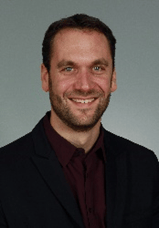 Kasper Roet is CEO and co-founder of QurAlis Corporation, is an experienced entrepeneur and worked both in industry and academia. Kasper has relevant expertise in ALS and other neuro indications. He received his PhD at the Netherlands Institute for Neuroscience working on gene therapies for paralysis. He co-founded Netfase, was BD and alliance manager at the Harvard Stem Cell Institute and fellow at the Boston Children’s Hospital. He worked at Janssen Vaccines as adjunct technical integrator and assay development lead.

