Pitfalls to Avoid when Meeting Investors – an Interview with Diana Saraceni of Panakes Partners

Diana Saraceni
An interview with Diana Saraceni, Co-Founder & General Partner, Panakes Partners

– By Karen Deyo, Investor Research Analyst, LSN

     Karen Deyo

One question that is commonly addressed during RESI panel sessions is: What should a company NOT do in initial meetings with investors? At RESI Europe, Diana Saraceni was a speaker on the Medical Device Investors panel and offered a list of six mistakes companies often make – some all the more important since they are mentioned less frequently. I spoke with Diana following RESI Europe, to recap this important advice.

Karen Deyo (KD): Thank you again for speaking on the panel, Diana. Let us start with the more basic, well-known advice. What are some of the things companies do in discussions with you that send up red flags?

Diana Saraceni (DS): One common issue we see is either too much or too little background information in an introductory pitch deck. On one hand, you do not need to spend several slides discussing what diabetes is, its prevalence and how it is currently treated. On the other hand, make sure to give an overview of the current standard-of-care, as a way to highlight what makes your technology unique. Another issue is a lack of flexibility with regards to valuation. Especially in early-stage, pre-revenue companies, even if they have received advice from a third party, this is never set in stone. You have to be open to negotiate with the investor, and remember that they and their experience are an added value for you.

KD: Any more commonly discussed mistakes you see in companies when approaching investors?

DS: Many companies want investors to sign an NDA before starting any sort of conversation. There is a common misconception that investors will copy your business or steal your idea, but in reality, they are not going to take the time and effort to do so. Signing an NDA before showing unpublished data or starting deep due diligence, both scientific and financial, is accepted, but do not expect an investor to sign an NDA before your first meeting. In addition, don’t expect detailed feedback on your technology or business plan unless the investor has done some sort of due diligence. Remember that investors themselves often turn to experts and advisors when evaluating companies so it is up to you to make sure to consult with KOLs before reaching out to investors.

KD: What are the less commonly discussed, but equally important, errors in fundraising strategy that you’ve seen?

DS: First, when starting your fundraising campaign, don’t immediately go to your top-tier targets right from the beginning. Start with smaller, more flexible, investors who can point out what questions need to be addressed in your initial presentation, helping you hone your pitch. Lastly, if a deal falls through after some due diligence, it is critical to follow up and find out what problem the investors identified. This can be an opportunity to initiate discussions in the future, by coming to the investor with the issue solved. It is important to remember that investors take note of their reasons for passing on an investment opportunity, and they will know if you approach them again without having addressed those issues, and that will not help your case.

KD: Thanks for all of this valuable feedback! I look forward to hearing what other insights you can provide at future RESI events!

Diana Saraceni is an investor with long experience in Venture Capital. She is currently Co-Founder & General Partner at Panakes Partners (www.panakes.it), an Italian Venture Capital firm dedicated to early stage investments in healthcare in Europe and Israel. Diana can rely on over 15 years of Venture Capital experience. She has also co-founded and managed 360 Capital Partners (www.360capitalpartners.com), one of the leading Venture Capital firm in Europe. She has led investments in a significant number of companies all over Europe, not only in the medical device sector, and generated several exits as IPO and M&A transactions. Ms Saraceni has a strong knowledge of the Venture Capital community in Italy and Europe. Ms. Saraceni holds an Msc in Engineering and an MBA from Luiss University.
Spotlight on Taiwan: How to Connect with a Rising Power in Life Sciences

By Jessica Yang, Investor Research Analyst, LSN

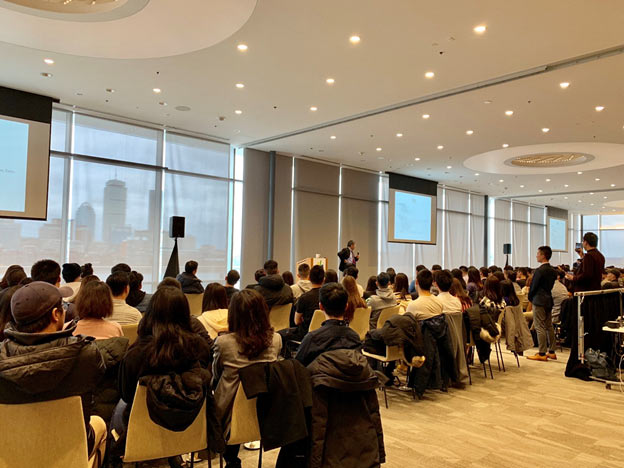
Taiwan is establishing its presence in the life science industry and becoming an important player on the global stage. As Taiwan moves ahead to build its life science innovative ecosystem, Life Science Nation has partnered with Ministry of Science and Technology (MOST) to organize an inaugural RESI Conference in Taipei, Taiwan on November 14th. RESI Taipei will be a great chance to get plugged into the Taiwan’s rising life science ecosystem and meet emerging startups, both local and drawn from RESI’s global network.

Last month, the Taipei City Government, BTBA (Boston Taiwanese Biotechnology Association), and ITRI (Industrial Technology Research Institute) co-organized the “Taipei Bio Forum” event in Boston. As a media partner, LSN also promoted this event to invite life science industry players in Massachusetts. This event was a great chance to tap into Taipei’s rapidly developing ecosystem of innovators and long-established network of sophisticated capital providers.

During the forum, Dr. Ko Wen-Je, the mayor of Taipei City, gave a keynote speech about the current status and industrial strategy of Taiwan’s biotech industry. The mayor described their current action plan to establish Taiwan as a major hub in the Asia Pacific biotech and pharmaceutical industries, following in the footsteps of Boston. Indeed, their first goal is to improve the ecosystem to build a Boston-like environment that will welcome and foster innovation, starting by implementing changes in regulations, increasing protections for intellectual property, recruiting and cultivating new talent, and providing access to larger amounts of funding. In addition, to promote the spread of ideas and collaborative environment conducive to innovation, the government plans to integrate different science parks and R&D centers in Taiwan into one biocluster. Lastly, Dr. Ko also emphasized their goal of both integrating a global presence locally and differentiating Taiwan from other global players by focusing on specific key industries and developing their own niche. These key industries may include precision medicine, and aging-related technologies.

Boston is regarded as a global center of the life science industry, and Mark Sullivan, Executive Director of Massachusetts Office of International Trade & Investment, highlighted how the city fosters international collaborations and, with the success of many Boston-based biotech companies, has promoted an environment for startup success. This included the presence of many companies, based in Boston or Taiwan, demonstrating these cross-border partnerships.

Overall, the forum was a great success and provided an opportunity to forge connections between these two key life science hubs.  By launching RESI Taipei, LSN aims to bridge the global life science ecosystem with Taiwan and bring Taiwan startups and investors together with their counterparts from the rest of the world.

Hot Investor Mandate: Pharmaceutical Company Seeks Early Stage Therapeutic Partnerships in Cardiovascular, Metabolic Disease, Rare Diseases, and More

A publicly traded pharmaceutical company based in Western Europe is interested in licensing and M&A opportunities in its core therapeutic areas of urology, cardiovascular, gastrointestinal and metabolic diseases, and also in all rare disease/orphan drug assets. The firm will consider partnerships worldwide. Particularly in the rare disease space, the firm prefers to invest in global rights.

The firm is interested in early stage therapeutic partnerships in rare diseases, including in preclinical assets provided that there is strong preclinical proof of concept data for the asset (such as strong efficacy data from an animal model that are relevant and reflective of the human condition). The firm generally does not invest in rare oncology assets but is otherwise open to a wide range of rare disease opportunities. In other core areas (urology, cardiovascular, gastrointestinal, and central nervous system) the firm prefers to partner with companies that have obtained solid human proof of concept data. The firm can be a hands-on development and manufacturing partner in small molecule therapeutics, but not in biologics or cell therapies.

If you are interested in more information about this investor and other investors tracked by LSN, please email mandates@lifesciencenation.com.


Hot Investor Mandate: USA/China Cross-Border VC Firm Considers All High Potential, Early-Stage Life Science Investment Opportunities

A venture capital firm with offices in USA and China invests exclusively in healthcare companies (therapeutics, medical devices, digital health, and healthcare services). The firm typically invests $1-5M in equity with the ability to make follow-on investment. The fund aims to make at least 5 investments per year, but this is not a fixed number. In general, the firm participates in seed, series A and series B funding rounds. The firm looks at companies of all parts of the world and has a strong preference for companies that have market opportunities in USA, Europe and China.  The firm’s China offices can provide companies with the resources they need for successful market entry in Asian markets.

The firm looks at all sectors pertaining to healthcare, including biotech therapeutics, R&D services, diagnostics, medical devices, and digital health. While the firm’s focus is in early-stage companies, it takes a very opportunistic viewpoint. In therapeutics, the firm will look at products of all stages from pre-clinical to phase III, and is open to all indications. In terms of medical devices, the firm will consider both 510k and PMA devices. In addition, the firm will also consider products that are already on the market.

The firm is open to both public and private companies, and expects them to have an experienced management team with a strong exit strategy. The firm requires a board seat in all portfolio companies.

If you are interested in more information about this investor and other investors tracked by LSN, please email mandates@lifesciencenation.com.

Hot Investor Mandate: Venture Firm with Europe and Asia Offices Invest in Life Science & Healthcare Technologies Addressing Prevention and Treatment of Chronic Diseases

A venture firm with offices in Europe and Asia invests in life science companies in the Benelux region, Germany, France, and parts of Asia, all near where the firm has operations. The firm may invest up to EUR 10 million in early stage venture rounds as well as clinical stage opportunities.

The firm invests in the prevention and treatment of chronic diseases. In terms of sector, the firm makes investments in therapeutics, medtech and digital health and diagnostics. Generally the firm invests in assets that are close to IND or close to registration for first in human trials.

The firm is interested in opportunities with a driven entrepreneurial team, good IP protection, which are addressing important medical needs.

If you are interested in more information about this investor and other investors tracked by LSN, please email mandates@lifesciencenation.com.

Hot Investor Mandate: Western Europe-Based Firm with Evergreen Fund Invests in Biotech & Medtech Opportunities, with Strong Interests in Platform Technologies

A firm with offices in Western Europe makes biotech and medtech investments from an evergreen fund. The firm typically makes initial investments of EUR 3-10m at the Series A or B stage, and may commit EUR 25m over the life of an investment. The firm invests across Europe, and aims to make at least 4 life science investments per year (2-3 biotech and 1-2 medtech investments).

The firm invests across the biotech and medtech sectors. Within the biotech sector, the firm prefers to invest in platform technologies rather than in single asset companies, and will invest as early as the preclinical stage. The firm will consider any therapeutic area, and has an interest in orphan drugs; due to having a large existing portfolio in immuno-oncology, the firm is not emphasizing this field at present. The firm prefers opportunities that do not require very large clinical trials. For medical devices, the firm prefers to invest in companies with products with a global potential, that are close to acquiring a CE Mark and that are preparing commercialization. The firm is also interested in enabling technologies such as next-gen PCR and lab equipment.

The firm does not invest in company-creation opportunities: the firm prefers to work with companies that already have high-quality management teams that have proven themselves through past success in the life science industry, and who have a strong network within the industry. The firm also considers the company’s capital efficiency, future capital needs, and the strength of the company’s prior investment syndicate. The firm prefers to lead or co-lead investments, and is a highly activist investor at a portfolio company’s board level.

If you are interested in more information about this investor and other investors tracked by LSN, please email mandates@lifesciencenation.com.

RESI Europe 2019 Innovation Challenge – Check Out the Winners

By Claire Jeong, Director of Research, Asia BD, LSN

claire

On Monday, March 25th, companies from North America, Western Europe, Israel, etc. showcased their technologies in the Vienna Marriott Hotel exhibition hall, where LSN organized the first ever (and quite successful!) RESI Europe conference. As usual, conference attendees were provided with 5 pieces of “RESI Cash” which they could use to “invest” in the companies of their choice. Again, congratulations to all finalists who were selected to present, and we hope RESI was able to serve as a great venue for creating valuable connections. But most importantly, we are excited to announce the Top 3 winners of this Innovation Challenge – please check their details below!

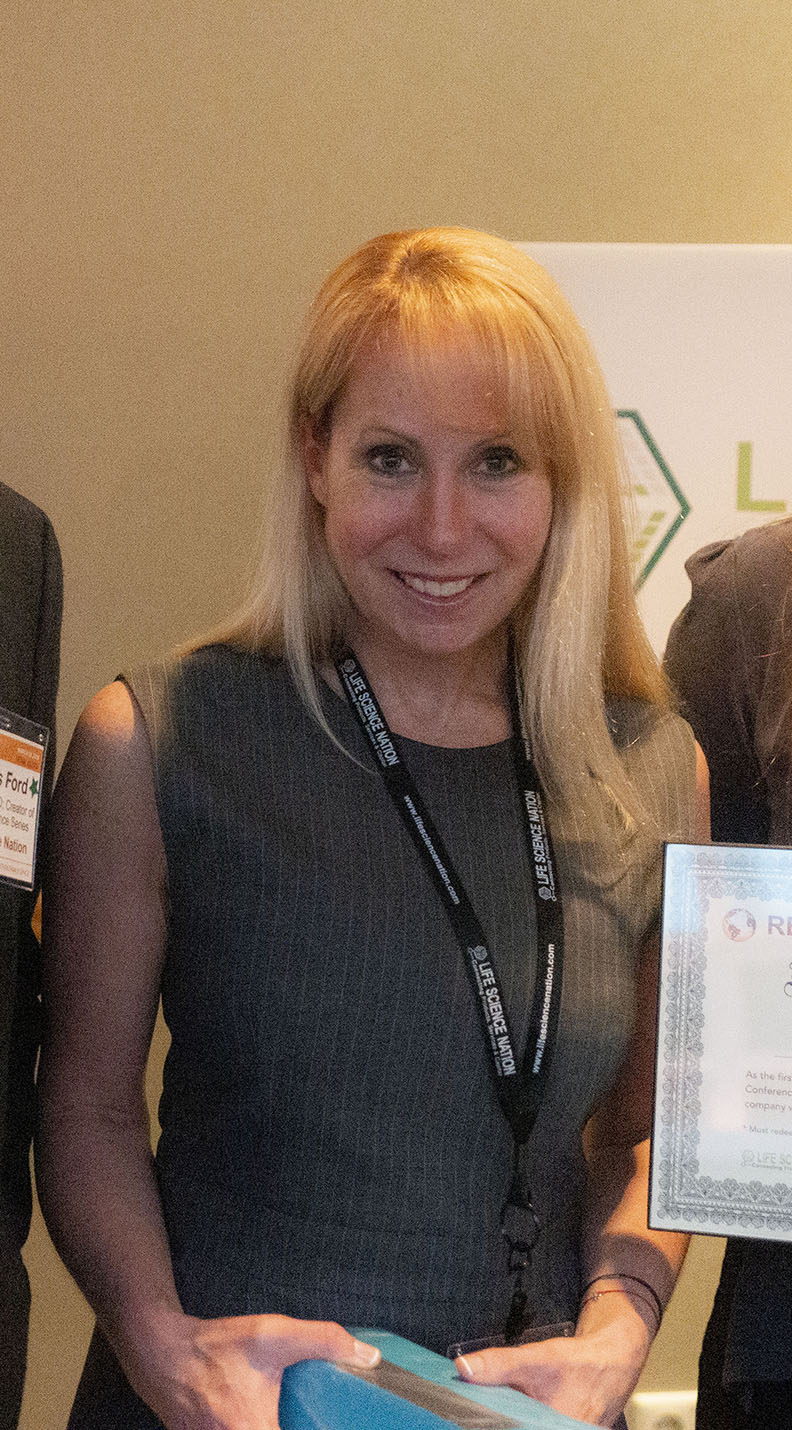
First Place: Rx Bandz

Rx Bandz provides a game-changing, cost-effective solution for millions of people globally who need to carry emergency injectable medication. Nearly 60% of them do not carry their prescribed auto-injectors with them. MiniJect,™ our miniaturized auto-injector, delivers a wide range of injectable drugs. Its small size and intuitive design make it easy to carry and simple to use. The first drug delivery platform for epinephrine will allow active patients to take it with them, thus increasing compliance and saving lives. Our world-class team has designed and tested a medical device that is also an attractive accessory. We have been deemed eligible for FDA- 505(B)2, the expedited pathway to market.  We have the options of either licensing the device for multiple medications, or taking it to market. Accessory attachments to the MiniJect,™ offer yet another revenue stream.

Jessica Walsh, Founder & CEO, Rx Bandz


Second Place: PhotoPill Medical

PhotoPill Medical develops a revolutionary state-of-the-art disposable swallow-able capsule for treating Crohn’s disease flare-ups and as a preventive treatment in-between flares, by implementing Photo-Bio-Modulation treatment (PBMt) and gut microbiota modulation light-protocols as it travels through the intestine. The PhotoPill capsule is personalized for each patient based on disease location and individual peristaltic rate. Photopill’s unique disruptive technology would be a first of its kind for intestinal tissue treatment and gut bacteria related disorders. This would be a safe, easy to use, cost effective solution for a huge market and a painful problem. PhotoPill has demonstrated excellent pre-clinical results, and preliminary data in IBD Proctitis patients, using Photopill’s dedicated rectal device. PhotoPill has strong IP portfolio and strong and experienced team.

Sharon Ben Yehuda, Co-Founder, PhotoPill Medical


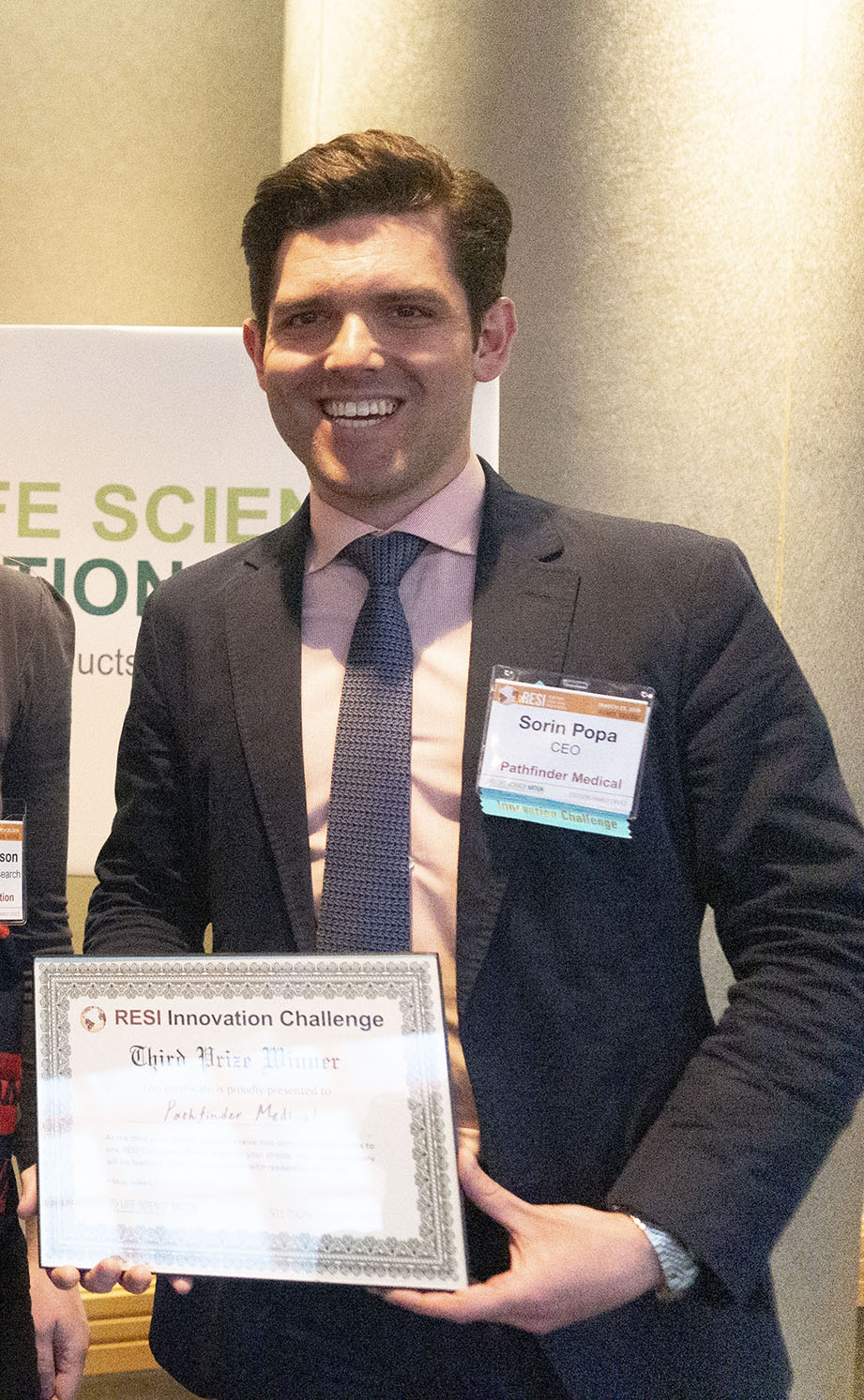
Third Place: Pathfinder Medical

Pathfinder Medical is developing a novel electronic catheter guidance system that will enable clinicians to connect blood vessels in a minimally invasive way. This platform technology has a variety of clinical applications in peripheral vascular and dialysis procedures, together representing a €4.5 billion yearly market. Open surgery is the current standard for preparing patients for dialysis and bypassing blocked peripheral arteries. High failure rates (approximately 50%) in both cases present a serious danger to life and require repeat procedures, for US dialysis patients alone this adds up to $4.6 billion per year. The ePATH catheter platform aims to eliminate need for open surgery in several vascular procedures, improving outcomes and reducing the burden on patients and healthcare systems.

Sorin Popa, Founder & CEO, Pathfinder Medical

If you missed out on the opportunity to compete in the RESI Europe Innovation Challenge, we would be happy to take your applications for our upcoming RESI Philadelphia on Monday, June 3rd. Please visit our online application portal at http://innovchlg.lifesciencenation.com/RESIlogin.php to get your application started!

Now Offering RESI Philadelphia Early Bird Rates