From the Innovator’s Pitch Challenge Podium to the Clinic: FELIQS Advances Vision Saving Therapies 

Third Place winner of the RESI San Diego Innovator’s Pitch Challenge, FELIQS is developing innovative therapies for neonatal ophthalmology and other serious retinal diseases with the goal of preserving vision at the earliest stages of life. In this interview, Kenichiro “Nobu” Kuninobu discusses the company’s lead clinical program, the value of participating in the RESI Innovator’s Pitch Challenge, and the milestones that will shape FELIQS’ next phase of growth.

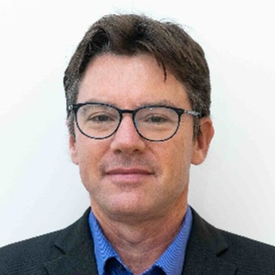
Kenichiro “Nobu” Kuninobu
Co-founder & CEO, FELIQS
Caitlin Dolegowski
Program Director, LSN

Caitlin Dolegowski (CD): FELIQS is focused on developing therapies for neonatal ophthalmology and other serious retinal diseases. Can you tell us about your lead program and the impact it could have on patients and their families?

Kenichiro Kuninobu (NK): FELIQS’ lead program, FLQ-101, is being developed for the prevention of retinopathy of prematurity, or ROP, a serious retinal disease affecting premature infants that can lead to lifelong visual impairment or blindness. Today, treatment is generally initiated after ROP has already progressed to a clinically significant stage. Our goal with FLQ-101 is to intervene earlier and prevent disease progression before invasive treatment becomes necessary. If successful, this approach could give premature infants the best possible opportunity for healthy visual development. For families, the impact could be profound. Preserving vision at the very beginning of life can influence a child’s development, independence, and quality of life, while potentially reducing a lifelong burden of care for families and healthcare systems.

CD: Your work bridges scientific innovation and international collaboration. How has that global perspective influenced the company’s development?

NK: FELIQS was founded on scientific discoveries originating in Japan, but from the beginning we have approached drug development with a global perspective. Our lead clinical program is being developed in the United States, while we continue to work closely with researchers, clinicians, regulators, and partners across Japan and other regions. That international approach has shaped how we think about clinical development, regulatory strategy, patient access, and partnerships. It also allows us to bring together complementary expertise from different regions. For diseases such as ROP, which affect premature infants around the world, we believe that building a globally relevant development strategy from an early stage is particularly important.

CD: Earning Third Place in the RESI San Diego Innovator’s Pitch Challenge highlights the strength of your innovation. What did this recognition mean to your team?

NK: Earning Third Place at the RESI San Diego Innovator’s Pitch Challenge was very meaningful to the FELIQS team. It provided encouraging external recognition of both our scientific approach and our mission to address serious retinal diseases in vulnerable patient populations, particularly premature infants. For our team, it was especially valuable to see investors and industry experts respond positively to our strategy and the potential of our programs. The recognition gave us additional confidence that FELIQS is pursuing an important and differentiated approach, while also increasing our visibility within the global life sciences community.

CD: Were there any conversations with investors, judges, or strategic partners at RESI that stood out or created new opportunities?

NK: RESI created a valuable forum for high-quality conversations with investors, judges, and potential strategic partners who understood both the unmet need in retinal disease and the importance of early intervention in ROP. Several discussions helped us refine our communication of the clinical and commercial opportunity, and some opened the door to follow-up conversations about financing, development strategy, and potential collaboration. The event was particularly useful because the feedback was practical, thoughtful, and directly relevant to our next stage of growth.

CD: What are the most important clinical, regulatory, or business milestones FELIQS hopes to achieve over the next 12 to 18 months?

NK: Over the next 12 to 18 months, our highest priority is to advance FLQ-101 clinically and build the foundation for its next stage of development. This includes progressing our ongoing clinical study in ROP, expanding our clinical network, generating additional data, and continuing regulatory discussions to define an efficient path forward.

At the same time, we plan to advance our broader pipeline, including FLQ-103 and FLQ-105, while continuing to strengthen the company financially and strategically.

From a business perspective, we are actively engaging with investors and potential strategic partners who can help us accelerate these programs. Ultimately, each of these milestones is focused on one objective: moving promising science into meaningful therapies for patients as efficiently and rigorously as possible.

CD: What qualities are you looking for in investors or strategic partners as you continue to grow?

NK: We are looking for investors and strategic partners who share our commitment to developing meaningful therapies for serious retinal diseases and who understand that building innovative medicines requires both scientific rigor and long-term perspective.

Beyond financial support, we particularly value partners who can contribute strategic insight, experience in ophthalmology, rare diseases, or global drug development, and access to networks that can help accelerate clinical and commercial progress.

Most importantly, we want partners who are collaborative and aligned with our mission. We believe the strongest partnerships are built when both sides share a long-term commitment to creating meaningful value for patients.

CD: Looking ahead, what is your long-term vision for FELIQS, and what advice would you offer companies considering participating in a future RESI Innovator’s Pitch Challenge?

NK: Our long-term vision is to establish FELIQS as a leading biotechnology company in neonatal ophthalmology and rare diseases. Building from our work in ROP, we aim to expand into additional diseases where early and innovative therapeutic intervention could preserve vision and meaningfully change patients’ lives.

For companies considering participating in a future RESI Innovator’s Pitch Challenge, my advice would be to come with a clear story, a focused objective, and an openness to feedback. RESI is not simply an opportunity to pitch your company. It is a platform to refine your strategy, understand how investors perceive your opportunity, and build relationships that may continue well beyond the event.


Additional Innovator’s Pitch Challenge (IPC) slots are now available, giving companies the opportunity to pitch directly to investors, receive live feedback, and boost visibility ahead of the event. Applications close August 26.

Apply to Pitch at RESI Boston

StimOxyGen on Advancing SGEN-33 Following First Place Win at RESI Europe 

After securing 1st Place in the Innovator’s Pitch Challenge at RESI Europe, StimOxyGen is gaining momentum as it advances its lead program, SGEN-33, toward clinical development. In this interview, Sian Farrell discusses the science behind the platform, upcoming milestones, and how the RESI experience has accelerated investor engagement.

Sian Farrell
CEO, StimOxyGen
Caitlin Dolegowski
Program Director, LSN

Caitlin Dolegowski (CD): For those new to StimOxyGen, how would you describe SGEN-33 and the problem it is solving in a way that resonates with investors?

Sian Farrell (SF): SGEN-33 is a pH-responsive, oxygen-generating nanoparticle designed to overcome tumour hypoxia, one of the biggest barriers limiting the effectiveness of radiotherapy and other cancer treatments. Many aggressive solid tumours, particularly pancreatic cancer, are severely oxygen deprived, making them highly resistant to therapy. SGEN-33 selectively activates within the acidic tumour microenvironment, releasing oxygen directly where it is needed to help re-sensitise tumours to treatment. What makes the opportunity particularly compelling is that we are addressing a fundamental biological resistance mechanism that impacts multiple high-value oncology indications. Rather than replacing existing therapies, SGEN-33 is designed to enhance them, positioning StimOxyGen within the growing combination of therapy landscape.

CD: What makes this approach particularly compelling from a commercial and clinical perspective compared to existing strategies?

SF: Clinically, our approach is differentiated because SGEN-33 generates oxygen directly within the tumour microenvironment rather than relying on systemic oxygen delivery methods, which have historically shown limited success. Existing hypoxia-targeting strategies such as hyperbaric oxygen therapy or intratumoural injections face significant limitations in practicality, scalability, or clinical adoption. In contrast, SGEN-33 is designed for intravenous administration and tumour-selective activation, offering a scalable and clinically feasible solution. Commercially, we believe this creates a highly attractive platform opportunity. Radiotherapy is used in approximately 60% of cancer patients worldwide, yet hypoxia remains a major unresolved challenge. By integrating into existing standards of care, SGEN-33 has the potential to enhance multiple treatment modalities across several solid tumour types without requiring clinicians to completely change current workflows. Importantly, we have already demonstrated strong preclinical efficacy and safety data in highly hypoxic tumour models, including pancreatic cancer, triple-negative breast cancer, and aggressive prostate cancer. Our studies have shown significant tumour growth reduction and survival benefit when SGEN-33 is combined with radiotherapy.

CD: What key milestones or inflection points should investors be watching as you move toward clinical development?

SF: The next 18–24 months represent a highly important period for StimOxyGen as we advance SGEN-33 toward clinical development. Our current focus is on completing key IND-enabling activities, including GLP toxicology and DMPK studies, GMP manufacturing scale-up, FDA regulatory engagement, and expansion of our radiotherapy-immunotherapy datasets. Alongside these milestones, we are progressing collaborations with leading translational oncology centres including Memorial Sloan Kettering Cancer Center (MSK), advancing early clinical strategy and trial design activities, and continuing to strengthen our scientific and clinical advisory network. A particularly exciting area is the growing evidence of immune-mediated effects observed in our preclinical studies, which may create future opportunities in combination with immunotherapy approaches.

CD: What are your current fundraising priorities, and what types of investors or partners are you looking to engage at this stage?

SF: We are currently raising $7.5 million to advance SGEN-33 through IND-enabling development and position the programme for First-in-Human clinical studies, with a target close by Q1 2027. The financing will support key value-creation milestones including GLP toxicology, DMPK studies, GMP manufacturing scale-up, FDA regulatory engagement, and continued expansion of our radiotherapy-immunotherapy datasets. In parallel, we are progressing clinical strategy and early trial design activities through collaborations with leading translational oncology centres, including Memorial Sloan Kettering Cancer Center (MSK). We are particularly interested in engaging with specialist life science investors, oncology-focused funds, and strategic partners with expertise in radiotherapy, immuno-oncology, nanomedicine, and translational drug development.

CD: How did participating in RESI Europe and the Innovator’s Pitch Challenge impact your visibility and conversations with investors?

SF: Participating in RESI Europe was hugely valuable for StimOxyGen from both a networking and visibility perspective. Having the conference based in Lisbon created an important opportunity to expand beyond the UK ecosystem and connect more directly with the broader European life science investment community. It allowed us to significantly grow our investor network and establish new relationships with international investors and strategic partners. Winning 1st Place in the Innovator’s Pitch Challenge increased our visibility and credibility within the global biotech community and created strong momentum in investor conversations. An additional benefit is the opportunity to attend future RESI conferences, including events in the United States, which will help us continue expanding our US investor and strategic partner network as we move toward clinical development. Beyond the exposure itself, the experience also provided a significant confidence boost for our team and reinforced that the work we are doing is resonating internationally.

CD: What stood out most about the Innovator’s Pitch Challenge experience compared to other pitch opportunities?

SF: What stood out most was the quality and relevance of the audience. I’ve participated in pitch competitions previously, but many were more sector-agnostic and included a broad mix of industries and technologies. At RESI, it was particularly meaningful to receive recognition in a highly relevant and competitive life sciences environment, surrounded by innovative biotech and healthcare companies tackling major clinical challenges. The discussions also felt far more relationship-driven than transactional. Conversations extended beyond the pitch itself and focused on clinical strategy, regulatory pathways, commercialization, and long-term value creation. Importantly, the support from the Life Science Nation (LSN) team did not feel like a “one-and-done” experience. The ongoing opportunities through future RESI events and the wider LSN network create continued momentum and provide a strong platform for us to further expand our international investor and strategic partner network moving forward.

CD: Following your win, what are the next key priorities for StimOxyGen as you move into your next phase of growth?

SF: Our biggest priority is maintaining the momentum we have built over the past 18 months as we advance SGEN-33 toward clinical development. Since completing our first VC financing round in January 2025, we have continued to de-risk the technology, expand our international investor network, progress collaborations with Memorial Sloan Kettering Cancer Center (MSK), and strengthen our translational and regulatory strategy. Winning the RESI Europe Innovator’s Pitch Challenge was another important milestone that reinforced the growing momentum around the company. Over the next phase of growth, our focus is on advancing SGEN-33 through IND-enabling development, progressing FDA engagement, scaling manufacturing capabilities, and continuing to strengthen our clinical strategy. Of course, securing the capital required to move the programme into the clinic remains a critical priority. We believe StimOxyGen is at a genuinely exciting inflection point, and we are actively looking to partner with investors who share both our ambition and our sense of urgency. At the heart of everything we do is the patient. We are working on therapies for people facing some of the most difficult-to-treat cancers, where treatment options are limited and outcomes remain devastatingly poor. That reality keeps our team focused every day and drives our determination to move as quickly and responsibly as possible toward the clinic. For us, this is about far more than building a company — it is about giving patients and families hope where too often there currently is very little. And, if our story resonates with you, we would love to continue the conversation.

Additional Innovator’s Pitch Challenge (IPC) slots are now available, giving companies the opportunity to pitch directly to investors, receive live feedback, and boost visibility ahead of the event. Applications close May 22.

Apply to Pitch at RESI San Diego