A venture capital investor with more than $1 billion in funding that helps founders bring therapeutic ideas to clinical proof-of-concept in a capital-efficient model. The firm provides portfolio companies with both capital and access to an experienced team of drug developers and biotech operators who deliver tailored operational and scientific support.
The firm invests in therapeutics companies at the Seed ($5–12 million) or Series A ($15–25 million) stage and is also open to spinout opportunities. The firm can be first or second money in and is geography-agnostic.
The firm solely invests in therapeutics and is modality- and indication-agnostic. Companies can be single-asset or platform-focused. The firm will fund anything from a well-defined idea on paper to existing companies with significant proof-of-concept data or early clinical data.
The firm does not have specific management team requirements and typically acts as a lead investor.
If you are interested in more information about this investor and other investors tracked by LSN, please email salescore@lifesciencenation.com.
A seed and early-stage venture investor and invests in disruptive technologies with focus on highly scalable Health Tech and ICT models. The typical investment size ranges from €0.5 million to € 5 million. The firm invests only in companies based in Europe.
The firm is currently looking for new opportunities and focuses on companies developing biotech enabling platforms, diagnostics, digital health solutions and minimally to non/minimal-invasive medical devices. The firm will not invest in pure drug development companies without underlying platform technology.
The firm typically seeks to invest in private companies with convincing founder teams. The firm will consider pre-revenue companies.
If you are interested in more information about this investor and other investors tracked by LSN, please email salescore@lifesciencenation.com.
A venture capital fund makes equity investments ranging from €500,000 to €5 million, with additional capital reserved for follow-on financing. The firm invests in companies across Europe and selectively in the United States.
The firm is currently seeking opportunities in the sectors of BioTools, Labtech, TechBio, Medical Technology, Biotech, and Diagnostics. The firm prefers companies that have already established proof of concept.
The firm focuses on privately held companies and does not require high-profile management teams to be in place. The firm generally takes a board seat following investment and prefers to act as the lead investor. The firm targets companies that already have a commercially viable technology, product, or service, ideally with a first collaboration or pilot with a potential customer, and that can reach commercialization with total investment between €10 million and €50 million.
If you are interested in more information about this investor and other investors tracked by LSN, please email salescore@lifesciencenation.com.
By Claire Jeong, Chief Conference Officer, Vice President of Investor Research, Asia BD, LSN
Life Science Nation (LSN) is thrilled to announce the confirmed investors for RESI London 2025, taking place on December 4, at King’s Fund, 11 Cavendish Square, with virtual partnering on December 8–9. This premier event connects early-stage life science companies with a diverse array of global investors, facilitating meaningful partnerships and funding opportunities.
Meet the Confirmed Investors
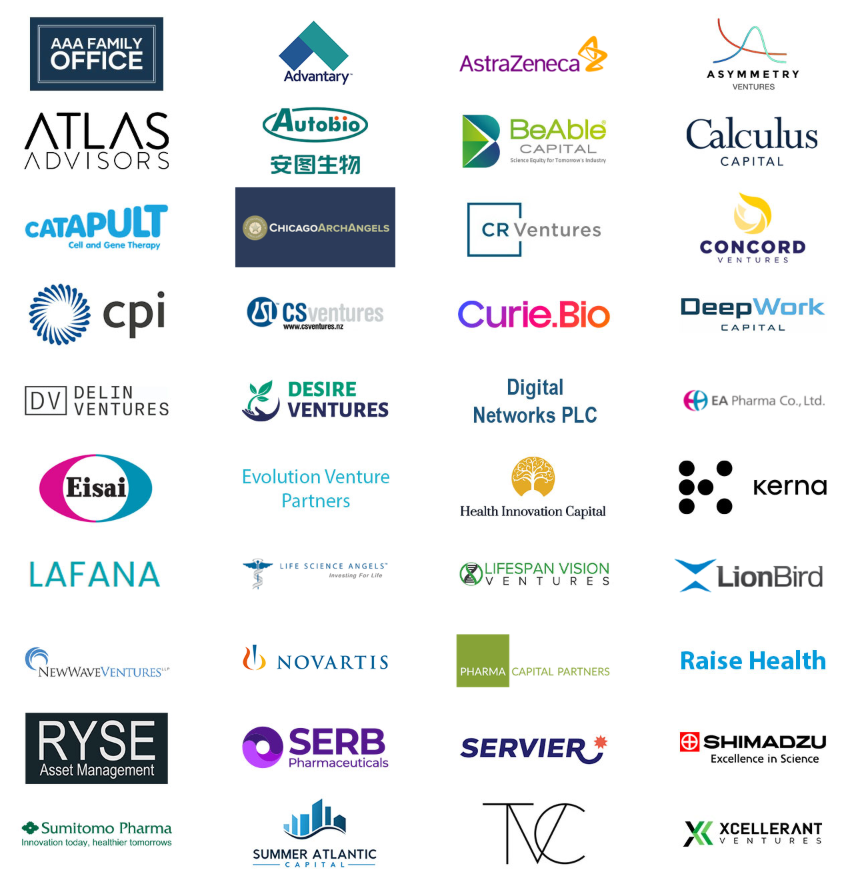
RESI London 2025 will feature a robust lineup of investors spanning various sectors within the life sciences industry. Confirmed investors include:
This diverse group of investors represents a broad spectrum of interests, from pharmaceutical giants to specialized venture capital firms, ensuring that attendees have access to a wealth of expertise and potential funding sources.
Why Attend RESI London 2025?
RESI London 2025 provides an exceptional platform for early-stage companies to engage directly with top-tier investors across the life sciences industry, present innovations to a panel of esteemed judges in the Innovator’s Pitch Challenge (IPC), and receive valuable feedback. Attendees will have the opportunity to expand their network by building relationships with potential partners, collaborators, and industry experts, while also continuing discussions and meetings through virtual partnering on December 8–9, extending their reach and maximizing opportunities.
Whether you’re seeking funding, partnerships, or strategic alliances, RESI London 2025 provides the resources and connections necessary to propel your venture forward.
On September 24, uniQure reported 36-months positive topline data from the phase1/2 study of their candidate AMT-130 for the treatment of Huntington’s disease. AMT-130 consists of viral vector AAV5 and a synthetic miRNA that targets exon 1 of the huntingtin gene. The results showed that AMT-130, directly injected into the striatum at a dose of 6 x 10^13 genome copies per subject, slowed disease progression at 36 months, as measured by the composite Unified Huntington’s Disease Rating Scale and by Total Functional Capacity compared with a “propensity score-matched external control”.
The results have yet to appear in the peer-reviewed literature, and some experts have urged caution in their interpretation, particularly with regard to the use of external historical control groups and the small number of patients (12 have completed the 36-month period). However, uniQure’s data have been widely welcomed as a breakthrough for a field that has experienced its fair share of false starts (most recently Roche/Ionis halting of its phase 3 dosing of tominersen in 2021 after promising phase 1/2a results). Moreover, the findings have bolstered interest in therapeutic approaches targeting exon 1 in the mutant allele in addition to reducing levels of the full-length huntingtin protein.
Huntington’s disease is a triplet repeat disease in which the huntingtin gene’s exon 1 bears the CAG repeat encoding the polyglutamine stretch that defines the pathology. It’s therefore not surprising that the N-terminal part of HTT and its product have attracted attention as drug targets. Broadly speaking, scientists have tried to get at exon 1 in three ways: targeting the gene itself to block transcription, targeting the mutant mRNA to inhibit translation, and targeting the truncated protein that results from the mutant mRNA. A recent review provides a thorough survey of the preclinical work on these three fronts.
From the drug-discovery point of view, the most advanced programs focus on the development of ASOs or RNAi sequences against the CAG repeat in the mutant mRNA. The motivation behind this strategy is in part the realization that transcription of mutant HTTexon 1 results in a shortened 102 nt mRNA that encodes a toxic protein prone to aggregation: HTTexon1.
To explain what goes wrong in RNA splicing, we need to take a quick detour into the biochemistry of mRNA processing. In any cell, pre-mRNA processing is a competition between the splicing machinery (which removes introns from transcribed genes by recognizing an intronic 5′ splice site, branch point, and 3′ splice site) and the machinery that carries out intronic polyadenylation. Intronic polyadenylation cleaves transcripts within introns and adds a poly(A) tail to the shortened exon–intron fragment transcript when intronic sequences like AAUAAA are present together with a downstream U/GU-rich element.
All of the above is important for Huntington’s because, in healthy brains (specifically the striatum), U1 small nuclear ribonucleoprotein (snRNP) is thought to sit on the cryptic polyA sites in intron 1 of HTT, blocking intronic polyadenylation and enabling accurate splicing of introns and production of a full-length (9,500 nt) mature HTT mRNA. In contrast, in Huntington’s patients, increasingly long CAG repeats in the huntingtin pre-mRNA are thought to sequester U1 snRNP, thereby interfering with formation of the spliceosome complex and making cryptic polyA sites accessible. The result is premature termination of transcription within intron 1, resulting in the generation of the the shortened 120 nt HTTexon1 mRNA transcript that encodes an N-terminal 17-amino acid HTTexon1 protein.
In wild-type huntingtin, components of the spliceosome, such as U1 snRNP make cryptic polyA sites in intron 1 inaccessible to the transcriptional machinery. Accurate splicing ensues, and full-length huntingtin mRNA is produced. In Huntington’s Disease, the CAG repeat is thought to sequester U1 snRNP, exposing the cryptic polyA sites, ultimately leading to the production of HTTexon1. Source: Nature Communications)
Until the UniQure program, most disease-modifying therapies in the clinic have sought to downregulate full-length huntingtin and haven’t discriminated between mutant protein and wild-type protein. The prevailing thinking has been that going after full-length HTT makes sense because both the full-length protein—and fragments of it produced by proteolytic degradation—were likely the main problem.
By targeting exon 1, AMT-130 aims to specifically reduce production of toxic HTTexon1. And several other drug developers have also started to pivot and focus more closely on targeting HTTexon1, with the hope that such approaches might have greater efficacy in reducing huntingtin aggregate nucleation.
Just this year, Alnylam/Regeneron recently took ALN-HTT02 into phase 1b testing. This siRNA is conjugated to a 2′-O-hexadecyl C16 palmitate lipid that enables traversal of the blood brain barrier. It targets a conserved mRNA sequence within huntingtin exon 1, leading to the RISC-mediated degradation of all HTT mRNAs. The approach downregulates both HTTexon1 and full-length HTT — and does not discriminate between the wildtype and mutant alleles.
There are other molecules in development that directly target the expanded CAG repeat in exon 1 that are allele-specific. Vico Therapeutics’ VO659 is an ASO with an allele-preferential mechanism of action, targeting expanded CAG repeats in the mutant transcript and inhibiting translation of the mutant allele via steric block. It is currently in phase 1/2a clinical trials, and the company announced positive interim biomarker data in September 2024.
Meanwhile, in the preclinical space, Sangamo/Takeda are developing a mutant-allele selective approach, focusing on blocking transcription of the huntingtin gene using lentiviral vector delivered zinc finger repressor transcription factors (ZFP-TFs) that target the pathogenic CAG repeat. They have shown that their ZFP-TFs repress >99% of disease-causing alleles while preserving expression of normal alleles in patient-derived fibroblasts and neurons. Lentivirally delivered ZFP-TFs lead to functional improvements in mouse models, opening the door to their potential clinical development.
Haystack is aware of at least three other companies developing therapeutics aimed at reducing the toxic effect of HTTexon1, but details of their programs are scarce. China-based HuidaGene Therapeutics is developing a CRISPR-based gene editing product to fix the mutant allele. Galyan Bio was developing GLYN122, a small molecule directly targeting HTTexon1, but the company seems to have ceased operations. Similarly, Vybion has been developing INT41, a functional antibody fragment against HTTexon1, but its current status is also unclear.
It is sobering that over 150 years’ since the first description of Huntington’s disease, which many think of as the archetypal monogenic disease, that we still lack a definitive understanding of its pathogenic mechanism. We don’t know whether the pathology arises from HTT protein, RNA, DNA or some combination of these. And despite the buzz surrounding HTTexon1, most of the data supporting its relevance to human disease still originates from work in mouse models, which recapitulate only certain aspects of the human disorder. That said, raised levels of HTTexon1 are present in patient brain biopsies, with the longer CAG repeats in individuals with juvenile Huntington’s resulting in higher levels of the truncated transcript.
It will be exciting to follow the progress of UniQure’s AMT-130 as our understanding of where in disease progression, and in which patients, this therapy will be most effective. And beyond HTTexon1, other therapeutics targeting alternative disease pathogenic mechanisms are on the horizon. Last month, Skyhawk Therapeutics reported promising phase 1/2 clinical results for it oral small-molecule splice modifier SKY-0515. Elsewhere, broadening understanding of DNA mismatch repair enzymes and the role of somatic repeat instability in the disease have led to investment in a flurry of startup companies focused on this mechanism. That work is now leading to broader excitement that therapies may become available for other difficult-to-treat triplet repeat diseases like Fragile X syndrome, Myotonic dystrophy type 1 and Friedreich ataxia, as demonstrated by the recent deal between Harness Therapeutics and Ono Venture Investment.
A venture capital firm based in the US manages close to $1B assets under management. The firm is an active investor in both early and late-stage companies and typically makes investments ranging from $1M to over $20M, depending on the company’s stage of development. The firm is open to global investment opportunities.
The firm is primarily focused on therapeutics but has also invested in medical devices and diagnostics, remaining open to opportunities across these sectors. Within therapeutics, the firm considers all modalities and indications but is currently most interested in gene therapy, gene editing, and technologies addressing central nervous system (CNS) diseases. The firm invests in both pre-clinical and clinical-stage opportunities.
The firm does not have specific company or management team requirements. The firm generally prefers to lead investment rounds and seek board representation but has also participated as a co-investor in syndicates.
If you are interested in more information about this investor and other investors tracked by LSN, please email salescore@lifesciencenation.com.
A strategic corporate venture capital fund established by a full-fledged pharmaceutical company seeks to make equity investments in startup companies that discover and develop innovative therapeutic products and/or drug-enabling platform technologies with clear potential to benefit cancer patients. Investment size is flexible depending on the deal, and the firm will also consider option-type investments and spin-outs in addition to pure equity investments. The firm is currently seeking focusing on opportunities in USA and Europe.
The firm considers early-stage (generally research to pre-IND) first-in-class or new biology-based approaches in drug discovery and innovative platform technologies, particularly assets that have a strategic fit with the parent company’s pipeline. The firm invests across a wide range of modalities, including biologics, oncolytic viruses, small molecules, and, on an opportunistic basis, cell and gene therapies. The firm’s primary indication of interest is oncology, but it also evaluates opportunities in immunology, allergy, musculoskeletal, and orphan indications.
While the firm is primarily focused on therapeutics, it may selectively review technologies in the medical device, diagnostic, or digital health sectors if there is strong strategic alignment.
The firm seeks management teams with strong sector expertise. Leveraging deep oncology drug discovery and development capabilities, the firm provides financial resources and strategic support to help translate novel research and high-potential drug candidates into cornerstone products. The firm may request regional options or rights on a case-by-case basis.
If you are interested in more information about this investor and other investors tracked by LSN, please email salescore@lifesciencenation.com.