Tag Archives: mental health

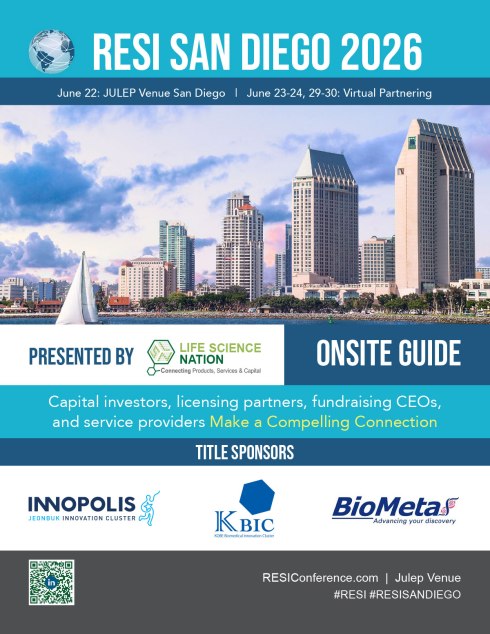
RESI San Diego 2026 Program Guide Released 

16 Jun

By Dennis Ford, Founder & CEO, Life Science Nation (LSN)

DF-News-09142022

Life Science Nation (LSN) is pleased to release the RESI San Diego 2026 Program Guide for its upcoming hybrid conference, taking place June 22 in person at the JULEP Venue in San Diego, followed by four days of virtual partnering on June 23–24 and June 29–30. 

RESI San Diego brings together early-stage life science companies, active investors, strategic partners, and industry leaders during one of the most important weeks in biotechnology. The conference features the Innovator’s Pitch Challenge, investor panels, educational workshops, company showcases, and a dynamic partnering platform designed to facilitate meaningful fundraising and business development conversations. 

The Program Guide provides a comprehensive look at this year’s agenda, including sessions covering therapeutics, medtech, diagnostics, digital health, corporate venture capital, artificial intelligence in healthcare, strategic partnerships, and emerging investment trends. Attendees can also explore participating investors, sponsors, exhibitors, and networking opportunities available throughout the five-day partnering event. 

With partnering already underway and meeting calendars continuing to fill, RESI San Diego offers a unique opportunity for innovators to connect directly with the investors and strategic stakeholders shaping the future of healthcare. 

View the RESI San Diego 2026 Program Guide and secure your place today at RESI San Diego.

Register for RESI San Diego

Don’t Underestimate the Importance of the Line 

9 Jun

By Dennis Ford, Founder & CEO, Life Science Nation (LSN)

DF-News-09142022

There is a line between deciding to pursue investors and partners and pursuing them. Most people believe they cross it the moment they decide. They don’t. Deciding is private. The line is the part the market can see, and the market only sees behavior. You can be completely certain you are committed and still be, as far as anyone outside your own head can tell, standing exactly where you were a year ago.

The market doesn’t care what you declare. It responds to what you do. What it reads is presence, whether you are in the room when it counts. There are moments when it counts more than others, when the people who fund and license and partner are not scattered across a thousand calendars but gathered in one place at one time, looking for their next opportunity. Those moments are real, and they are on the calendar. The wave forms whether you are ready or not. The only question it puts to you is whether you are in the water when it arrives.

Here is the part that surprises people. The companies that are serious about this do not try to be efficient about it. You would think the sophisticated move is to be selective, to take only the meetings that obviously matter and skip the rest. It isn’t, and there is a hard reason why. The meeting that changes your company does not announce itself going in. The lead investor is hidden inside a large number of conversations that look, beforehand, exactly like the ones that lead nowhere. The licensing partner is buried in a stack of introductions you cannot tell apart until you are sitting in them. You cannot reason your way to the one that counts and avoid the others. The only way to reach it is to go through the volume. So the serious company does not look for reasons to take fewer meetings. It looks for reasons to take more, because every additional relevant room is another draw from the deck the one card is hidden in. Most of the draws are blanks. That is not a flaw in the method. That is the method.

Activity guarantees nothing, and no one who has done this for long will tell you otherwise. What inactivity guarantees is the opposite. The company that is not in the room is not weighed, and ends up passed over. It is simply never seen, and the market does not hold a seat open for the company that didn’t show. It gives the seat to one that did. Which brings me to the week of June 22 in San Diego. That is a week the market gathers. The city fills with meetings, events, and venues all competing for the same hours, and RESI, on June 22, is built for exactly the thing I have been describing, a room assembled out of investors, licensing teams, and business development people who came specifically to find companies like yours.

Some of you reading this are already going to be there. You have a reason to be in San Diego that week, and you still have not decided to be in this particular room. Sit with that for a second. You will be in the same city, on the same days, with the market gathered a few miles away, and you are on the fence about walking in. There is a word for standing that close to the water, dressed to swim, watching the set roll past. The word is not caution. It is hesitation, and from the outside the market cannot tell the difference between a company that hesitated and a company that was never there.

The line we started with is not crossed by deciding you are ready. It is crossed in the open, by being where the market is while the market is there. If you believe you are ready, the week of June 22 is where that belief becomes visible or doesn’t. Register for RESI San Diego, June 22.

Don’t underestimate the importance of the line.

Register for RESI San Diego

StimOxyGen on Advancing SGEN-33 Following First Place Win at RESI Europe 

12 May

After securing 1st Place in the Innovator’s Pitch Challenge at RESI Europe, StimOxyGen is gaining momentum as it advances its lead program, SGEN-33, toward clinical development. In this interview, Sian Farrell discusses the science behind the platform, upcoming milestones, and how the RESI experience has accelerated investor engagement.

Sian Farrell
CEO, StimOxyGen
Caitlin Dolegowski
Program Director, LSN

Caitlin Dolegowski (CD): For those new to StimOxyGen, how would you describe SGEN-33 and the problem it is solving in a way that resonates with investors?

Sian Farrell (SF): SGEN-33 is a pH-responsive, oxygen-generating nanoparticle designed to overcome tumour hypoxia, one of the biggest barriers limiting the effectiveness of radiotherapy and other cancer treatments. Many aggressive solid tumours, particularly pancreatic cancer, are severely oxygen deprived, making them highly resistant to therapy. SGEN-33 selectively activates within the acidic tumour microenvironment, releasing oxygen directly where it is needed to help re-sensitise tumours to treatment. What makes the opportunity particularly compelling is that we are addressing a fundamental biological resistance mechanism that impacts multiple high-value oncology indications. Rather than replacing existing therapies, SGEN-33 is designed to enhance them, positioning StimOxyGen within the growing combination of therapy landscape.

CD: What makes this approach particularly compelling from a commercial and clinical perspective compared to existing strategies?

SF: Clinically, our approach is differentiated because SGEN-33 generates oxygen directly within the tumour microenvironment rather than relying on systemic oxygen delivery methods, which have historically shown limited success. Existing hypoxia-targeting strategies such as hyperbaric oxygen therapy or intratumoural injections face significant limitations in practicality, scalability, or clinical adoption. In contrast, SGEN-33 is designed for intravenous administration and tumour-selective activation, offering a scalable and clinically feasible solution. Commercially, we believe this creates a highly attractive platform opportunity. Radiotherapy is used in approximately 60% of cancer patients worldwide, yet hypoxia remains a major unresolved challenge. By integrating into existing standards of care, SGEN-33 has the potential to enhance multiple treatment modalities across several solid tumour types without requiring clinicians to completely change current workflows. Importantly, we have already demonstrated strong preclinical efficacy and safety data in highly hypoxic tumour models, including pancreatic cancer, triple-negative breast cancer, and aggressive prostate cancer. Our studies have shown significant tumour growth reduction and survival benefit when SGEN-33 is combined with radiotherapy.

CD: What key milestones or inflection points should investors be watching as you move toward clinical development?

SF: The next 18–24 months represent a highly important period for StimOxyGen as we advance SGEN-33 toward clinical development. Our current focus is on completing key IND-enabling activities, including GLP toxicology and DMPK studies, GMP manufacturing scale-up, FDA regulatory engagement, and expansion of our radiotherapy-immunotherapy datasets. Alongside these milestones, we are progressing collaborations with leading translational oncology centres including Memorial Sloan Kettering Cancer Center (MSK), advancing early clinical strategy and trial design activities, and continuing to strengthen our scientific and clinical advisory network. A particularly exciting area is the growing evidence of immune-mediated effects observed in our preclinical studies, which may create future opportunities in combination with immunotherapy approaches.

CD: What are your current fundraising priorities, and what types of investors or partners are you looking to engage at this stage?

SF: We are currently raising $7.5 million to advance SGEN-33 through IND-enabling development and position the programme for First-in-Human clinical studies, with a target close by Q1 2027. The financing will support key value-creation milestones including GLP toxicology, DMPK studies, GMP manufacturing scale-up, FDA regulatory engagement, and continued expansion of our radiotherapy-immunotherapy datasets. In parallel, we are progressing clinical strategy and early trial design activities through collaborations with leading translational oncology centres, including Memorial Sloan Kettering Cancer Center (MSK). We are particularly interested in engaging with specialist life science investors, oncology-focused funds, and strategic partners with expertise in radiotherapy, immuno-oncology, nanomedicine, and translational drug development.

CD: How did participating in RESI Europe and the Innovator’s Pitch Challenge impact your visibility and conversations with investors?

SF: Participating in RESI Europe was hugely valuable for StimOxyGen from both a networking and visibility perspective. Having the conference based in Lisbon created an important opportunity to expand beyond the UK ecosystem and connect more directly with the broader European life science investment community. It allowed us to significantly grow our investor network and establish new relationships with international investors and strategic partners. Winning 1st Place in the Innovator’s Pitch Challenge increased our visibility and credibility within the global biotech community and created strong momentum in investor conversations. An additional benefit is the opportunity to attend future RESI conferences, including events in the United States, which will help us continue expanding our US investor and strategic partner network as we move toward clinical development. Beyond the exposure itself, the experience also provided a significant confidence boost for our team and reinforced that the work we are doing is resonating internationally.

CD: What stood out most about the Innovator’s Pitch Challenge experience compared to other pitch opportunities?

SF: What stood out most was the quality and relevance of the audience. I’ve participated in pitch competitions previously, but many were more sector-agnostic and included a broad mix of industries and technologies. At RESI, it was particularly meaningful to receive recognition in a highly relevant and competitive life sciences environment, surrounded by innovative biotech and healthcare companies tackling major clinical challenges. The discussions also felt far more relationship-driven than transactional. Conversations extended beyond the pitch itself and focused on clinical strategy, regulatory pathways, commercialization, and long-term value creation. Importantly, the support from the Life Science Nation (LSN) team did not feel like a “one-and-done” experience. The ongoing opportunities through future RESI events and the wider LSN network create continued momentum and provide a strong platform for us to further expand our international investor and strategic partner network moving forward.

CD: Following your win, what are the next key priorities for StimOxyGen as you move into your next phase of growth?

SF: Our biggest priority is maintaining the momentum we have built over the past 18 months as we advance SGEN-33 toward clinical development. Since completing our first VC financing round in January 2025, we have continued to de-risk the technology, expand our international investor network, progress collaborations with Memorial Sloan Kettering Cancer Center (MSK), and strengthen our translational and regulatory strategy. Winning the RESI Europe Innovator’s Pitch Challenge was another important milestone that reinforced the growing momentum around the company. Over the next phase of growth, our focus is on advancing SGEN-33 through IND-enabling development, progressing FDA engagement, scaling manufacturing capabilities, and continuing to strengthen our clinical strategy. Of course, securing the capital required to move the programme into the clinic remains a critical priority. We believe StimOxyGen is at a genuinely exciting inflection point, and we are actively looking to partner with investors who share both our ambition and our sense of urgency. At the heart of everything we do is the patient. We are working on therapies for people facing some of the most difficult-to-treat cancers, where treatment options are limited and outcomes remain devastatingly poor. That reality keeps our team focused every day and drives our determination to move as quickly and responsibly as possible toward the clinic. For us, this is about far more than building a company — it is about giving patients and families hope where too often there currently is very little. And, if our story resonates with you, we would love to continue the conversation.

Additional Innovator’s Pitch Challenge (IPC) slots are now available, giving companies the opportunity to pitch directly to investors, receive live feedback, and boost visibility ahead of the event. Applications close May 22.

Apply to Pitch at RESI San Diego

Innovator’s Pitch Challenge Winner Spotlight: Bram De Moor of You2Yourself 

14 Apr

Following its recognition as a winner of the Innovator’s Pitch Challenge at RESI Europe, You2Yourself is advancing a new approach to early disease detection through longitudinal biomarker monitoring. In this interview, Bram De Moor discusses the science behind URIMON, the company’s commercialization strategy, and how RESI has supported its investor engagement. 

Bram De Moor
Founder & General Manager, You2Yourself
CaitiCaitlin Dolegowski
Program Director, LSN

Caitlin Dolegowski (CD): For those new to You2Yourself, how would you describe URIMON and the value of longitudinal biomarker monitoring in a way that resonates with investors?

Bram De Moor (BD): URIMON is a personalized, non-invasive, urine-based liquid biopsy platform that uses urinary miRNA profiling to detect multiple serious diseases — including prostate cancer, lung cancer, and cardiovascular disease — before symptoms appear. One urine sample generates simultaneous risk scores across multiple conditions.

The longitudinal dimension is key: repeated monitoring detects biological drift months to years before clinical symptoms — the difference between catching cancer at stage I versus stage III. With no needles, no clinic visit, and at-home collection with mail-in capability, URIMON is designed for scalable, population-level adoption.

CD: What makes your approach to early disease detection fundamentally different from traditional diagnostic models?

BD: Traditional diagnostics are reactive and often focus on a single biomarker. URIMON differs in three key ways:

  • Multi-disease detection from a single sample, analyzing hundreds of miRNA species simultaneously
  • Focus on molecular signals rather than anatomical changes, enabling earlier detection
  • Use of urine as a scalable, patient-friendly biofluid that captures signals from across the body

This approach provides a unified molecular health view, reducing fragmentation across specialties.

CD: You have built a unique biobank of longitudinal samples — how does this dataset strengthen your technology and create a competitive advantage?

BD: The URIMON Biobank, developed since 2019 with over 6,500 participants under IRB-approved and GDPR-compliant protocols, is a significant strategic moat.

It enables algorithm training on longitudinal patient data, including individuals who later develop disease, supporting prospective validation. It also ensures robustness across cohorts, allowing classifiers to generalize beyond a single institution.

Replicating this dataset would require years and substantial capital, making it a durable barrier to entry.

CD: How do you think about commercialization, particularly your subscription-based model and the path toward broader reimbursement and population-level adoption?

BD: Our strategy is staged to de-risk scaling. We are entering the market under the EU IVDR Article 5(5) in-house LDT framework to accelerate time to revenue.

Our subscription model (€299–499/year) targets individuals, employer groups, and occupational health programs, aligning recurring revenue with longitudinal monitoring.

Reimbursement will follow through HTA submissions in Europe, with FDA De Novo clearance as a parallel pathway in the U.S.

CD: What key milestones or inflection points should investors be watching as you move toward your planned 2027 market entry?

BD: Key milestones include:

  • Clinical validation and publication of performance data
  • Regulatory progress under IVDR and FDA pathways
  • Launch of commercial infrastructure and first paying customers
  • Strategic partnerships and completion of financing rounds
  • These milestones will demonstrate both technical validation and commercial traction.

CD: How did participating in RESI Europe and the Innovator’s Pitch Challenge impact your investor visibility and strategic conversations?

BD: RESI provided direct access to European and transatlantic investors actively seeking early-stage diagnostic companies — a highly targeted audience that is difficult to reach through traditional outreach.

The Innovator’s Pitch Challenge offered structured validation in a competitive setting, signaling credibility to institutional investors. It also led to new investor conversations and follow-up meetings now underway.

CD: Following your recognition at RESI Europe, what are the next key priorities for You2Yourself as you move into your next phase of growth?

BD: Our focus over the next 12–18 months includes:

  • Expanding clinical evidence through continued biobank growth and prospective studies
  • Securing financing through grants and a seed-to-Series A bridge round
  • Scaling team and infrastructure across lab, regulatory, and business development functions

With favorable market conditions — including advances in NGS, growing demand for preventive health, and regulatory clarity — You2Yourself is well positioned to lead in this space.

Applications are now open for upcoming Innovator’s Pitch Challenges. Companies can apply to pitch at RESI San Diego 2026 and take the stage in front of a global network of investors and partners.

Apply to Pitch at RESI San Diego

The Needle Issue #25

14 Apr
Juan-Carlos-Lopez
Juan Carlos Lopez
Andy-Marshall
Andy Marshall

The approval of multiple anti-amyloid monoclonal antibodies (mAbs) — aducanumab (Aduhelm; now withdrawn), lecanemab (Leqembi) and donanemab (Kisunla) — over the past five years has opened the era of disease-modifying Alzheimer’s drugs, albeit with only modest benefits in addressing cognitive decline (30% slowing) and associated serious safety risks, such as CNS inflammation and cerebral hemorrhages, which has limited clinical uptake. While many drug development programs target biological processes other than amyloid formation (e.g., tau and tangles, neurotransmitter receptors, neuroinflammation, autophagy, and mitochondrial or metabolic dysfunction), companies continue to optimize anti-amyloid monoclonals, but also look for alternative ways to therapeutically target Aβ.

One alternative therapeutic modality to antibodies is chimeric antigen receptor (CAR) immune cell therapy. In recent weeks, we have been thinking a lot about in vivo chimeric antigen receptor (CAR)-T therapies, which were one of the dealmaking trends in 2025, and we recommend readers check out an excellent summary of trends in the area from the consultancy firm Scitaris (you don’t even have to give them your details to download the report).

CAR-T treatments have established their clinical niche as last-ditch treatments for B-cell malignancies, with some remarkable outcomes for late-stage patients. In some cases, they have been shown to be at least twice as effective as T-cell engager bispecific antibodies in clinical studies. But they remain rather blunt instruments.

Despite advances in the clinical management of cytokine-release syndrome and immune effector cell neurotoxicity syndrome (ICANS), CAR-T treatments continue to be associated with serious risks. And while there have been advances in managing these adverse eventsatypical non-ICANS neurotoxicities (NINTs) can also create serious clinical management issues, with risk factors predisposing patients to development still only poorly understood.

That said, over the past year, we have seen an increasing trend for the use of CAR-T treatments outside oncology. They have started to be applied with promising efficacy in various areas of autoimmunity (systemic lupus erythrematosuslupus nephritissystemic sclerosisSjögren’s syndromeantisynthetase syndromemyasthenia gravis and idiopathic inflammatory myopathies) and neuroinflammatory conditions (multiple sclerosis). In this respect, a recent paper in Science caught our attention. In it, Marco Colonna and his colleagues at Washington University in St. Louis harness astrocytes to clear amyloid plaques by promoting their ability to phagocytize Aβ.

To that end, they used in vivo gene therapy to generate astrocytes carrying chimeric antigen receptors (“CAR-As”), a strategy not unlike the one used in cancer immunotherapy. Although both macrophages (CAR-Ms) and conventional CAR-Ts have been tested in preclinical models of Alzheimer’s disease with limited success, this study reports the first attempt to directly engineer astrocytes in the body to generate CAR-As.

In broad terms, the construct used to generate CAR-As consisted of an Aβ-binding domain and the phagocytic signaling protein MEGF10 (multiple epidermal growth factor-like domains protein 10). The team examined a variety of constructs and chose two for in vivo testing. One of them combined a fragment from the Aβ-binding antibody crenezumab and MEGF10, which is primarily expressed in astrocytes. The second construct combined a fragment of aducanumab with the phagocytosis receptor Dectin-1, which is primarily expressed in microglia.

The authors packaged the constructs in an adeno-associated viral (AAV) vector under the control of an astrocyte-specific promoter and injected them intravenously into 5xFAD mice (which carry five familial Alzheimer’s disease (FAD) mutations, driving rapid Aβ plaque formation, synaptic loss, and cognitive decline starting around 2–4 months). Both CAR-As reduced amyloid burden and neuritic dystrophy, and the treatment worked both in the prophylactic and therapeutic settings.

Single-nucleus RNA sequencing and immunostaining showed that the CAR-As adopted the transcriptomic profile of activated astrocytes and readily clustered around amyloid plaques. Microglial cells, in turn, also responded to the treatment by showing a reduction of the disease-associated transcriptomic profile that is often seen after administration of monoclonal anti-Aβ antibodies. This is of interest because this disease profile of microglial cells has been suggested to contribute to the inflammatory reaction sometimes seen after Alzheimer’s immunotherapy.

A caveat of the study is that the authos saw no improvements in cognition following therapy, albeit behavioral results in mouse models have been notoriously poor at predicting outcomes in humans. However, the translational questions don’t stop there.

If in clinical practice the CAR-A approach would require an AAV vector, then immunogenicity of the treatment is going to be an issue. Pre-exposure to AAV is often a problem for gene-therapy programs, where patients are much younger. Given that Alzheimer’s is a disease associated with an elderly population, immunogenicity is likely to be exacerbated. Similarly, the delivery of 1013–1014 viral genomes to elderly patients living with Alzheimer’s—many of whom will already have a brain prone to neuroinflammation—makes the specter of unwanted side effects a major concern. In this respect, finding Alzheimer’s patients whose disease stage and age would be appropriate for a therapy with potentially highly toxic consequences for fragile recipients is also difficult to gauge.

That is not to say that CAR-immune cell therapy may not have a place in CNS disease. It just seems like neurological conditions, such as multiple sclerosis where patients are younger and potentially less fragile, are the place where much of the translational groundwork and clinical management for CAR-A or CAR-T therapies must be worked out before moving into neurodegenerative disease for elderly and cognitively compromised patients.

Novotech at RESI JPM: Strategic Early Clinical Development for Biotech Sponsors 

3 Mar

As a sponsor of RESI JPMNovotech joined the RESI community during JPM Week to engage with emerging biotech companies at pivotal stages of development. Marina Mullins, VP of Early Clinical Development at Novotech, shared insight into the company’s biotech-focused model, global execution strategy, and evolving approach to early-phase clinical development. 

Marina Mullins
CaitiCaitlin Dolegowski

Caitlin Dolegowski (CD): Can you briefly describe Novotech’s mission and core capabilities as a global CRO and scientific advisory partner? 

Marina Mullins(MM) : Novotech is a global full-service clinical research organization and scientific advisory partner focused on accelerating the development of innovative therapeutics for biotech and small- to mid-sized pharmaceutical companies. The company provides integrated clinical trial services across Phase I–IV, with particular strength in early clinical development, regulatory strategy, medical oversight, biometrics, and operational execution. 

With offices across Asia-Pacific, North America, and Europe, and long-standing site partnerships globally, Novotech combines regional expertise with global coordination to support sponsors from preclinical planning through proof-of-concept and beyond. Its model integrates scientific advisory and operational delivery, enabling sponsors to move efficiently from strategy to execution. 

CD: What differentiates Novotech from other CROs in terms of clinical execution, expertise, or client support? 

MM: Novotech differentiates itself through a biotech-centric approach and deep regional execution expertise. Rather than operating as a transactional service provider, the company works as a strategic partner, aligning development strategy with operational planning from the outset. 

Key differentiators include strong early-phase capabilities, particularly in first-in-human and proof-of-concept studies; deep regulatory and operational experience across high-performance regions such as Australia, Asia, and North America; therapeutic expertise spanning oncology, infectious diseases, obesity, CNS, endocrine, rare diseases, and emerging modalities; and a partnership model designed to provide agility, senior oversight, and milestone-aligned execution. 

This integrated structure allows sponsors to make data-driven decisions while maintaining timeline discipline and regulatory alignment. 

CD: How does Novotech’s global footprint support biotech and pharma companies as they advance clinical development? 

MM: Novotech’s global presence enables sponsors to strategically select development regions based on speed, regulatory pathway, patient access, and capital efficiency. 

For example, Australia offers an established regulatory framework that allows certain first-in-human studies to proceed under the Clinical Trial Notification scheme without requiring an Investigational New Drug submission to the U.S. Food and Drug Administration. This can provide an efficient pathway to first patient while maintaining internationally recognized ethical and regulatory standards. 

At the same time, Novotech’s footprint across Asia, North America, and Europe supports seamless program expansion into multi-regional trials. Sponsors benefit from consistent governance, harmonized data standards, and coordinated regulatory strategy as programs advance. 

CD: As a sponsor of RESI during JPM Week, what were your key objectives for participating this year? 

MM: Novotech’s objectives were centered on early engagement and strategic dialogue. The company aimed to connect with emerging biotech companies preparing for first-in-human or proof-of-concept studies, provide guidance on early development strategy and regulatory pathways, explore long-term partnerships beyond single studies, and support investor-backed companies in aligning clinical milestones with financing objectives. 

RESI provided a focused environment to engage with innovative sponsors at critical inflection points in development. 

CD: Who is Novotech most interested in connecting with? 

MM: Novotech is particularly interested in engaging with early- to mid-stage biotech companies transitioning from preclinical to first-in-human studies, and companies seeking an integrated CRO partner that combines regulatory advisory, scientific strategy, and operational execution. The emphasis is on building strategic relationships with sponsors who value early alignment between scientific design, regulatory positioning, and clinical operations. 

CD: Are there particular trends in early clinical development shaping Novotech’s ECD strategy? 

MM: Regulators are placing greater emphasis on optimized dose selection and robust early-phase data packages, increasing the use of adaptive designs, expansion cohorts, and integrated pharmacokinetic and pharmacodynamic modeling in first-in-human studies. 

There is also growing strategic use of healthy volunteer studies, where scientifically appropriate, to better characterize safety, pharmacokinetics, and target engagement before patient expansion. This can reduce downstream risk and improve capital efficiency. 

Biotech sponsors are under pressure to generate milestone-defining data efficiently. As a result, early programs increasingly incorporate translational biomarkers, seamless SAD and MAD structures, and optional proof-of-concept expansion pathways within unified protocol frameworks. 

Together, these trends reinforce a shift toward positioning early clinical development as a strategic foundation for the entire program lifecycle. 

Interested in sponsoring an upcoming RESI conference? 

To explore sponsorship opportunities, please contact resi@lifesciencenation.com. Life Science Nation would welcome the opportunity to meet and discuss organizational goals for connecting with the global RESI investor and innovator community.

RESI IPC Winner VerImmune Advances a New Immuno-Oncology Playbook  

18 Feb

VerImmune is an emerging biotechnology company advancing a novel virus-inspired platform designed to redirect the body’s existing immune memory toward hard-to-treat diseases. The company participated in RESI JPM as part of the Enterprise Singapore delegation, reflecting Singapore’s growing role as a global hub for biomedical innovation and cross-border collaboration. In this conversation, Founder & CEO Joshua Wang shares insights into VerImmune’s scientific approach, clinical ambitions, and momentum following recognition as an Innovator’s Pitch Challenge (IPC) winner. 

Joshua Wang
CaitiCaitlin Dolegowski

Caitlin Dolegowski (CD): For readers who are just discovering VerImmune, how do you describe the company and its scientific focus? 

Joshua Wang (JW): VerImmune is an IND-enabling stage biotechnology company leveraging the natural architecture of viruses to create a self-assembling Virus-inspired Particle (ViP™) platform for targeted therapeutic delivery of diverse payloads for oncology, autoimmunity, and animal health indications

VerImmune’s lead ViP program, VERI-101, is pioneering a new First-in-Class immuno-oncology paradigm that repurposes existing CMV-specific T-cell memory cells (present in ~85% of adults globally) to recognize and eliminate solid and metastatic tumors in a tumor-type-agnostic manner, either as a monotherapy or in combination with existing standards of care.

CD: What unmet medical need are you targeting, and how does your platform or approach differentiate you in the immunology landscape? 

JW: Despite recent blockbuster innovations like checkpoint inhibitors (PD-1/PD-L1) , antibody drug-conjugates and radioligand therapies, resistance to these treatments and other standards-of-care becomes inevitable and cancer recurs. This inevitably creates a large population of post-failure patients with limited to no options.
Hence, the biggest unmet need in oncology remains dealing with such cancer resistance and recurrence.

VerImmune has discovered that within these patient populations, regardless of previous treatment, most patients still retain a robust immunity to viruses.

VerImmune targets this preserved anti-viral immune memory and repurposes it against tumors, bypassing previous mechanisms of immune or genetic resistance.

Since all patients have pre-existing viral immunity (e.g to CMV which is what VERI-101 targets), VerImmune’ s approach represents a distinct and potentially category-defining modality in immuno-oncology, with clear strategic and partnering value in the post-failure setting and most importantly, giving patients one more shot at a treatment opportunity!

CD: What was your experience participating in the Innovator’s Pitch Challenge at RESI JPM? 

JW: As part of the Enterprise Singapore startup delegation from Singapore, participating at the Innovator’s Pitch Challenge at JPM RESI 2026 was a high-impact international opportunity as it occurred alongside 90+ other companies from around the world in a forum with concentrated investor and partner visibility. We were truly honored to win 2nd place which provides further external validation of our science, platform, and commercialization strategy before a global audience.

CD: With so many strong companies presenting, what feedback or reactions stood out to you from judges or attendees? 

JW: Despite a challenging biotech financing environment, which does not favor highly novel new mechanisms and approaches, we were encouraged that judges and attendees acknowledge the strategic logic that the post-PD1/ADC/RLT failure population still retains active anti-viral immunity. They highlighted the novelty of redirecting intact, non-exhausted viral immune memory rather than attempting to generate new anti-tumor immunity or introduce another small-molecule payload, viewing it as a differentiated and refreshing timely approach.

CD: How has RESI JPM helped advance investors, partners, or industry conversations for VerImmune? 

JW: Yes, being recognized as a winner has amplified the visibility of VerImmune’s approach and strengthened its perceived credibility. It has led to increased inbound interest from investors seeking to learn more, rather than relying primarily on outbound outreach.

CD: Where does the company currently stand in terms of funding, partnerships, or key development stages? 

JW: We are currently at the IND-enabling stage whereby we have already had a successful pre-IND meeting with the FDA which confirmed alignment on our planned GLP Toxicology studies and CMC manufacturing scale up to GMP clinical material. We are currently working to build up a syndicate to raise our Series A to close this financing which will advance our lead ViP program- VERI-101 into first-in-human clinical trials.

CD: What milestones or inflection points are most important for VerImmune in the coming months? 

JW: A key milestone is completing our Series A, which will enable full execution of our ongoing IND-enabling activities and transition VerImmune into a clinical-stage company with VERI-101 advancing into first-in-human studies.

The deadline to apply for the Innovator’s Pitch Challenge at RESI Europe has been extended to February 23. Applicants are encouraged to act quickly, as submissions are reviewed on a rolling basis.

Apply to Pitch at RESI Europe 2026