
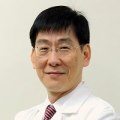
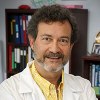
 Cheng-Yu Chen |
An interview with Cheng-Yu Chen, VP of Taipei Medical University By Jessica Yang, Investor Research Analyst, LSN |
 Jessica Yang |
In recent years, Taiwan has rapidly been catching up to the global Artificial Intelligence (AI) wave, as the government, leading industries, and academic institutions have proactively worked together to make Taiwan an AI talent hub in Asia. The well-known information and communications technology (ICT) and semiconductor industry in Taiwan have established a great foundation for intelligent technology development.
I had the opportunity to speak with Cheng-Yu Chen, VP of Taipei Medical University (TMU). Dr. Chen is also the Director of the Research Center for Artificial Intelligence in Medicine at TMU. Taipei Medical University has worked with Life Science Nation (LSN) and brought its spin-off companies to attend the Redefining Early Stage Investments (RESI) conferences for multiple years. TMU is also one of the most active academic institutions in Taiwan and has built its own AI in Medicine ecosystem. This includes the Technology Commercialization Center (TMU-TCC), the Smart Hospital Simulation Lab (SHSL), an incubator/accelerator, and hospitals, which not only support AI professionals, but also help with early-stage AI companies’ fundraising and business development.
Dr. Chen shared a comprehensive perspective of Taiwan’s AI in life science developments, and how Taipei Medical University has become an AI innovation hub in Taiwan.
Jessica Yang (JY): How do you see AI in life science developments and opportunities in Taiwan?
Cheng-Yu Chen (CC): Taiwan has been seeking to develop world-leading AI infrastructure and to become an important player in the global AI value chain. Especially within the life sciences area, I think Taiwan can leverage the following advantages that make it an essential hub to develop and promote AI technology:
(1) An industry leadership position in the manufacturing of ICT & semiconductor hardware
(2) The Taiwan government’s strong support and commitment to improving the AI R&D environment
(3) A no.1 ranking in the Global Open Data Index and a high level of transparency of data-sharing
When all these data combine with our ICT industries, it provides a friendly environment for testing the application of AI. In addition, the Taiwan government’s ongoing AI action plan, which includes the intent to introduce new laws and regulations to promote AI development, also helps professionals gain access to over 20 years of data from the National Health Insurance Administration while maintaining patients’ privacy. Overall, I see lots of promising opportunities in Taiwan to incorporate AI in life sciences.
JY: What are Taipei Medical University’s current efforts and accomplishments in AI in life science development?
CC: Here at Taipei Medical University (TMU), we understand that “No data, no AI,” thus TMU established the first Graduate Institute of Biomedical Informatics in Taiwan in 1998, which cultivated a sufficient talent pool to catch up the current global AI trend. Then we followed the government’s AI action plan to build more professional programs in AI in Medicine in recent years. These programs are aimed to increase the number of medical doctors, medical technologists, and clinic professionals with a working knowledge and skills in AI.
Furthermore, we also have the Research Center for AI in Medicine, the Smart Hospital Simulation Lab (SHSL), the Technology Commercialization Center (TMU-TCC), incubators, and hospitals, all designed to advance AI technologies. A professor who has a great idea can start a company through the commercialization center, the incubator programs can help find resources, and our research centers and labs can provide systems to complete proof-of-concept. As an example, we have already curated three AI-related companies in the past two years:
(1) DermAI: AI solutions to detect Malignant Melanoma (MM) and the risk of acnes
(2) AESOP Technology: AI-based prescription error prevention solution to maximize patient safety
(3) Redica Health: Ted-ICU AI solution to help with smart hospital construction
We plan to start two more companies next year.
JY: Both DermAI and AESOP have attended RESI before! Speaking of this, does TMU have any international collaborations in AI in life science development?
CC: Yes. There are many aspects on which we work with international corporations and institutes. For example, we partnered with AstraZeneca on incubator programs and clinical trial collaboration. We have also cooperated with the Massachusetts Institute of Technology (MIT) to organize Hackathons on Health IoT programs. We also worked with Stanford University, University of Pennsylvania, and the University of California, and sent our talents to learn AI imaging and surgical planning, etc. at these institutions. For the spin-off companies I just mentioned, AESOP Technology partnered with Harvard Innovation Labs and Brigham and Women’s Hospital to complete prescription screening tests. We expect to have more collaborations worldwide in the next few years.
JY: As we know, Taiwan did a great job in in preventing COVID-19 spread – do you think AI helps with this successful response?
CC: Yes. Our government, hospitals, and research institutes all took rapid actions that made Taiwan able to develop a nationwide mask sitemap using AI in real-time, as well as an AI-applied alert system incorporated in hospitals to decrease the risk of COVID-19 spread and local transmission.
In addition, the Ministry of Science and Technology (MOST) is gathering principal investigators’ ideas to further develop preventive strategies for such a pandemic, and many are AI-related. I think that as long as Taiwan keeps an innovative mindset and grasps the advantages of AI development, we will be able to build a successful and leading ecosystem in AI in the life science arena.
As AI is playing a significant role in the healthcare arena worldwide, LSN plans to launch the inaugural 4D Meets AI partnering conference September 17 – 18, 2020. This new 4D Meets AI conference is set to provide a new platform for all companies developing Drugs, Devices, Diagnostics, and Digital Health (the 4 Ds), with an Artificial Intelligence (AI) vertical, to meet and connect with investors and strategic partners. Visit http://4dmeetsai.com/ to learn more and register.

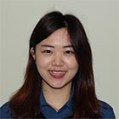

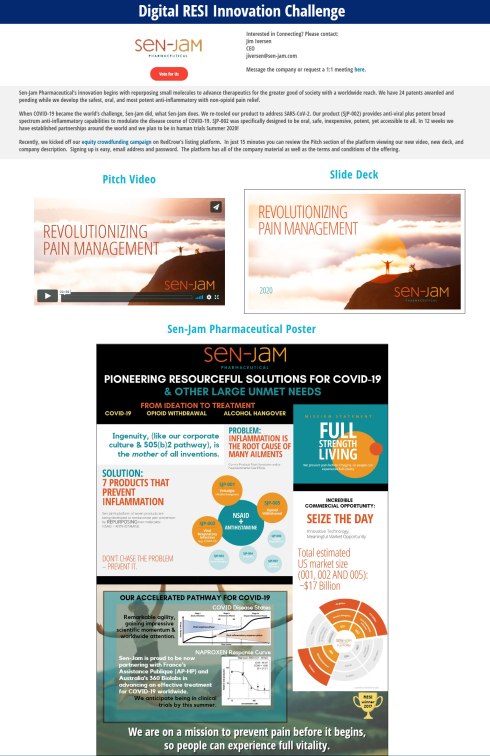


 Andrew Satz is the CEO and Co-Founder of EVQLV, a technology company leveraging AI to accelerate the speed and lower the failure rates of biologics discovery and development. He co-developed EVQLV’s biologics discovery engine, which uses a wide range of machine learning and software engineering techniques to design and screen novel biologics. A data scientist by training, Satz is a seasoned entrepreneur and technologist having founded multiple startups and holding leadership roles in companies ranging from insurance to biotech. Satz holds a BA in Economics and MS in Data Science, both from Columbia University.
 Gini Deshpande, PhD, is the founder and CEO of NuMedii, a data-driven drug discovery company that pioneered the use of artificial intelligence and advanced data sciences to rapidly discover new precision therapeutics. Having raised the company’s financing and overseen successful partnerships with several large pharma companies, she is now spearheading the company’s efforts in the development of its own pipeline in fibrosis and orphan oncology indications. Previously, she helped Affymetrix and other companies with market development strategies for their innovative technologies. She led intrapreneurial efforts at Children’s Hospital Boston for the creation of new devices for the tiniest of patients and vaccines for the developing world. Gini has also helped commercialize early-stage life science technologies in research tools, diagnostics & therapeutics and has closed licensing deals worth several million. Gini received her PhD in Biological Sciences from Purdue University and did post-doctoral work at Massachusetts General Hospital.
 Veronomics, Inc. is a Delaware C Corporation (registered in New York State) headquartered in the University at Buffalo New York State Center of Excellence in Bioinformatics and Life Sciences. The company was founded by Irwin H. Gelman, PhD, who is a Distinguished Professor of Oncology and Director of Research Integration in the Roswell Park Comprehensive Cancer Center, and Track Chair of the UB-Roswell Park academic program in Cancer Genetics, Genomics and Development. Dr. Gelman received his BA in Biochemistry at Wesleyan University, MA, MPh and PhD degrees from Columbia University, and was an American Cancer Society Postdoctoral Associate in the lab of Prof. Hidesaburo Hanafusa at The Rockefeller University. Dr. Gelman has been involved with two biotech startups currently traded on the NASDAQ, Antigenics LLC (now Agenus) and Kinex Pharmaceuticals (now Athenex), where he helped develop the Src-family kinase inhibitors, KX2-391 and KX2-361, now in Phase II and III clinical trials for several cancers.
 Rafael leads Genialis’ effort to integrate and mine vast and diverse sources of biomedical knowledge to realize the promise of precision medicine and therapeutic discovery. He spent nearly 20 years in biomedical research prior to Genialis, publishing on the evolution of innate immune systems, bioengineering of microbes, and genetics of development. Rafael co-invented the j5 DNA assembly design automation software for high-throughput molecular design and analyses (since commercialized by TeselaGen). Rafael earned his doctorate at Yale University, and conducted postdoctoral research at Lawrence Berkeley National Laboratory’s Joint BioEnergy Institute (JBEI) and Baylor College of Medicine. In his free time, Rafael enjoys cooking and rock-climbing, and raising heirloom tomatoes and two precocious children.
 Nabiha Saklayen is a bio-inspired physicist and entrepreneur. Nabiha launched Cellino to converge physics, biology, and machine learning to enable paradigm shifts in regenerative medicine. Cellino is building the next generation of cell and tissue therapies with a proprietary platform technology that makes stem cell-derived therapies scalable for the first time. Nabiha was recognized as a Pioneer in MIT Tech Review’s 35 Innovators under 35 list for her inventions in laser-based delivery methods and is on the 2019 Forbes under 30 List for Healthcare. She received her PhD in Physics from Harvard University as an HHMI International Fellow. She made significant scientific contributions to the field of pulsed-laser delivery to cells, with several peer-reviewed papers published, patents pending, and grants awarded. Nabiha grew up in Saudi Arabia, Bangladesh, Germany, and Sri Lanka.


 Next Phase Newsletter