Investor Panelists at RESI Europe 2025

By Claire Jeong, Chief Conference Officer, Vice President of Investor Research, Asia BD, LSN

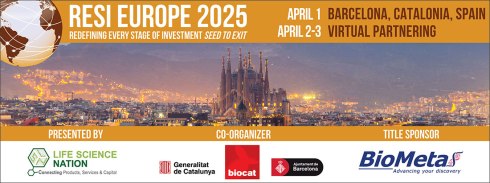
The Life Science Nation (LSN) team is preparing for next week’s RESI Europe conference in Barcelona, where life science and healthcare innovators will connect with a global network of investors. With a curated agenda featuring six panels, attendees will gain key insights into emerging investment trends and strategies shaping the industry.

This year’s panels will cover Medical Devices, Digital Health, Corporate VC, Cross-Border Investments, Seed Funds, and Therapeutics Innovations. LSN has assembled a distinguished lineup of panelists representing diverse investment groups, from corporate venture capitalists to early-stage investors and sector specialists. These experts will share their approaches to evaluating startups, their perspectives on the evolving investment landscape, and their insights into fostering successful partnerships. As a truly international event, RESI Europe will bring together investors from across the globe, creating opportunities for cross-border collaboration and meaningful networking.

RESI panels are designed to facilitate constructive dialogue between investors and fundraising CEOs. Attendees will receive tactical advice on capital raising and partnership development, helping them refine their strategies and accelerate their fundraising efforts. These must-attend discussions offer founders and executives direct access to investors, providing an invaluable platform to expand their networks and gain actionable insights.

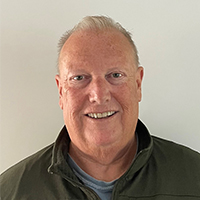
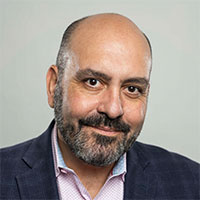
Join the panelists below at RESI Europe and take the next step in your fundraising journey.

Carla-Benichou
Carla Benichou

Senior Investment Analyst
RV Invest GmbH
Jorge-Blasco
Jorge Blasco

Venture Partner (Spain)
Lumo Labs
Nils-Bottler
Nils Bottler

Principal (Berlin)
Angelini Ventures
Matthieu-Coutet
Matthieu Coutet

Partner, Biovelocita Strategy
Sofinnova Partners
Geoffrey-D'hondt
Geoffrey D’hondt

Investment Director
Heran Partners
Jordi-Ferrer
Jordi Ferrer

Healthcare Investment Director
Ship2B Ventures
Lina-Gaydarova
Lina Gaydarova

Investment Manager
Novaterra
Simon-Hua
Simon Hua

Chairman
BioMetas
Santiago-Lozano
Santiago Lozano

Healthtech Funds Director
Clave Capital
Jim-McGough
Jim McGough

Managing Partner
Mid Atlantic Bio Angels
Erki-Mölder
Erki Mölder

Managing Partner
Verge Health Tech Fund
Daniel-OMahony
Daniel O’Mahony

Partner
Seroba Life Sciences
Luis-Pareras
Luis Pareras

Managing Partner
Invivo Partners
Sanchita-Pasi
Sanchita Pasi

Investor
EQT Life Sciences
William-Pay
William Pay

Venture Partner
Winhealth Pharma
Laura-Rodriguez
Laura Rodriguez

Partner
Invivo Partners
Artemy-Shumskiy
Artemy Shumskiy

Senior Associate
LongeVC
Florence-Thueux
Florence Thueux

President & CEO
M2Care
Louise-Warme
Louise Warme

Head of We Venture Capital
We Venture Capital


Insights from the Investor Fireside Chat on Life Science Fundraising

By Joey Wong, Director of Investor Research, Hong Kong BD, LSN

Joey-New-HeadshotHosted by Life Science Nation (LSN), co-moderated by Labiotech.eu, and sponsored by ShareVault, last Thursday’s Investor Fireside Chat brought together four active investors in the life sciences and healthcare sectors. Each panelist shared insights from their unique investment focus and fund background, offering perspectives on key investment trends and the 2025 landscape.

A central theme that emerged was cautious optimism in early-stage life science and healthcare fundraising. While investors have remained highly conservative in recent years, there is still dry powder available, and some are considering deploying capital to generate returns. However, overall sentiment remains cautious, with investors seeking greater certainty about capital allocation. Panelists emphasized that companies should plan their runway carefully, as raising funds between seed and Series A may take longer than anticipated. Additionally, securing continued support from existing investors was highlighted as a critical factor in navigating the current fundraising environment.

When asked for advice, panelists underscored the importance of capital efficiency. They encouraged companies to focus on fundamentals, set clear milestones, be strategic about pipeline expansion, and extend their runway as much as possible. One panelist suggested planning for at least 12 to 30 months of runway. While high valuations are always appealing, the panelists advised founders to recognize today’s challenges and seize investment opportunities when available – after all, cash is king, and survival is key.


Interview with RESI JPM Sponsor, Bullfrog AI 

By Caitlin Dolegowski, Marketing Manager, LSN

CaitiBullfrog AI is at the forefront of integrating artificial intelligence into drug development, helping biotech and pharma companies extract meaningful insights from complex data. Toby Sayre shares how the company’s AI-driven approach enhances decision-making, accelerates therapeutic innovation, and improves success rates. In this interview, he discusses Bullfrog AI’s technology, its role in shaping the future of drug development, and the company’s experience at RESI.

Secure your sponsorship or exhibitor package today. Contact the LSN Business Development Team to find the best fit for your brand and maximize your impact at RESI in 2025.

Partnering is Open for RESI Europe – Connect with Global Investors 

By Karen Deyo, VP of Product, Israel BD, LSN

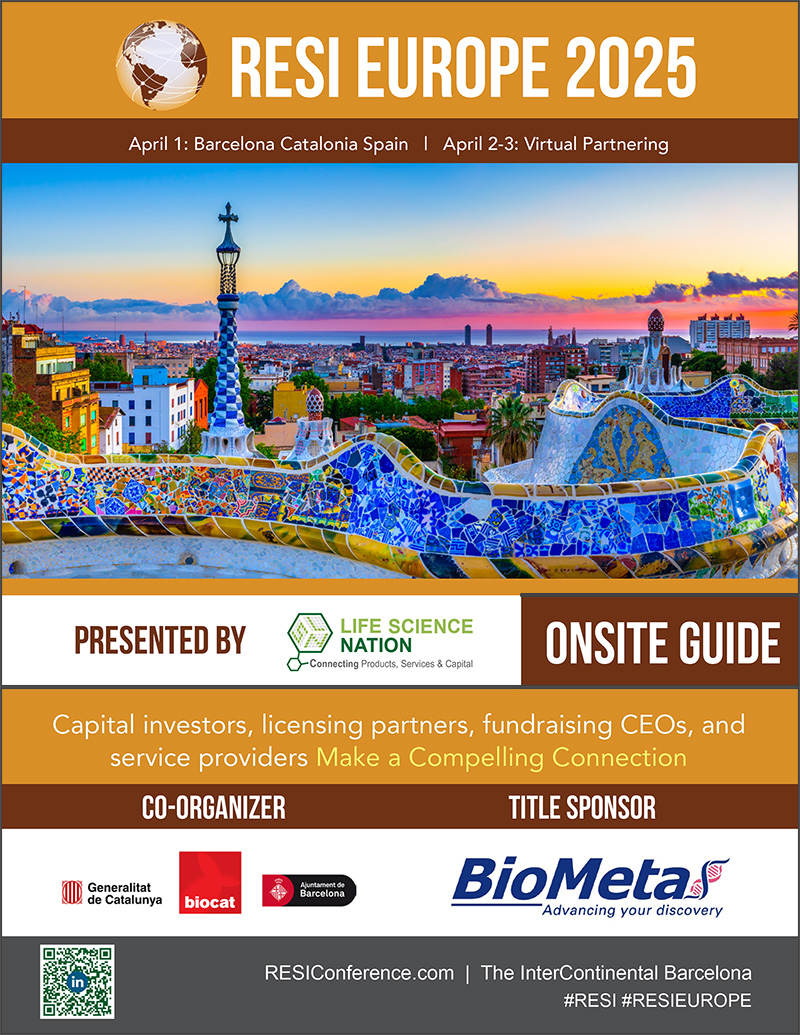
karen-wpPartnering for RESI Europe, co-organized with Biocat, is now live. As of March 10, the system is already buzzing with activity, demonstrating the strong demand for early-stage deals. The conference begins with an in-person RESI Europe event on April 1 in Barcelona at the InterContinental Hotel, followed by two days of virtual partnering on April 2-3.

This is a key opportunity for life science startups, investors, and strategic partners to connect on a global level. RESI offers flexible registration options, including a one-day in-person pass, two-day virtual access, or full participation across all three days. The RESI partnering platform is unique, utilizing the LSN Investor and Licensing Partner database to ensure that companies can identify which investors are the best fit before requesting a meeting.

There is still plenty of time to register and start booking meetings with investors actively seeking early-stage technologies. RESI is a truly global event, and we encourage you to attend the upcoming partnering tutorial to make the most of the platform.

March 18, 2025 11:00 AM ET
RESI Europe Partnering Tutorial – Sign up 

Unprecedented Growth of Life Science Investment & Startups in Catalonia/Barcelona

By Sougato Das, President and COO, Life Science Nation (LSN)

Sougato-DasThe Barcelona and the Catalonia region of Spain achieved record investment in life sciences startups, venture, and growth companies in 2024. Catalonia hosts the HQs of 1500 life science companies, of which 90% are early stage/startups – an average of 1.25 startups are created in the region weekly. Combined with commensurate increases in scientific publications (over 54K, ranked 5th in Europe), clinical trials, and other bibliometric measures, Catalonia is becoming a major life science hub in Europe, with 25% of Spain’s life science companies. With RESI Europe, the largest life science investor event in the EU in terms of number of attending investors, taking place April 1 – 3, the trend is positioned to continue in 2025.

In fact, Catalonian life science seed, venture, and growth companies received €350 million in investment in 2024. The increasing draw of the region for Spanish investors, pan-European investors, Asian investors, and US investors can be seen not only across investments, but also across conference participation. 80% of the investment is from VCs, with 75% from investors outside of Spain, including prestigious firms like Sofinnova Partners, Merck, and Novartis Venture Fund. The remaining 20% of the investment is from non-dilutive sources. Not to be outdone, M&A activity also hit a record for the region, with 11 life science M&A deals.

In terms of modality, medtech has led in gross investment amount, primarily due to Impress (dental health). Next was biotech, accounting for €143 million. Digital health investment, however, saw a drop of 40% vs. 2023. This is likely due to the digital health sector experiencing rapid growth in 2023, with a 61% increase from 2022 – most first-round investments were likely made in digital health during that time and now the receiving companies are engaged in the funded R&D. Catalonia also boasts 71 investment organizations.

Finally, Catalonia is a hotbed of clinical trial activity, host to 87% of trials in Spain. The plurality (one-third) of these trials are in oncology. Recognizing this potential, global pharmaceutical and life sciences leaders have set up production centers and R&D departments in Catalonia, taking advantage of the region’s exceptional pool of local talent. Now is the time to take advantage of RESI Europe to partner with international investors, if you are local to Spain, or get your bearings in the booming Catalonia life science sector if you are new to the region.

Helping founders prepare for investment: A conversation with Juan Carlos Lopez and Andy Marshall of Haystack Sciences 

Interview with Juan Carlos Lopez, Founder, and Andy Marshall, Partner of Haystack Sciences By Dennis Ford, Founder & CEO Life Science Nation.

Dennis Ford
Dennis Ford
Juan-Carlos-Lopez
Juan Carlos Lopez
Andy-Marshall
Andy Marshall

Haystack Science is a boutique consulting firm specialized in identifying and vetting the translational potential of academic projects and preclinical companies. We met with Juan Carlos Lopez and Andrew Marshall, two former Nature editors who founded Haystack, and spoke about how they help academic startups maximize their chances of success and their potential to attract seed and early-stage capital.

Dennis Ford (DF): What is the problem you are addressing?

Juan Carlos Lopez (JC): We’re interested in the disconnect between early-stage science from academic centers and the data needed to make therapeutic projects compelling for clinical development and investment. It’s the age-old problem known as the valley of death.

Andy Marshall (AM): Or the valley of debt if you’ve put your life savings into it! At Haystack, we appreciate that company building is a long and expensive road. Unless you’ve traveled that road several times, understanding the entire path for your product from beginning to end – foundational research to clinical development – can be hard. You need to think about the whole path to be successful. We provide feedback and pointers, knowing what investors and pharma think about when evaluating opportunities, so that a project has the greatest chance of attracting capital.

DF: What differentiates Haystack from other consultants in the space?

JC: Haystack’s partners spent a good part of our careers – Andy at Nature Biotech and I at Nature Medicine – evaluating a vast range of translational research and technologies from across the globe. We know what outstanding research looks like. If you want that perspective and overview of the science behind your project and where you need to take it, we are your guys. Together we’ve worked in pharma, venture capital, and foundations, so we know what projects need to be successful in those arenas.

AM: Yes. And Haystack can make introductions. We can help you find the right investors, prepare for that one interview with them (because you won’t normally get more than one chance), and maximize your chances of success.

DF: Who are you offering your services to?

JC: Our primary clients are academic founders, TTOs, and CEOs of biotech startups in preclinical development. Haystack also helps investors and foundations assess technologies and opportunities and prioritize assets in areas of interest to their portfolios.

DF: What are some of challenges for early-stage projects or biotech startups?

AM: A lot of research published in Cell, Science or Nature has that last paragraph: “And this finding may lead to the development of new therapies…” But building a successful company around that foundational science is a long haul. Experiments take long and don’t always reproduce. Competition and technological advances can make your program obsolete. It is hard to predict from mice what works in humans. You need to orient your scientific, human and financial capital to reach first-in-human studies as efficiently and economically as possible.

JC: At Haystack, we see a lot of advanced projects aimed at wrong indications, missing key data or seeking to enter crowded markets. We can highlight areas where a project needs to refocus or correct course to maximize its chances of success.

AM: Our feedback is also objective and unbiased. There’s a myth that academics and TTOs have broad access to industry expertise in their local ecosystem. Sure, they can access that advice, but the fact is that feedback is nearly always informal and cursory. Pharma and investors are not in the business of giving you detailed feedback, they have other priorities. We, on the other hand, provide formal, objective feedback that is actionable.

JC: Yes, this is a key point. There’s usually a big delta between what people in industry want and where an academic project is. Investors don’t generally give specific feedback because they don’t see the point. Telling a founder which key experiments are missing isn’t a good use of their time because these experiments are costly and take a long time. By then, the investor’s dry powder is gone, and the fund’s strategic goals may have changed. Or a pharma company may have shifted its focus away from your therapeutic area.

DF: What services are you offering to founders or startup CEOs who come to you?

JC: Part of our passion for this area is for more entrepreneurs to succeed. This is why Haystack put together our Therapeutics Evaluation Form. It asks the questions that a pharma company would ask before launching a drug-discovery program or an investor would ask before financing a project. It is a free tool, and we regard it as partly educational. Once you complete the form, we send you back a numerical score (the Haystack Score). This reflects the potential of a project to reach clinical development and to attract further investment. It consists of around 45 questions, many of which require simple Yes/No answers and will take ~30-40 minutes to complete.

AM: If, after filling out the form, you want to delve deeper into how to improve your project, Haystack can create a custom ‘gap analysis’ that will help prioritize next steps. And if the project is ready for investment, we can introduce you to investors who might be interested in your venture. There’s a direct relationship between the likelihood of clinical development and the likelihood of attracting investment.

DF: Why do you think so few early-stage therapeutic startups are sustainable?

JC: Flawed or irreproducible science, inexperienced team, lack of capitalization, attracting the wrong investors. Also, novel technologies or new therapeutic modalities take much longer to translate into products. There are just too many unanswered questions because of the novelty. Most companies run out of money just trying to answer those questions.

AM: Yes, first-time academic founders sometimes underestimate the difference between an academic project and an industry project. Academic science is all about following new findings and opening new lines of investigation. That is the antithesis of drug development. Translation is about reduction to practice. Removing as much risk as possible about the technological, biological and clinical aspects. At Nature, we used to place a great deal of emphasis on conceptual novelty. In industry, you need enough novelty to get IP protection but, for everything else, you want corroborating evidence and as little novelty as possible to reduce risk.

DF: You mentioned tech-transfer offices. What kinds of services are you offering them?

AM: TTOs at elite institutions have extensive resources to stress test their portfolios and interface with industry, especially in Boston and San Francisco. But there are a lot of TTOs that are understaffed, underfunded and underrecognized in many parts of the USA and beyond. We help those teams prioritize opportunities and provide them with an independent assessment of the technical quality, clinical potential and commercial interest of projects in their portfolio so they can prioritize which of them to move forward.

JC: Similarly, for foundations and patient organizations funding academic science, the aim is often to move translational projects to the point where they are mature enough to attract private financing. Haystack provides advice on steering projects and can help develop the right strategy for a non-profit organization to maximize the impact of its grants.

DF: What’s your plan for Haystack this year?

JC: We are seeking to get our message out to the wider startup and TTO communities. For the first part of 2025, Haystack is expanding the client base and offering some discounts on services. We’re actively looking to expand our reach beyond the US, so we’d welcome enquiries from ventures across the globe. Anyone interested in working with us can reach out to info@haystacksci.com or visit Haystack’s website.

RESI Europe 2025 Innovator’s Pitch Challenge Finalists 

By Claire Jeong, Chief Conference Officer, Vice President of Investor Research, Asia BD, LSN

The RESI Europe Innovator’s Pitch Challenge (IPC) finalists are in! This exciting event will feature multiple pitch sessions where finalist companies present their groundbreaking innovations to a panel of investors and industry experts. Each participating company will also have table space in the RESI exhibition hall, providing attendees with opportunities to engage with them directly.

Innovator’s Pitch Challenge Companies at RESI Europe 2025

RESI Europe, co-organized with Biocat, will feature a diverse range of startups, including companies represented by incubators and tech hubs such as the European Innovation Council (EIC), Navarra, and Biocat. The challenge provides a key opportunity for participating startups to gain exposure, connect with investors, and advance their fundraising efforts.

The participating companies are listed above. If you’re attending RESI Europe, be sure to visit their tables in the exhibition hall and catch their pitch sessions. To see these presentations and meet with the companies one-on-one, you can register for the event here.