European Technology Hubs Will Be in the Spotlight at RESI Europe

By Greg Mannix, VP, EMEA Business Development, LSN

RESI has long been a catalyst for early-stage life science companies seeking strategic partnerships and investment. A key component of this mission is fostering relationships with technology hubs around the world, and Europe is no exception. Across the continent, regions and organizations take unique approaches to supporting innovation, but they share a common goal: helping promising startups progress from spinout to commercialization.

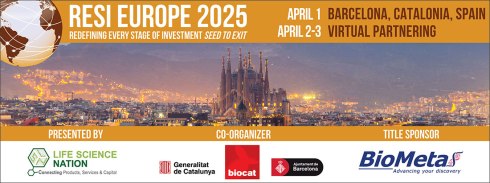
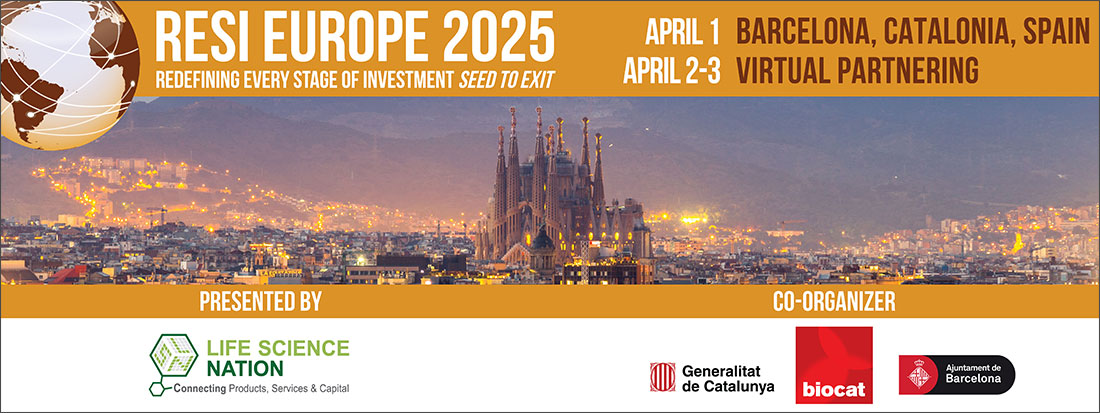
At RESI Europe 2025, taking place April 1-3 in Barcelona, three standout technology hubs will be prominently featured:

Region of CataloniaSpain Flag
Region of Catalonia
European Innovation Council
Region of NavarraSpain Flag
Region of Navarra

Innovative startups from these hubs will showcase their cutting-edge technologies in the Innovator’s Pitch Challenge (IPC), where they will pitch to a panel of active investors and receive valuable feedback. In addition, these companies will be featured in the IPC exhibition space, where attendees can explore their technologies and engage in meaningful discussions. RESI Europe presents a prime opportunity to connect directly with representatives from these organizations, gaining insights into their programs and the promising startups they support.

With a dynamic mix of investor panels, curated networking, and dedicated showcasing of European innovation, RESI Europe 2025 will be an essential gathering for those looking to tap into the continent’s thriving life science ecosystem.

How Ukraine Affects Global Life Science Innovation

By Sougato Das, President and COO, Life Science Nation (LSN)

Sougato-DasAs the provider of the global RESI conference, a critical catalyst for life science startups to meet with investors and in-licensors, we get to learn about life science ecosystems across the world. This includes Ukraine, which is in a unique situation in three areas of life sciences, some of which affects global life sciences R&D.

Firstly, Ukraine was a hotbed of industry-sponsored phase 0 – 3 clinical trials. While the majority of these were big pharma-sponsored, a substantial amount were led by early-stage companies. In the three years preceding the current war, from February 2019 to February 2022, there were 446 such trial starts in Ukraine. In the three years since, that number has dropped to just 55. With its former abundance of treatment-naïve patients, low costs, reliable healthcare provider systems and fast investigator recruitment, Ukraine used to be a favorite for companies seeking clinical PoC.

Secondly, based on late 2020 report from BioUkraine, Ukraine was emerging in the field of organic life sciences R&D. It had 15 life science hubs, 75 life science companies (including affiliate offices of large pharmas), hosted 45 life science conferences and had 12 investment firms. Although more recent statistics are not available, recent estimates conclude 20% of scientists have left the country in the last 3 years.

Finally, a lot has been said in the media recently about rare earth metals (REMs) in Ukraine. Generally, we think of these metals in relation to the energy sector, especially batteries. However, 45% of REMs are used for ceramics and alloys, much of which is used in med tech and medicines (e.g. Lanthanum for kidney disease, Yttrium for cancer, Samarium for bone pain). In med devices, REM ceramics are used in electronic implants and hip replacements, while REMs are used extensively in contrast agents, magnets, electronics, x-rays, lasers and dental implants. This does not just include on-market devices; REMs are increasingly being used for developing new kinds of devices, for example, magnets to fulfill therapeutic use cases that do not have adequate solutions today.

In conclusion, Ukraine was, and could once again be, a promising region for life science innovation and research, as well as a source of unique materials for new devices, diagnostics and medicines. Despite the current situation, Ukraine is working with a number of European nations to ensure their regulations, processes and standards are aligned with Western Europe’s so they can move quickly when the opportunity is there. The intent of this article is to highlight the global interconnectedness of the life science innovation ecosystem in light of current events, which will be showcased at RESI Europe with 250 investors and in-licensors, hundreds of startups and dozens of tech hubs in attendance.

FDA’s Med Device Staff Firings: Industry Implications 

By Sougato Das, President and COO, Life Science Nation (LSN)

Sougato-DasThe FDA’s Center for Devices and Radiological Health (aka CDRH aka the folks who approve med devices) had firings a little more than a week ago, continuing from the layoffs at the NIH and CDC. Early signs indicate a reduction of 10% – 15%. Those who lost their jobs included those funded by medical device user fees and not tax-payer dollars. Since the cuts affected probationary employees the most, recent hires to evaluate newer technologies like AI-assisted imaging and digital health are gone, making it hard to imagine approvals for these modalities would not grind to a halt. AdvaMed’s head, Scott Whitaker, conveyed that AdvaMed had sent a letter to HHS in response, emphasizing the importance of AI and related technologies, the patient-facing effects throwing a wrench in the approval machine would have, and the lack of tax-payer savings. This may have been effective, as in breaking news today, the Associated Press reported that some of the fired individuals received calls and messages reversing their dismissals, stating terminations were “rescinded effective immediately.”

Besides staff cuts, there are other changes in FDA CDRH guidances, such as removal of requirements to have demographically diverse clinical trials. If the Trump administration continues to lower the regulatory hurdles required for approval, approval times could accelerate despite reduced staff, assuming further layoffs do not materialize and funds from user fees are made available again. Of course, this could result in products with less safety testing, which could lead to recalls and trust erosion.

The million-dollar (well, actually billion dollar) question is: how will these changes affect seed and series A-B funding for med tech, health tech and AI? Usually, regulatory uncertainty has a dampening effect on the investment climate. Companies may need to hedge their bets by doubling down on fundraising and partnering activity. How many meetings have you had in the last 3 months? How many leads do you have? How many meetings do you need to close your next fundraise? LSN can help you dramatically accelerate your business development. With the largest and most detailed life science investor/in-licensor database and the largest investment conferences (by number of attending investors) in the world, LSN is poised to help get you funded before any potential downturn. Reach us at: resi@lifesciencenation.com

Exploring the Future of Biotech Investment: The Therapeutics Panel at RESI Europe 

By Claire Jeong, Chief Conference Officer, Vice President of Investor Research, Asia BD, LSN

With biotech venture capital investment surging by over 33% in 2024 and in-licensing activity remaining strong, optimism is growing in the life science ecosystem. The Therapeutics panel at RESI Europe in Barcelona, taking place at the InterContinental Hotel on April 1, will bring together key investors to explore the evolving landscape of biotech investment and partnerships.

This panel will examine emerging trends and therapeutic breakthroughs, providing insight into the indications and modalities attracting investor interest. Discussions will also highlight the role of venture capital and in-licensing partners in driving innovation, as well as key considerations for biotech companies navigating R&D and scaling operations. Given the high-risk nature of early-stage biotech investment, panelists will share perspectives on how to de-risk opportunities through due diligence and strategic partnerships.

Moderated by Jim McGough of Mid Atlantic Bio Angels, this discussion will feature an esteemed lineup of investor panelists, including Laura Rodriguez of Invivo Partners, Carla Benichou of RV Invest GmbH, and Artemy Shumsky of LongeVC. Their collective expertise will offer a comprehensive look at how investment and collaboration are shaping the future of biotech innovation.

Jim-McGough
Jim McGough

Managing Partner
Mid Atlantic Bio Angels
(Moderator)
Carla-Benichou
Carla Benichou

Senior Investment Analyst
RV Invest GmbH
Laura-Rodriguez
Laura Rodriguez

Partner
Invivo Partners
Artemy-Shumskiy
Artemy Shumskiy

Senior Associate
LongeVC

Investment and strategic partnering remain essential in advancing therapeutics that address high unmet medical needs. Whether you are a biotech entrepreneur seeking funding or an investor looking to stay ahead of industry trends, this panel promises valuable insights into the dynamic world of biotech investment.

Join us at RESI Europe to gain firsthand knowledge from top investors and forge meaningful connections that could help propel the next wave of groundbreaking therapies to market.

Investors Meet Syndicates at RESI

By Greg Mannix, VP, EMEA Business Development, LSN

When we think of a partnering conference like Redefining Ever Stage of Investment (RESI), we often envision cutting-edge life science startups pitching their technologies to investors and licensing partners – whether through one-on-one meetings or in the Innovator’s Pitch Challenge (IPC). While this is certainly a key aspect of the event, it’s important to note that about 20% of the scheduled and ad hoc meetings at RESI are between investors themselves!

So, why is RESI such a prime venue for investors from around the world? Because cross-border alliances and syndicates are not just common – they’re becoming essential. Consider these key trends:

  • Syndicates are the new normal: Single-investor participation in funding rounds is now rare. More often, deals are made through syndicates, which help spread risk and allow investors to tap into broader networks and expertise.
  • Expanding geographic horizons: Investors who restrict their focus to just one region may struggle to compete for the most innovative technologies. As a result, many are looking beyond their comfort zones to find the best opportunities.
  • The global capital gap: European companies often find it difficult to secure the capital needed for larger rounds within Europe, creating a growing need to partner with US and Asian investors.

On March 30th, right before RESI Europe in Barcelona, LSN will host an exclusive Investor-only  Networking Event, bringing together investors from North America, Europe, and Asia for an evening of tapas, drinks, and new connections. For more information, contact resi@lifesciencenation.com.

China: The New Darling for Deals with Trump Tariffs Looming 

By Sougato Das, President and COO, Life Science Nation (LSN)

Sougato-DasThe buzz among biotech execs and investors gathered at RESI JPM 2025 was if the last year of pharma deals falling to a decade-low was reversing with a rapid-fire source of new lower-risk drug candidates: China. With one-third of the therapeutic molecules bought by pharma coming from China last year, including the better-than-Pembro hopeful of Summit Therapeutics licensed from Chinese Akeso, US investors including Atlas, Bain, Forbion, General Atlantic and RTW are making major investments in Chinese biotech. Merck, Novartis, GSK, Gilead and other large pharmas have inked a slew of Chinese deals and have indicated they will do more, mainly in the areas of obesity, cardiovascular, immunology, liver diseases and oncology, many with novel MoAs. With relatively dry organic venture funding in China, Chinese companies are aggressively seeking Western suitors. China’s out-licensing is accelerating, with $46B in 2024, $38B in 2023 and $28B in 2022.  

Of course, the first question is how is Summit’s drug candidate going to get FDA approval with Chinese-only studies? The strategy here is to reduce risk by licensing ‘biobetters’ that have shown clinical success in China and then running late-stage clinical studies in the US for approval. Chen Yu, formerly of Vivo Capital, was quoted as saying. “Why would we do any early-stage development in the U.S. anymore? Why wouldn’t we just get clinical PoC in China and then bring it over to the U.S. for the expensive clinical development when we actually know the drug works? …that could be a revolutionary new way for our industry to become more efficient.” 

Not to be outdone, Merck announced it would license a competitive asset to Summit’s – and it was also from China. 

Clinical trials in China can recruit faster than US-based trials with less cost, allowing a startup to go from formation to clinical trials in less than 18 months due to: 

  • Large populations that have not taken drugs for their disease are available at a multitude of regional hospitals 
  • Obtaining experimental drugs for free is a strong incentive for patients to enroll 
  • Less tightly regulated investigator-initiated trials are rapidly proliferating 
  • Regulatory flexibility and lesser fees/overhead 

Investment and licensing is not the only Western-Chinese deal types being made. M&A has been on the rise. Examples include Genmab’s acquisition of ProfundBio ($1.8B) and BioNTech’s of Biotheus at ($950M). 

With the speed of early-stage development in China, US startups may face new challenges. Alex Borisy, founder of Curie.Bio, cautioned that the usual process of publishing or presenting/postering at scientific meetings could “launch a thousand ships” in China, and advised early-stage biotechs to author patents in such a manner as to make it difficult to do so. 

What could all this mean with a pro-tariff Trump presidency? That is TBD. However, Paul Hastings, CEO of Nkarta and former BIO Board Chair, remarked that it would be hard to imagine that raw materials and innovation would be exempted from future tariffs. 

One of the best places to meet with early-stage Chinese companies is RESI. With Life Science Nation’s copious reach into the Chinese market, RESI conferences feature a multitude of attractive Chinese firms, eager to partner and pitch their technologies. 

This article is a summary/digest of various general and biotech news articles; it is not original journalism. 

Innovating Cancer Treatment: Interview with UPyTher’s CEO Geert van Almen 

By Caitlin Dolegowski, Marketing Manager, LSN

CaitiTargeted drug delivery has the potential to revolutionize cancer treatment, improving efficacy while reducing side effects. UPyTher is at the forefront of this innovation, leveraging its proprietary supramolecular drug delivery platform to enhance chemotherapy.

In this interview, Geert van Alem, Co-Founder and CEO of UPyTher, discusses the company’s vision, the science behind their platform, and their approach to securing funding. As the 3rd place winner of the Innovator’s Pitch Challenge (IPC) at RESI London, UPyTher continues to gain recognition for its groundbreaking work. Geert also shares insights on the company’s experience at RESI and the value of connecting with global investors.

Watch the full interview to learn more about UPyTher’s journey and the future of their technology.