RESI London 2024: A Global Gathering of Life Science Investors 

By Faith Patenaude, Investor Research Analyst, LSN

Faith

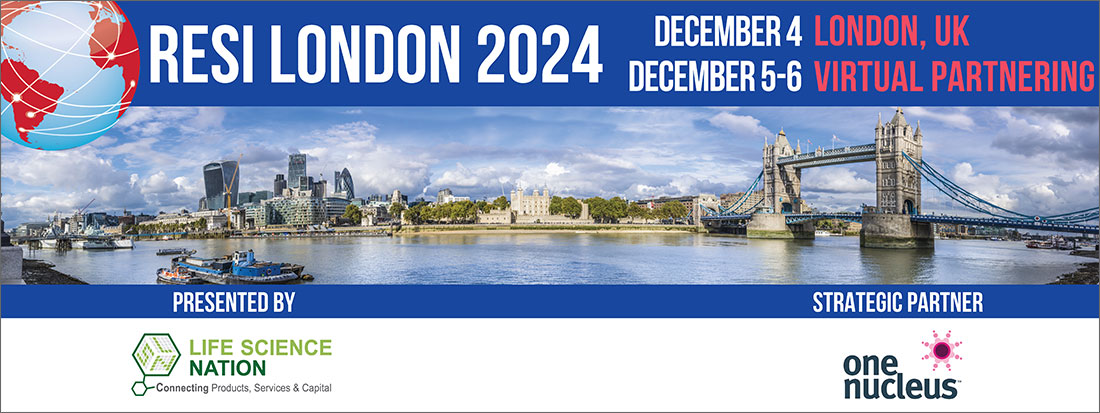
The upcoming Redefining Early Stage Investments (RESI) Conference in London is shaping up to be a remarkable event for life science innovators worldwide. The conference will be taking place in-person on December 4 at 11 Cavendish Square, followed by virtual partnering on December 5-6. RESI London 2024 is set to connect ambitious life science start-ups with a diverse array of early-stage investors and strategic partners from across the globe.

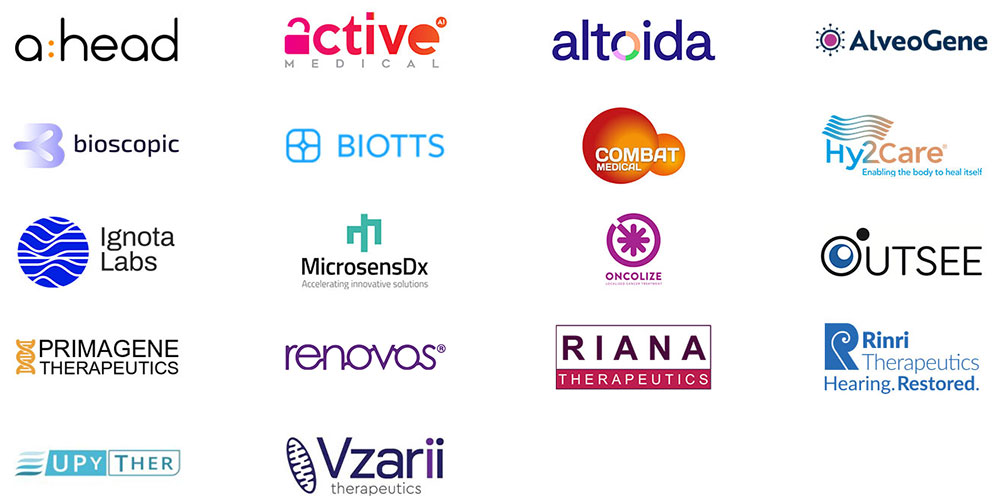
Featured RESI London Investors

RESI-London-CI

RESI’s reach goes well beyond the UK. While London-based investors like Delin Ventures, Boost Capital Partners, and Calculus Capital will be actively participating, RESI London 2024 will also welcome an extensive lineup of international firms, opening doors to far-reaching networks and growth opportunities.

European representation will be especially strong. In addition to local players, leading firms such as M Ventures from The Netherlands and CVX Ventures from Denmark will be present, providing crucial European connections for attending start-ups.

But the participation doesn’t stop at Europe. From the United States, esteemed investors like Optum Ventures and Lifespan Vision Ventures will take part in the event. Expanding beyond the Eastern Hemisphere, attendees can connect with firms such as Teijin Pharma from Japan, and Brandon Capital Partners from Australia, all of whom are eager to explore new partnerships with innovative life science start-ups.

RESI London 2024 offers an unparalleled chance to engage with a diverse and globally-minded group of investors. Interested in joining? Contact us at resi@lifesciencenation.com or click here to learn more.

RESI-London-2024-1100px

RESI-SF-2025-Banner-1100px

Innovating Together: Insights from BioJapan 2024 with Life Science Nation 

By Claire Jeong, Chief Conference Officer, Vice President of Investor Research, Asia BD, LSN

A few weeks ago, Life Science Nation (LSN) headed to Yokohama to attend BioJapan 2024 from October 9-11, 2024. As one of the largest partnering conferences in Asia focused on the life sciences industry, this year’s event attracted over 18,000 attendees over the course of 3 days. For many years, BioJapan has served as a useful platform for LSN to expand its international network, including startups, investors/strategic partners, bioclusters, service providers, and more.

This year, LSN was invited by Life Science Incubation Council (LSIC) to join a seminar on “how life science startups in Japan can work together with global partners”. Founded in 2022, LSIC is a Japanese organization that has created a platform on which key players in the sector such as start-ups, VCs, pharmaceutical companies, medical device companies and government organizations can work together to develop innovative technology seeds, aiming towards commercialization of these technologies. LSN has signed an MOU with LSIC earlier this year to collaborate on initiatives to support the life sciences ecosystem in Japan.

Biojp

The seminar took place on the last day of BioJapan, Friday, October 11, and featured the following panelists: Claire Jeong (Life Science Nation), Hélène Moore (BIOQuébec), Angela Kukula (MedCity), and Toru Seo (NewSight Tech Angels). The seminar presented an opportunity for each panelist to shed more light into their activities and their respective ecosystems, and to provide guidance on how Japanese companies can establish better relationships with international partners for expanding their business on an international scale.

Biojp2

▲ Shigehiro Asano (National Cerebral and Cardiovascular Center, Osaka), Claire Jeong (VP of Investor Research, Asia BD), Toru Seo (NewSight Tech Angels), Nao Yoshizawa (Life Science Incubation Council), Hélène Moore (BIOQuébec), Angela Kukula (MedCity), Tsuneaki Sakata (Osaka University / Biocommunity Kansai BiocK)

It was a great honor for LSN to share the panel with key industry experts and engage with more connections in Japan. LSN looks forward to continue providing a platform for life science and healthcare startups to connect with investors and strategic partners. Whether you are a startup seeking to identify more international investors and partners, or an investor seeking more international dealflow, please contact RESI@lifesciencenation.com if you are interested in learning more about how LSN can be helpful.

As with previous years, this year’s BioJapan was a very productive and well-executed event, and we look forward to returning next year!

RESI-London-2024-1100px

RESI-SF-2025-Banner-1100px

How to Succeed in Company Presentations/Pitches at Partnering Conferences: The Drive to Win, and What It Takes

Interview with Dennis Ford, Founder & CEO of Life Science Nation (LSN) By Claire Jeong, CCO, VP of Investor Research, Asia BD, LSN

DF-News-09142022Dennis Ford Claire-newClaire Jeong

In the high-stakes world of fundraising, competition is fierce, and success demands more than just a good idea—it requires strategy, persistence, and grit. At Life Science Nation (LSN), participant feedback helps us fine-tune our events to serve their needs better. Recently, concerns were raised about the fairness of the Innovator’s Pitch Challenge (IPC) at RESI Boston. In this forum, companies pitch to a panel of investor judges and audience, with some alleging that participants may have “gamed the system.” These observations point to a larger conversation about business dynamics—where determination often trumps traditional notions of fairness. In this candid interview, LSN’s CEO, Dennis Ford, explores the fine line between integrity, innovation, and the entrepreneurial hustle that drives results in a competitive environment.

Claire Jeong (CJ): What differentiates CEOs who succeed in fundraising from those who struggle, particularly in the context of RESI and the Innovator’s Pitch Challenge?
Dennis Ford (DF): The RESI IPC is a microcosm of the real-world fundraising landscape. Some CEOs adopt a proactive approach, while others wait for investors or licensing partners to approach them. The passive ones tend to wait for things to happen to them, while the proactive CEOs are out there making things happen. Just like in the real world, the ones who seize every opportunity are the ones who tend to succeed.

CJ: What mindset shift do you believe is critical for startup CEOs transitioning from academia to a competitive fundraising environment?
DF: Many startup CEOs, particularly those coming from academia, think that paying an entry fee, being selected to pitch, and setting up a poster is enough. They expect investors to naturally flock to them. However, that’s only a minimal effort. To truly excel at a partnering event like RESI, you need to actively seek out opportunities—engage with everyone who walks by, identify investors, and make sure they know who you are. This transition mirrors the shift from academia to the business world, where you’re no longer a scientist—you’re a salesperson, marketer, and business developer.

CJ: How important is balancing compelling science with a determined business development strategy in the fundraising process?
DF: Striking the right balance is essential. In fact, we’ve seen some of the more aggressive participants in the IPC go as far as asking people for their RESI dollars, getting colleagues to donate theirs, and working the system to gain attention. This is the point of the IPC – getting CEOs to put themselves out there and speak to as many attendees as possible. It gives companies many opportunities to practice their pitch, network, and push CEOs to tell as many people as possible their story. While it might not seem “fair” to some, this aggressive approach mirrors the cutthroat nature of fundraising. CEOs need to understand that they’re no longer just researchers—they’re operating in a startup environment where they need to fight for every dollar, every collaboration, and every opportunity.

CJ: Can you share examples of how startup CEOs who took a more aggressive approach achieved success at RESI or in their broader fundraising efforts?
DF: The CEOs who reframe their mindset and adopt a more aggressive approach are often the ones who succeed. The combination of preparation, hustle, and compelling science gives them a real chance. If a CEO lacks either preparation or hustle, the likelihood of failure increases. That’s why the failure rate in life science startups is so high. The process of translating science into a viable product is hard, and having a team willing to fully commit is even harder. But when you have that combination, you’re much more likely to succeed.

CJ: What advice would you give to CEOs who are hesitant to take an aggressive approach when engaging with investors at events like RESI?
DF: The hesitation is understandable, but this isn’t an environment where waiting around will get you anywhere. If you want to succeed, you have to go after it relentlessly. Yes, the market can be frustrating, and investors can be difficult, but those who adapt and push beyond their comfort zones are the ones who will secure funding. CEOs should view it as a way to practice their elevator pitch and refine their story – speaking to 100 people in the quest to gain RESI cash will help companies refine their pitch a lot more than if they stick to only speaking to people with whom they have scheduled meetings.

CJ: How does participation in the RESI IPC competition reflect the real-world challenges life science startups face in fundraising?
DF: The RESI IPC mirrors the fundraising marketplace perfectly. We’ve run about 50 of these competitions over the last twelve years, and the pattern is always the same—some participants hustle hard, others take a more passive approach, and many learn and improve as they go. What’s interesting is that the startups who win IPC prizes—based on votes from both RESI dollars and judges—tend to be the ones who also succeed outside of the competition. They’ve become guerrilla marketers and street fighters, combining that tenacity with a solid product and milestones. Success in the technology and innovation space has always required that mix of drive and substance, and it always will.

The RESI Innovator’s Pitch Challenge is not just a competition; it’s a testing ground for the broader fundraising landscape. It rewards those who balance science with the hustle, pushing past the perceived limits of fairness to carve out their path in the startup ecosystem. The lesson? If you want to succeed, you must be willing to fight for it—aggressively, intelligently, and relentlessly.

Apply Pitch at RESI London Apply Pitch at RESI JPM

RESI-London-2024-1100px

RESI-SF-2025-Banner-1100px

Conversation with John Qiao, Founder & CEO of RadioClash: Innovator’s Pitch Challenge Success at RESI Boston

Interview with John Qiao, Founder & CEO of RadioClash By Caitlin Dolegowski, Marketing Manager, LSN

John-QiaoJohn Qiao CaitiCaitlin Dolegowski

In this interview, we spoke with John Qiao, Founder and CEO of RadioClash, who secured third place in the Innovator’s Pitch Challenge at RESI Boston this past September. John shares insights into the company’s journey, their fundraising efforts, and their experience pitching to investors at the conference.

Apply Pitch at RESI London Apply Pitch at RESI JPM

RESI-London-2024-1100px

RESI-SF-2025-Banner-1100px

Advamed’s The MedTech Conference: We came, we saw, we connected.

By Max Braht, Business Development Manager, LSN

Max-Braht-HeadshotLife Science Nation (LSN) furthered its dedication to medtech by exhibiting at the world’s largest med device conference, Advamed’s MedTech in Toronto from October 14th to the 17th. The only conclusion to be drawn from the 4350 attendees, 1926 companies/exhibitors/sponsors and 550 speakers/sessions is the industry is thriving and awash with optimism, innovation and a laser-focus on patients.

For LSN, the most exciting place was the Innovation Pavilion, featuring over 30 startups, some of which had found funding from past RESI events. From medical devices to diagnostics to combination products, we found an amazing variety of innovation from otoscopes that use ultrasound to determine if a pediatric ear infection requires antibiotics or not to a new generation of home dialysis machines that prevent the common problem of infections. We were happy to extend complimentary offers to use our deep knowledge in securing capital to help these companies to fund their developmental goals. If you’re a med device startup and need help fund raising, contact us at resi@lifesciencenation.com for a complimentary review of your pitch deck and free in-depth profile of an investor who is well-aligned with your company.

MedTech Photo

On the programming front, one of the keynotes featured tennis greats and one-time rivals Chris Evert and Martina Navratilova, who gave fascinating insights into their early lives as sports stars and their current battles against cancer, and how critical imaging devices are to their treatment. Advamed did not skimp on networking receptions, providing plentiful evening opportunities to connect over Canadian gastronomic specialties and leading entertainers.

Overall, the organizers reported that MedTech 2024 was a record-breaking event for them. We certainly felt the energy of the event and plan to return next year!

RESI-London-2024-1100px

RESI-SF-2025-Banner-1100px

RESI London: Connecting Global Life Science Startups with Investors 

By Claire Jeong, Chief Conference Officer, Vice President of Investor Research, Asia BD, LSN

RESI London is your gateway to global early-stage investment in life sciences. This video gives you a quick look at what to expect at the upcoming RESI London conference – the investor panels, Innovator’s Pitch Challenge, expert workshops, and partnering opportunities that unite startups and investors. Discover how RESI fosters meaningful connections in the life science ecosystem.

register-now

RESI-London-2024-1100px

RESI-SF-2025-Banner-1100px

EYWA Biotech: Pioneering Psychedelic APIs for Mental Health Treatment

Interview with Victoria Paz, Co-founder and CEO of EYWA Biotech By Caitlin Dolegowski, Marketing Manager, LSN

Victoria-Paz
Victoria Paz
CaitiCaitlin Dolegowski

EYWA Biotech is leading the charge in developing psychedelic APIs through cutting-edge synthetic biology techniques. In this interview, Victoria Paz, a key figure at EYWA, shares insights into the company’s mission, their innovative approach to solving mental health treatment challenges, and their experience at the Innovator’s Pitch Challenge during RESI Boston. From their fundraising journey to the impact they envision for the healthcare industry, this conversation sheds light on how EYWA Biotech is pioneering solutions in the biotech space.

About the Company

Caitlin Dolegowski (CD): Can you give us a brief introduction to EYWA Biotech and the problem you’re aiming to solve?
Victoria Paz (VP): Eywa Biotech is focused on using synthetic biology and gene engineering to produce GMP-certified psychedelic APIs like psilocybin, DMT, 5-MeO-DMT, and bufotenin. We aim to solve the challenge of providing a reliable, high-quality, and sustainable supply chain for psychedelic compounds used in research and therapeutic applications. Our goal is to address the mental health crisis by ensuring consistent access to these innovative compounds for conditions such as treatment-resistant depression and PTSD.

CD: What inspired you to start EYWA Biotech, and what differentiates your technology from others in the field?
VP: The inspiration behind Eywa Biotech came from the urgent need for new solutions in mental health treatment. Current production methods for psychedelic compounds are often inefficient and environmentally unsustainable. Eywa’s approach stands out because we use synthetic biology to create scalable microorganisms that produce these compounds in fewer steps, cutting down production time and reducing environmental impact. This enables us to deliver high-purity APIs for research and clinical use at a lower cost.

CD: How do you envision your solution impacting the healthcare industry in the next few years?
VP: We believe that Eywa Biotech’s innovations will play a key role in transforming mental health treatment by providing a reliable supply of high-quality psychedelic compounds. Our technology has the potential to make therapeutic psychedelics more accessible to researchers and healthcare providers, accelerating the development of novel mental health treatments. By doing so, we hope to contribute to a broader acceptance of psychedelics in medicine and support the advancement of personalized treatments for conditions like depression and PTSD.

Fundraising Status

CD: Where are you currently in the fundraising process?
VP: We recently closed our pre-seed round, which has allowed us to build and scale our initial production capabilities. We are now preparing to launch our seed round by the end of next year to support further scaling, commercialization, and the development of new formulations and preclinical trials.

CD: What type of investors are you seeking, and what do you hope to achieve with this round of funding?
VP: We are looking for strategic investors who have a strong understanding of biotechnology, mental health, and pharmaceuticals. Ideally, these investors will bring not only capital but also expertise in scaling biomanufacturing and navigating regulatory landscapes. With this round, we aim to scale our production to an industrial level, expand into new markets, and advance our pipeline of formulations and APIs.

CD: How have potential investors responded to your pitch so far, and what has been the most frequent feedback?
VP: Feedback from investors has been positive, especially regarding our innovative approach to scaling psychedelic API production and our focus on sustainability. The most common feedback has been around ensuring that our go-to-market strategy is well-defined, especially in terms of navigating regulatory challenges and market entry in different regions.

Experience at RESI Boston

CD: How was your experience participating in the Innovator’s Pitch Challenge at RESI Boston?
VP: Participating in the Innovator’s Pitch Challenge at RESI Boston was an invaluable experience. It provided us with a platform to showcase Eywa Biotech’s vision to a diverse panel of investors and industry leaders, allowing us to refine our message and receive valuable feedback.

CD: What was the most valuable aspect of presenting to a dedicated panel of investors at the event?
VP: The most valuable aspect was the insightful questions and constructive feedback from the panel, which helped us better understand the investment priorities of various stakeholders in the biotech space. It also offered a great opportunity to build connections with potential investors who align with our long-term vision.

CD: How did the RESI Boston conference contribute to your overall fundraising journey and networking?
VP: The RESI Boston conference significantly boosted our fundraising journey by allowing us to engage directly with high-quality investors and potential partners. It expanded our network within the biotech and life sciences community, helping us identify potential strategic partners for future collaborations.

CD: Did you find the feedback from investors during the pitch challenge helpful, and if so, how?
VP: Absolutely, the feedback was extremely helpful. It highlighted the importance of clarifying our regulatory strategy and demonstrating market readiness. This has guided us in refining our pitch to better address investors’ concerns about market entry timelines and scalability.

CD: Would you recommend the Innovator’s Pitch Challenge to other early-stage biotech companies, and why?
VP: Yes, I would highly recommend it. The Innovator’s Pitch Challenge provides a unique opportunity to receive direct feedback from experienced investors, gain visibility in the industry, and connect with like-minded entrepreneurs. It’s an ideal platform for any early-stage biotech company looking to validate their business model and accelerate their growth.

RESI-London-2024-1100px

RESI-SF-2025-Banner-1100px