

The Needle Issue #8

24 Jun
Juan-Carlos-Lopez
Juan Carlos Lopez
Andy-Marshall
Andy Marshall

Around 1 in 5000 people live with a maternally inherited mitochondrial disease like MELASLeber’s Hereditary Optical Neuropathy (LHON) or MIDD, for which there are limited or no treatment options. Gene- and base-editing therapies for mitochondrial DNA (mtDNA) have lagged behind CRISPR–Cas9-based approaches targeting nuclear genes. Whereas there is already a CRISPR–Cas9-based product on the market and >150 different active trials of investigational therapies, the company closest to the clinic with an I-CreI (mitoARCUS) meganuclease targeting a mtDNA point mutation in MELAS/mitochondrial myopathy (Precision Biosciences) announced last month that it was pausing development for commercial reasons.

Despite this disparity, there is reason for optimism as a flurry of different types of optimized cytidine and adenine base editors for mtDNA are now available, with base conversion efficiencies of 50% now achievable, and some newer formats reaching efficiencies as high as 82%.

The development of mtDNA editors is not without challenges. First, editors must dispense with the targeting guide RNA, as mitochondria possess a double membrane that lacks any RNA transport system, effectively thwarting CRISPR-based gene or base editors (instead, a mitochondrial targeting sequence is used to ferry-in editor proteins). Second, unlike nuclear DNA with two copies of a gene, every human cell contains thousands of mitochondria — oocytes contain a whopping 193,000 mitochondria on average — and each organelle contains an average 10 mitochondrial genomes. Those ~10,000 genomes per cell may not all have the same sequence, with mutations existing in a state known as heteroplasmy, in which both mutant and wild-type genomes co-exist in the same organelle. Disease only occurs when the percentage of mutant mtDNA exceeds a particular threshold, typically between 70% and 95%.

Heteroplasmic mitochondrial diseases, like MELAS and MIDD, could be treated using I-Crel/FokI meganucleases or restriction enzymes linked to either transcription activator-like effector (TALE) domains or zinc fingers (which introduce double-strand DNA breaks into target sequences, leading to elimination of mutant mtDNA and repopulation of wild-type mtDNA); other conditions like LHON are predominantly mutant homoplasmic, which means they can only be treated using base editors or supplemental gene therapy.

One key concern with base-editing technology has been its propensity for off-target and bystander changes. This has led to various strategies to increase specificity, such as engineering the deaminases to narrow the editing window or use of nuclear exclusion sequences to stop nuclear sequence editing. Now, two papers in Nature Biotechnology represent important advances that could speed up translational studies of mitochondrial diseases.

Liang Chen, Dali Li and their colleagues of ShanghaiTech University, China report the engineering of highly efficient mitochondrial adenine base editors (eTd-mtABEs) by introducing mutations into the TALE TadA-8e deaminase for greater activity and specificity. These editors achieved up to 87% editing efficiency in human cells and over 50% in vivo, with reduced off-target effects compared to earlier tools.

In the first study, the researchers used eTd-mtABEs to introduce mutations in the human ND6 gene, encoding a subunit of the oxidative phosphorylation (OXPHOS) system linked to LHON and Leigh syndrome. They found reduced levels of ATP and more reactive oxygen species in the edited cells compared with controls, consistent with disease phenotypes. Next, the team used this adenine TALE base editor to introduce two pathogenic T-to-C mutations in the mitochondrial TRNS1 gene of rat zygotes, a gene linked to childhood-onset sensorineural hearing loss. The resulting offspring showed sensorineural hearing loss, which was transmitted to the F1 generation, providing proof of concept that eTd-mtABEs can be used to create animal models of disease.

In the companion paper, Chen, Li and their colleagues used the adenine TALE base editor to model Leigh disease in rats using a similar strategy. The resulting rats showed reduced motor coordination and muscle strength, defects that were obtained with editing efficiencies of only 54% on average. To test if the abnormalities could be reversed, the authors then used a cytosine TALE base editor in zygotes from the mutant rats. On average, the editing efficiency was only 53%, but this was enough to rescue the disease phenotypes.

This is the first report of direct correction of mtDNA mutations via a TALE base editor in an animal model. The next step will be to show feasibility in a model after disease onset (only the UK and Australia allow maternal spindle transfer therapy for mitochondrial diseases; no country has permitted mitochondrial base editing in human zygotes).

Achieving effective therapeutic mitochondrial base editing in affected target tissues will thus require efficient AAV delivery. For LHON, an already approved FDA AAV-2 product transduces the optic nerve and retinal ganglion cells, providing a translational path; GenSight Biologics also recently published 5-year outcome data for its AAV-2 therapy Lumevoq (lenadogene nolparvec) in LHON. But AAV delivery in other mitochondrial conditions will not be as simple: MELAS patients, for example, require efficient transduction of the CNS, kidney, skeletal muscle and cardiac muscle; MIDD patients need AAV delivery to the pancreas, inner ear, retina and kidney. Although a commercial AAV vector (AAVrh74) is available for muscle (Sarepta’s Elvidys), vectors that reach many of these other tissues have yet to be commercialized and may require next-generation AAV capsids and/or refinement of machine-guided design of cell type-specific synthetic promoters to reach target organs.

It is encouraging that the roughly 50% base conversion rate achieved in these new studies exceeded the heteroplasmy threshold required for disease manifestation and therapeutic rescue. At the same time, despite this remarkable success, concerns remain about off-target effects — both in mitochondrial and nuclear genomes — and narrow therapeutic windows. And with base editing approaches so far behind conventional gene therapies like Lumevoq in development, compelling commercial and clinical advantages benchmarked against best-in-class gene therapy will be needed to convince investors to back these approaches.

One parting thought: the past year has seen a noticeable uptick in publications on mitochondrial base editing technology from labs outside of the US. TALEN specialist Cellectis, headquartered in Paris, France, acquired 19% of equity in the mitochondrial base editing company Primera Therapeutics in 2022, ostensibly for its rapid TALE assembly platform (FusX System), which streamlines TALE repeat construction. In South Korea, Jin-Soo Kim at the Korea Advanced Institute of Science and Technology (KAIST) recently co-founded startup Edgene with Myriad Partners to develop mitochondrial base editors based on his seminal work on TALE-linked deaminases (TALEDs) enabling A to G conversion, which he has continued to optimize. According to Biocentury8 out of 13 base editing studies published in 27 translational journals over the past year came from labs in China. Wensheng Wei’s group at Peking University, a founder of Edigene in Beijing, continues to work on mitobase editors, with two recent patents on strand-selective mitochondrial editing. And Jia Chen of ShanghaiTech University, China, and his collaborators Li Yang and Bei Yang, are scientific advisors to Correctseq in Shanghai, which is developing transformer base editors for ex vivo and in vivo applications. It seems that mitochondrial base editing may be another area where US biotech may soon be finding itself chasing the dragon. David Liu and Beam Therapeutics may have something to say about that.

Hot Investor Mandate: Healthcare Focused VC Firm Invests in Promising Companies in North and South America, Across All Life Science Sectors

24 Jun

A healthcare technology-focused venture capital firm invests primarily in pre-Seed, Seed, Bridge, and Series A financing rounds and is currently investing from their second fund. Typical investment size ranges from $100-250k, with potential for follow on. The firm welcomes global opportunities, but will invest primarily in the “Americas” (North or South America). 
 
The firm is particularly interested in the areas of mental health, longevity, and chronic conditions, and technologies that can promote prevention, better access, and better quality of care. With their current fund, the firm seeks to invest into more biotech companies, and will consider all modalities. The firm will also continue to invest in medical devices, diagnostics, and digital health companies that address their key focus areas, with an open interest in various types of technologies within these main sectors. In terms of stage of development, the firm is open to pre-clinical, pre-revenue generating companies with demonstrated proof of concept. 
 
The firm does not have specific company or management team requirements. The firm can act as either a lead or co-investor, will typically seek board representation when leading.

If you are interested in more information about this investor and other investors tracked by LSN, please email salescore@lifesciencenation.com

Hot Investor Mandate: US and China-Based Cross Border VC Firm Seeks to Invest in Novel Therapeutics and Enabling Technologies Globally, from Seed to Growth

24 Jun

A life science venture capital firm with extensive global access and unique cross-border expertise. The firm discovers, incubates and grows next-generation life science companies in early and growth stage. Their portfolio companies pioneer differentiated therapies and enabling technologies to address major human diseases with high unmet medical needs. They operate offices in USA and China. 
 
The firm focuses mostly on novel therapeutics, like small molecule, cell therapy, gene therapy, etc, while the firm is also open to enabling technologies and high-end specialty services. The firm is looking to invest from seed, first institutional round, to growth stage. 
 
The firm has no specific requirement for the company & management team. 

If you are interested in more information about this investor and other investors tracked by LSN, please email salescore@lifesciencenation.com

Hot Investor Mandate: Corporate VC Firm Invests in Medtech and Digital Health Companies in Areas of Chronic Diseases and Conditions, Emergency Medicine, and More

24 Jun

A corporate venture capital firm invests globally in technologies with potential to impact mortality rates at scale by improving healthcare quality and outcomes to support the parent company’s initiatives. The firm’s fund prioritizes technologies that address acute, time-critical conditions and makes investments internationally. The firm will invest up to $5M USD for their first check with capital reserved to follow on. The firm is actively deploying capital. 
 
The firm invests solely in medical devices, diagnostics, and digital health. The fund does not invest in therapeutics, biotech, pharma, and CROs. The fund looks at acute, time-critical areas of healthcare and is interested in solutions that support prevention, earlier identification and intervention, and improved therapeutics for these conditions. Key areas of focus include, but are not limited to cardiovascular care, sepsis, stroke, trauma and surgery, maternal and neonatal care, emergency medicine, and healthcare education & training. 
 
The firm can act both as a lead and co-investor. The firm needs to see committed and full-time teams with demonstrated product market fit. The fund invests in pre- and post- FDA approval companies, but companies should have an MVP and licensed IP where relevant. 

If you are interested in more information about this investor and other investors tracked by LSN, please email salescore@lifesciencenation.com

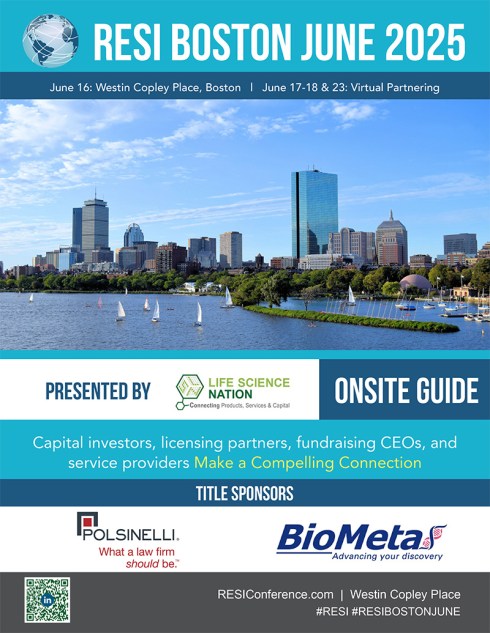
The RESI Boston June 2025 Program Guide Release

10 Jun

By Dennis Ford, Founder & CEO, Life Science Nation (LSN)

DF-News-09142022The official program guide for RESI Boston, June 2025 is now available! Redefining Every Stage of Investment (RESI) is built to connect life science and healthcare innovators with a global network of investors representing a wide range of funding strategies, from Seed through Series B and beyond.

This guide provides an overview of what to expect throughout the conference, detailing all of the content and layout for our in-person event on June 16th. Inside, you’ll find the full agenda, speaker bios, panel descriptions, and key information to help you navigate your RESI experience. Whether you’re participating in investor meetings, pitch sessions, workshops, or ad hoc networking, this guide is your resource to stay informed and get the most out of RESI Boston.

Access the full guide here:

Introducing the Investor Judges for the Innovator’s Pitch Challenge at RESI Boston 

10 Jun

By Claire Jeong, Chief Conference Officer, Vice President of Investor Research, Asia BD, LSN

RESI Boston takes place on June 16, and Life Science Nation is pleased to announce the investor judges participating in this event’s Innovator’s Pitch Challenge (IPC). With more than 50 companies presenting across 14 sessions, the IPC offers life science startups a high-impact opportunity to gain visibility, pitch directly to active investors, and receive valuable feedback in real time.

Each session will feature investor and strategic partner judges with expertise spanning therapeutics, medical devices, diagnostics, digital health, and life science tools. Following every pitch, judges will lead a live Q&A to assess the opportunity and share insights from the investor perspective.

Every IPC company will also have a dedicated table in the RESI Exhibition Hall, making it easy for attendees to connect with founders and learn more.

All registered attendees will be invited to vote online for their favorite companies, and the Top 3 companies will be announced at the end of the day’s cocktail reception. Winners will receive a prize and be featured in an upcoming issue of the LSN newsletter.

Scroll down to see which investors will serve as judges for this year’s IPC:

John Abeles
John Abeles
General Partner
Northlea Partners
Chris Aleong
Chris Aleong
VP
BioIdeations
Christina Ansted
Christina Ansted
Sr. Managing Partner
RCP Venture Capital
Jit Basak
Jit Basak
Investor
Launchit Ventures
Jay Batchu
Jay Batchu
Entrepreneur in Residence
Xontogeny
Randy Berholtz
Randy Berholtz
Sr. Advisor
Mesa Verde Venture Partners
Jeff Berman
Jeff Berman
Managing Partner & Co-Founder
Big Tree Innovation Fund
Kalyan Chakravarthy
Kalyan Chakravarthy
Sr. Manager, External Innovation
Ipsen S.A.
Jo Chaturvedi-Durant
Sr. Investor & Venture Partner
VU Venture Partners
Shailesh Chavan
Shailesh Chavan
Managing Partner
Transatlantic Life Science Venture
Nicolas Cindric
Nicolas Cindric
Partner
Yahara Ventures
Javier Coindreau
Javier Coindreau
General Partner (Boston)
Sila B Health Ventures
Bettina Ernst
Bettina Ernst
Director
BERNINA BioInvest
Alex Fair
Alex Fair
Managing Partner
Medstartr Capital
Dimitra Georganopoulou
Managing Director
Qral Ventures
Serban Georgescu
Serban Georgescu
Due Diligence Chair
Mass Medical Angels
Ken Grise
Ken Grise
Principal
Sixty Degree Capital
Marco Gulla
Marco Gulla
Investment Associate
Health Technology Holding (HTH)
George Hong
George Hong
Investor
H Advisor Group
Guanghui Hu
Guanghui Hu
Venture Partner & CEO
Viva BioInnovator
Kristin King-Jankiewicz
Member & Head of Group Management
Boston Harbor Angels
Claire Leurent
Claire Leurent
Managing Director
AbbVie
Vivian Li
Vivian Li
SA
K2 Venture Partners
Ali Malihi
Ali Malihi
President
Back Bay Group
Nune Martiros
Nune Martiros
Sr. Associate
Paladin Capital Group
Jim McGough
Jim McGough
Managing Partner
Mid Atlantic Bio Angels
Ralph Morales III
Ralph Morales III
Venture Partner / Executive-in-Residence
Aquillius Ventures
Jose Navarro
Jose Navarro
Scientific Director & Partner
quadraScope Venture Fund
Lizzie Ngo
Lizzie Ngo
Principal
Longwood Fund
Yoichi Omae
Yoichi Omae
BD Director
Asahi Intecc USA Inc
Soyoung Park
Soyoung Park
General Partner
1004 Venture Partners
Chandra Ramanathan
Chandra Ramanathan
VP and Head of External Innovation, Life Sciences Innovation Group
Danaher Corporation
Nans Rivat
Nans Rivat
VP
PACE Healthcare Capital
Shreya Sawant
Shreya Sawant
Venture Partner
Aquillius Ventures
Pranav Seshadri
Pranav Seshadri
Investor
T.Rx Capital
Jason Shieh
Jason Shieh
Partner/Co-Founder
HelixPoint Capital
Oliver Sims
Oliver Sims
Investment Manager
Octopus Ventures
Alex Spicer
Alex Spicer
M&A Associate
SERB Pharmaceuticals
Sri Sriadibhatla
Sri Sriadibhatla
Director, Healthcare Investment Group
Ben Franklin Technology Partners of Southern Pennsylvania
Isaac Stoner
Isaac Stoner
EIR
Slater Technology Fund
Asad Taherbhoy
Asad Taherbhoy
Angel Investor
Angel Star Ventures
Wei Tao
Wei Tao
Board Director & Chair, Bio/Genomics
Life Science Angels
Vince Wong
Vince Wong
CEO and President
BioCrossroads
Chris Yoo
Chris Yoo
General Partner and Managing Director
Xcellerant Ventures
Doug Zingale
Doug Zingale
Co-Founder & Managing Partner
Blue Goose Capital
Patrick-Cooke
Patrick Cooke, PhD
Associate
Merck Digital Sciences Studio
SERB Pharmaceuticals
Samuel Freedman
M&A Analyst
SERB Pharmaceuticals

Navigating CFIUS: Awareness and Opportunity for Biotech Startups in a Changing Investment Landscape

10 Jun

By Sougato Das, President and COO, LSN

Sougato-Das

CFIUS, short for the Committee on Foreign Investment in the United States, is an interagency committee tasked with reviewing foreign investments into U.S. companies that may present national security risks. Though created in 1975, CFIUS has recently expanded its focus to include sectors such as biotechnology, in light of evolving global priorities and concerns.

A recent presidential memorandum has signaled heightened attention to biotech transactions, particularly those involving sensitive technologies and personal health data. The memo also outlines a more streamlined process for investment reviews involving allies of the United States, while suggesting a more cautious stance toward investments from jurisdictions deemed non-aligned. Although not yet codified into law, these signals indicate that the regulatory environment is tightening for some international investors.



Biotech startups should not interpret this shift as a prohibition, but rather as an evolving framework that will increasingly require awareness, strategic planning, and legal clarity when engaging global investors and partners. This is particularly relevant for companies with potential funding interest from regions such as Asia, including China and, more recently, jurisdictions currently under enhanced CFIUS scrutiny.

Global Fundraising: A Numbers Game with Strategic Implications

For over a decade, Life Science Nation has been building and guiding early-stage companies through capital fundraising and licensing campaigns from a global perspective. There are two fundamental reasons why this work must be approached as a numbers game. In today’s fragmented global funding landscape, visibility, volume, and variety are essential for finding and securing the right partners. First, if you confine your outreach to your home region or country, you can quickly exhaust the pool of suitable targets. Second, when you do find a lead investor or licensing partner, they typically want to see a geographically diversified syndicate. As development progresses and commercialization strategies take shape, having informed and engaged partners across key global regions becomes not optional, but essential.

Failing to secure global relationships early on, whether due to limited strategy, policy restrictions, or lack of access, can create real obstacles to growth. Overly restrictive capital policies risk unintentionally slowing innovation and creating pressure for startups to move offshore. In an increasingly interconnected life science ecosystem, enabling global access to capital and partnerships is critical to maintaining U.S. leadership in biotech innovation.

Moving Forward

As the landscape for global biotech investment continues to evolve, early-stage startups will benefit from understanding CFIUS and related frameworks. While the regulatory terrain may shift, it still presents a significant opportunity for those who prepare strategically.

Early-stage biotech companies that navigate these cross-border dynamics with foresight and structure will be best positioned to engage international capital, generate high-value data, and build toward global commercialization.

Startups are encouraged to attend RESI Boston on June 16th or connect with industry experts for a deeper discussion. Register RESI Boston June now.