Hot Life Science Investor Mandate 1: Family Office Fund Seeking Early Stage Medical Devices

A family office/venture capital firm based in New York firm manages an evergreen fund that seeks to make seed, venture, and growth equity investments in early to mid-stage medical device companies, but will also consider secured debt to help revenue generating companies with short term cash flow issues. The firm will also consider pre-seed investments. The firm can allocate anywhere from $1M to $10M per company, but generally allocates around $8M. The firm typically does 3 rounds of financing with an initial investment of around $3M. The firm is geographically agnostic, but highly prefers to invest in companies that are based in the US. The firm seeks to make about 3-4 allocations in the next 6-9 months.

The firm is currently looking for medical device companies with a strong emphasis on products with a 510(k) regulatory pathway. In terms of subsectors, the firm is looking for products specifically in the areas of interventional radiology and cardiology, spine/orthopedics and minimally invasive surgery. The firm is generally opportunistic in terms of indication.

The firm is looking to invest in companies with a management team with a track record of success in the healthcare industry. However, the firm is generally flexible and does not require a full management team. The firm can assemble the management team over the course of the investment.

If you are interested in more information about this investor and other investors tracked by LSN, please emailĀ mandates@lifesciencenation.com

Hot Life Science Investor Mandate 2: Social Impact Angel Group Seeking Investments in Medical Technology and Healthcare IT

An angel network focused on social impact investing with chapters throughout the United States is currently looking for investments in healthcare. The group typically participates in seed and series A raises of $300,000-$1.5 million, but may take part in raises of up to $3 million. In general the group only considers opportunities in the USA and Canada, but the group will also consider global health companies located in the developing world.

The Group is open to opportunities in several industries, including healthcare technologies. The group does not invest in biotech drug development, but is interested in medical technology companies with lower capital requirements and a shorter path to commercialization. The group generally invests in companies that have completed product development and have a product on the market. The group is particularly interested in global health companies that are developing last-mile solutions for delivering healthcare in the developing world. Companies developing a product that is not regulated by the FDA, including consumer health, healthcare IT and lab equipment/lab software companies are more likely to be of interest.

The group typically invests in companies that have revenues, or which can demonstrate user traction among free users eg. via a successful trial or partnership.

If you are interested in more information about this investor and other investors tracked by LSN, please emailĀ mandates@lifesciencenation.com

Hot Life Science Investor Mandate 3: Large Pharma Group Seeking Investment, In-Listening and M&A Opportunities in a Number of Indications

A large pharma group based in the US is looking to form partnerships with development stage biotech companies via a variety of structures, including strategic venture investments, in-licensing, collaborations, and M&A. The firm is actively pursuing these opportunities and is willing to look globally.

The firm focuses on therapeutic assets in oncology (including immuno-oncology), immunology, and neurodegenerative diseases.Ā  The firm is also interested in fibrotic diseases of the liver (such as HBV). The firm is open to both biologic and small molecule opportunities, but is generally not focused on cell therapies such as CAR-T technologies. The firm will consider assets at any stage of development, but is particularly interested in outreach from companies developing early stage technologies.

If you are interested in more information about this investor and other investors tracked by LSN, please emailĀ mandates@lifesciencenation.com

Hot Life Science Investor Mandate 4: Corporate VC Fund of Large Medtech Firm Seeking Wide Range of Medical Device Investments

The corporate investment group that invests strategically on behalf of a large medtech firm uses a variety of structures to work with early stage medical technology companies, including both licensing relationships and equity investments on a case by case basis. The firm is a flexible investor, and the firm’s allocation sizes are wide ranging. The firm invests worldwide.

The firm invests in sectors that are relevant to its parent companies business groups including Cardiovascular, Restorative Therapies (including spinal implants, neuromodulation treatments for pain and urological disorders, deep brain stimulation, and neurovascular devices), Diabetes, and Minimally Invasive Therapies (including general surgery, gastrointestinal care, pulmonology, and respiratory care and monitoring technologies). The firm is interested in diversifying the firms product and services offerings within all of these four Groups and also in integrating new fields of information technology and services into the strategic areas, such as IT-enabled patient monitoring and contract management of provider facilities. The firm invests at a range of development stages but generally prefers to work with companies that have obtained clinical data regarding their asset.

If you are interested in more information about this investor and other investors tracked by LSN, please emailĀ mandates@lifesciencenation.com

Using CRM to Build A Data-Driven, Transparent Fundraising Campaign

By Lucy Parkinson, Senior Research Manager, LSN

lucy 10*10How is your financing campaign organized? Whether you’re deploying an in-house BD team to raise your round, or working with an investment bank or third-party marketer, the staff who execute your campaign need to have an efficient and reliable means of organizing the campaign and storing all the relevant data points that result from their actions. At LSN, we believe that using a cloud-based contact relationship management (CRM) system to organize your campaign is essential.

In this article, we’ll explore why we use CRM as the backbone of our campaign cloud infrastructure, and we’ll provide tips on how CRM can be used to improve the process and the results of your outreach.Ā  There are many CRM systems available at a low cost (typically $5-20 per user per month); LSN uses Salesforce.com, which will therefore be used as an example in this article. (While we recommend Salesforce.com to LSN clients, LSN has no affiliation with Salesforce).

figure_1_wp

Tracking Campaign Information

We’ve talked previously about the importance of creating a global target list of investors, and ofĀ tiering those leads to increase your campaign efficiency. By using a CRM system, your fundraising team can make full use of the investor information that you’ve gathered.

You can import your investor information into the CRM system, which will create an account page for each investor. You can create customized fields to track all your data points related to that investor. In a recent installment of the LSN Summer Reading Series, we provided a template that covers the most essential fields for a fundraising campaign:

  • Date of Last Email (Date Field): This should be filled in every time you send an email to a prospect. This will enable you to know the last time you reached out to a prospect.
  • Follow-up Date (Date Field): This field will tell you the next time you need to follow up with a prospect. By sorting your prospects based on this field, you can track who you should follow up with on any given date.
  • Date of Last Voice Mail (Date Field): This should be filled in every time you leave a voice mail with a prospect.
  • Status of Lead (Pick List Field): By qualifying accounts based on the criteria above, you will be able to prioritize your to-do list.
  • Notes: This is where you can track any significant details from previous conversations. Keeping these notes logged in a central location helps in juggling multiple investor dialogues.

These data points will allow the campaign team to easily organize their efforts – and indeed, Salesforce.com allows users to automatically track their emails to potential investors using the Email to Salesforce settings. One powerful benefit of the CRM system is that it can be used as the ‘source of truth’; rather than team members spreading information across emails, ExCel spreadsheets and meeting notes, all information is centralized in the CRM system. This allows the team to easily collate and share their information, and track the progress of the campaign.

Keeping On Track

CRM systems also include task and list management features that allow you to organize the work of your campaign. The fundraising team can create different account views to bring up certain targets that require action; the team may wish to view a list of all their Tier 1 targets that have yet to respond to outreach, or to view a list of all the investors that expressed interest in reviewing the company’s pitch deck but have yet to return to you with feedback. The task management features of the CRM system can be used to create a to-do list that manages all your required follow-up activities. By using these features, you can easily see what work needs to be completed by the end of the day, and also prevent necessary tasks from slipping through the cracks.

The Transparency Factor

One great benefit of using a CRM system is that it allows the fundraising company’s executive team to access the campaign team’s work at any time. By logging into the CRM system, you can create reports that will tell you how many emails and phone calls the team has been sending, and which investors have been responsive. The CRM system could also be used to track other useful data points, such as the general reasons provided by investors who have declined to participate in your round.

This information could be useful for managing an in-house fundraising team. But if you’re contracting a third party marketer, it’s essential that you have access to this information. LSN has often spoken to life science executives who are paying a retainer to an investment bank or a broker, but who have little insight on what this third party is doing. Which investors are they contacting, and how frequently? What message is the broker sending to these investors? CEOs typically only hear from their fundraising partner when an investor meeting has been booked – and that’s only the tip of the iceburg as regards fundraising activities.

To avoid this problem, LSN’s advisory arm always provides the fundraising company’s CEO with a login to access to the campaign CRM system. This allows the CEO to overview all the activities carried about by the fundraising team, and also to add their own meeting notes to the system in order to keep all campaign information centralized.

Taking the Next Step

It’s too easy to let a productive investor contact founder because of a failure to establish the next step in the process. However, a CRM system provides a structure to track the outcome of every interaction with your potential investors. After every meeting, a follow-up process should be carried out, including scheduling a second meeting if the investor is interested; you can use your task list to make sure that the next steps are planned out and then taken accordingly. In some cases, the investor may be currently unable to pursue the opportunity, but requests that you circle back at a later time. Perhaps the investor requests that you notify them once a certain trial has been completed, or a revenue milestone has been reached. You can set a follow-up task to remind you to contact the investor again in the future.

CRM is a flexible tool that can greatly increase your campaign outreach efficiency, serving both as a collective memory of the steps you’ve taken so far, and as a map of the path ahead. We strongly advise you to make use of this resource.


RESI Boston 2015 Big Pharma Panel Announcement

By Alejandro Zamorano, VP of Business Development, LSN

Alejandro 10*10

As RESI returns to Boston, so does one of the event’s most popular panels. The Big Pharma Panel features five high-level external innovation executives from top tier pharma companies, who will discuss their key motivators and strategies in depth. What indication areas are the most sought after? What can be expected in the due diligence process? How does an early stage entrepreneur interface with business development executives from pharmaceutical companies? LSN’s Big Pharma RESI Panelists will shed light on these questions and more.

Moderated byĀ Steve Yoder, Global Head, Specialty Pharmaceuticals Search and Evaluation, Bristol Myers SquibbĀ this panel will feature:

  • Michael Draper, Senior Director External Science & Partnering – East Coast, Sanofi
  • Tomas Landh, Vice President, Senior Principal Scientist Innovation Sourcing, Novo Nordisk
  • Kuldeep Neote, Senior Director, New Ventures/Scout, Johnson & Johnson Innovation
  • Kiran Reddy, Senior Director, Corporate Strategy, Biogen

Hear from big pharma executives as they explain how they engage with early stage startups, and how they like to be contacted. The speakers will help the audience understand their timeline for contact, and give advice on how to create a dialogue that leads to a relationship and an eventual alliance. If you need to understand the time frame and limitations of how big pharma corporate works, this expert session is crucial for you to attend.

RESI-Boston-wp

LSN Summer Reading Series Chapter 11: ā€œEmail Campaignsā€

By Michael Quigley, Director of Research, LSN

mike-2

This week, the LSN Summer Reading Series covers one of the most powerful tools in your fundraising arsenal: the outreach email.

From basics like mail merging and segmenting your list to sophisticated tools such as delivery scheduling and analytical tracking, this chapter covers how to use email to introduce your company to an audience of potential investors.Ā This chapter also explains the importance of targeting the right contacts when you send an email and of including clickable links in order to uncover which recipients are engaging with your message.

Click here to download/print the chapter PDF

We hope you find this chapter useful in moving your fundraising campaign for us. Next week, join us to read “Chapter 12: Anatomy of an Allocation Process.”

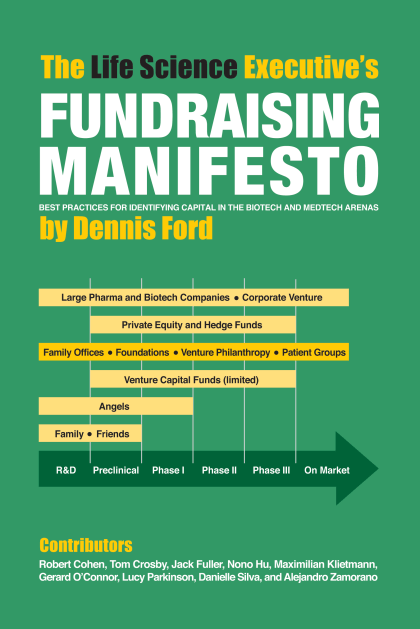
Enjoyed the preview? Buy now fromĀ Amazon.comĀ orĀ Barnes & Noble

Bookcover-Front