Seed Funding Hits Lows, Investor Pull Back, Sentiment Down — But Opportunities Remain for the Savvy

Sougato-DasAmid one of the toughest biotech markets in years, seed funding for young companies has fallen to its lowest level in a decade. According to Atlas Venture’s Bruce Booth, only about 55 biotech startups in the U.S. raised initial funding in the first quarter of 2025 — a nearly 70% drop compared to the peak in early 2021.

“It is getting tougher. When there’s no IPO market, there’s no B rounds, and then there’s no A rounds, and there’s no seed rounds. It all trickles down,” said Søren Møller, managing partner of seed investments at Novo Holdings. Søren also conveyed that due to the market confusion caused by tariffs and the shifting positions thereof, his $160B fund would slow investment until there is more certainty. With regards to IPOs, the CEO of the same fund advised that now is “probably” not a good time to IPO, unless you have to do so, due to the view on interest rates being unclear. Søren’s sentiments were echoed by both Roche and Merck & Co. on the deal-making front.

To add insult to injury, BioCentury’s biotech risk sentiment survey found “Biotech is reeling, fearful and furious about the fallout of tariffs, FDA and NIH policies.” BioCentury reported that the perfect storm, including market downturn, regulatory uncertainty, negative perception of scientific research, and the possible loss of the US as the leader in global biomedical innovation, could signal one of the worst times for the industry “in decades.”

But not everyone sees this contraction as a negative. As Booth wrote in his blog on biotech venture creation, “it’s a great time to start new biotech companies” precisely because of the scarcity. With fewer startups competing for capital, talent, and patients, the few companies that do form today could become tomorrow’s market leaders.

The “supply-demand” dynamics favor the brave: when new company creation slows, venture firms creating startups have a clearer runway. As Booth put it, “With scarce startup supply, when investor demand returns — which it will — founding and early equity holders will be rewarded.” He pointed to past examples like Alnylam (founded in 2002) and Nimbus (founded during the 2009 downturn) as proof that tough times can seed future giants.

Beyond the U.S., global funding opportunities could offer a lifeline for biotech founders. As domestic venture firms tighten their wallets, international investors — including Asian corporates, and Middle Eastern sovereign wealth groups — are increasingly active in scouting early-stage innovation. Seeking funding globally not only diversifies a startup’s investor base but also opens doors to broader partnership and commercialization strategies.

As Booth reminds early-stage entrepreneurs, “big doses of discipline are important medicine” — with startups needing to sharpen plans, tighten budgets, and be open to strategic partnerships. But for those who endure, today’s brutal market could create the “emerging stars of the 2030s.” At Life Science Nation, we’ve tracked hundreds of companies that have attended RESI, used our investor database, and attended our entrepreneurial education courses, and know one thing for sure: It is ultimately a numbers game. The more investors you meet, the higher your chances of getting funded or additional funding are. That’s why the RESI conferences feature hundreds of investors funding pre-seed to B rounds – to help life science companies in times like these fast-track their fundraise.

Sources:

  • Biotech seed rounds sink to lowest level in years as industry slump drags on by Kyle LaHucik, Endpoints News
  • Biotech Venture Creation: The Benefits of Scarcity by Bruce Booth, LifeSciVC blog
  • Biotech sees a new, hard era ahead, survey finds: BioCentury’s Risk Sentiment survey, BioCentury
  • Novo Holdings dials back investment as Trump stymies economic forecasters, Bloomberg, as reported by Fierce Biotech

Introducing Haystack Corner – Insights from Juan Carlos López and Andrew Marshall of Haystack Science

By Dennis Ford, Founder & CEO, Life Science Nation (LSN)

DF-News-09142022Life Science Nation is excited to introduce a new feature in the Next Phase newsletter: Haystack Corner, highlighting insights from The Needle, the weekly publication by Juan Carlos López and Andrew Marshall at Haystack Science.

The Needle delivers sharp, actionable updates focused on the earliest stages of biotech commercialization. From translational breakthroughs to the business strategies shaping tomorrow’s therapeutics, The Needle offers a unique perspective for entrepreneurs, researchers, and investors working to move discoveries from the lab to the market.

About the Contributors

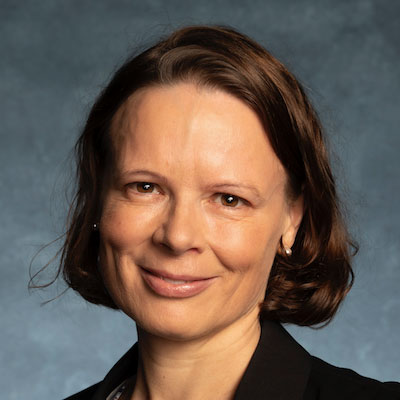
  • Juan Carlos López, Ph.D. — Former Chief Editor of Nature Medicine, with deep expertise in neuroscience, academic collaborations, venture philanthropy, rare diseases, and translational research.
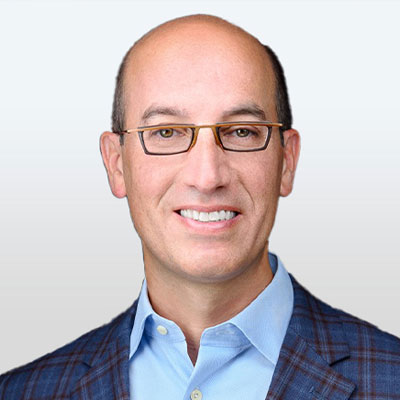
  • Andrew Marshall, Ph.D. — Former Chief Editor of Nature Biotechnology, a recognized leader in biotech venture creation and scientific commercialization.
Juan-Carlos-Lopez
Juan Carlos Lopez
Andy-Marshall
Andy Marshall

LSN is proud to bring Haystack Corner to Next Phase readers, starting with this issue. LSN encourages you to explore and share these curated insights with colleagues and peers who are passionate about advancing life science innovation.

The Needle. Issue #1

Hot Investor Mandate: CVC Arm of Global CDMO Seeking Co-Investment Opportunities from Seed to IPO in Biotech – Open to Biologics, Antibodies, Proteins, DNA/RNA, Vaccines, and More

Founded in 2018, the corporate venture arm of a leading global Contract Research, Development and Manufacturing Organization is open to investing in anywhere from seed to IPO financing rounds. Initial investment size can vary and follow-on investment is possible. The fund primarily seeks opportunities in the US, and is open to China and Europe as well. The fund does not lead rounds and prefers companies with a lead investor in place. Depending on the investment size and deal terms, the fund may consider an observer seat or board seat. The fund makes equity investments only and does not have an equity-for-service model. 
 
Separately from the corporate venture arm, the parent corporation also runs a program which collaborates with over 25 partners, such as accelerators, seed/venture capital firms, incubators, and other similar programs to provide startups various tools and resources to accelerate biotech assets development. Startups must be an active participant or referred by a Program Partner to be eligible. 

The fund will consider a wide range of biotech assets, from antibody drug, protein therapeutics, vaccines, DNA and mRNA drugs. The fund is also open to orphan drugs. One type of asset that the fund does not consider cell and gene therapy. 

The fund does not lead investments rounds therefore would only invest when a lead investor is secured. The fund is open to working with new or first-time founders but hopes to see that the team has a good supportive network. The fund is interested in working with founders who are open to advice and suggestions. 

If you are interested in more information about this investor and other investors tracked by LSN, please email salescore@lifesciencenation.com

Hot Investor Mandate: U.S.-Based Venture Capital Firm Backed by Health System Seeks Medical Technologies to Improve Quality and Health Outcomes

A venture capital firm founded in 2014 is managing $150 million fund on behalf of a large, not-for-profit health system in the United States. The firm has closed a second $150 million venture and growth equity fund. 
 
As of 2025, the firm has initially closed a third fund and spun out as an independent venture capital firm. The firm has committed $150M, and the firm will seek to have a final close later in the year with additional LPs. Typical equity allocations had ranged from $8-15 million over the life of a company. The firm is looking primarily for opportunities across the US, and the firm would consider international companies with strong US advocacy and technology that can be deployed to the US market. 

The firm is looking for innovative medical technologies that are in line with the organization’s mission, improve quality and convenience, lower cost and improve health outcomes. Examples may include patient management systems for healthcare providers, home care systems, or monitoring devices for chronic disease management. The firm typically works with mature companies with revenue, consumer traction, or some validation on their technology. 

The firm is looking for solid management teams that show track records of success. The firm provides healthcare system expertise to portfolio companies to refine existing solutions, while expanding their adoption within and beyond its healthcare system. Providence Ventures is open to investing as a lead or co-investing along a syndicate. 

If you are interested in more information about this investor and other investors tracked by LSN, please email salescore@lifesciencenation.com

Hot Investor Mandate: Asia-based Private Equity Firm Invests Opportunistically in Life Sciences, including Therapeutics, Medical Devices, Digital Health and Diagnostics 

Founded in 1973, a private equity firm headquartered in Tokyo, Japan has a total capital commitment of its investment funds in Japan and overseas have approximately $8.5B USD. The life science investment team invests in breakthrough innovations that potentially addresses unmet medical need. The firm has a dedicated life science investment team and invests in early and venture stage companies. For life science, the firm invests within $10M USD per round. The firm invests opportunistically in the life sciences. The firm seeks an opportunity to invest in innovative therapeutics, medical devices, digital health, diagnostics, and healthcare services that are in discovery/development stage. The firm prioritizes new IP/NCE and modality over repurposed or reformulated products. The firm generally requires a seat on the board of directors or observers. 

If you are interested in more information about this investor and other investors tracked by LSN, please email salescore@lifesciencenation.com

Hot Investor Mandate: U.S.-Based Venture Capital Firm Interested in Pre-Seed to Series A Opportunities in AI for Healthcare, Diagnostics, and Medical Devices 

A venture capital firm was founded in 2014 and is based in Palo Alto, CA. The firm invests across multiple industries – within healthcare, the firm is interested in AI in healthcare and medical devices. The firm manages 3 funds right now, and the latest fund closed in 2022. The firm typically invests $1M-$2M initial check per company, and reserve 2/3 of the fund for pro rata. The firm prefers to lead the round and also open to co-investment. The firm typically makes 7-10 new investments per year, and only focuses on companies based in North America (USA & Canada). Furthermore, the firm has a considerable value-add in supporting companies leveraging their former entrepreneur and operator experience, and their CXO network which includes over 30 executives from Fortune 1000 companies. 

The firm is open to all subsectors of AI in healthcare, diagnostics and all classes of medical devices. The firm is indication agnostic and looks primarily at early-stage companies, particularly at the seed pre-Series A stage. 

The firm does not have a particular management team requirement, as it primarily assesses the technology itself. If leading the round, the firm will take a board seat after an investment. 

If you are interested in more information about this investor and other investors tracked by LSN, please email salescore@lifesciencenation.com

Why Do 90% of Life Science Startups Fail? Because the Science Never Gets Out of the Way 

By Dennis Ford, Founder & CEO, Life Science Nation (LSN)

DF-News-09142022The Core Challenge: Science Without Commercialization Fails

Despite strong science, most life science startups struggle to scale because their founders lack the commercial expertise and support to navigate the investor landscape. Traditional accelerators often fall short, offering generic mentorship rather than hands-on, market-facing guidance.

Life Science Nation (LSN) addresses this gap by preparing startups to succeed on the global stage. From seed to Series B, LSN equips companies with the narrative, materials, and investor access needed to execute targeted global roadshows. Startups don’t just get introductions—they get a playbook for matching with the right partners, at the right stage, for the right reasons.

A Two-Way Innovation Bridge

LSN’s platform operates in both directions. It helps startups leave their region to reach global capital and commercial partners and connects international investors and licensing firms with often overlooked emerging markets. LSN is the connective tissue linking regional science to global dealmaking from LATAM to China to Europe and North America.

Regions that succeed in commercialization align government, academia, and industry. LSN brings the final piece: a global engine that sources, vets, and connects startups with the right capital and channels to commercialize.

Most Regions Have Science. Few Have a Commercialization Engine.

Virtually every country boasts scientific talent and academic excellence, but most lack the infrastructure, regulatory flexibility, and partner networks to commercialize innovations globally. LSN fills that gap by preparing startups for the global market and helping international players tap into new regional pipelines. The result: cross-border dealmaking, accelerated product development, and a more connected global life sciences sector.

RESI & LSN Labs: Global Success Starts Here

LSN’s commercialization platform is anchored by RESI (Redefining Early Stage Investments), a global conference series that connects startups and investors through curated, stage-specific matchmaking. With over $5 billion raised by RESI alumni, the event has become a trusted launchpad for early-stage fundraising.

Startups also gain access to the Global Partnering Campaign (GPC) and LSN Labs—a standardized, education-driven accelerator that teaches narrative development, market fit mapping, and investor targeting. It’s a proven system that replaces chance with structure.

The Missing Capital Layer: Early-Stage Therapeutics Fund

To close the early-stage funding gap, LSN is co-launching a $50 million venture fund in partnership with a few strategic stakeholders (unannounced). The fund provides micro-investments, fractional executive support, milestone-based coaching, and access to a global CRO network, offering a de-risked, high-support runway from discovery to Series B. Fully integrated with LSN’s ecosystem, the fund provides capital, coaching, and commercialization support in one unified package, creating a new template for therapeutics’ sourcing, shaping, and scaling.

A Blueprint for the Future of Biotech Commercialization

LSN is rewriting the life science commercialization playbook. By integrating structured education, curated global networks, and early-stage capital, LSN is helping science finally get out of its own way. In doing so, it’s reducing the failure rate of life science startups and ensuring more breakthroughs reach patients worldwide. This is the new commercialization model—where science and business move forward, together.