Interview with Scott Kozak, Vice President of Research & Development, with contributions from Dr. Angela Lek, Vice President of Research at Muscular Dystrophy Association (MDA) By Caitlin Dolegowski, Marketing Manager, LSN
I had the opportunity to interview Scott Kozak, Vice President of Research & Development, with contributions from Dr. Angela Lek, Vice President of Research, both at the Muscular Dystrophy Association (MDA), a title sponsor at upcoming RESI Boston. As leading figures in MDA’s mission to advance treatments and find cures for neuromuscular diseases, Scott and Angela bring a wealth of experience and a shared dedication to improving patient outcomes. In this interview, they discuss their professional backgrounds, the latest advancements in research, and offer valuable advice for early-stage companies in the field of Duchenne muscular dystrophy (DMD) research.
Caitlin Dolegowski (CD): Scott, can you share a bit about your background and what led you to your current role as Vice President of Research & Development at the Muscular Dystrophy Association?
MDA: Sure. I have been in the pharmaceutical industry for 35 years. Most of that time has been concentrated on licensing & business/corporate development. I have held senior positions in Big Pharma & Specialty Pharma before concentrating on the entrepreneurial route, co-founding 3 companies along with my own consulting company. As an Entrepreneur In Residence for Yale Ventures, The University of Connecticut Center for Entrepreneurial Innovation, and Connecticut Innovations, I have helped many start-ups with business plans and fundraising as well as helping university faculty & students start companies. My role at MDA was a perfect fit for the experience I have gained throughout my years in the industry. I support the Research areas from a business perspective, which covers strategy, negotiation and other partnering activities for MDA Grants, Venture Philanthropy, MOVR, our patient registry of Real-World Data (RWE), and KickStart, a program encompassing MDA in-licensing IP and partnering for the development of therapeutics for the first time.
CD: What advice would you give to early-stage companies looking to access grants for DMD research, and what resources or programs does MDA offer to support them in this process?
MDA: Advice: It is never too early to reach out to MDA’s research team to initiate conversations about your drug or device development plans. We can provide disease-specific insights, patient perspectives, guidance on trial design as well as help connect you with the right experts in the field. We also highly recommend engaging with TREAT-NMD’s Advisory Committee for Therapeutics (TACT) to receive a comprehensive review on your drug development plans by a multidisciplinary team of experts in the neuromuscular disease space: https://www.treat-nmd.org/what-we-do/tact/
Resources/programs: MDA Venture Philanthropy (MVP) awards early-stage companies with promising therapies in development to treat neuromuscular conditions: https://www.mda.org/science/mda-venture-philanthropy
CD: As we explore innovative approaches in DMD treatment, can you explain the significance of Myosana’s non-viral delivery platform and how it differs from current viral delivery methods?
MDA: Myosana’s non-viral platform differs from AAV-based delivery methods because the therapeutic transgene is not packaged in an existing biological delivery vehicle. Instead, the platform includes proprietary components to deliver DNA that is stable in circulation and can assist in movement from blood vessels to muscle by targeting the GLUT4 transporter that is enriched in skeletal and cardiac muscles. The GLUT4 transporter naturally undergoes trafficking from internal stores to the muscle surface and then back again. The Myosana platform is designed to hitch a ride on GLUT4, leading to internalization of the cargo. Once inside the cell, the DNA cargo is optimized for nuclear targeting and expression.
Myosana’s non-viral delivery platform to deliver full-length dystrophin is mutation agnostic and is anticipated to benefit the entire DMD patient population. In addition, the technology overcomes known hurdles associated with current viral delivery methods utilized in gene therapy such as adeno-associated viruses (AAV) by: 1) not limiting gene size; 2) potential for repeat dosing due to lack of immune response; 3) enriched cardiac and skeletal muscle targeting via the GLUT4 receptor; 4) a predicted decreased cost of goods and better scalability.
CD: What are the potential advantages of delivering the full-length dystrophin gene compared to current microdystrophin approaches?
MDA: Full-length gene delivery of dystrophin at sufficient doses is anticipated to restore full functionality of the dystrophin protein at the sarcolemma, thus achieving a better result than current microdystrophin gene replacement therapy developed for DMD. Microdystrophin gene constructs currently in clinical development are approximately a third the size of full-length dystrophin and can at best achieve a milder Becker Muscular Dystrophy phenotype.
CD: How might Myosana’s technology address some of the limitations of existing gene therapies for DMD, such as gene size restrictions and the inability to repeat doses?
MDA: Currently, patients who test positive for pre-existing AAV antibodies are currently not eligible to receive AAV-based therapies due to immune-related safety concerns. This also precludes patients from being able to receive AAV-based therapies more than once. Myosana’s non-immunogenic platform is not anticipated to exclude any patients based on pre-existing immune concerns. Importantly, current gene therapy technologies are not optimized for durability, hence the ability to re-dose presents a very attractive option for Myosana’s platform.
Myosana’s non-viral delivery platform can be adapted to deliver gene cargoes without the size limitation of AAV. This opens doors for gene replacement therapy across a range of NMDs with genes that exceed the size limit for AAV packaging (e.g. Titin, Nebulin, LAMA2, Dysferlin, RYR1). The lack of size limitation also makes fine-tuning regulation of the transgene expression theoretically feasible by allowing for the use of native promoters and or additional regulatory elements.
CD: Could you elaborate on the mutation-agnostic nature of this approach and its potential to benefit the entire DMD patient population?
MDA: Despite FDA approval for exon skipping drugs for Duchenne (eteplirsen, golodiresen, casimersen, vitolorsen), there is still significant unmet need for the DMD patient population. These specific drugs target only a subset of patients with mutations in hotspot exons of the DMD gene, excluding those with pathogenic mutations that do not fall in exons 45, 51, 53. The recently approved Elevidys gene replacement therapy delivers a truncated version of the dystrophin gene that aims to achieve a milder Becker-like phenotype in patients. The ability to deliver sufficient quantities of full-length dystrophin may be necessary for the maximum achievable benefit and should be helpful to all DMD/BMD patients regardless of their disease-causing mutation.
CD: How does MDA’s support for Myosana’s research align with the organization’s history of funding DMD research, dating back to the identification of the dystrophin gene in 1986?
MDA: MDA has a strong track record in funding DMD research, dating back to the 1980s when we funded Dr. Louis Kunkel who discovered the dystrophin gene as the disease-causing gene responsible for DMD. Over the years, MDA has funded a range of DMD projects ranging from basic science research to clinical trials. Importantly, MDA supported Dr. Jeffrey Chamberlain and his research into understanding the function of dystrophin and whose pivotal findings have enabled the identification of the most functionally important regions of dystrophin. This vital knowledge has enabled the generation of miniaturized dystrophin gene therapies pursued by several companies. MDA also funded Dr. Jerry Mendell who conducted early AAV-based gene therapy trials and pioneered systemic delivery for muscular dystrophies. We continue to support cutting edge therapy development, identifying new technologies that can fill an unmet need in DMD. Myosana was selected for investment via our MVP program committee because their platform represents an alternative option to viral-based gene therapies and potentially holds tremendous therapeutic benefit through the restoration of the full-length dystrophin gene.
CD: What are your expectations for the development of genetic treatment options for DMD patients in the coming years?
MDA: Our expectation for genetic treatment options is to ensure that every patient is eligible for treatment that can restore dystrophin to therapeutic levels that is sustained over many years, thus allowing patients to life longer and more independent lives.




 Limited Openings for 1 Medtech and 1 Therapeutics Pitch at RESI Boston!

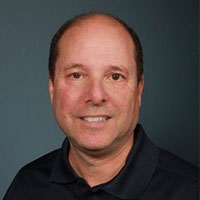 Scott Kozak
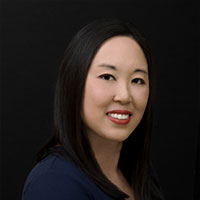 Dr. Angela Lek


 Next Phase Newsletter