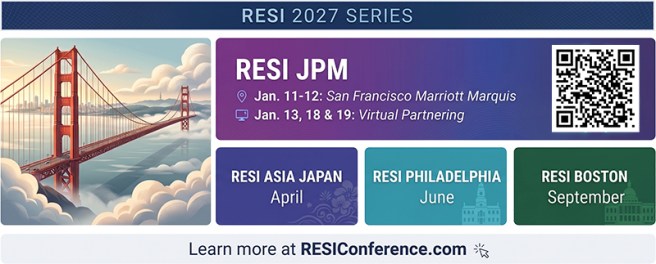
Help Shape Group Hotel Rates for Biotech Week Boston & RESI 2027: Take the 30-Second Lodging Survey

By Caitlin Dolegowski, Program Director, LSN

As the life science calendar ramps up, planning is already actively underway for next year’s Biotech Week Boston and the concurrent RESI Boston partnering conference.

Every autumn, thousands of early-stage biopharma and medtech founders, active investors, corporate pharmaceutical business development executives, and service providers descend upon Massachusetts. While the week delivers immense value through high-stakes dealmaking, one persistent hurdle facing attendees year after year is Boston’s notoriously tight lodging market.

To help our community manage travel overhead and secure prime accommodations, the Life Science Nation (LSN) and RESI conference operations team is currently actively negotiating discounted room blocks with premier 4-star properties across the Back Bay and Copley area – right in the central corridor of the week’s key activities.

To ensure we secure the deepest volume discounts and reserve the appropriate room inventory for your team, we need your direct input.

Why Lodging in Boston Requires Advance Coordination

Hotel pricing across central Boston spikes significantly during Biotech Week, driven by global industry demand. Individual reservations made late in the cycle often face exorbitant rack rates or require staying far outside the primary event clusters.

By consolidating the collective purchasing power of our attending founders, investors, and regional tech hub delegations, LSN negotiates dedicated group blocks designed to:

  • Cap Peak-Rate Volatility: Lock in pre-negotiated, below-market room rates during one of the city’s highest-occupancy weeks.
  • Keep Teams Centrally Located: Anchor attendees within walking distance of The Westin Copley Place and key partnering venues, eliminating unnecessary commute friction across town.
  • Guarantee Sufficient Inventory: Provide your executive team, board members, and business development leads with confirmed space before room blocks sell out.

Take the 30-Second Lodging Survey

Our room block allocations and target rate negotiations directly depend on the aggregate requirements of the companies planning to participate.

Whether your organization plans to send a single executive or an entire delegation, please take 30 seconds to share your general lodging preferences:

Take the 30-Second Biotech Week Boston Hotel Survey

(The survey is completely anonymous, requires no login, and takes under a minute to complete.)

What Happens Next

Your feedback on target price points, stay duration, and room count will directly equip our negotiation team as we finalize contracts with Back Bay hotel partners in the coming weeks. Once group blocks are locked in, confirmed booking links and preferential access will be shared with registered delegates and newsletter subscribers.

Thank you for helping us make Biotech Week Boston both highly productive and cost-effective for the early-stage life science community.

For any specific questions regarding group delegations, corporate sponsorships, or partnering registration, please reach out to the RESI team at resi@lifesciencenation.com.

Take the 30-Second Biotech Week Boston Hotel Survey

The Problem Isn’t Access to Capital. It’s Being Investable. Why early-stage life science companies need a commercialization engine, not another introduction

By Dennis Ford, Founder & CEO, Life Science Nation (LSN)

For years, LSN ran an investment banking program for early-stage life science companies. It taught us something important: capital-raising solutions work best when a transaction is imminent. For most early-stage companies, it isn’t. Seed, Series A, and Series B companies are still working through the scientific, clinical, regulatory, commercial, and financing risks that determine whether investors will engage. They pitch technology and market potential. Investors ask what’s been proven, which risks have been retired, and what evidence is still missing. More introductions won’t close that gap. These companies need more than deal preparation. They need a commercialization process that can run for months or years.

The Commercialization Engine
LSN is building one with global partners: universities, research institutes, regional clusters, and innovation programs with technology-rich ecosystems. Our partners advance discoveries, generate evidence, and retire development risks. LSN provides assessment intelligence, investability preparation, and access to the global capital and licensing marketplace. LSN’s agentic AI engines support this process. They help evaluate companies through the eyes of investors and licensing partners, an approach already used with more than 250 clients. They also identify and rank relevant global capital and licensing targets.

Stage Commercialization Capability
Scientific assessment and de-risking Scientific and commercialization partners
Investability preparation LSN Investability Assessment, LSN Labs, de-risked decks
Partner identification LSN Matching Engine and Global Target Lists
Campaign execution BD Assist
Global partnering RESI Conference Series

Companies enter wherever their readiness puts them. Agentic AI tools are becoming widely available. LSN’s advantage is the global network, relationships, proprietary databases, and market intelligence built through years of direct work with investors, licensing partners, and companies. That depth of intelligence goes well beyond the cursory matches available from web searches.

BD Assist: Where Preparation Becomes Execution
A seasoned CEO may know a few dozen investors and can find a few hundred more. That still isn’t enough. LSN’s Matching Engine generates a Global Target List of 800–1,000 prospective capital and licensing partners. BD Assist puts that intelligence to work through sustained outreach, engagement tracking, and follow-up over the 9–18 months that early-stage campaigns can require. The CEO leads investor relationships, negotiations, and transactions. LSN manages targeting intelligence, sets up the meetings, and provides campaign support. The cost is $5,000 a month, with no success fee. LSN leverages databases that capture current and forward-looking mandates and historical VC and Pharma transactions, then integrates into all of LSN’s RESI events to add face-to-face or virtual meetings with investors and licensing partners worldwide.

Who Is the Perfect Fit for BD Assist?
The ideal client is an experienced life science CEO who knows how to raise capital and has an investable asset and a credible development plan. What they lack is the global reach and campaign infrastructure to pursue hundreds of prospective investors and licensing partners. This CEO doesn’t need someone to explain fundraising or negotiate a term sheet. They need a dedicated team to identify the right global targets, run a disciplined campaign, and keep opportunities moving while they run their company. BD Assist is not for every company that needs money. Companies still working through fundamental scientific or investability issues may first need assessment, de-risking, and preparation.

The CEO knows how to raise the money. LSN provides the global intelligence and reach, including meeting setup and campaign infrastructure, to help them find it.

To see whether BD Assist is the right fit for your company, contact the LSN team. LSN BD will provide a free investability assessment report, show you what your global target list should look like, and offer commentary on your messaging for your target audience.

Get Your LSN Labs Company Assessment Report

Watch the Asset Flow, Not the Equity Flow: What I Learned at BioJapan

By Dennis Ford, Founder & CEO, Life Science Nation (LSN)

I recently returned from BioJapan, and the one takeaway I want to share with my global network is this: stop viewing Asia Pacific as a single market.

Regulations on both sides of the Pacific have made equity deals between the US and China much harder. But capital hasn’t stopped moving. It has changed form. Where equity deals run into friction, pharma licenses the asset instead. Chinese biotechs out-licensed $60 billion of assets in the first quarter of this year alone, up 73% from the same period a year earlier. That includes AstraZeneca’s deal with CSPC worth up to $18.5 billion. Large pharma faces a steep patent cliff before 2030, so its appetite for clinical-stage assets isn’t going away.

So watch the asset flow, not the equity flow. Here is what actually changed for me in Japan. I went in thinking about APAC as one market with local variations. It isn’t. It is three markets with three completely different jobs, and once you see them separately, the whole region stops looking confusing.

Three Markets, Not One

Each market plays a different role. China produces more assets than its domestic capital can absorb. Australia and Southeast Asia have the clinical infrastructure others can use. Japan and Korea stand out because they have both: a growing supply of academic innovation and deep corporate balance sheets looking for it.

Region Sell Side
(Early-Stage Assets)
Buy Side
(VC / PE / Pharma)
Characterization
Mainland China A large volume of high-quality assets, many moving faster than domestic capital can fund them Domestic equity is selective and US venture investment has pulled back, while global pharma licensing runs at record levels “The Asset Reservoir”
Japan, South Korea, & Taiwan A deep, largely untapped pool of academic assets, alongside mature platforms: ADCs and regenerative medicine in Japan, AI-driven discovery and diagnostics in Korea. Taiwan continues to produce world-class assets Active corporate venture arms and well-capitalized conglomerates “The Strategic Capital Track”
Australia & Southeast Asia Excellent trial infrastructure producing fast, high-quality human data Cross-border investors using local efficiency as a launchpad for global programs “The Clinical Fast Track”

Japan: Where Assets Meet Capital

Universities such as the University of Tokyo, Kyoto University, Keio University, Osaka University, Kobe University, and the University of Tsukuba, with RIKEN anchoring the discovery end, are producing a remarkable range of new assets across drugs, devices, diagnostics, and digital health. What’s new is a coordinated government effort to carry those assets to market:

  • AMED runs a 2:1 double match-up program. When a registered VC invests in a Japanese drug discovery startup, AMED can add up to twice that amount in non-dilutive funding, awarded per pipeline rather than per company, so a startup with three approved programs can draw on it three times.
  • MEDISO, under the Ministry of Health, Labor and Welfare, pairs ventures and university spinouts with experts in regulatory affairs, international development, and fundraising.
  • J-Bridge, run by JETRO, connects international innovators with Japanese corporates.

Three state-backed institutions, answering to different ministries, are working on the same bottleneck, and regional clusters are carrying that work into the field. For global investors and partners, that means Japanese assets now arrive better funded and better prepared, and Japanese corporate capital is easier to reach than it has been in years.

One Japanese advantage almost nobody prices correctly: Japan maintains a conditional, time-limited approval pathway for regenerative medicine products that can grant market access on evidence of probable benefit. No other major market offers that. If you have a cell or gene therapy and have never looked at Japan as a first market rather than a third one, you are leaving an option unexercised.

KBIC, the Kobe Biomedical Innovation Cluster, and LSN are working together to strengthen the commercialization pathway for Japanese life science companies through entrepreneur education, company preparation, capital formation, and international business development. At BioJapan in October, LSN presented joint sessions with KBIC, including one alongside MEDISO, on startup readiness and global fundraising.

RESI Asia: Tokyo and Kobe

That is why RESI is coming to Japan. RESI Asia Japan convenes in Tokyo on April 13, 2027, for global partnering. We expect to announce more events around RESI before and after the 13th

The Bottom Line

Regulatory boundaries have changed the rules, but pharma’s appetite for licensing shows the underlying science has never been more valuable. Watch the asset flow, not the equity flow. I look forward to seeing many of you in Tokyo next April.

RESI Asia Japan Registration:

Japan-base Registration (JPY)
Non-Japan-base Registration (USD)

Hot Investor Mandate 2: Japanese Pharma Launches New Global Initiative to Invest in Early-Stage Companies

A wholly-owned subsidiary of a global pharmaceutical company with headquarters in Japan is focused on developing innovative products in CNS, dermatology, and pain management. In particular, the pharma has established a strong global presence in transdermal patch products, and has several established products on the market.

The pharmaceutical company is seeking novel products for potential in-licensing and partnering opportunities to strengthen their current pipeline. In addition, the company is unveiling a new initiative through which the company will provide investment to early-stage technologies for which the company could help leverage clinical development. The size of investment will largely depend on the company’s stage of development, but the company is open to invest in seed to mid-stage companies. The company is seeking global opportunities.

With the new early-stage investment initiative, the company is interested in investing and partnering beyond the current focus areas: pain, CNS, and dermatology. Because of the company’s deep expertise in transdermal technology, the company can add significant values to companies with NCEs which can be delivered by patches. The company is also interested in reformulation and repositioning opportunities. The company will consider technologies as early as in development/pre-clinical.

The company has no specific management team requirements. The company has a development and regulatory team that can help companies with advancing towards FDA approval as well as Asian market entry, particularly Japan. Because the company has many resources and support to offer to early-stage companies, experienced management team and successful track record would be a plus, but not a requirement.

If you are interested in more information about this investor and other investors tracked by LSN, please email mandates@lifesciencenation.com.