By Dennis Ford, Founder & CEO, Life Science Nation (LSN)

I recently returned from BioJapan, and the one takeaway I want to share with my global network is this: stop viewing Asia Pacific as a single market.
Regulations on both sides of the Pacific have made equity deals between the US and China much harder. But capital hasn’t stopped moving. It has changed form. Where equity deals run into friction, pharma licenses the asset instead. Chinese biotechs out-licensed $60 billion of assets in the first quarter of this year alone, up 73% from the same period a year earlier. That includes AstraZeneca’s deal with CSPC worth up to $18.5 billion. Large pharma faces a steep patent cliff before 2030, so its appetite for clinical-stage assets isn’t going away.
So watch the asset flow, not the equity flow. Here is what actually changed for me in Japan. I went in thinking about APAC as one market with local variations. It isn’t. It is three markets with three completely different jobs, and once you see them separately, the whole region stops looking confusing.
Three Markets, Not One
Each market plays a different role. China produces more assets than its domestic capital can absorb. Australia and Southeast Asia have the clinical infrastructure others can use. Japan and Korea stand out because they have both: a growing supply of academic innovation and deep corporate balance sheets looking for it.
Japan: Where Assets Meet Capital
Universities such as the University of Tokyo, Kyoto University, Keio University, Osaka University, Kobe University, and the University of Tsukuba, with RIKEN anchoring the discovery end, are producing a remarkable range of new assets across drugs, devices, diagnostics, and digital health. What’s new is a coordinated government effort to carry those assets to market:
- AMED runs a 2:1 double match-up program. When a registered VC invests in a Japanese drug discovery startup, AMED can add up to twice that amount in non-dilutive funding, awarded per pipeline rather than per company, so a startup with three approved programs can draw on it three times.
- MEDISO, under the Ministry of Health, Labor and Welfare, pairs ventures and university spinouts with experts in regulatory affairs, international development, and fundraising.
- J-Bridge, run by JETRO, connects international innovators with Japanese corporates.
Three arms of government are working on the same bottleneck, and regional clusters like KBIC are carrying that work into the field. For global investors and partners, that means Japanese assets now arrive better funded and better prepared, and Japanese corporate capital is easier to reach than it has been in years.
One Japanese advantage almost nobody prices correctly: Japan maintains a conditional, time-limited approval pathway for regenerative medicine products that can grant market access on evidence of probable benefit. No other major market offers that. If you have a cell or gene therapy and have never looked at Japan as a first market rather than a third one, you are leaving an option unexercised.
KBIC, the Kobe Biomedical Innovation Cluster, and LSN are working together to strengthen the commercialization pathway for Japanese life science companies through entrepreneur education, company preparation, capital formation, and international business development. At BioJapan in October, LSN presented joint sessions with KBIC, including one alongside MEDISO, on startup readiness and global fundraising.
RESI Asia: Tokyo and Kobe
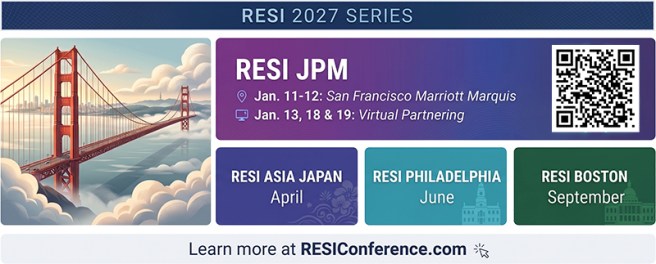
That is why RESI is coming to Japan. RESI Asia Japan convenes in Tokyo on April 13, 2027, for global partnering. We expect to announce more events around RESI before and after the 13th
The Bottom Line
Regulatory boundaries have changed the rules, but pharma’s appetite for licensing shows the underlying science has never been more valuable. Watch the asset flow, not the equity flow. I look forward to seeing many of you in Tokyo and Kobe next April.
RESI Asia Japan Registration:
| Japan-base Registration (JPY) |
| Non-Japan-base Registration (USD) |