Synaptic Bio, First-Place IPC Winner at RESI Boston: Building a Next-Generation Checkpoint Therapy

Synaptic Bio, the First-Place winner of the Innovator’s Pitch Challenge at RESI Boston, is advancing a tetravalent bispecific antibody designed to improve both the efficacy and tolerability of cancer immunotherapy. In this interview, the team shares how SYB302 applies immune synapse biology to PD-1 therapy, its path toward the clinic, and the investor and partnering conversations sparked at RESI. 
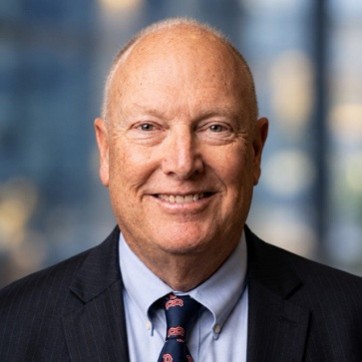
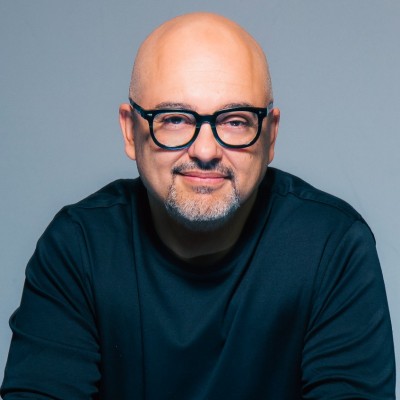
Yotam Levin
CEO and Co-Founder at Synaptic Bio
Caitlin Dolegowski
Program Director, LSN

Caitlin Dolegowski (CD): Introduce Synaptic Bio and the unmet need you are addressing in cancer immunotherapy. 

Yotam Levin (YL): Synaptic Bio is a spinout from Dr. Adam Mor’s lab at Columbia University, building bispecific antibodies around the biology of the immune synapse, the interface where a T cell and a tumor cell engage. Our lead program, SYB302, pairs a next-generation PD-1 blocker with IL-25 neutralization in a single asset. Checkpoint inhibitors (ICIs) transformed oncology, but they leave a lot of patients behind. Roughly 800,000 people in the US are treated with ICIs each year, but an estimated 480,000 don’t respond. About half overall develop immune-related adverse events, an expected side effect of bolstering the immune system, and an estimated 140,000 patients have to stop therapy because of severe ones. So there are two problems: too few patients respond, and too many who do respond are forced off a drug that was working. We designed SYB302 to address both concerns.

CD: How does your tetravalent bispecific platform, including SYB302, leverage immune synapse biology to differentiate it from existing checkpoint therapies? 

YL: Today’s PD-1 antibodies mainly work by blocking PD-1 from binding its ligand. SYB302 adds a physical mechanism. Its PD-1 arms are long, and the molecule is larger than a standard antibody. That size pushes PD-1 out of the immune synapse so it can’t suppress the T cell. We have a cool movie on our website at www.synaptic-bio.com to show this. The tetravalent design adds a second mechanistic layer. IL-25 is a homodimer, so each IL-25 molecule can bridge two SYB302 antibodies. That clusters PD-1 on the T cell surface and drives its internalization and degradation. IL-25 is abundant in the tumor microenvironment, so the effect is strongest where we want it. IL-25 is also a driver of immune-related toxicity. Neutralizing this cytokine gives us a built-in safety brake. In preclinical models, including colon, melanoma, and bladder tumors, SYB302 showed stronger tumor control than anti-PD-1 with markedly less organ damage. A single antibody designed to improve both efficacy and tolerability – we have not seen any other antibody that does both.

CD: What are the most important scientific or development milestones over the next 12 to 18 months? 

YL: Our focus is moving SYB302 from a mature Development Candidate toward the clinic. The key milestones are:

  1. Stable cell line and process: completing cell line development and defining the manufacturing process, targeted around month 9 after funding.
  1. FDA engagement: a pre-IND meeting, targeted around month 12.
  1. GMP and toxicology: starting GMP manufacturing and GLP toxicology, leading to an IND submission at about month 24.

In parallel, we’ll expand our preclinical data in colorectal cancer and other indication-specific models, characterize IL-25 as a potential patient-selection biomarker, and advance the manuscript describing the SYB302 data. Colorectal cancer, particularly the MSS subtype that responds poorly to current checkpoint inhibitors, is our lead indication. CRC is a very prevalent disease with few treatment options. As supported by the biology of IL-25, this tumor shows that having high levels of IL-25 correlates highly with poor overall survival.

CD: What did being named First Place winner of the Innovator’s Pitch Challenge at RESI Boston mean to your team? 

YL: It was a meaningful validation, especially coming from an audience of investors and industry experts who evaluate hundreds of stories a year. Our science comes from a university lab and takes a different approach to PD-1 biology, so it’s rewarding to see that message resonate with people who understand the field. It also reinforces our conviction that the next generation of checkpoint therapy needs to deliver both better efficacy and better tolerability.

Preparing for the pitch was fun, because we had to distill a 30 to 60-minute story into a mere six minutes. This forced substantial simplification on one hand, but it also required us to ensure a sophisticated audience gets what they came for – understanding the essence of what we do. The most critical listener in the audience was, of course, Professor Mor – the fact that he liked the presentation was yet another award.

CD: What aspects of the RESI experience, including the pitch, judge feedback, or partnering conversations, were most valuable? 

YL:

  1. The pitch: We had to make multiple decisions on what to leave behind and not share. It’s like asking – of the 12 major value propositions of your assets, what are the one and a half that you really need to focus on?
  2. Judge feedback: The judges were very insightful, despite the brevity of the presentation and lack of detail. One asked about breakdown of budgets and its assumptions, identifying some assumptions we’ve taken without showing them. I was happy we could answer the questions quickly without to use backup slides for an answer.
  3. RESI Sessions: We really enjoyed the panels because they brought industry leaders and experienced investors. We could get a much better feel for what individual fund managers expect to see, how they differ from one another, how to overcome the overwhelming noise of hundreds of pitches and business plans, and whether or not there is a likely fit with certain parties. Meeting these investors in person instead of through email, Zoom, or networking apps made all the difference.

CD: Did RESI Boston lead to any meaningful investor, strategic partner, or scientific conversations that you expect to continue? 

YL: Yes. We had productive conversations with a few investors and potential strategic partners, and several are in the funnel. I can’t share specifics of course, but the interest has been in both SYB302 and the broader platform.

CD: What types of investors or strategic partners would be most valuable, and why should other early-stage companies consider the Innovator’s Pitch Challenge? 

YL: We’re looking for partners who understand the immuno-oncology landscape and can support a long development path. That includes biotech-focused venture investors for our seed financing, and strategic partners in oncology and immunology who see the value of a differentiated PD-1 backbone. For our lead asset, we prefer traditional seed funding; for our additional assets in Type2 inflammation we also foresee single-asset licensing, option-based co-development or a strategic investment. We think corporate VCs could be a natural fit, because they have deep scientific expertise but also an eye for market access. Our strongest asset is our science, data, and results – having experienced investors in our team would go a long way.

Apply to Pitch at RESI JPM 2027

The Missing Piece in Preparing Life Science Companies for Investors

By Dennis Ford, Founder & CEO, Life Science Nation (LSN)

One of the most pervasive problems we see across life science entrepreneurial programs is that Entrepreneurs-in-Residence (EIRs) help companies develop executive summaries and pitch decks that emphasize the science and market opportunity. This approach repeats across incubators, accelerators, universities, and entrepreneurial training programs worldwide.

The problem is that the two sides of the table are speaking different languages. The sell side presents science and market potential, while investors and licensing partners evaluate the seven-layer risk stack: market, technical, regulatory, execution, economic, financing, and exit risk. They want to understand which risks have been retired, which remain, and what evidence supports the company’s ability to overcome them.

This is precisely where LSN spends its time preparing companies for global roadshows and RESI partnering events.

We begin with the LSN assessment, which identifies where the company sits within the risk stack, what has been accomplished, and what remains to be de-risked. We then reconstitute the executive summary and pitch deck to speak the language of risk, supported by evidence rather than simply promoting the science and market opportunity.

We also develop a milestone-driven Gantt chart that shows the development milestones already completed and the value created, the one, two, or three critical milestones ahead for the remainder of the current year, and the subsequent development and de-risking milestones planned for years two and three.

The capital ask becomes the financial expression of the de-risking plan. By calculating the cost of the current and future milestones, the company can explain precisely how much capital it needs, what that capital will accomplish, which risks will be retired, and how achieving those milestones is expected to increase the asset’s value.

This is the fundamental distinction between a conventional pitch deck and a de-risked deck. One emphasizes the promise of the science and the size of the market. The other demonstrates a credible, milestone-driven, financed pathway to making that science investable.

That is the missing commercialization discipline LSN brings to the table, and it is what investors and licensing partners are looking for.

Register for RESI JPM 2027

RESI JPM 2027 Investor Panel Lineup Announced 

By Claire Jeong, Chief Conference Officer, Vice President of Investor Research, Asia BD, LSN

Life Science Nation is pleased to announce the finalized investor panel lineup for RESI JPM 2027, taking place January 11 and 12 at the San Francisco Marriott Marquis during J.P. Morgan Healthcare Week.

The two day program features 14 investor sessions across therapeutics, medtech, diagnostics, digital health, platform technologies, strategic partnerships, and alternative sources of capital.

Monday, January 11

9:00 AM | Follow the Money [2027 Outlook & Trends]

Where Life Science & Healthcare Investors See Opportunity in 2027

Every year at JPM, one question sets the tone for the week: where is the capital going? Investors from across therapeutics, medtech, diagnostics, digital health, and tools take the stage to share what they are seeing in fundraising, valuations, and exit windows. They will discuss which sectors are attracting conviction, which are being left behind, and how their own priorities have shifted since last year. Whether you are raising, investing, or building, this is the read on the market you need before the deals begin.

10:00 AM | What Is Fundable Now: Therapeutics [Early Stage Therapeutics]
What Earns a Term Sheet from Early Stage Biotech Investors

Early stage therapeutics investors must weigh scientific promise against the risks of translating it into a viable treatment. Seed through Series A investors get candid about what earns their conviction: differentiated biology, convincing translational evidence, and a credible clinical development strategy. The discussion explores how investors assess target validation, competitive positioning, safety, and the experiments needed to reduce key development risks. Expect frank talk about what makes them lean in, what makes them pass, and how founders can make a compelling scientific and investment case for a therapeutic program.

11:00 AM | Backing the Next Medical Breakthrough [Medical Devices]

How Investors Evaluate Early Stage Device Innovation

Medical device companies face distinct investment hurdles, from proving technical feasibility to establishing a path to clinical adoption. This panel brings together medtech investors to discuss how they evaluate early stage opportunities across surgical technologies, robotics, monitoring, wearables, and home care. The conversation examines clinical need, regulatory strategy, reimbursement, usability, and the evidence required to support adoption. Hear what makes a device differentiated, how investors assess development and commercial risk, and which milestones strengthen the case for investment.

1:00 PM | Strategics at the Table [Strategics]

How Corporate Partners Decide When to Invest, Partner & Acquire

Strategic partners are shaping which technologies reach patients, and they are increasingly involved long before a company is ready to sell. Business development leaders from pharma and medtech join corporate venture investors to explain when they engage, what they need to see, and how they think about partnering, investing, and acquiring. Learn how to get on a strategic partner’s radar, what makes a startup stand out in a crowded pipeline, and how to build a relationship that lasts beyond a single deal.

2:00 PM | The First Believers [First Check Investors]

How the Earliest Backers Turn Life Science Ideas into Fundable Companies

Every great company has someone who said yes first. This panel gathers the earliest backers in life sciences: angels, seed funds, venture studios, foundations, and accelerators. They explain how they evaluate opportunities before substantial scientific or commercial validation, what they look for in a founding team, and what gives them the conviction to write the first check. The conversation covers company formation, initial experiments, and how early capital and hands on support help founders establish a credible development path. For founders at the very start, it is a candid map of the road from initial concept to the first funded development milestones.

3:00 PM | The Brain Trust [CNS / Neuro]

Investing Across Neuroscience & Psychiatry

Few areas of medicine combine such enormous unmet need with such complex investment challenges. This panel brings together investors in therapeutics, neuromodulation devices, digital biomarkers, and diagnostics to discuss what draws capital into neuroscience and psychiatry. Together they explore how advances in biology, technology, and clinical trial design can reopen areas once considered too difficult, and how founders across modalities can position themselves to attract investment.

4:00 PM | Patient Capital [Family Offices]

How Family Offices Are Investing Directly in Life Sciences

Family offices offer a distinct route to life science capital through direct investing, syndication with peers, and investment structures that can support longer time horizons. This session explores what draws private capital to highly technical opportunities, how family offices diligence science and technology, and what founders should know before approaching them. Panelists discuss how they structure investments, work with specialist co-investors, and assess follow-on needs. It is a practical look at how to earn the confidence of this diverse investor community.

Tuesday, January 12

9:00 AM | Investing in Longer, Healthier Lives [Longevity]

The Science and Technologies Addressing Age Related Disease

Helping people live longer, healthier lives requires addressing the diseases and functional challenges that come with aging. This panel brings together therapeutics, medtech, diagnostics, and digital health investors to explore opportunities in cardiometabolic disease, musculoskeletal health, physical function, and maintaining independence. The discussion examines how investors evaluate treatments for specific age related conditions alongside technologies that address underlying aging biology, detect risk earlier, or help people remain active. Hear what constitutes meaningful clinical evidence, how companies define a viable path to market, and what makes an opportunity compelling for early stage investment.

10:00 AM | Digital Health After the Hype [Digital Health]

What Investors Want to See in Evidence, Adoption & Economics

The digital health market has been through a reset. Investors discuss what they are backing now: clinical grade AI, new models of care delivery, and businesses with evidence, engagement, and economics that hold up to scrutiny. Hear where value is being created, what has changed in how these companies are evaluated, and what separates durable businesses from those that struggle to convert adoption into sustainable growth.

11:00 AM | Enabling the Next Generation of Medicine [Platform Technologies]

Investing in Discovery Platforms, Delivery Technologies & Research Tools

Some of the most valuable companies in life sciences make new medicines possible. This panel brings together investors backing AI enabled discovery platforms, delivery technologies, synthetic biology, and the research tools that accelerate development. The conversation centers on how to separate a durable platform from a clever technology, how investors evaluate platform companies alongside tools and infrastructure businesses, and how business models differ from those of asset driven companies. Hear what makes these technologies investable and where founders can build lasting value.

1:00 PM | Capital Across Borders [Cross Border Investors]

How International Investors Evaluate and Finance Life Science Companies

Cross border investment can expand a company’s funding options, but attracting international capital requires understanding how investors evaluate opportunities beyond their home markets. This panel brings together investors from different regions to discuss geographic mandates, due diligence, syndication, and the local presence or development plans they expect from companies abroad. Hear what makes a company attractive to overseas investors, how investors work with local co-investors, and how founders can build relationships that lead to cross border financing.

2:00 PM | Runway Without the Round [Beyond Venture Capital]

Financing the Next Milestone Beyond Conventional Venture Equity

A conventional venture round is not the only way to fund a company. This panel explores non dilutive grants, foundation funding, venture debt, royalty financing, strategic agreements, and government backed programs. Capital providers explain who qualifies, what stage or evidence their funding requires, how long the process takes, and what obligations or tradeoffs founders should understand. The discussion examines which sources are suitable for early stage companies and how they can complement equity financing. Hear how to match funding to a development milestone and extend runway without relying solely on another conventional venture round.

3:00 PM | From Seed to Series A

Building the Evidence and Investor Confidence for the Next Round

Securing seed funding is only the beginning. This panel brings together seed investors and Series A investors to explore how life science companies turn initial funding into a financeable next round. The discussion covers setting achievable milestones, demonstrating progress against the original investment thesis, identifying a lead investor, and building a syndicate. Across therapeutics, medtech, and digital health, panelists discuss how founders should align development plans, capital needs, and fundraising timelines. Hear how existing investors assess follow-on support, what new investors need to see, and how to address gaps that can leave promising companies between rounds.

4:00 PM | The Investor Reverse Pitch

Meet the Investors and Discover What They Want to Fund

To close the conference, the roles flip. Investors from across therapeutics, medtech, diagnostics, digital health, and tools take the stage to pitch their mandates: what they invest in, at which stage, with what check size, and what gets their attention. Investors deliver short presentations, followed by audience Q&A. Founders leave with a clear list of who to follow up with and how to approach them. It is a practical, high energy finish to two days of conversations.

Speaker Submissions

Life Science Nation is currently seeking qualified investors, corporate business development leaders, family office representatives, and other capital providers for speaker consideration. Submit a speaker application.

Submit a speaker application

RESI Boston 2026 Innovator’s Pitch Challenge Winners Announced 

By Claire Jeong, Chief Conference Officer, Vice President of Investor Research, Asia BD, LSN

Life Science Nation is pleased to announce the winners of the RESI Boston 2026 Innovator’s Pitch Challenge, held during Biotech Week Boston.

Over the two days o RESI, more than 70 early stage life science companies presented their innovations to an audience of active investors, strategic partners, and industry leaders. Following the final round of pitches, the top three companies were recognized during lunch on day two:

1st Place 2nd Place 3rd Place
Synaptic Bio Orthonika Ironsides Medical

Congratulations to Synaptic Bio, Orthonika, Ironsides Medical, and every company that took the stage. The caliber of innovation, preparation, and investor engagement throughout the Challenge reflected the exciting work advancing across the global life science ecosystem.

Judges’ Picks Award Winners

In addition to the overall winners, Life Science Nation is proud to recognize the companies that received the highest evaluation scores from the investor judges in each Innovator’s Pitch Challenge session:

These companies stood out to the judging panels for the quality of their presentations and the potential of their technologies to address important unmet needs.

Apply to Pitch at RESI JPM 2027

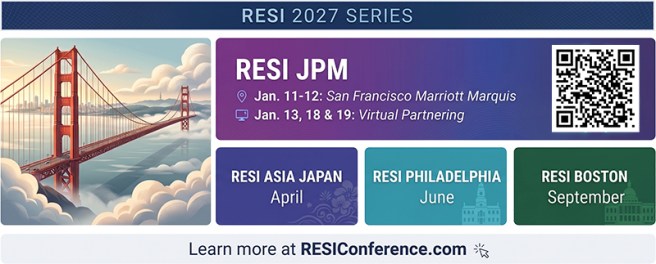
Applications are now open for the Innovator’s Pitch Challenge at RESI JPM 2027, taking place in San Francisco on January 11 to 12, with virtual partnering January 13 and 18 to 19.

The Innovator’s Pitch Challenge gives early-stage companies the opportunity to present live to active life science investors, receive structured feedback, and build meaningful connections through RESI partnering.

Apply to the Innovator’s Pitch Challenge and secure your opportunity to pitch at RESI JPM.

Apply to Pitch at RESI JPM 2027

RESI Boston 2026: Your Complete Conference Guide 

By Dennis Ford, Founder & CEO, Life Science Nation (LSN)

DF-News-09142022

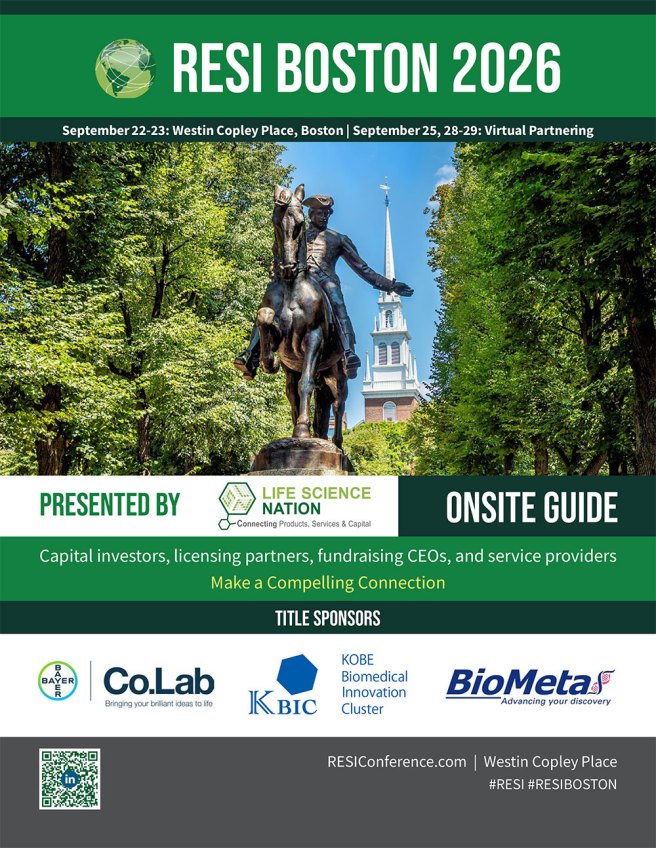
Life Science Nation (LSN) is pleased to release the RESI Boston 2026 Program Guide for the upcoming hybrid conference, taking place September 22–23 in person at the Westin Copley Place in Boston, followed by virtual partnering on September 25 and September 28–29.

Held during Biotech Week Boston, RESI brings together early-stage life science companies, active investors, strategic partners, and industry leaders for targeted fundraising and business development conversations. The event features the Innovator’s Pitch Challenge, investor panels, workshops, company showcases, and RESI Partnering, the conference’s purpose-built platform for scheduling one-on-one meetings.

The Program Guide offers a comprehensive look at the RESI Boston agenda, including sessions focused on the Boston biotech ecosystem, therapeutic innovation, pharma partnering, strategic capital, health systems, chronic disease care, family office investing, and impact investing. Attendees can also explore the participating investor, sponsor, exhibitor, and company lineup, along with networking opportunities throughout the event.

With partnering underway and meeting calendars continuing to fill in the final weeks before the conference, RESI Boston offers innovators a valuable opportunity to connect directly with investors and strategic stakeholders shaping the future of healthcare.

View the program guide and register for RESI Boston today.

Register for RESI Boston

Meet the Investor Judges at RESI Boston 2026 

By Claire Jeong, Chief Conference Officer, Vice President of Investor Research, Asia BD, LSN

RESI Boston brings together early-stage life science innovators and active investors during Biotech Week Boston. Life Science Nation is pleased to announce the investor judges participating in the Innovator’s Pitch Challenge (IPC).

This year’s IPC will feature more than 70 companies presenting across 20 pitch sessions over two days, offering startups a valuable opportunity to gain visibility, present directly to investors, and receive real-time feedback from experienced decision-makers.

Each pitch session will be evaluated by a panel of investor and strategic partner judges with expertise spanning therapeutics, medical devices, diagnostics, digital health, and life science tools. Companies will deliver a six-minute presentation followed by seven minutes of live investor Q&A, giving judges the opportunity to assess scientific differentiation, commercial potential, and investment readiness.

All IPC companies will also have a dedicated space in the RESI Exhibition Hall, creating additional opportunities for follow-up conversations and deeper engagement with investors and conference attendees.

RESI Boston attendees will be invited to vote with their RESI Cash for their favorite presenting companies. The Top 3 companies will be announced, with winners receiving prizes and additional exposure through the LSN Newsletter.

See the investors serving as judges for this year’s RESI Boston Innovator’s Pitch Challenge:

Featured RESI Boston IPC Judge
René Bastón
René Bastón
Covenant Venture Capital
Caleb Bell
Caleb Bell
Beyond Next Ventures
Randy Berholtz
Randy Berholtz
Mesa Verde Venture Partners
Shailesh Chavan
Shailesh Chavan
Ingenious Global Venture Partners
Bruce Cohen
Bruce Cohen
Xeraya Capital
Yvette Ferreira
Yvette Ferreira
Xcellerant Ventures
Navin Govind
Navin Govind
Evidence Ventures
Ole Henrik Bang Andreasen
Avant Bio
Christopher Hupp
Christopher Hupp
Ipsen S.A.
Deepak Jha
Deepak Jha
Autobahn Labs
James Lee
James Lee
Unistone Ventures
Claire Leurent
Claire Leurent
AbbVie Ventures
Heather Loring
Heather Loring
AstraZeneca
James Massaquoi
James Massaquoi
Glasswing Ventures
Mahesh Narayanan
Mahesh Narayanan
Neuvation Ventures
John Pennett
John Pennett
Mid Atlantic Bio Angels
Garrett Peterson
Garrett Peterson
Yahara Ventures
Andrew Rae
Andrew Rae
Woodgreen Ventures
Raza Shaikh
Raza Shaikh
Launchpad Venture Group
Justin Siemann
Justin Siemann
Sontag Foundation
Sarah Tao
Sarah Tao
CSL Behring
Martin Taylor
Martin Taylor
F-Prime Capital
Lily Ting
Lily Ting
Lundbeck
Sally Wang Liang
Sally Wang Liang
Xpanse Venture

Register for RESI Boston 2026

RESI Boston Investor Speakers

By Claire Jeong, Chief Conference Officer, Vice President of Investor Research, Asia BD, LSN

RESI Boston brings together active early-stage investors and life science innovators for two days of investor-led programming focused on capital, partnering, and market dynamics shaping healthcare innovation.

The agenda will feature leading biotech VCs, family offices, corporate scouts, health system investors, and impact-focused investors sharing how they evaluate opportunities, where they see momentum, and what founders need to understand as they prepare to raise capital and build strategic partnerships.

From Boston’s biotech ecosystem and early-stage therapeutic investing to pharma partnering, health systems, strategic capital, chronic disease, women’s health, family offices, and impact investing, the panel program offers practical insight across the full life science financing landscape.

These conversations are designed to help entrepreneurs better understand investor priorities, refine their fundraising strategy, and build relationships with the people actively shaping the future of healthcare innovation.

RESI Boston takes place in person September 22–23 at the Westin Copley Place, with virtual partnering September 25 and September 28–29. Whether attending in Boston or virtually, participants can connect with investors, gain perspective from the panel stage, and advance their next conversations through targeted partnering.

Register for RESI Boston 2026
Featured RESI Boston Investor Speakers
John Abeles
John Abeles
Northlea Partners
Marc Appel
Marc Appel
Pacific Bridge NY
Farnaz Bakhshi
Farnaz Bakhshi
ACS BrightEdge
Caleb Bell
Caleb Bell
Beyond Next Ventures
Alan Chiu
Alan Chiu
Breakthrough T1D
Scott Davis
Scott Davis
Sontag Foundation
Ronald Dorenbos
Ronald Dorenbos
BioFrontline Ltd.
Shane Duffy
Shane Duffy
Avanos Medical, Inc.
Tao Fang
Tao Fang
MRL Ventures Fund (MRLV)
David Fogel
David Fogel
Mass Medical Angels
Navin Govind
Navin Govind
Evidence Ventures
Nimisha Gupta
Nimisha Gupta
Jazz Pharmaceuticals, Inc
William Hsu, PhD
William Hsu, PhD
NuFund Venture Group
Austin Hwang
Austin Hwang
Analog Garage
Jonathan Ilicki
Jonathan Ilicki
Industrifonden
Renaud Jacquemart
Renaud Jacquemart
Omnium Global
Rohit Jain
Rohit Jain
HBS Alumni Angels of Northern California
Satoshi Konagai
Satoshi Konagai
Astellas Venture Management (AVM)
Jason Kraus
Jason Kraus
Boston Harbor Angels
Kathy Ku
Kathy Ku
Sazze Partners
Sally Wang Liang
Sally Wang Liang
Xpanse Venture
Nate Macht
Nate Macht
ACS BrightEdge
Nune Martiros
Nune Martiros
Paladin Capital Group
Andrew Merken
Andrew Merken
Polsinelli PC
Nikhil Mutyal
Nikhil Mutyal
AstraZeneca
Rohit Nuwal
Rohit Nuwal
TELUS Ventures
Maggie O'Toole
Maggie O'Toole
LabCentral
Soyoung Park
Soyoung Park
1004 Venture Partners
Dushyant Pathak
Dushyant Pathak
Autobahn Labs
Garrett Peterson
Garrett Peterson
Yahara Ventures
Andrew Rae
Andrew Rae
Woodgreen Ventures
Parthiban Rajasekaran
Sanofi
Armin Rump
Armin Rump
Otsuka Pharmaceutical Co., Ltd.
Mo Soleja
Mo Soleja
Golden Seeds
Yvanka de Soysa
Yvanka de Soysa
Foreground Capital
Daniel Teper
Daniel Teper
YADAY Health
Andrew Thomson
Andrew Thomson
Ipsen S.A.
John Tremblay
John Tremblay
Launchpad Venture Group
Le Zhan
Le Zhan
Yunion Healthcare Ventures