
Tag Archives: RESI

Women CEOs Lead the Day at the RESI Innovation Challenge

27 Mar

By Maximilian Klietmann, VP of Marketing, LSN

Max Smile 2

RESI ended on Monday evening with over 400 attendees and over 660 partnering meetings. Additionally, 33 of the 150 biotech and medtech companies attending RESI were selected for the RESI Innovation Challenge, and competed for “RESI Cash” invested by conference attendees. Well, the winners are in:

  • The winners are global in nature, hailing from the US and Europe.
  • There was a tie for third place.
  • Women led the charge! Three of the four winning companies have women CEOs.

Scroll down to see the winning companies below (click the logos to visit company websites):

FIRST PLACE:

EMPIRIKO

Empiriko, based in Newton, MA, is addressing several of the challenges faced by scientists, clinicians and decision-makers responsible for taking drugs from concept to commercialization. The company’s Biomimiks™ solutions can help in predicting patient/drug interaction and can be used to optimize drug designs, and improve patient outcomes.

Pam Randhawa, Founder and CEO


SECOND PLACE:

BIOARRAY

BIOARRAY, based in Farmington, CT, is developing proprietary predictive diagnostic tests, based on cancer genes (markers), to choose the most efficacious treatment for cancer patients beforehand, rather than the trial and error approach currently used.

Marcia Fournier, CEO


THIRD PLACE (TIE):

STC logo

STC Biologics is a biotechnology company located in Cambridge MA focusing on development of biologic drugs. The company’s portfolio of drugs includes a MAb biosimilar for Oncology as well as a re-appropriated biologic drug for the treatment of Alzheimer’s.

Magdalena Leszczyniecka, President and CEO


THIRD PLACE (TIE):

Multineurons_logotype_300dpi

Multineurons, based in Switzerland, is developing medical devices for non-invasive and wireless brain-computer interface and brain diagnosis/therapy. The company’s products are based on a unique technology that evolved from more than a decade of R&D. 

Tasos Smeros, Founder & CEO
LSN Announces RESI II

20 Nov

By Max Klietmann, Conference Co-Chair and VP of Marketing, LSN

The LSN team is very pleased to announce the second Redefining Early Stage Investments conference, to be held Monday, March 24, 2014 in Boston. This event is the next in LSN’s ongoing conference series focused on creating a dialogue between emerging life science companies and active early stage investors from ten categories around the world. LSN is committed to maintaining its mission of moving science forward by creating a forum for early stage innovation and capital to meet, and we are building on last September’s success. We’ve made some exciting changes for the March event – Here are some highlights:

Full Day Partnering – RESI will have partnering meetings available for the full duration of the day.

More Investor Panels – We’ve increased the number and variety of investor panels available to conference participants, based on cutting-edge content derived from our constant research of the industry.

Free Workshops – RESI will host a series of in-depth workshops in the areas of outbound fundraising, valuation, and the legal landscape.

Disruptive Technology Horizon – RESI will host a half-day session on the emerging disruptive technologies that have the potential to redefine the industry in the future.

New Company Presentation Format – RESI is offering innovative life science companies the opportunity to showcase their technologies to investors via poster displays throughout the (expanded) exhibit hall, giving them full-day exposure to investors and other conference participants.

If you haven’t attended RESI yet, here is a quick overview of attendance distribution from last year:

  • Over 300 attendees last year (targeted 200), estimating 500 this year
  • Over 115 early stage investors from around the world
  • 43% International / 57% Domestic
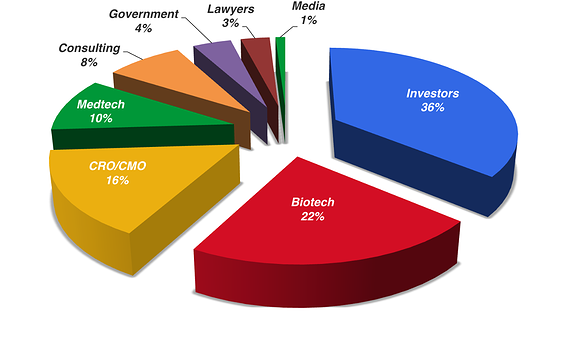
  • Attendee profile split per the chart below:

RESI Attendance BreakdownSpecial reduced earlybird registration rates for attending and exhibiting are available for a limited time only, so be sure to register now!

Special sponsorship opportunities are also available now.

We look forward to seeing you in March. Stay tuned for more RESI II conference updates.

Innovations at RESI: Diagnostics Gone Wild

10 Oct

By Lucy Parkinson, Research Analyst, LSN

When a potential investor approaches a diagnostics company, some of the first words out of their mouth are likely to be “How are you going to deal with the reimbursement problem?” At the Redefining Early Stage Investments Conference, we heard from diagnostic entrepreneurs who were rethinking the reimbursement model from the ground up.

A traditional business model for a diagnostics company involves persuading care providers that they ought to use the test, and then convincing HMOs that they ought to reimburse it. For a new product, this can be a tough sell; insurance plans often won’t specifically cover an innovative test, leaving the company to scratch for reimbursement on a case-by-case basis. They have to prove over and over that the test is more accurate or more cost-effective than the competition. Even companies providing an established product may find their revenues at the mercy of Centers for Medicare & Medicaid Services billing coding changes. Given these challenges, how can a diagnostics company build an attractive business plan that will win over investors?

Find the gaps in a divided marketplace. Most healthcare practitioners work in a highly specific area, yet many medical conditions manifest in ways that cut across these divisions. Sometimes, linked comorbidities are split between two different areas of medicine – for example, diabetes and eye problems. A diabetic patient might not have the time or inclination (or even the insurance coverage) to get their eyes checked out. An innovative business plan for an ophthalmic diagnostic might therefore include targeting clinics that deal with diabetes, and vice versa. We’ve heard from diabetes diagnostics looking to eye clinics for a new market; these related yet divided conditions show up all over the life science map, and diagnostics for many indications could take advantage of them.

Bypass the gatekeepers. We heard one diagnostics CEO say “I want to see people using our device in Walmart and CVS.”  If you have the right product – in this case, a device for a huge potential market that can deliver an automated result in minutes at a sub-$100 cost – you can seek direct routes to consumers. Similarly, the consumer market for wearable medical devices is exploding; this is, thus far, the only subsector of the medical device space where a company has successfully crowdsourced development of a product.

Rethink what your technology can do.  We heard from the developer of a diagnostic test so sensitive and robust that it can be administered entirely by mail, with the patient receiving a diagnostic kit at home and returning a swab straight to the diagnostic lab.  What is this company’s new business idea for this powerful new platform? Crowdsourced clinical trials. Rather than trial participants having to be regularly monitored by researchers at one location, they can be enrolled in the trial and then participate remotely, anywhere, anytime, bringing a huge increase in scale and a decrease in costs (including for participants).

Diagnostics might seem like a crowded field, but if your technology is powerful, a little innovative thinking about what it can do can completely change your approach to attaining revenue. You’ll stand out to investors if the reimbursement problem isn’t a problem to you at all.