Why Most JPM Pitch Sessions Fail Early-Stage Startups, and How to Master Your Delivery at RESI JPM 2027

By Claire Jeong, Chief Conference Officer, Vice President of Investor Research, Asia BD, LSN

During J.P. Morgan Healthcare Week, presenting your technology in front of active capital allocators is one of the most effective ways to accelerate an early-stage fundraising campaign. For Seed, Series A, and Series B founders, a well-executed pitch can compress months of outreach into four days of high-velocity investor dialogue. 

However, the reality on the ground in San Francisco is that the quality of pitch events varies widely. 

The Reality of JPM Pitch Events: Why Quality Matters 

Every January, dozens of satellite pitch sessions, demo days, and presentation showcases compete for attention across downtown San Francisco. Unfortunately, many of these formats end up creating little tangible value for founders: 

  • The “Empty Room” Syndrome: Startups are placed into peripheral side-rooms where the audience consists mostly of fellow founders waiting for their turn, rather than genuine capital allocators with active checkbooks. 
  • One-Way Broadcasts: Conventional pitch sessions offer five to ten minutes of uninterrupted presentation time, after which founders simply walk off the stage. There is no dialogue, no live questioning, and no way to know whether the narrative resonated. 
  • The Follow-Up Void: Once a session ends, founders are left guessing which investors in the room were genuinely interested, leading to cold post-event follow-ups that rarely convert. 

For early-stage innovators who are investing significant capital and time to be in San Francisco, pitching cannot be a vanity exercise. It must deliver qualified access, real-time feedback, and direct partnering continuity. 

Why the RESI Innovator’s Pitch Challenge (IPC) Provides a Superior Model 

The Innovator’s Pitch Challenge (IPC) at RESI JPM 2027 was engineered specifically to solve the shortcomings of typical conference showcases. Held during the in-person days at the San Francisco Marriott Marquis (January 11 and 12), the IPC integrates presentation visibility with structured due diligence:

IPC Package Feature What Is Included Strategic Value for Founders
Two (2) Full Hybrid Passes Includes two standard passes covering 2 in-person days (Jan 11-12) and 3 virtual partnering days (Jan 13, 18, 19). $6,590 standard value: Full access to the 1-on-1 partnering platform, investor panels, and educational workshops.
Live Pitch & Real Q&A Present on stage to a dedicated panel of active healthcare investor judges, followed by interactive live Q&A. Eliminates one-way broadcasting and connects directly with active capital allocators deploying funds into your sector.
Investor Evaluation Sheet Receive a consolidated report compiled directly from judge scorecards and anonymous qualitative notes. Actionable intelligence on how institutional investors evaluate your science, team, and commercial roadmap.
Dedicated Exhibit & Poster* Reserved poster board space in the high-traffic Yerba Buena exhibition hall with free printing for one (1) poster*. A dedicated physical base camp for two full days to anchor spontaneous walk-up meetings and follow-up discussions.
*Note on Poster Printing: Free printing is provided for one (1) poster per participating company, provided that print-ready artwork is submitted prior to the designated printing deadline.

By combining live stage presentation with the official Investor Evaluation Sheet, IPC finalists receive invaluable data on how their scientific milestones, regulatory pathways, and commercial models are perceived by active decision-makers. 

Execution: How to Pitch to Investors and Handle Live Q&A 

Being selected for an investor pitch session is only the first step. The real differentiator between a polite response and a request for a follow-up meeting is how effectively you execute on stage. 

When presenting to institutional healthcare investors, founders must navigate two fundamental challenges: 

  • Translating Science into Commercial Milestones: Investors evaluate hundreds of assets during JPM Week. Your pitch must quickly articulate not just how your technology works, but how your next milestone materially de-risks the asset and creates a value inflection point. 
  • Mastering the Q&A Defense: The question-and-answer period is where investors test the depth of your leadership team. Whether responding to inquiries regarding regulatory flexibility, clinical trial design, competitive moats, or valuation expectations, your answers need to be direct, transparent, and grounded in data. 

To assist founders in refining their presentations, structuring compelling pitch narratives, and preparing for live investor inquiries, our team conducted a dedicated strategy session. You can review the complete discussion as you finalize your materials: 

[Webinar Recording] Pitching Strategy & Q&A Educational Session

Pitch slots across therapeutics, medical devices, diagnostics, and digital health tracks are strictly capped to ensure high judge-to-presenter ratios and dedicated evaluation time. The application deadline for the RESI JPM 2027 Innovator’s Pitch Challenge is Wednesday, November 11, 2026. Applications are reviewed and confirmed on a rolling basis, and sessions regularly fill before the final deadline. 

If you are raising capital and want to position your company directly in front of active buy-side investors during JPM Healthcare Week, secure your application today: 

Apply to Pitch at RESI JPM 2027

The Problem Isn’t Access to Capital. It’s Being Investable. Why early-stage life science companies need a commercialization engine, not another introduction

By Dennis Ford, Founder & CEO, Life Science Nation (LSN)

For years, LSN ran an investment banking program for early-stage life science companies. It taught us something important: capital-raising solutions work best when a transaction is imminent. For most early-stage companies, it isn’t. Seed, Series A, and Series B companies are still working through the scientific, clinical, regulatory, commercial, and financing risks that determine whether investors will engage. They pitch technology and market potential. Investors ask what’s been proven, which risks have been retired, and what evidence is still missing. More introductions won’t close that gap. These companies need more than deal preparation. They need a commercialization process that can run for months or years.

The Commercialization Engine
LSN is building one with global partners: universities, research institutes, regional clusters, and innovation programs with technology-rich ecosystems. Our partners advance discoveries, generate evidence, and retire development risks. LSN provides assessment intelligence, investability preparation, and access to the global capital and licensing marketplace. LSN’s agentic AI engines support this process. They help evaluate companies through the eyes of investors and licensing partners, an approach already used with more than 250 clients. They also identify and rank relevant global capital and licensing targets.

Stage Commercialization Capability
Scientific assessment and de-risking Scientific and commercialization partners
Investability preparation LSN Investability Assessment, LSN Labs, de-risked decks
Partner identification LSN Matching Engine and Global Target Lists
Campaign execution BD Assist
Global partnering RESI Conference Series

Companies enter wherever their readiness puts them. Agentic AI tools are becoming widely available. LSN’s advantage is the global network, relationships, proprietary databases, and market intelligence built through years of direct work with investors, licensing partners, and companies. That depth of intelligence goes well beyond the cursory matches available from web searches.

BD Assist: Where Preparation Becomes Execution
A seasoned CEO may know a few dozen investors and can find a few hundred more. That still isn’t enough. LSN’s Matching Engine generates a Global Target List of 800–1,000 prospective capital and licensing partners. BD Assist puts that intelligence to work through sustained outreach, engagement tracking, and follow-up over the 9–18 months that early-stage campaigns can require. The CEO leads investor relationships, negotiations, and transactions. LSN manages targeting intelligence, sets up the meetings, and provides campaign support. The cost is $5,000 a month, with no success fee. LSN leverages databases that capture current and forward-looking mandates and historical VC and Pharma transactions, then integrates into all of LSN’s RESI events to add face-to-face or virtual meetings with investors and licensing partners worldwide.

Who Is the Perfect Fit for BD Assist?
The ideal client is an experienced life science CEO who knows how to raise capital and has an investable asset and a credible development plan. What they lack is the global reach and campaign infrastructure to pursue hundreds of prospective investors and licensing partners. This CEO doesn’t need someone to explain fundraising or negotiate a term sheet. They need a dedicated team to identify the right global targets, run a disciplined campaign, and keep opportunities moving while they run their company. BD Assist is not for every company that needs money. Companies still working through fundamental scientific or investability issues may first need assessment, de-risking, and preparation.

The CEO knows how to raise the money. LSN provides the global intelligence and reach, including meeting setup and campaign infrastructure, to help them find it.

To see whether BD Assist is the right fit for your company, contact the LSN team. LSN BD will provide a free investability assessment report, show you what your global target list should look like, and offer commentary on your messaging for your target audience.

Get Your LSN Labs Company Assessment Report

From BioJapan 2026 to RESI Asia 2027: Connecting Japan’s Life Science Innovation to Global Opportunities

By Momo Yamamoto, Senior Investor Research Analyst, LSN

Life Science Nation (LSN) was pleased to return to Yokohama for BioJapan 2026 held on October 7-9 at PACIFICO Yokohama. Known for one of Asia’s leading life sciences partnering conference hosted by the Japan Bioindustry Association (JBA), the event brought together startups, investors, pharmaceutical companies, and industry stakeholders from around the world to explore emerging innovations and opportunities for collaboration.

This year, for the first time, LSN participated in two seminars in collaboration with the Kobe Biomedical Innovation Cluster (KBIC), focusing on helping Japanese life science startups navigate the global investment landscape. Throughout the conference, LSN emphasized the importance of investor readiness and international engagement for emerging life science companies seeking to accelerate their development and commercialization efforts.

On October 8, LSN participated in the KBIC x MEDISO Collaboration Program “Key Points for Early-Phase Global Fundraising” which brought together representative from Japan’s public and private sectors, including government delegates, venture capitalists, biotech executives, and ecosystem leaders, to discuss the challenges and opportunities associated with international fundraising for early-stage life science companies. A particularly meaningful aspect of the seminar was the opportunity to hear directly from startup CEOs who LSN has been working with on their international business development efforts. Drawing from their firsthand experiences, the discussion explored the realities of approaching global investors and navigating different investment expectations.

The following day on October 9, LSN joined KBIC for a second luncheon seminar titled “Inside Global Fundraising: LSN Framework for Startup Readiness and Global Capital Raising Success”. This session focused on broader global fundraising trends and the strategies life science startups can adopt to improve their readiness for international investment. Together, the two seminars highlighted the common message of how successful fundraising requires more than scientific excellence. It also demands a strong understanding of the perspective from global investors and the ability to build meaningful relationships across markets.

Japan’s Foundation for Global Growth within the Global Life Science Ecosystem

Japan has long been recognized as a global leader in scientific research and technological innovation. With its world-class academic institutions, established pharmaceutical industry, and growing biotechnology startups community, the country offers a strong foundation for life science innovation. The country’s scientific expertise combined with an increasingly entrepreneurial research environment, it continues to create opportunities for translating breakthrough discoveries into commercially viable solutions. Innovation hubs such as Kobe City demonstrate the importance of collaboration between academia, industry, government, and emerging companies. By fostering connections across these groups, organizations such as KBIC help strengthen the infrastructure needed to support growth of impactful life science businesses.

Japan’s strengths span multiple sectors including pharmaceutical R&D, regenerative medicine, cell and gene therapies, academic research, and the integration of healthcare with engineering and technology. However, as Japan’s biotechnology startup ecosystem continues to develop, access to international capital and strategic partnership remains an important consideration for companies seeking to expand beyond the domestic market. For early-stage companies, engaging with global investors can provide more than financial resources. International relationships can also create opportunities for clinical development, licensing, commercialization, and entry into new markets. By connecting Japan’s scientific strengths and global investment and partnering opportunities, LSN aims to help bridge the gap between promising research and international commercialization.

Continuing the Momentum to RESI Asia 2027 in Tokyo

Building on the discussions and relationships established at BioJapan, LSN is excited to continue supporting the Japanese life science ecosystem through RESI Asia 2027, taking place on April 13, 2027 at the ANA InterContinental Tokyo Hotel, with KBIC as our co-developer. As part of LSN’s globally recognized RESI Conference Series, RESI Asia is designed to connect early-stage life science and healthcare startups with investors, pharmaceutical companies, and strategic partners seeking innovative technologies and new business development opportunities. The conference will also offer virtual partnering on April 15-16 and 19-20, extending the opportunity for international engagement beyond the in-person event.

The conference will bring together not just participants from Japan and across Asia, but also around the world, creating a dedicated platform for cross-border investment and strategic collaboration. The conference will feature startups in Pre-Seed through Series B stages across therapeutics, medical devices, diagnostics, and digital health, offering international investors and pharmaceutical companies direct access to promising companies from Japan, the broader Asian life science ecosystem, and around the world.

From BioJapan 2026 to RESI Asia 2027, LSN remains committed to supporting Japan’s life science innovators as they connect with the global investment community. We look forward to continuing our collaborations with KBIC and the broader Japanese life science ecosystem and welcoming startups, investors, and strategic partners to Tokyo next April!

RESI Asia Japan Registration:

Japan-base Registration (JPY)
Non-Japan-base Registration (USD)

RESI JPM 2027 on Track to Surpass Last Year’s 850 Investors and Licensing Partners

By Claire Jeong, Chief Conference Officer, Vice President of Investor Research, Asia BD, LSN

More than 100 investors and licensing partners have already confirmed for RESI JPM 2027, and we are on pace to pass the 850 who attended last year

That number deserves a second look. Most conferences report total attendance, which is mostly other companies. 850 is the buy side alone: venture capital, corporate venture, family offices, angel groups, strategic investors, and pharma business development teams. People with mandates and checkbooks, in one room, during the one week of the year when the entire industry is already in San Francisco.

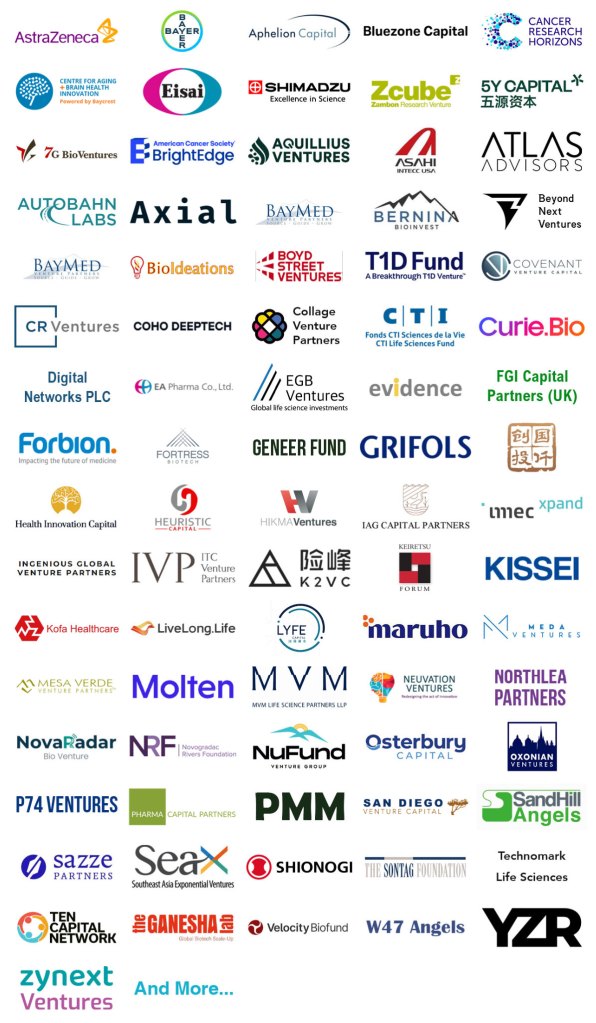
Meet the Confirmed Investors 

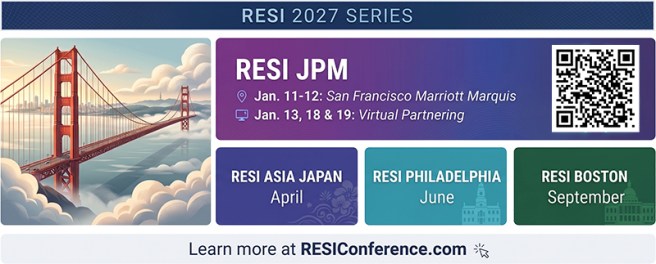
RESI JPM runs in person on January 11 and 12 at the San Francisco Marriott Marquis, with three additional days of virtual partnering on January 13, 18, and 19. It is LSN’s largest conference of the year.

Why Density Is the Product

The hard part of early-stage fundraising is not the pitch. It is access.

Institutional calendars during JPM Week are locked months in advance, and an early-stage company without an existing relationship generally cannot get on them. The companies that do well that week are the ones who were already in the conversation.

RESI was built to change the math. Instead of chasing a handful of meetings around the city, you walk into a room with hundreds of active investors and licensing partners and you select who you want to meet before you arrive.

What Is Coming to RESI JPM 2027

The confirmed group spans the full early-stage ecosystem: venture capital, corporate venture arms, family offices, angel groups, strategic investors, and pharma and medtech business development. Mandates cover therapeutics, diagnostics, medical technology, digital health, and platform technologies, across preclinical through Phase 2.

How to Get the Most Out of It

  • Partnering meetings. Our system lets you filter the investor audience by stage, indication, geography, and check size, then request meetings directly. You build your own schedule rather than hoping for a hallway encounter.
  • The Innovator’s Pitch Challenge. Present to a live investor panel, get scored feedback in front of the room, and put your company in front of people who are evaluating in real time. Applications close on Wednesday, November 11.
  • Three virtual partnering days. January 13, 18, and 19 extend your reach to investors who could not travel, including a large international contingent who partner with us remotely.

Register

Registration is open now, and the investor count is still climbing. The earlier you register, the earlier you can start requesting meetings against the confirmed list.

Register for RESI JPM 2027

Watch the Asset Flow, Not the Equity Flow: What I Learned at BioJapan

By Dennis Ford, Founder & CEO, Life Science Nation (LSN)

I recently returned from BioJapan, and the one takeaway I want to share with my global network is this: stop viewing Asia Pacific as a single market.

Regulations on both sides of the Pacific have made equity deals between the US and China much harder. But capital hasn’t stopped moving. It has changed form. Where equity deals run into friction, pharma licenses the asset instead. Chinese biotechs out-licensed $60 billion of assets in the first quarter of this year alone, up 73% from the same period a year earlier. That includes AstraZeneca’s deal with CSPC worth up to $18.5 billion. Large pharma faces a steep patent cliff before 2030, so its appetite for clinical-stage assets isn’t going away.

So watch the asset flow, not the equity flow. Here is what actually changed for me in Japan. I went in thinking about APAC as one market with local variations. It isn’t. It is three markets with three completely different jobs, and once you see them separately, the whole region stops looking confusing.

Three Markets, Not One

Each market plays a different role. China produces more assets than its domestic capital can absorb. Australia and Southeast Asia have the clinical infrastructure others can use. Japan and Korea stand out because they have both: a growing supply of academic innovation and deep corporate balance sheets looking for it.

Region Sell Side
(Early-Stage Assets)
Buy Side
(VC / PE / Pharma)
Characterization
Mainland China A large volume of high-quality assets, many moving faster than domestic capital can fund them Domestic equity is selective and US venture investment has pulled back, while global pharma licensing runs at record levels “The Asset Reservoir”
Japan, South Korea, & Taiwan A deep, largely untapped pool of academic assets, alongside mature platforms: ADCs and regenerative medicine in Japan, AI-driven discovery and diagnostics in Korea. Taiwan continues to produce world-class assets Active corporate venture arms and well-capitalized conglomerates “The Strategic Capital Track”
Australia & Southeast Asia Excellent trial infrastructure producing fast, high-quality human data Cross-border investors using local efficiency as a launchpad for global programs “The Clinical Fast Track”

Japan: Where Assets Meet Capital

Universities such as the University of Tokyo, Kyoto University, Keio University, Osaka University, Kobe University, and the University of Tsukuba, with RIKEN anchoring the discovery end, are producing a remarkable range of new assets across drugs, devices, diagnostics, and digital health. What’s new is a coordinated government effort to carry those assets to market:

  • AMED runs a 2:1 double match-up program. When a registered VC invests in a Japanese drug discovery startup, AMED can add up to twice that amount in non-dilutive funding, awarded per pipeline rather than per company, so a startup with three approved programs can draw on it three times.
  • MEDISO, under the Ministry of Health, Labor and Welfare, pairs ventures and university spinouts with experts in regulatory affairs, international development, and fundraising.
  • J-Bridge, run by JETRO, connects international innovators with Japanese corporates.

Three state-backed institutions, answering to different ministries, are working on the same bottleneck, and regional clusters are carrying that work into the field. For global investors and partners, that means Japanese assets now arrive better funded and better prepared, and Japanese corporate capital is easier to reach than it has been in years.

One Japanese advantage almost nobody prices correctly: Japan maintains a conditional, time-limited approval pathway for regenerative medicine products that can grant market access on evidence of probable benefit. No other major market offers that. If you have a cell or gene therapy and have never looked at Japan as a first market rather than a third one, you are leaving an option unexercised.

KBIC, the Kobe Biomedical Innovation Cluster, and LSN are working together to strengthen the commercialization pathway for Japanese life science companies through entrepreneur education, company preparation, capital formation, and international business development. At BioJapan in October, LSN presented joint sessions with KBIC, including one alongside MEDISO, on startup readiness and global fundraising.

RESI Asia: Tokyo and Kobe

That is why RESI is coming to Japan. RESI Asia Japan convenes in Tokyo on April 13, 2027, for global partnering. We expect to announce more events around RESI before and after the 13th

The Bottom Line

Regulatory boundaries have changed the rules, but pharma’s appetite for licensing shows the underlying science has never been more valuable. Watch the asset flow, not the equity flow. I look forward to seeing many of you in Tokyo next April.

RESI Asia Japan Registration:

Japan-base Registration (JPY)
Non-Japan-base Registration (USD)

The Missing Piece in Preparing Life Science Companies for Investors

By Dennis Ford, Founder & CEO, Life Science Nation (LSN)

One of the most pervasive problems we see across life science entrepreneurial programs is that Entrepreneurs-in-Residence (EIRs) help companies develop executive summaries and pitch decks that emphasize the science and market opportunity. This approach repeats across incubators, accelerators, universities, and entrepreneurial training programs worldwide.

The problem is that the two sides of the table are speaking different languages. The sell side presents science and market potential, while investors and licensing partners evaluate the seven-layer risk stack: market, technical, regulatory, execution, economic, financing, and exit risk. They want to understand which risks have been retired, which remain, and what evidence supports the company’s ability to overcome them.

This is precisely where LSN spends its time preparing companies for global roadshows and RESI partnering events.

We begin with the LSN assessment, which identifies where the company sits within the risk stack, what has been accomplished, and what remains to be de-risked. We then reconstitute the executive summary and pitch deck to speak the language of risk, supported by evidence rather than simply promoting the science and market opportunity.

We also develop a milestone-driven Gantt chart that shows the development milestones already completed and the value created, the one, two, or three critical milestones ahead for the remainder of the current year, and the subsequent development and de-risking milestones planned for years two and three.

The capital ask becomes the financial expression of the de-risking plan. By calculating the cost of the current and future milestones, the company can explain precisely how much capital it needs, what that capital will accomplish, which risks will be retired, and how achieving those milestones is expected to increase the asset’s value.

This is the fundamental distinction between a conventional pitch deck and a de-risked deck. One emphasizes the promise of the science and the size of the market. The other demonstrates a credible, milestone-driven, financed pathway to making that science investable.

That is the missing commercialization discipline LSN brings to the table, and it is what investors and licensing partners are looking for.

Register for RESI JPM 2027

RESI JPM 2027 Investor Panel Lineup Announced 

By Claire Jeong, Chief Conference Officer, Vice President of Investor Research, Asia BD, LSN

Life Science Nation is pleased to announce the finalized investor panel lineup for RESI JPM 2027, taking place January 11 and 12 at the San Francisco Marriott Marquis during J.P. Morgan Healthcare Week.

The two day program features 14 investor sessions across therapeutics, medtech, diagnostics, digital health, platform technologies, strategic partnerships, and alternative sources of capital.

Monday, January 11

9:00 AM | Follow the Money [2027 Outlook & Trends]

Where Life Science & Healthcare Investors See Opportunity in 2027

Every year at JPM, one question sets the tone for the week: where is the capital going? Investors from across therapeutics, medtech, diagnostics, digital health, and tools take the stage to share what they are seeing in fundraising, valuations, and exit windows. They will discuss which sectors are attracting conviction, which are being left behind, and how their own priorities have shifted since last year. Whether you are raising, investing, or building, this is the read on the market you need before the deals begin.

10:00 AM | What Is Fundable Now: Therapeutics [Early Stage Therapeutics]

What Earns a Term Sheet from Early Stage Biotech Investors

Early stage therapeutics investors must weigh scientific promise against the risks of translating it into a viable treatment. Seed through Series A investors get candid about what earns their conviction: differentiated biology, convincing translational evidence, and a credible clinical development strategy. The discussion explores how investors assess target validation, competitive positioning, safety, and the experiments needed to reduce key development risks. Expect frank talk about what makes them lean in, what makes them pass, and how founders can make a compelling scientific and investment case for a therapeutic program.

11:00 AM | Backing the Next Medical Breakthrough [Medical Devices]

How Investors Evaluate Early Stage Device Innovation

Medical device companies face distinct investment hurdles, from proving technical feasibility to establishing a path to clinical adoption. This panel brings together medtech investors to discuss how they evaluate early stage opportunities across surgical technologies, robotics, monitoring, wearables, and home care. The conversation examines clinical need, regulatory strategy, reimbursement, usability, and the evidence required to support adoption. Hear what makes a device differentiated, how investors assess development and commercial risk, and which milestones strengthen the case for investment.

1:00 PM | Strategics at the Table [Strategics]

How Corporate Partners Decide When to Invest, Partner & Acquire

Strategic partners are shaping which technologies reach patients, and they are increasingly involved long before a company is ready to sell. Business development leaders from pharma and medtech join corporate venture investors to explain when they engage, what they need to see, and how they think about partnering, investing, and acquiring. Learn how to get on a strategic partner’s radar, what makes a startup stand out in a crowded pipeline, and how to build a relationship that lasts beyond a single deal.

2:00 PM | The First Believers [First Check Investors]

How the Earliest Backers Turn Life Science Ideas into Fundable Companies

Every great company has someone who said yes first. This panel gathers the earliest backers in life sciences: angels, seed funds, venture studios, foundations, and accelerators. They explain how they evaluate opportunities before substantial scientific or commercial validation, what they look for in a founding team, and what gives them the conviction to write the first check. The conversation covers company formation, initial experiments, and how early capital and hands on support help founders establish a credible development path. For founders at the very start, it is a candid map of the road from initial concept to the first funded development milestones.

3:00 PM | The Brain Trust [CNS / Neuro]

Investing Across Neuroscience & Psychiatry

Few areas of medicine combine such enormous unmet need with such complex investment challenges. This panel brings together investors in therapeutics, neuromodulation devices, digital biomarkers, and diagnostics to discuss what draws capital into neuroscience and psychiatry. Together they explore how advances in biology, technology, and clinical trial design can reopen areas once considered too difficult, and how founders across modalities can position themselves to attract investment.

4:00 PM | Patient Capital [Family Offices]

How Family Offices Are Investing Directly in Life Sciences

Family offices offer a distinct route to life science capital through direct investing, syndication with peers, and investment structures that can support longer time horizons. This session explores what draws private capital to highly technical opportunities, how family offices diligence science and technology, and what founders should know before approaching them. Panelists discuss how they structure investments, work with specialist co-investors, and assess follow-on needs. It is a practical look at how to earn the confidence of this diverse investor community.

Tuesday, January 12

9:00 AM | Investing in Longer, Healthier Lives [Longevity]

The Science and Technologies Addressing Age Related Disease

Helping people live longer, healthier lives requires addressing the diseases and functional challenges that come with aging. This panel brings together therapeutics, medtech, diagnostics, and digital health investors to explore opportunities in cardiometabolic disease, musculoskeletal health, physical function, and maintaining independence. The discussion examines how investors evaluate treatments for specific age related conditions alongside technologies that address underlying aging biology, detect risk earlier, or help people remain active. Hear what constitutes meaningful clinical evidence, how companies define a viable path to market, and what makes an opportunity compelling for early stage investment.

10:00 AM | Digital Health After the Hype [Digital Health]

What Investors Want to See in Evidence, Adoption & Economics

The digital health market has been through a reset. Investors discuss what they are backing now: clinical grade AI, new models of care delivery, and businesses with evidence, engagement, and economics that hold up to scrutiny. Hear where value is being created, what has changed in how these companies are evaluated, and what separates durable businesses from those that struggle to convert adoption into sustainable growth.

11:00 AM | Enabling the Next Generation of Medicine [Platform Technologies]

Investing in Discovery Platforms, Delivery Technologies & Research Tools

Some of the most valuable companies in life sciences make new medicines possible. This panel brings together investors backing AI enabled discovery platforms, delivery technologies, synthetic biology, and the research tools that accelerate development. The conversation centers on how to separate a durable platform from a clever technology, how investors evaluate platform companies alongside tools and infrastructure businesses, and how business models differ from those of asset driven companies. Hear what makes these technologies investable and where founders can build lasting value.

1:00 PM | Capital Across Borders [Cross Border Investors]

How International Investors Evaluate and Finance Life Science Companies

Cross border investment can expand a company’s funding options, but attracting international capital requires understanding how investors evaluate opportunities beyond their home markets. This panel brings together investors from different regions to discuss geographic mandates, due diligence, syndication, and the local presence or development plans they expect from companies abroad. Hear what makes a company attractive to overseas investors, how investors work with local co-investors, and how founders can build relationships that lead to cross border financing.

2:00 PM | Runway Without the Round [Beyond Venture Capital]

Financing the Next Milestone Beyond Conventional Venture Equity

A conventional venture round is not the only way to fund a company. This panel explores non dilutive grants, foundation funding, venture debt, royalty financing, strategic agreements, and government backed programs. Capital providers explain who qualifies, what stage or evidence their funding requires, how long the process takes, and what obligations or tradeoffs founders should understand. The discussion examines which sources are suitable for early stage companies and how they can complement equity financing. Hear how to match funding to a development milestone and extend runway without relying solely on another conventional venture round.

3:00 PM | From Seed to Series A

Building the Evidence and Investor Confidence for the Next Round

Securing seed funding is only the beginning. This panel brings together seed investors and Series A investors to explore how life science companies turn initial funding into a financeable next round. The discussion covers setting achievable milestones, demonstrating progress against the original investment thesis, identifying a lead investor, and building a syndicate. Across therapeutics, medtech, and digital health, panelists discuss how founders should align development plans, capital needs, and fundraising timelines. Hear how existing investors assess follow-on support, what new investors need to see, and how to address gaps that can leave promising companies between rounds.

4:00 PM | The Investor Reverse Pitch

Meet the Investors and Discover What They Want to Fund

To close the conference, the roles flip. Investors from across therapeutics, medtech, diagnostics, digital health, and tools take the stage to pitch their mandates: what they invest in, at which stage, with what check size, and what gets their attention. Investors deliver short presentations, followed by audience Q&A. Founders leave with a clear list of who to follow up with and how to approach them. It is a practical, high energy finish to two days of conversations.

Speaker Submissions

Life Science Nation is currently seeking qualified investors, corporate business development leaders, family office representatives, and other capital providers for speaker consideration. Submit a speaker application.

Submit a speaker application