Archive | March, 2015

The Magnificent Seven-Fundraising Challenges Facing Life Science Entrepreneurs

12 Mar

By Dennis Ford, Founder & CEO, LSN

Dennis bookEntrepreneurs in the life science space face a myriad of challenges on the commercialization journey including fundraising. While the current open IPO window has certainly shed positive light on the sector, early stage life science companies are still facing an uphill climb when it comes to fundraising. There is simply a limited amount of capital available to fund a burgeoning number of products, ideas, and solutions that can no longer be supported by government or academic sources. However, the supply and demand of capital is not the only hindrance to an early stage life science company; below are seven fundraising pitfalls that we hear about on a daily basis in our dialogues with investors and entrepreneurs.

  1. Contributing to “White Noise”

An investor’s inbox is often bombarded with messages describing the latest and greatest opportunities; however, more often than not, these opportunities are outside of that investor’s wheelhouse.  You need to match your company to an investor’s current mandate. There are simply not enough hours in the day for an investor to read, let alone respond to, all of these messages, and as a result, many go unnoticed or do not receive an adequate review. While there are those investors who do not specify their investment interests, fundraisers in the entrepreneurial community can remedy this problem by taking the time to properly research and qualify the investors to whom they are reaching out.  Make sure when you go after an investor you know it is a fit for your company’s sector and stage of development.

  1. Lacking A Clear, Concise Message

Having a clear and concise message can significantly improve your odds of standing out amid the “white noise.” When your opportunity can be understood quickly, investors can more easily identify whether it is something to which they should allocate more time for review. Unfortunately this is not something widely accepted by many scientist-entrepreneurs, who insist on sending reams of data prior to establishing any initial interest. This not only impedes their ability to initiate contact, but it also adds to the overall problem by clogging the communication. It’s imperative to develop an ongoing dialogue with investors that are a fit. It works and makes both parties more efficient.

  1. Misunderstanding the Time, Effort, and Capital Required to Fundraise Successfully

At LSN we begin conversations with entrepreneurs with three basic questions: “Are you fundraising?” “Do you know how long it will take?” and “Do you know how much it will cost?” We do this to determine how savvy the entrepreneur is regarding raising capital. LSN staff need to gauge how well prepared a fundraising CEO is for what lies ahead. In our experience an average campaign can take anywhere from 9 to 18 months and can cost anywhere from $60,000 to $100,000, when you factor in expenses such as those associated with being on the road and the development of marketing collateral and a website, it adds up.  Understanding the time and cost commitment required is crucial in determining when you need to start your campaign. Additionally, if you are raising money to stay alive, as many in this space are, you want to make sure you have enough cash reserves to last until you can lock down an allocation.

  1. The Myriad of Third Party Capital Raising Entities that Overpromise and Under Deliver

Many entrepreneurs who lack the time or skills necessary to run a campaign on their own hire third party groups or individuals to fundraise on their behalf. At LSN we have heard countless stories of groups that promise access to a vast global network of investors, which, in reality, often consists of just a few personal contacts along with a number of investors that may not be investing in companies that match your profile. These third parties don’t often take the time to maintain the list of investors on their networks to determine who is active and what they are really looking for. This “not-being-in-synch” often leads to “mercy meetings,” which ultimately go nowhere since they are based only on a favor and not on fit. The importance of an accurate, up-to-date list of targets cannot be underestimated when fundraising. Entrepreneurs that come to LSN also report a lack of transparency from these groups regarding who they are communicating with about the opportunity and what feedback they are receiving. When considering a third party for assistance with your fundraising, it is vital to receive a valid reference from a company in your space who has worked with them in the past. At LSN we keep track of everything on SalesForce.com and our clients can log in 24/7 and see which investors have been called, when they were contacted and which staff member is responsible for following up. Additionally, the client can read all the notes from the conversation and review any action items.

  1. Not Having a Plan B

When going into due diligence and later stage conversations with potential investors or partners, countless entrepreneurs fall into the trap of becoming so confident in the likelihood of investment that they cease to continue reaching out to other groups. This path is dangerous for a number of reasons. First, despite every positive conversation, until the money is in the bank, there is always a significant chance that the investor will not make an allocation. If you put all your faith in one investor who leads you on for months while you halt other fundraising activities, you will lose valuable time in your campaign and may even have to start from scratch. Second, we have heard from investors that it can be fairly clear when the entrepreneur is not talking to other potential investors, which will have a negative impact on the leverage that the fundraising CEO has when negotiations begin.  Third, the majority of financing rounds taking place in the life science arena today are made by a syndicate of multiple investors. Even if the investor you are communicating with agrees to invest, to close out the round you will likely need others to join, and the formation of a syndicate can be expedited if you have been in constant dialogue with a number of investors.

  1. Surface Thinking

When a person is in marketing mode, he is in dialogue with investors in order to facilitate a relationship that will result in a capital allocation.  Email canvassing, phone canvassing, WebEx presentations and road shows are all part of the dynamic. Sending an email to a bevy of targets in Asia or to Family Offices in North America without thinking about how to track the number of opens with an email report is counterproductive. To get more out of the email, you can use email campaign software to track this information.  By wiring the email with a few links that can be clicked upon to take the reader to your website, or to allow the reader to download a white paper, you can determine which investors are interested in your message and would be a good fit for your company.  Surface thinking is just sending the email without thinking deeply about how to get results out of the email campaign.  You need to get past the surface concept of an email; send it to a targeted list that can be monitored and reported on based on interest shown through opens and clicks. Targeted emails can help determine fit.

Phone canvasing isn’t just making a few phone calls and leaving some hasty message.  Like email, you need to get down past the surface of a phone call and keep your elevator pitch on the tip of your tongue.  You need to be precise and compelling.  You need to think of what you will do if no one picks up, and what to do if someone does pick up.  Being cavalier and frivolous in your investor canvassing creates white noise and doesn’t move you forward in your campaign.

  1. Informed Content

When you do your research and know an investor is a fit for your sector and stage it makes sense to start to think about how you can create some content that highlights your firm and your product or service. HubSpot has preached this concept for a long time.  Basically, informed content is about showing your value by getting content into your market space that is timely and compelling.  Informed content acts as a beacon for your company. It draws and guides people to you.  LSN’s newsletter, Next Phase, goes out to 15,000 global readers on a weekly basis. There are a lot of innovators and investors that read this newsletter.  We try and offer up helpful and insightful content that sheds light on the life science investor universe.  We highlight investor trends, we carve up our investor data and present up to date metrics on who is investing in what, and we do deep dives into the 10 categories of investors that we track.  Our goal is to do anything we can do to help our innovators and or investors connect more easily and understand each other better.  As a result, we get a lot of responses flooding in over the transom every week.  This action leads to business relationships.

These are just a few of the issues that we see life science entrepreneurs struggle with when trying to raise capital. With capital in limited supply, it is crucial that you avert these mistakes at every step of your fundraising campaign. By better understanding potential pitfalls and setting up your campaign strategy to avoid them, you can greatly increase your chances for a successful fundraise at a fair valuation.

Northeast Life Science Innovation: Diverse Fields of Assets and Investors

12 Mar

By Lucy Parkinson, Senior Research Manager, LSN

lucy 10*10Two weeks ago, we took a dive into early stage life science assets in the Southwest region of the U.S. Today, we’ll take a look at what’s happening closer to our home, here in the global life science hub of the Northeast.

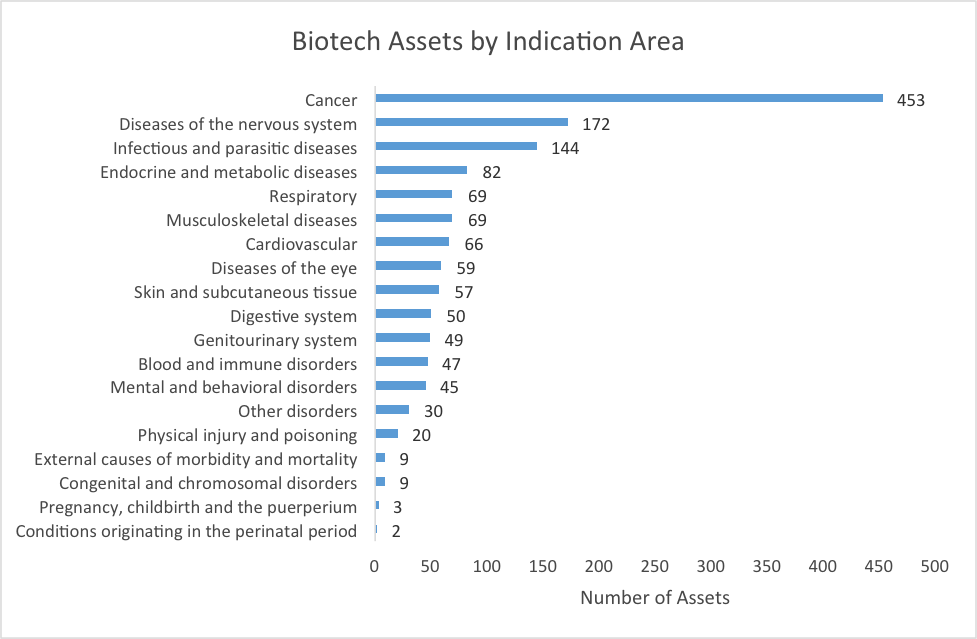
Using the LSN Company Platform, we are able to observe the wealth of innovation occurring in this region. We analyzed a sample of biotech and medtech innovators across nine Northeastern states: Connecticut, Maine, Massachusetts, New Hampshire, New Jersey, New York, Pennsylvania, Rhode Island, and Vermont. This sample drew from the pipelines of almost 400 life science companies, and included 1596 biotech assets in a range of developmental phases, from Preclinical through Phase III trials, as well as 154 medtech products in development. For 1435 of the biotech assets, we are able to track the primary indication area targeted by the product, as is shown in Figure 1. As in the Southwest, we saw significant pipelines in cancer, diseases of the nervous system, and infectious and parasitic diseases. With such a large sample, even less crowded indication fields such as blood and immune diseases and mental and behavioral disorders possess a significant number of pipeline assets.

1

Figure 1 | Source: LSN Company Platform, Data as of March 11, 2015

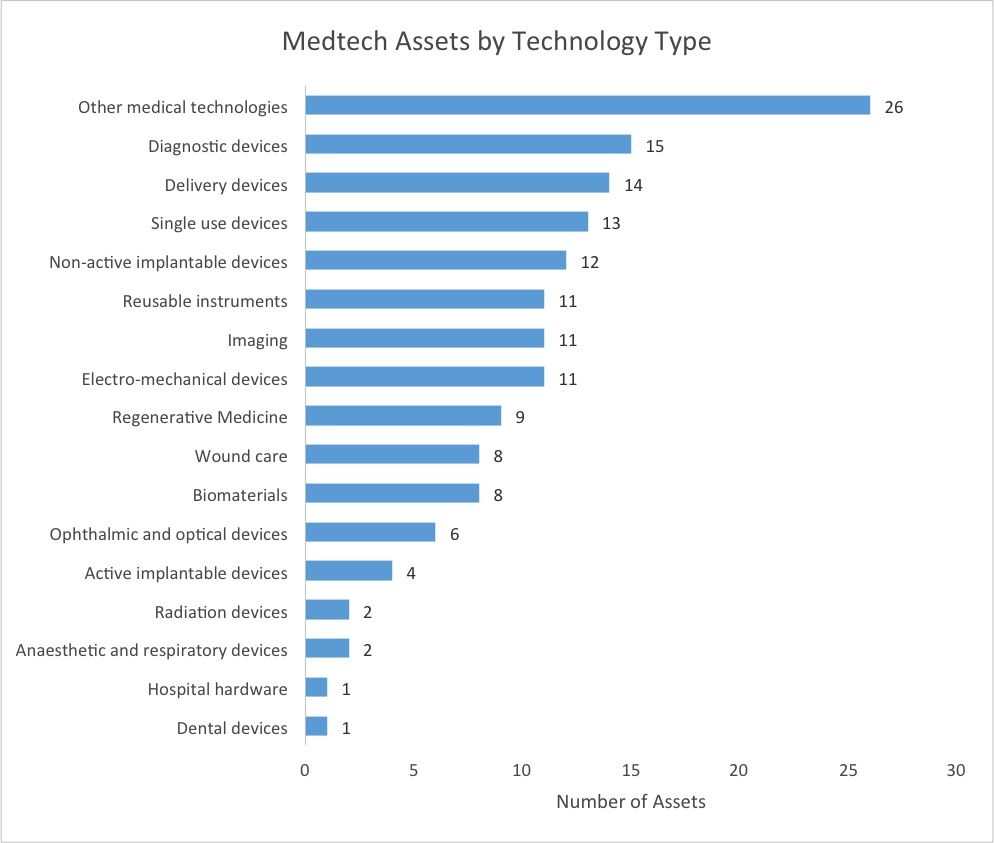
We also found a great variety of medtech assets, as is shown in Figure 2. Diagnostic devices and delivery devices were the two most common technology types; this is in sharp contrast with the Southwest, where implantable devices and reusable instruments were the leading fields of medtech innovation.

Figure 2 | Source: LSN Company Platform, Data as of March 11, 2015

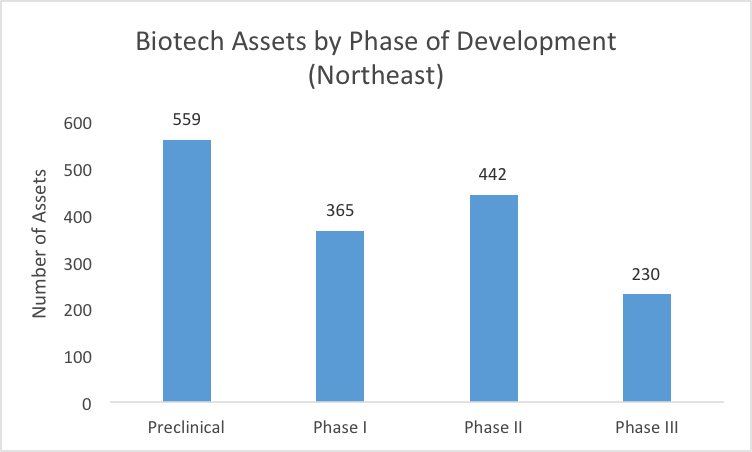
Of the biotech assets, the greatest number are at the preclinical phase of development. However, Figure 3 shows that the drop-off before the IND is much less sharp than we saw in the Southwest.

3

Figure 3 | Source: LSN Company Platform, Data as of March 11, 2015

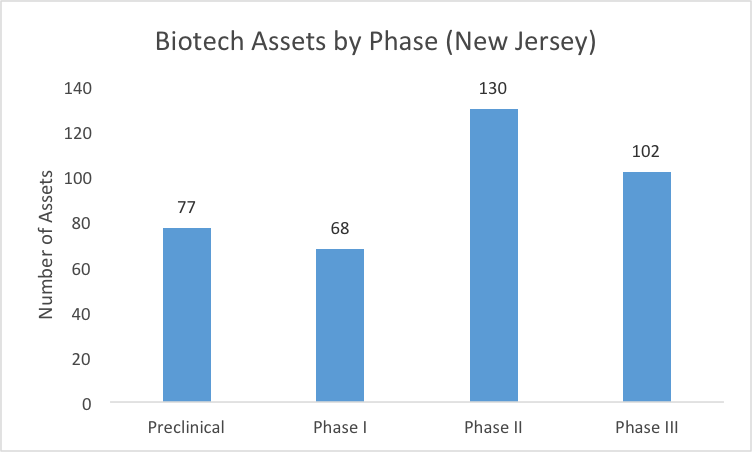
There are fewer than 2 preclinical assets for every Phase I asset, and only 2.4 preclinical assets for every Phase III asset. This is likely because the local pharma strength leads to assets migrating to the region as they progress through the pipeline due to relocations, partnerships, or acquisitions.  One notable state within the sample is New Jersey (see Figure 4), where we find more Phase III assets than preclinical or Phase I assets.

4

Figure 4 | Source: LSN Company Platform, Data as of March 11, 2015

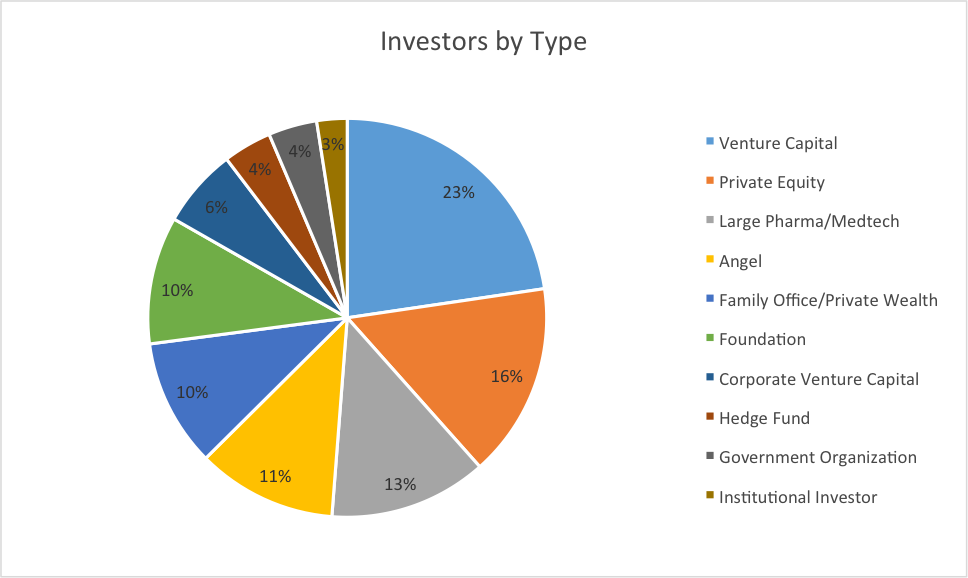
As the Northeast is well-known for life science innovation, it’s unsurprising that we also find many local investors who are interested in early stage life science opportunities. Figure 5 shows the types of investors that LSN has identified in this region.

5

Figure 5 | Source: LSN Investor Platform, Data as of March 11, 2015

There are significant distinctions between life science investors in the Northeast and life science investors in the Southwest. Predictably, we see a greater corporate presence, with large pharma and medtech companies and their corporate venture funds together comprising 19% of active life science investors in the region. Only 23% of Northeast-based life science investors are venture capital firms, a clear sign that it’s important to look beyond this funding source if you’re seeking a Northeast-based investor.

[Video] Biotech Angel Groups Panel at RESI 4

12 Mar

By Nono Hu, Senior Manager, Branding & Messaging, LSN

Nono 2If you are in the biotech arena looking for capital allocations from angel investors, this recap video is for you. The RESI 4 Biotech Angel Groups Panel features five investors from life science angel networks throughout the USA. In this panel, angels explained how they assess early-stage biotech opportunities and discussed the following topics:

• What attracts you to the biotech space as an angel investor?
• What are the headwinds that you see when you look at biotech companies?
• What’s the state of optimism regarding mergers and acquisition activity in the next 1-2 years?
• What do you look for in a biotech company that attracts you?
• How do you assess the potential that is locked in biotech companies before they generate revenue?

Watch the video to learn more.

Hot Life Science Investor Mandate 1: Family Office Seeking Early Stage Oncology Opportunities

12 Mar

A specialist investor that is funded by private capital was founded in 2011 and has operations in Luxembourg, Belgium and USA. The firm exclusively focuses on investments in early-stage drug development companies targeting cancer therapies. The firm is most interested in companies from late seed stage to series A. The investment size will vary, and it can range from a few hundred thousand dollars up to a couple of million dollars. The firm may make 3-4 investments in the next year, depending on the opportunity. The firm has no geographic restriction and is actively seeking new investment opportunities across the globe.

In the life sciences, the firm is currently looking for new investments targeting the development of oncology therapies. The firm will not invest in medical device or diagnostics. The firm typically invests in companies with solid preclinical proof of concept (late preclinical stage/ pre-IND), and it will fund the companies at least up to human proof of concept (clinical phase Ib/ phase IIa). The firm prefers to invest in companies with small pipeline and a clear regulatory pathway. Historically, the firm was active in companies targeting immune therapy and tumor cell metabolism within the oncology field.

The firm primarily invests in private companies with experienced management team and breakthrough potential. The firm looks to be a lead investor and may take a board seat.

If you are interested in more information about this investor and other investors tracked by LSN, please email mandates@lifesciencenation.com

Hot Life Science Investor Mandate 2: Russian Corporate VC Fund Seeking Life Science Investments Globally

12 Mar

A venture capital fund financed entirely by a Russian pharmaceutical company is looking to make investments ranging from $5-$15 million in companies in the life science space. The firm could make as many as 2-3 investments over the next 6-9 months and is willing to allocate to companies around the globe. Besides equity investment, the firm would consider local licensing opportunities for Russian/CIS market.

The fund is currently looking for companies developing therapeutics and is open to both small molecules, biologics, and cell/gene therapy. The firm is more interested in companies working with single assets though they are also willing to consider platform technologies. Indications of interest include Oncology, Inflammation, Neurodegenerative diseases, Orphan genetic diseases, Critical care, Regenerative medicine and Cardiovascular. The firm looks for companies that have at least reached in-vivo proof of concept with their lead asset.

The fund is looking for privately held companies and prefers companies with experienced management teams in place. The firm looks to act as a value-added investor through their strategic alignment with its parent company, and looks to take a seat on the company’s board on a case by case basis. The firm is willing to both lead and co-invest in financing rounds.

If you are interested in more information about this investor and other investors tracked by LSN, please email mandates@lifesciencenation.com

Hot Life Science Investor Mandate 3: South Korean Pharmaceutical Company Seeking to In-License Clinical Stage Therapeutics in Neurology, Hepatology, and Gastroenterology

12 Mar

A South Korean pharmaceutical company that specializes in Gastrointestinal, CNS, and Metabolic products is actively searching for promising therapeutic candidates under development around the world to incorporate into its pipeline. The company is flexible in terms of the structure, but mostly in-licensing or co-development. The company is interested in world wide/major territories such as the US, EU, APAC, and East Asia. 

The firm is currently seeking promising therapeutic candidates to incorporate into its pipeline. The company is most interested in neurology, hepatology, and gastroenterology. However, the firm is also interested in other therapeutic areas that address large unmet medical needs. The company will look at both small molecules and biologics and will consider only NCE or NCE-like molecules (such as repositioning molecule, new indication, etc). The company prefers assets in phase I, II, or IND-ready. However, the company will also look at assets in phase III and NDA stage.

If you are interested in more information about this investor and other investors tracked by LSN, please email mandates@lifesciencenation.com

February Mandate Roundup: 79 Investors from 13 Countries

5 Mar

By Lucy Parkinson, Senior Research Manager, LSN

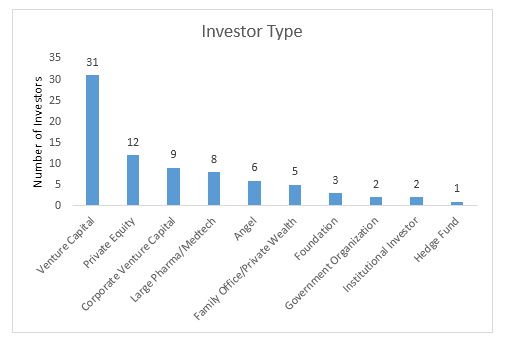
lucy 10*10This February, LSN’s research staff in Boston has seen not only a lot of snowfall, but also a lot of mandates. We spoke with a total of 79 investors during this short, snowy month. As Figure 1 demonstrates, we had conversations with every type of life science investor that LSN tracks:


01

Figure 1 | Source: LSN Investor Platform, Data as of February 28, 2015

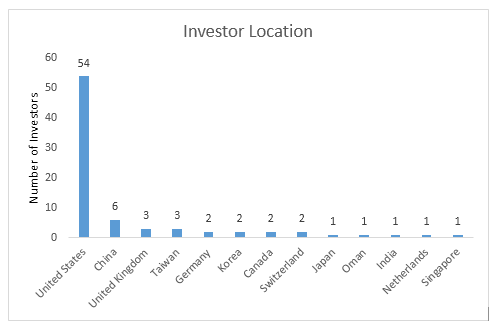
These investors are also diverse geographically; although most are based in the U.S., we also spoke to investors in 12 other countries around the world (see Figure 2). Fourteen of these investors are based in Asia, a region often untapped by entrepreneurs located outside of it; LSN has discovered through our mandate interviews that most Asia-based life science investors are looking beyond the region for investment opportunities. 

02

Figure 2 | Source: LSN Investor Platform, Data as of February 28, 2015

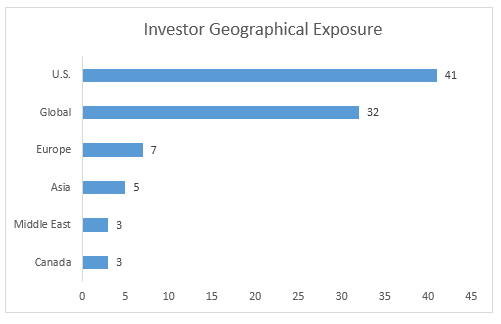
As you can see in Figure 3 below, almost half of these investors are interested in opportunities globally. The rest focus on one or several specific geographic regions, with the U.S. being the most common.

03

Figure 3 | Source: LSN Investor Platform, Data as of February 28, 2015

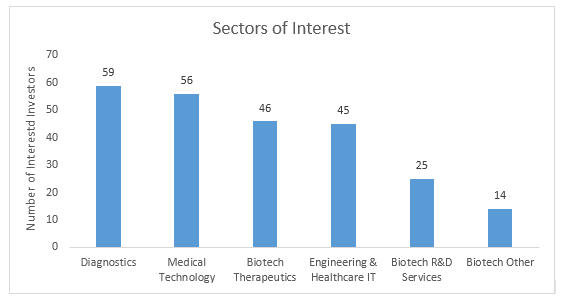
The investors we contact have varied interests across the life sciences; some invest opportunistically in any part of the field, whereas others focus on a particular area of speciality. In February 2015, the diagnostics sector attracted interest from the greatest number of investors, followed by medical technology and biotech therapeutics (see Figure 4). We’ve found from our discussions with investors that diagnostics companies receive attention from both medtech investors interested in diagnostic devices and imaging technologies, and also from biotech investors interested in molecular diagnostics and personalized medicine. In addition to these three sectors, we also speak to investors who are interested in engineering companies (including companies developing lab equipment or healthcare IT products), biotech R&D companies (including CROs), and other biotech opportunities such as industrial biotech or agricultural biotech.

04

Figure 4 | Source: LSN Investor Platform, Data as of February 28, 2015

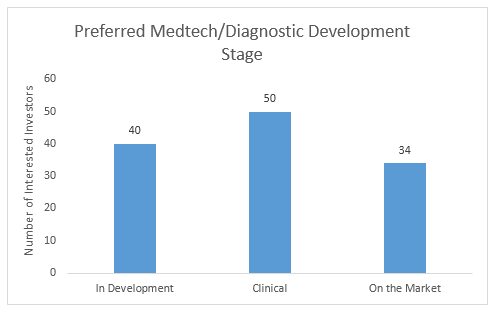
LSN focuses on researching investors who are open to early stage life science opportunities, and those represented in February’s mandates are no exception. The investors we spoke with are most likely to be focused on companies that have successfully passed through the IDE/IND stage and have products in early clinical trials. However, we also spoke to many investors who look at other opportunities, including those offered by very early stage companies as well as late stage companies that have begun marketing their product. Figure 5 shows the stages at which diagnostic and medical technology investors prefer to invest:

05

Figure 5 | Source: LSN Investor Platform, Data as of February 28, 2015

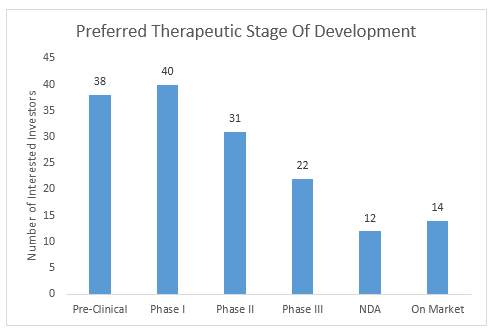
Figure 6 shows the stage at which biotech therapeutics investors prefer to invest. In this sector, you can see that interest in fully developed products drops off sharply, due to the much longer development cycle involved.

06

Figure 6 | Source: LSN Investor Platform, Data as of February 28, 2015

While this roundup provides an overview of the information we have recently gathered regarding investor interest, we collect many other details that help us identify suitable opportunities for each investor, including which indication areas and technological approaches the investor focuses on, and what kind of financing rounds the investor is open to participating in. These details are invaluable to a life science company looking to find the right investor fit. We look forward to speaking with more life science investors during March and beyond.