Gliachem’s Innovator’s Pitch Challenge Success at RESI

Vanessa-WilliamsonVanessa Williamson Interview with Vanessa Williamson, Entrepreneur-in-Residence/CEO at Gliachem

By Caitlin Dolegowski, Marketing Manager, LSN

CaitiCaitlin Dolegowski

Caitlin Dolegowski (CD): Please introduce us to Gliachem and the company’s technology.

Vanessa Williamson (VW): Gliachem is a pre-clinical stage company developing small molecule therapeutics for rare and neurological diseases being spun out from the University Health Network (UHN) in Toronto, Canada. We have a first-in-class neurology drug development program with a unique mechanism of action and are targeting Rett Syndrome as our initial clinical indication.

Rett Syndrome is a rare, x-linked neurological disorder that affects how the brain develops, typically manifesting in females at 18-36 months. Its symptoms are highly debilitating and include intractable motor and cognitive disabilities, breathing issues, and seizures. Lifelong caregiver support is required, and patient lifespan is often reduced. Limited treatment options exist, and the only approved drug, Trofinetide, shows small effect size and tolerability issues, leaving significant room for improvement. With 350,000 Rett patients worldwide, including 34,000 in major markets, there is the chance for blockbuster success.

We are currently in the advanced hit to lead stage. We have strong genetic target validation for a novel Rett target, target PD assays developed and qualified to support lead candidate identification and have developed 3 distinct chemical series (NCEs), each demonstrating potency, selectivity and drug-like properties.

CD: Tell us about Gliachem’s team.

VW: Gliachem is in the process of incorporation, which will be complete by the end of 2023. Our team is currently our scientific co-founders – Dr. James Eubanks and Dr. Mark Reed – and myself as CEO. Over the next few months, we will be expanding the leadership team.

The technology originated in the lab of Dr. Eubanks at UHN. Dr. Eubanks is a neurodevelopment and molecular genetics expert with over 30 years of experience in academic research, including translational development. He is also a well-recognized KOL in Rett Syndrome. At UHN, he is a Senior Scientist and Research Division Head for Experimental and Translational Neuroscience at the Krembil Research Institute.

Dr. Reed is an accomplished medicinal chemist and expert in CNS drug discovery with over 20 years of experience in academia, biotech, and large pharma. He is currently the Director of the Center for Medicinal Chemistry and Drug Discovery at UHN, as well as co-founder and CSO of Treventis Corporation, a biotech start-up focused on protein misfolding related specifically to Alzheimer’s, who recently partnered their lead program with Takeda for $350M.

I have executive experience in the life sciences sector, including the scale-up and commercialization of small molecule therapeutics and diagnostics. Prior to Gliachem, I’ve most recently held VP Corporate Development roles in the diagnostics space, focusing on business and partnership development, sales and marketing, as well as M&A and fundraising.

CD: This was Gliachem’s first time at RESI. How did you initially learn about the conference and what did you think of the RESI experience?

VW: In a word, RESI was AMAZING. We learned about the conference from the Commercialization Office at UHN, who also supported our participation. We did the in-person partnering, as well as the Innovators Pitch Challenge (IPC). RESI curated a fantastic list of investor attendees, and the entire event was so smooth and well organized. The details about the investors that you could access through the partnering platform, especially if you elected the Premiere Mandate, was second to none. That enabled us to strategically target investors, making the whole meeting highly productive.

CD: What stage of fundraising is Gliachem in and what are your goals in 2024?

VW: RESI was the soft launch of our fundraising. We had the opportunity to meet with many early-stage investors from around the world and test both the market and our business plan. We had some very engaging meetings and positive feedback, and are ready to get into deeper discussions. We are raising a $3.2M CAD seed round, which will enable us to complete our hit to lead activities, identify an advanced lead, complete our proof of concept in a Rett animal model and initiate lead optimization. We are looking for strategic investors, who will not only provide financing, but who will also support us in this very exciting stage of early growth.

CD: Congratulations on your second-place finish at RESI Boston September Innovator’s Pitch Challenge (IPC)! What do you think was the key to your success at RESI September?

VW: Thank you! We are so proud of this accomplishment!

Aside from our team and technology, it absolutely was the amount of time we spent preparing. A 4-minute pitch is not easy. There is an opportunity to add a bunch more content than you would with just a standard elevator pitch, but you can’t overload. Coming up with a succinct message that focused on the problem, solution, differentiation and market opportunity was key. As tempting as it was to get deep into the science, we focused on the business opportunity.

The LSN and RESI resources were also invaluable. We attended the prep session you offered and followed the recommendations with respect to focus.

Preparation also applies to the investor meetings. Research the investors. Reach out to the right ones with a tailored and succinct message. And be persistent. Needless to say, many of my best meetings did not come from immediate replies to my initial message.

CD: What advice would you like to give to fellow entrepreneurs about RESI conferences?

VW: In short, do it! It was an invaluable experience. Take advantage of the IPC (including the poster area) as it does enable another level of exposure that you wouldn’t usually get. The judges also provided written feedback which we have used as we continue to evolve our pitch. Finally – prepare, prepare, prepare. Have a plan. There is a lot going on in a really short time, and to maximize the opportunities you need to have a plan. That said, don’t be constrained by your planning and be open to going with the flow. The serendipitous connections for me were just as valuable as the targeted ones.

RESI-SF-2024-Banner-1100

Crossing the Atlantic: European Startups Finding Funding at RESI

By Rikki Piccirillo, Marketing Manager, LSN

Rikki

In this episode, join host Dennis Ford, Founder & CEO, Life Science Nation; Creator of RESI Conference Series as he engages in a captivating conversation with Greg Mannix, a leading expert in the world of life sciences investment. Together, they discuss the exciting world of European startups making their way across the Atlantic to seek funding opportunities in North America, with a particular focus on the opportunities in the city of Boston.

Greg Mannix, a driving force behind the RESI Conference, shares his wealth of knowledge and experience in helping European entrepreneurs navigate the complex terrain of North American investment. As the Managing Director at Life Science Nation (LSN) and an advocate for international collaboration in the life sciences industry, Mannix offers insights into the strategies, challenges, and success stories of European startups entering the North American market.

Discover why Boston, often referred to as the “Silicon Valley of the East Coast,” is the prime destination for European life science companies seeking funding. Dive into the thriving ecosystem of biotech, medtech, and digital health innovations and find out how the RESI Conference connects these European innovators with the vast investment opportunities in the United States.

https://podcasters.spotify.com/pod/show/life-science-nation/episodes/Crossing-the-Atlantic-European-Startups-Finding-Funding-at-RESI-e2906mf

RESI-Boston-2023-September-1100px-w

Interview with Shikha Sharma, Senior Director, Innovation at California Life Sciences (CLS)

Shikha-SharmaShikha Sharma Interview with Shikha Sharma, Senior Director, Innovation at California Life Sciences

By Caitlin Dolegowski, Marketing Manager, LSN

CaitiCaitlin Dolegowski

Caitlin Dolegowski (CD): Please introduce us to California Life Sciences.

Shikha Sharma (SS): California Life Sciences (CLS) is the state’s most impactful life sciences membership organization, advocating for the sector and its diverse innovation pipeline. For more than 30 years, CLS has served the community by supporting companies of all sizes, from early-stage innovators and startups to established industry leaders in the fields of biotechnology, pharmaceuticals, and medical technology. As integral components of a healthy and collaborative ecosystem, CLS also works closely with universities, academic and research institutions, the investment community, and other critical partners that promote this vibrant sector. On behalf of our more than 1,200 member organizations, CLS works to shape public policy, improve access to breakthrough technologies, educate lawmakers, and advance equity within our ecosystem by championing innovative solutions for some of the most pressing challenges of our times. In doing so, CLS fulfills its mission to protect and nurture California’s life sciences industry, empowering discoveries that lead to healthier lives around the world.

CD: What type of companies do California Life Sciences consider for membership?

SS: CLS members represent companies of all sizes, from early-stage innovators and startups to established industry leaders in the fields of biotechnology, pharmaceuticals, and medical technology. As integral components of a healthy and collaborative ecosystem, CLS also works closely with universities, academic and research institutions, the investment community, and other critical partners that promote this vibrant sector.

CD: What stage of fundraising is California Life Sciences looking to support?

SS: The CLS Innovation & Entrepreneurship programs primarily support early-stage companies in fundraising stages from pre-seed to Series A. However, the broader CLS community encompasses members, companies, stakeholders, and pharma industry professionals with accessibility to later stage fundraising know-how and connections. Becoming part of CLS gives you access to a broad network that can directly and indirectly support companies in any stage of fundraising.

CD: Clearly, California Life Sciences, is in California. Though, not all your members are located in California. What are your geographic qualifications?

SS: We don’t have geographic qualifications, per se.  CLS welcomes any organization that is looking to access, expand and/or maintain a foothold in what I would consider the most robust life sciences ecosystem worldwide.

CD: What works well for California Life Sciences in being a part of the RESI experience?

SS: As part of our portfolio of entrepreneurship services, CLS seeks to establish partnerships with respected partnering and investor conferences to aid our members in the fundraising journeys. Importantly, opportunities like RESI connects them with Seed and Series B investors, channel and licensing partners.

CD: What other information is important for companies to consider about California Life Sciences?

SS:  California Life Sciences’ innovation and entrepreneurship initiatives connect life science startups to the resources needed to help them effectively scale their ventures. Our programs create a platform for accessing business partners, investors, foundations and patient advocacy organizations, peers, and other industry leaders.

Designed to nurture and advocate for emerging and diverse innovators from throughout the state, CLS offers advisory services, positioning for capital tools, access to capital through strategic partnerships and events and US market access resources to help in the development and commercialization of their business.

RESI-Boston-2023-September-1100px-w

 Clinials + LSN Educational Workshop = RESI Innovator’s Pitch Challenge Success

Maree-BeareMaree Beare Interview with Maree Beare, Founder at Clinials

By Caitlin Dolegowski, Marketing Manager, LSN

CaitiCaitlin Dolegowski

Maree Beare, Founder at Clinials, is a sector leader in HealthTec, FemTech and BioTech innovation. In 2021, Maree launched her second innovation, a BioTech company Clinials. Clinials is an AI-Driven clinical trial participant recruitment platform based in Brisbane, Australia, and a member of BEDA (Brisbane Economic Development Agency). Maree speaks with us about being a part of BEDA’s MedTech Accelerator cohort and her introduction to Life Science Nation followed by her eventual second-place finish in the Innovator’s Pitch Challenge at RESI Boston June earlier this summer.

RESI-Boston-2023-September-1100px-w

Rx Bandz Finds Great Success at RESI

Jessica-Walsh
Jessica Walsh
Interview with Jessica Walsh, Founder and CEO, Rx Bandz

By Caitlin Dolegowski, Marketing Manager, LSN

Caiti
Caitlin Dolegowski

Caitlin Dolegowski (CD): Please introduce us to Rx Bandz and the company’s technology.

Jessica Walsh (JW): We created MiniJect®, the world’s smallest auto-injector, that is designed to deliver a wide range of injectable medications, including viscous biologics and vaccines, from 1 mL – 5 mL via intramuscular or subcutaneous injection.  It’s easy to use, extremely rugged and reliable, waterproof, temperature resistant, and versatile.

We started out to deliver epinephrine targeting the huge global market of people who have severe allergies.  We added work with the military, and our pipeline has expanded to include injectable medications to stop pain, hemorrhages, and other emergency conditions within the $55 billion auto-injector market.

CD: Tell us about the Rx Bandz team.

JW: We have an amazing team with decades of experience in engineering, drug development, and quality management. In addition, they have brought other auto-injectors to market.  We started with a few core people and grew to attract world experts and strategic partners.  They are experienced and smart, but also, they fit into our lean and agile way of working: mission-focused, collaborative, and supportive.

CD: Rx Bandz first attended a RESI conference in Vienna. How did you learn about the conference?

JW: We were just starting out when I received an email. It was my first international conference to present our auto-injector. I still recall the energy of the space and connecting with amazing people from our industry that attended the event from around the world. I still stay in touch with many of them. We have been very fortunate to have so many people who are enthusiastic about our technology and have supported our efforts.

CD: What stage of fundraising is Rx Bandz in and what were you looking to accomplish at RESI when you originally registered?

JW: We are currently raising our Series A round that will take us through FDA approval and commercialize MiniJect. This is a high-growth opportunity for investors who have an interest in making healthcare safer, more effective, efficient, and affordable.

When I attended RESI, we were raising our Seed round, which ended up being oversubscribed and more than exceeded our goals. The conference helped us to connect with investors who were looking for a truly transformative medical device that meets patients’ needs in a global market with high revenue potential. We also met with pharmaceutical companies that were interested in MiniJect as a cost-effective, patent-centric drug delivery platform that could reliably deliver their formulation.

CD: When we spoke, you referenced RESI as being of great value in regard to timing and attendees. Can you tell us more about the appeal of RESI?

JW: The event at RESI provided us with international recognition in the healthcare industry during Bio Week in Vienna, Austria. It provided a platform for us to connect with investors and pharmaceutical companies that we would otherwise not have had the opportunity to meet. It is an excellent opportunity to meet with the right people.

CD: You all had some great success at RESI Vienna! You were RESI Innovation Challenge (now called the Innovator’s Pitch Challenge) winners. What did this success bring for Rx Bandz? 

JW: Winning RESI Innovation Challenge was a huge honor. We were up against some of the most innovative companies. Our entire team was thrilled that our work was recognized on an international platform.

I believe when presenting to investors, they like to see that your company has been vetted and the technology has received awards and or accolades. The RESI conference and competition provide a wonderful opportunity to showcase technology and promote the organization.  Besides a company’s innovative technology, it is critical that startups build relationships to form strategic partnerships and attract investment. Winning the International Innovation Challenge at RESI helped us to accomplish these goals.

CD: What advice would you like to provide to fellow entrepreneurs?

JW: I like to put the patient at the forefront of our efforts. It helps to know their stories and be inspired by the people who survived if they had our technology.  There is no doubt life science start-ups face challenges that organizations in other industries might not, and it can be a difficult pathway. It makes everything easier when you put the patient first. In addition, be bold, build a great team, and be unrelenting in your pursuit to bring your technology to market.

RESI-Boston-2023-June-1100px

Life Science Nation & Brisbane Economic Development Agency (BEDA) Equals RESI Success

Miriam-Kent
Miriam Kent
Interview with Miriam Kent, General Manager, Business Growth, Trade and Talent, Brisbane Economic Development Agency (BEDA)

By Caitlin Dolegowski, Marketing Manager, LSN

Caiti
Caitlin Dolegowski

Life Science Nation (LSN) worked with the Brisbane Economic Development Agency and their MedTech Accelerator cohort in a hybrid Entrepreneurial Education program that culminated at RESI JPM San Francisco. We talked with Miriam Kent, General Manager, Business Growth, Trade and Talent at BEDA to learn more about their take-aways from the education course and RESI conference and hear what is next for the MedTech innovation coming from Brisbane.

Caitlin Dolegowski (CD): Introduce us to Brisbane Economic Development Agency (BEDA) and discuss your focus in the life science industry and how the MedTech Accelerator cohort came to be? 

Miriam Kent: General Manager, Business Growth, Trade and Talent at Brisbane Economic Development Agency: As Brisbane’s champion, BEDA works to enhance and promote the city’s reputation globally, drive visitation, and attract investment and talent in key growth industries.

We support domestic and international investors with full market entry and expansion strategies, while supporting local businesses to scale globally and grow through our accelerator programs.

BEDA’s MedTech Initiative is designed to elevate our exceptional local talent, to attract international investment, and fast-track life-saving medical products to the market.

Brisbane has a strong track-record for innovation thanks to our world-class research institutes and universities. We’re supporting the next generation of companies to stand out in a globally competitive market, to foster fresh developments and discoveries.

CD: BEDA brought a MedTech Accelerator cohort to work with Life Science Nation (LSN) in a hybrid (virtual and in person) educational program and wrapping the program at RESI JPM San Francisco, can you tell us about the startups that attended? 

MK: A rapid test for sepsis, a bionic voice box, and an inhaler for anaphylaxis are just some of the life-changing healthcare innovations produced by the Brisbane cohort.  We were extremely proud to see two Brisbane companies take out gold and bronze in the Innovator’s Pitch Challenge.

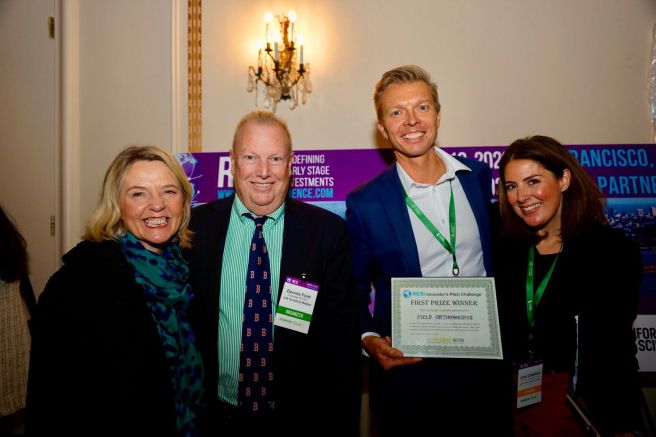
Field Orthopaedics impressed the panel of seasoned investors and industry experts to secure the top prize for their innovative surgical screws and nails for treating complex fractures.

Meanwhile, Max Kelsen, claimed bronze with its machine learning solutions that are transforming the way scientists store, analyse and work with data to fast-track vital research.

Leading Brisbane MedTech companies – Clinials, De Motu Cordis, Laronix, Microbio and Midnight Health were also awarded finalist seats and were successful in attracting global investor and partner interest.

CD: Congrats to the BEDA cohort who did very well in the Innovator’s Pitch Challenge at RESI JPM San Francisco, taking 1st and 3rd place! What aspects of the LSN educational program were most useful to help get the companies ready for JPM Week and pitching at RESI? 

MK: While these businesses are experts in their fields, knowing how to pitch their idea and who to pitch to on a global stage can be a challenge for some early-stage ventures looking to secure investment. With the support of Life Science Nation, our cohort members have been able to create strategies and connections to advance their global fundraising campaigns in a pivotal international market.

Throughout the program, the cohort has also benefited from mentorship from peak bodies like Life Sciences QLD, industry leaders like Vaxxas and ASX-listed Microba, as well as advice from local investors and venture capital groups.

CD: The educational program also featured executives from leading MedTech firms such as Stryker and Philips; how do you think their contributions shaped the success of the cohort at RESI JPM? 

MK: Insights shared by global leaders like Stryker provide invaluable context and underline the importance of a refined and strategic funding campaign.

Stryker’s recent investment in Brisbane’s Herston Quarter health precinct will help drive medical technology, innovation, and collaboration to improve patient outcomes and solidify our city’s capability and reputation as a global science and research leader.

CD: Did the mix of virtual content over several months and in-person tutoring at the start of the JPM Week work well? 

MK: The mix of virtual and in-person content ensures we can deliver an intensive, comprehensive learning experience, in a convenient way for leaders with busy schedules.

It is exciting to see the discussion and collaborations across continents.

CD: What is next for BEDA’s MedTech Accelerator cohort? 

MK: The feedback we’ve received has been hugely positive and we look forward to working with a new cohort for year two of our MedTech Accelerator in 2023.

The outstanding success of our local start-ups, in a competitive global market, is a testament to the quality of the research and development that’s happening here in Brisbane.

We’d like to thank Life Science Nation for partnering with us to support this vital industry.
MicrosoftTeams-image (5)

Get to Know RESI Sponsor BE Health Ventures

Arthur Chen
Arthur Chen
Interview with Arthur Chen, Managing Partner, BE Health Ventures

By Caitlin Dolegowski, Marketing Manager, LSN

Caiti
Caitlin Dolegowski

BE Health Ventures is the largest institution in Taiwan with a venture fund and accelerator dedicated to HealthTech, MedTech and digital health startups. Based in Taipei, they leverage the unique strengths of Taiwan’s thriving ecosystem to position themselves as the gateway to Asia for both local and international startups. BE Health was a valued sponsor this past RESI JPM San Francisco in January. In the following interview, BE Health’s Managing Partner, Arthur Chen, gives us insight into BE Health and how they are serving both local and international startups.

Caitlin Dolegowski (CD): Please introduce us to BE Health Ventures.

Arthur Chen (AC): BE Health Ventures is the FIRST and ONLY hospital-backed VC in Taiwan. We launched the accelerator program in 2018 and have helped accelerate about 100 different startups since then, backed by the support of two of the largest hospital networks in Taiwan. The total fund raised by the alumni has surpassed $150M USD.

In addition to helping secure funding, our accelerator program provides non-financial resources to help our startups to validate their solutions and business ideas with our hospital partners. And through our venture capital fund, we invest in companies with exciting potential and help them expand across Asia.

CD: What are some traits of the Asian markets that are different from the USA or Europe markets?

AC: Asia contains 60% of the world’s population and continues to grow. It is estimated that by 2030, the region will also have 60% of the world’s population aged 65 or older. According to a recent report I studied, the total estimated healthcare spending in Asia alone is estimated to exceed $4 trillion by next year, with hospitals, home care, telemedicine, medical device, and drug development expected to lead the way. In fact, the Asia-Pacific region has far surpassed the United States and Europe in terms of the demand for healthcare. Currently, the market growth in Asia Pacific is 19.9%, much higher than the 10% growth rate in the U.S. and Europe. However, unlike the US or Europe, Asia is not a single market. We have China, Japan, India, Southeast Asia… and so on. Different countries have different regulatory paths, such as NMPA in China, PMDA in Japan, and each country also has its own reimbursement policies and payer structure; not to mention that cultural differences add to the threshold for overseas startups to enter the Asian market. Therefore, we have launched the accelerator program to help.

CD: What should we as investors be looking for from startups that want to enter the Asian markets? How do you evaluate whether they made the most of it or not, and is that a good indicator for future success?

AC: Given the diversity of country profiles in Asia, it would not be easy to successfully penetrate different countries’ markets to achieve scale. Each market takes time to operate because of the differences in culture and government health policies. We find that the successful MedTech companies would be those that can offer differentiated technologies that are superior to the competitors but partner locally to provide a customized solution to attract customers in different markets. The companies that can provide end-to-end medical solutions that meet the full range of each customer’s needs will likely gain more market share.

CD: On the topic of American or international startups entering the APAC region, what makes Taiwan an attractive launchpad? Why did you choose Taiwan, and what is your plan for the Asian market hereafter?

AC: There are many reasons why Taiwan is a viable choice to start your business in Asia. Here are some.

1) Taiwan is in the center of Asia: The average flight is 2h55m to six major cities in the western Pacific- Tokyo, Seoul, Beijing, Shanghai, Hong Kong, and Singapore. 2) Medical Resources: The NHI (National Health Insurance) in Taiwan has collected over 20 years of digitized, single-payer medical data. 3) Supply Chain: Strength in creating proprietary technology, R&D & manufacturing. 4) Convenient Entry for Foreign Talents: Foreign entrepreneurs can apply for the Entrepreneur Visa or the Employment Gold Card, both of which are routes for international talents to reach Taiwan. To sum up, Taiwan serves as an important bridge connecting the West to emerging Asia-Pacific markets. The geographical location of Taiwan makes it the perfect place to start your business in Asia, and then leverage Taiwan as a launchpad to expand your business presence to the rest of Asia.

CD: How would you characterize the current startup investment scene in Taiwan? What kind of opportunities should we be aware of?

AC: Startup investment in the health and medical sector in Taiwan has been heating up year by year. In 2021, the number of early-stage investments in this sector nearly tripled, with over 430 deals funded, reaching a record high. Cell therapy, CDMO, medical AI, and advanced medical devices are some of the hottest topics in Taiwan’s early-stage funding market, serving as the main drivers of this wave of healthcare investment boom. With new medical treatment and new technological breakthroughs, more ICT companies and cross-sector startups are expected to join the industry.

Due to the size and growth rate of the Asian healthcare market and the power of technology to transform the industry in recent years, more technology giants have chosen Taiwan as their base in Asia to form partnerships with the healthcare industry. For example, Microsoft, Amazon, and Google have all set up offices and formed R&D teams in Taiwan. This trend of Taiwan becoming a medical technology cluster in Asia Pacific is already taking shape.

CD: What can BE provides for the international startups?

AC: BE supports both local and international startups to start, scale and grow within the challenging healthcare ecosystem in Asia. One thing that sets us apart as a VC is our unparalleled access to hospital facilities. In Taiwan, we partner with two of the largest hospital groups, namely Show Chwan Memorial Hospital and Taipei Medical University. And with these two partnerships combined, we can access about 15 hospitals across the Asia-Pacific region as well as IRCAD Taiwan, the largest non-invasive surgical training center in all of Asia. We offer an acceleration program called PoC (Proof of Clinical Evidence) for every stage of startups to use Taiwan as their launchpad into the Asian market, to verify product feasibility and market demand. The program recruits 1 batch per year and it follows a 20-24-week curriculum.

The BE PoC Accelerator Program provides the ideal opportunity for international startups to explore business opportunities in Asia. With our network of hospitals, startups can explore unmet clinical needs through needs validation, establishing a hospital pilot site, and access to medical resources. Startups interested in clinical trial, manufacturing, data access and fundraising resources will also benefit from our network across Taiwan and Asia.

We are now in the process of recruiting startups for a new batch. Startups interested in Asian market are welcome to apply! https://www.behealthpoc.com/

CD: We were thrilled to have BE Health Ventures as a sponsor and exhibitor at RESI JPM San Francisco! What were some of your takeaways from RESI? 

AC: The RESI conference connects startups with early-stage investors and strategic business partners. This year, we led 10 Taiwanese startup teams in the Pitch Challenge, many of which were highly rated by investors, and CytoAurora won second place. This is a proof to Taiwan’s innovative strength. As a startup accelerator and venture builder, BE Health continues to look forward to more cross-border collaborations, connecting the West and the East.

RESI March 2023 Digital Copy (FULL Banner Size)