


The Needle Issue #27

Juan-Carlos-Lopez
Juan Carlos Lopez
Andy-Marshall
Andy Marshall

This week, we provide some lightning takes on recent translational papers that caught our eye. We saw several preclinical advances in approaches for pain, neurodegeneration, cardiovascular disease and bone disorders. In the gene-editing arena, several new large DNA insertion technologies and RNA-targeting CRISPR systems came to the fore.

But before we dive in, we want to highlight the New England Journal of Medicine report from the groups of Rebecca Ahrens-Niklas and Lindsey George at the Children’s Hospital of Philadelphia that details a neuroepithelial tumor in a 5-year-old boy with severe mucopolysaccharidosis type I (MPSI, a.k.a. Hurler Syndrome) 4 years after receiving an intracisternal injection of an AAV-9 gene therapy.

Needless to say, approved AAV-based gene therapy products have a long track record of safety, efficacy and long-term transgene expression, but the specter of insertional mutagenesis has always loomed, even though AAV is a predominantly episomal vector. More than five years ago, a paper on hemophilia A dog studies published in Nature Biotechnology reported 1,741 unique AAV integration events in liver and clonal expansions of transduced hepatocytes, with many integrations near growth-related genes. In that case, no tumors were seen. Human liver-biopsy studies after AAV gene therapy have similarly made clear that integration and clonal hepatocyte expansion can happen, while not showing obvious malignant transformation. The NEJM report stands out as providing the first well-documented case of human oncogenesis plausibly linked to AAV vector integration. We can expect it to lead to tighter regulatory and post-marketing oversight of AAV gene therapies, as illustrated by the clinical hold the US Food and Drug Administration (FDA) already placed on Regenxbio’s gene therapy for Hurler, which was reported back in January. The takeaway for the investment community is that this is not entirely unexpected and should be viewed in the context of >6,000 patients receiving AAV gene therapy to date without major long-term toxic effects.

Safety signals have also been a recurring theme for drugs targeting sodium voltage channels (Nav1.7) in different pain indications. Multiple industry programs have encountered problems with off-target effects and poor clinical translation. Now a team led by Wengsheng Zhang at Sichuan University has identified potent nonopioid analgesics targeting multiple voltage-gated sodium channel isotypes with improved efficacy when tested their efficacy in perioperative rat models (PNAS). We wonder how such a broad approach would mitigate some of the safety flags encountered by previous clinical trials of investigational drugs targeting this pathway. Elsewhere, Xiao-Ming Li and collaborators at Zhejiang University School of Medicine set out to mitigate some of the adverse events of cannabinoid 1 (CB1) agonists, such as reduced locomotion, hypothermia, addiction and analgesic tolerance using so-called biased signaling and targeting downstream signaling cascades mediated predominantly through inhibitory guanine nucleotide binding protein (Gi), rather than beta-arrestin. They show their Gi-biased inhibitors display analgesic properties, but with reduced side effects when tested in mice (Cell). Over recent years, industry has explored cannabinoids to treat a wide range diseases, including chronic kidney disease, glaucoma and even obesity, again with limited clinical success. It will be interesting to see whether drugging a downstream signaling pathway will bring greater reward.

While cannabinoids haven’t exactly set the world of company formation alight, platforms leveraging autophagy biology are another story. In the past five years, Lysoway Therapeutics, Retro Biosciences, Casma Therapeutics, Automera Therapeutics, PAQ Therapeutics and AUTOTAC Bio have all received funding for platforms leveraging auto-phagosomal pathways, such as ATTEC, AUTAC, AUTOTAC, chaperone-mediated autophagy or AUTAB. The latest instantiation of ATTEC is described in a paper by Einar Sigurdsson and researchers from New York University, who develop single-domain antibodies to promote autophagy-mediated tau degradation in patient-derived neurons, improving motor function in tauopathy mice (Science Translational Medicine). Autophagy is also the focus for a collaboration between the Jia-Hong Lu team at the University of Macau and MindRank AI, which developed an AI-based screening platform using a variational autoencoder trained on a library (from MedChemExpress and TSBiochem) of over 1 million compounds to identify brain-penetrant small molecule autophagy enhancers effective in mouse models of Alzheimer’s disease (Nature Biomedical Engineering).

Elsewhere in the neurodegenerative disease field, TDP-43 aggregation is a hallmark of disorders like amyotrophic lateral sclerosis and frontotemporal dementia. Acurastem and Quralis have been tackling these diseases using antisense oligonucleotides (ASOs) to modulate splice-switching of genes affected by mutant TDP-43. But new research from the groups of James Shorter at the University of Pennsylvania, Christopher Donnelly at the University of Pittsburgh, Nicolas Fawzi at Brown University, Brigid Jensen at Thomas Jefferson University and Jeetain Mittal at Texas A&M reveals that short 34-nucleotide RNAs can act as chaperones to inhibit TDP-43 aggregation and prevent neurodegeneration in the mouse. This potentially opens up short RNA chaperones as a new therapeutic modality for protein-folding disorders (Science).

Moving away from the CNS, some intriguing advances in other therapeutic areas popped into our inbox. One of the new frontiers for oligonucleotide therapies is common cardiovascular indications, such as heart failure and atrial fibrillation. For example, Ionis’ transferrin-receptor 1 targeted ASO for downregulating phospholamban in R14-deleted dilated cardiomyopathy just entered phase 1 testing in a development partnership with AstraZeneca. Along these lines, two teams headed by Matthias Nahrendorf and Maarten Hulsman at Harvard Medical School report another target, osteopontin (Spp1), downregulation of which with an antibody–siRNA conjugate targeting TREM2+ cardiac macrophages suppresses atrial fibrillation in mice (Nature Cardiovascular Research).

Another area likely to attract more commercial activity going forward is metabolic bone disease. Last December, the US Food and Drug Administration (FDA) made a landmark regulatory shift, formally qualifying percentage change from baseline at 24 months in total hip bone mineral density (BMD) via imaging as a validated surrogate endpoint (previously, bone disease trial times typically took anywhere from two to five years). Two recent papers discuss new therapeutic approaches to heterotopic bone formation after injury. In the first, two teams led by Benjamin Levi and Michael Dellinger from UT Southwestern show that vascular endothelial growth factor D (VEGF-D)-induced lymphangiogenesis can promote heterotopic bone resorption in mice (PNAS). And across the Atlantic, the groups of Johan Keller and Anke Baranowsky at the University Medical Center Hamburg-Eppendorf target extracellular traps from myeloid cells using an FDA-approved recombinant DNAse 1 Pulmozyme to inhibit traumatic heterotopic ossification in mice (Science Translational Medicine; Roche/Genentech’s Pulmozyme (dornase alpha) is approved only for the pulmonary indication cystic fibrosis).

Moving onto advanced genetic therapeutics, several advances caught our attention in the gene-editing space. While programmable recombinases/integrases capable of introducing genetic cargoes >10 kb have been prominent in journals, momentum in commercializing these approaches has proceeded at a moderate pace, with Brink Therapeutics, Seamless Therapeutics and Stylus Medicine all raising funding in the past three years. The ability of recombinases to introduce large constructs has been touted as a key advantage over prime editing, which traditionally can only achieve desired edits no larger than ~300 bp. In this context, three recent papers disclose alternative prime-editing approaches for the genomic insertion of large sequences, overcoming the sequence size limitation. First, research patented by Ying Zhang’s group at Wuhan University shows that quadruple paired pegRNAs enable prime editing based genomic insertion of sequences as long as 26 kb in vitro (Nature). Second, the teams of Haoyi Wang, Chenxin Wang and Wei Li at the Chinese Academy of Science developed “PRIME-In”, a genome editing platform for the integration of up to 3 kb-long DNA sequences in human T cells independent of double-stranded DNA breaks (Nature Biomedical Engineering). Last, the groups of Erik Sontheimer and Wen Xue at the University of Massachusetts Chan Medical School described a “prime assembly” approach for the insertion of DNA fragments as long as 11 kb (Nature).

Finally, in the area of RNA editing, two recent studies expand the palette of CRISPR–Cas effectors capable of targeting and manipulating cells at the level of transcripts rather than nuclear DNA. A paper from I-Ming Hsing’s group at Hong Kong University of Science and Technology describes the first use of DNA-guided CRISPR–Cas12a effectors for programmable RNA recognition and cleavage (Nature Biotechnology). In a second paper, Yang Liu’s team at the University of Utah, Chase Biesel’s group at University of Würzburg and scientists from Akribion Therapeutics and BRAIN Biotech engineer CRISPR–Cas12a2 for the selective, DNA-triggered killing of virally infected human cells on the basis of their transcriptional profile (Nature).

Conference roundup

Selected startups raising funds in past three years presenting data at the American Society for Cell and Gene Therapy (ASCGT), Boston, May 11–15.

Preclinical financings (from April 21 to May 4)

Preclinical financings (from May 5 to May 11)

Preclinical financings (from May 12 to May 14)

Preclinical deals (from April 16 to April 29)

Preclinical deals (from April 30 to May 13)

Stay in touch

We hope you enjoyed this issue of The Needle and hit the button below to receive forthcoming issues into your inbox

If you’re interested in commercializing your science, get in touch. We can help you figure out the next steps for your startup’s translational research program and connect you with the right investor. Follow us on X, BlueSky and LinkedIn. Please send feedback; we’d love to hear from you (info@haystacksci.com).

Innovator’s Pitch Challenge: Where Deals Start

By Max Braht, VP of Business Development, LSN

Max-Braht-Headshot

At most conferences, startup pitch competitions are treated as side programming. Founders present a deck, judges select winners, applause follows, and the event moves on.

At RESI San Diego, the Innovator’s Pitch Challenge (IPC) is designed differently.

The IPC is not simply about winning a competition. It is designed to help early-stage life science companies generate investor attention, create business development momentum, and accelerate conversations that continue long after the presentation ends.

For many companies, that interaction becomes the most valuable part of the experience.

“The discussions also felt far more relationship-driven than transactional,” said Sian Farrell, CEO of StimOxyGen. “Conversations extended beyond the pitch itself and focused on clinical strategy, regulatory pathways, commercialization, and long-term value creation.”

Unlike standalone pitch competitions, the IPC is integrated directly into the larger RESI partnering ecosystem. Participating companies also receive partnering access, poster presentation visibility, and exposure throughout the conference environment, creating multiple opportunities for follow-up interaction.

“The combination of the presentation and the partnering platform made a significant difference,” said Bram de Moor, CEO of You2Yourself. “RESI brought us into direct contact with European and transatlantic life science investors who specifically seek early-stage diagnostic and biomarker companies — an audience difficult to reach through cold outreach.”

The IPC also introduces an interactive audience component through “RESI cash,” distributed to attendees during registration. Participants allocate their RESI cash to the companies they believe demonstrate the strongest potential, creating additional visibility and engagement throughout the event.

For founders navigating today’s capital environment, opportunities that combine exposure with concentrated investor access are increasingly valuable.

As fundraising conditions continue to demand stronger differentiation and clearer commercialization pathways, platforms that help companies sharpen messaging and generate high-quality investor interaction have become increasingly important.

At RESI, the IPC is intended to serve exactly that purpose.

Selected companies receive:

  • Two 5-day RESI registrations
  • A six-minute company presentation followed by seven minutes of investor Q&A
  • Poster presentation space
  • Full partnering access
  • Exposure to investors, strategic partners, and pharma business development teams throughout Convention Week

For many founders, the IPC becomes more than a presentation opportunity. It becomes the place where investor conversations begin, strategic relationships form, and fundraising momentum accelerates.

Applications for the Innovator’s Pitch Challenge at RESI San Diego are currently open, with limited presentation slots remaining.

Apply to Pitch at RESI San Diego

Hot Investor Mandate: Healthcare Impact-Driven VC Funds Pre-Series A and Series B Technologies Improving Healthcare Access and Outcomes

A global healthcare-focused impact venture capital fund affiliated with a broader healthcare innovation platform is headquartered in Asia. The firm invests equity capital into technology-enabled healthcare companies, typically deploying investments ranging from approximately $500K to $2M. The firm targets opportunities from Pre-Series A through Series B stages and seeks companies capable of delivering both measurable healthcare impact and strong financial returns. The firm invests globally, with particular interest in solutions that can scale across domestic markets as well as other emerging healthcare markets.  

The firm focuses on technologies that improve healthcare access, outcomes, and quality of care. Core investment themes include preventive healthcare and self-care solutions, healthy aging and longevity, holistic wellness, and AI-enabled hospital technologies. The firm prioritizes scalable digital health platforms, data-driven healthcare technologies, and tech-enabled services addressing systemic healthcare challenges across provider systems, hospital infrastructure, and consumer health channels.  

From a company and management team perspective, the firm seeks teams with strong operational execution, clearly defined impact objectives, and the ability to scale across diverse healthcare environments. The firm prioritizes companies with validated technologies, credible commercial models, and realistic market adoption strategies. Beyond capital, the firm provides portfolio companies with access to strategic partnerships, healthcare providers, hospital systems, and regional expansion support across Southeast Asia and other high-growth markets. The firm is open to acting as either a lead investor or co-investor. 

If you are interested in more information about this investor and other investors tracked by LSN, please email salescore@lifesciencenation.com. 

Hot Investor Mandate: Venture Arm of International Healthcare Company Invests in Life Science Technologies Addressing Respiratory Disease, CNS, Women’s Health 

A venture investment arm of an international healthcare and pharmaceutical organization is focused on advancing innovative patient-centered solutions. The firm invests in early-stage life sciences companies developing breakthrough therapeutics, medical devices, digital health technologies, nutraceuticals, and medical foods. The firm prioritizes opportunities aligned with key strategic healthcare areas and supports portfolio companies through industry expertise and international commercial networks.  

The firm focuses on respiratory diseases, central nervous system and neurological disorders, and women’s health. Within women’s health, areas of particular interest include urinary tract infections, vaginal infections, and related unmet healthcare needs. The firm evaluates opportunities across therapeutics, diagnostics, digital health, medical devices, nutraceuticals, and medical foods that can improve patient access, disease management, and quality of care. The firm does not invest in oncology and generally avoids technologies designed exclusively for inpatient or hospital-only environments, preferring solutions accessible in broader patient-care settings.  

In addition to early-stage investments, the firm is open to strategic collaborations with companies that already have commercialized products and are seeking international expansion opportunities. The firm leverages the broader organization’s global infrastructure and commercial presence to support geographic growth and market access.  

From a company and management team perspective, the firm seeks teams with strong scientific or clinical expertise and a clear commitment to impactful innovation. While prior industry experience is viewed positively, the firm remains open to working with promising founders and syndicate partners aligned with its strategic focus areas. 

If you are interested in more information about this investor and other investors tracked by LSN, please email salescore@lifesciencenation.com. 

Hot Investor Mandate: Europe-Based Life Sciences Focused VC Builds and Invests in Therapeutics Companies Across Oncology, Rare Diseases, and More

A life sciences-focused venture capital firm with offices in Europe focuses on disruptive early-stage life sciences companies and invests primarily in therapeutics. The firm is actively investing through its latest fund and has built a portfolio of multiple startups through both direct investments and company creation initiatives. The firm invests predominantly in Europe, with a strong emphasis on opportunities in Western Europe. 
 
The firm invests primarily in therapeutics and does not currently focus on medical devices, diagnostics, or digital health. The firm is modality-agnostic and evaluates a broad range of therapeutic approaches. Areas of strongest interest include oncology, immuno-oncology, rare and orphan diseases, infectious diseases, and immunology. The firm typically invests from preclinical through early clinical stages and focuses on opportunities with the potential to become first- or best-in-class therapies. 
 
From a company and management team perspective, the firm is open to working with both experienced operators and first-time entrepreneurs and has supported several companies led by first-time CEOs. The firm places strong emphasis on diversity in leadership and maintains a hands-on investment approach, actively mentoring and supporting portfolio companies. The firm is open to acting as either a lead investor or co-investor and works closely with scientific founders, academic institutions, and syndicate partners to help companies scale and mature. 

If you are interested in more information about this investor and other investors tracked by LSN, please email salescore@lifesciencenation.com. 

Hot Investor Mandate: Multi-Stage VC Firm With Ties to Global Financial Service Group Seeks Therapeutics and Medtech Addressing Unmet Medical Needs

A long-established venture capital firm based in Asia is affiliated with one of the world’s largest financial services groups. The firm invests across multiple sectors, including life sciences, and has the flexibility to deploy multi-million-dollar investments depending on the opportunity. The firm evaluates opportunities globally and is actively seeking new international investments. 

Within life sciences, the firm focuses on therapeutics and medical technologies that address significant unmet medical needs relevant to the firm’s domestic market. The firm is particularly interested in companies with clear partnership strategies involving pharmaceutical or healthcare organizations, including licensing, co-development, and strategic investment structures. The firm evaluates a range of therapeutic modalities including small molecules, biologics, biosimilars, and reformulated products. The firm primarily targets programs in Phase I clinical development but may also consider opportunities approaching clinical entry within approximately one year. Areas of interest include oncology, orphan diseases, and other high unmet need indications. 

From an investment structure perspective, the firm prefers to co-invest alongside established institutional investors in opportunities outside its domestic market. As a result, the firm strongly prefers companies with a credible lead investor or an existing institutional syndicate already in place. 

If you are interested in more information about this investor and other investors tracked by LSN, please email salescore@lifesciencenation.com. 

Mastering the Hybrid Hustle: Right Partnering Strategies at Convention Week

By Caitlin Dolegowski, Program Director, LSN

Partnering conferences are a vital catalyst in an early-stage company’s journey toward securing capital and achieving milestone fundraising goals.

To help you get the absolute most bang for your buck during San Diego Convention Week, here are the top 8 strategies to maximize your ROI on the partnering meetings.

  1. Book Your Registration and Travel Early

Beyond the financial perks, registering early ensures that you are among the very first attendees to gain access to the Partnering system when it opens. In the world of fundraising, the early bird gets the open calendar slot before an investor’s schedule is completely booked.

  1. Perfect Your Partnering Profile Before Sending a Single Message

Once your partnering login hits your inbox, don’t rush straight to messaging. First, meticulously fill out your company profile, detail your tech, and upload your marketing materials (pitch deck and executive summary).

Investors will vet your profile page before hitting “Accept” on a meeting request; an incomplete profile is an automatic decline.

  1. Treat Your Meeting Requests Like a High-Value Pitch

When you begin reaching out to the hundreds of investors, your message needs to be crisp and compelling. Investors want to see specific data points right away. Ensure your meeting requests concisely address:

  • The Hook: Introduce yourself and your company.
  • The Tech: Clearly explain the product/platform.
  • The Market: What critical unmet medical need does it address?
  • The Edge: What does the competition look like, and why are you better?
  • The Traction: Major landmarks, IP status, or clinical achievements to date.
  • The Ask: Current financing needs and exactly how the capital will be used.
  1. Aggressively Fill Your Calendar

Fundraising is a numbers game. Use the partnering system’s advanced filter functions to map out investors who strictly match your company’s sector, indication, and fundraising size. Remember: Most investors will not contact you proactively. You must drive the outreach.

  1. Skip the Morning Rush: Grab Your Badge Early

Most conferences allow you to pick your event badge early. Keep an eye out for the early registration announcements. Picking up your badge a day early allows you to beat the morning lines, scope out the venue, and map your routes between partnering tables and panels so you don’t waste a single minute.

  1. There Are No Breaks in Fundraising

The in-person day in San Diego is an immersive networking marathon. Socializing over breakfast, lunch, and during the evening cocktail reception is just as critical as your scheduled partnering slots. Keep your elevator pitch polished, have your digital business cards or QR codes ready, and be prepared to network with everyone around you. You never know who you might sit next to at lunch.

  1. Be Flexible and Consider All Meeting Types

If an investor turns down a formal meeting request due to a scheduling conflict, do not give up. Use the flexibility of the multiple partnering days to find a slot. Even if a mutual window can’t be found within the conference dates, use the platform to pivot and pitch an ad-hoc meeting via Zoom or a coffee chat outside the formal boundaries.

  1. Network Peer-to-Peer

While investors are the primary target, remember the immense value of talking to fellow founders, CEOs, and service providers. Building a network of peers allows you to share fundraising intelligence, compare notes on active investors, and discover trusted vendors.

Think Big: Build a Full-Year Partnering Runway

Because fundraising is a continuous effort, looking at a single event in isolation can leave gaps in your capital pipeline. LSN hosts five RESI conferences a year globally, feeding into an internal database tracking over 10,000 early-stage life science investors across Venture Capital, Family Offices, Angels, and Corporate Venture arms.

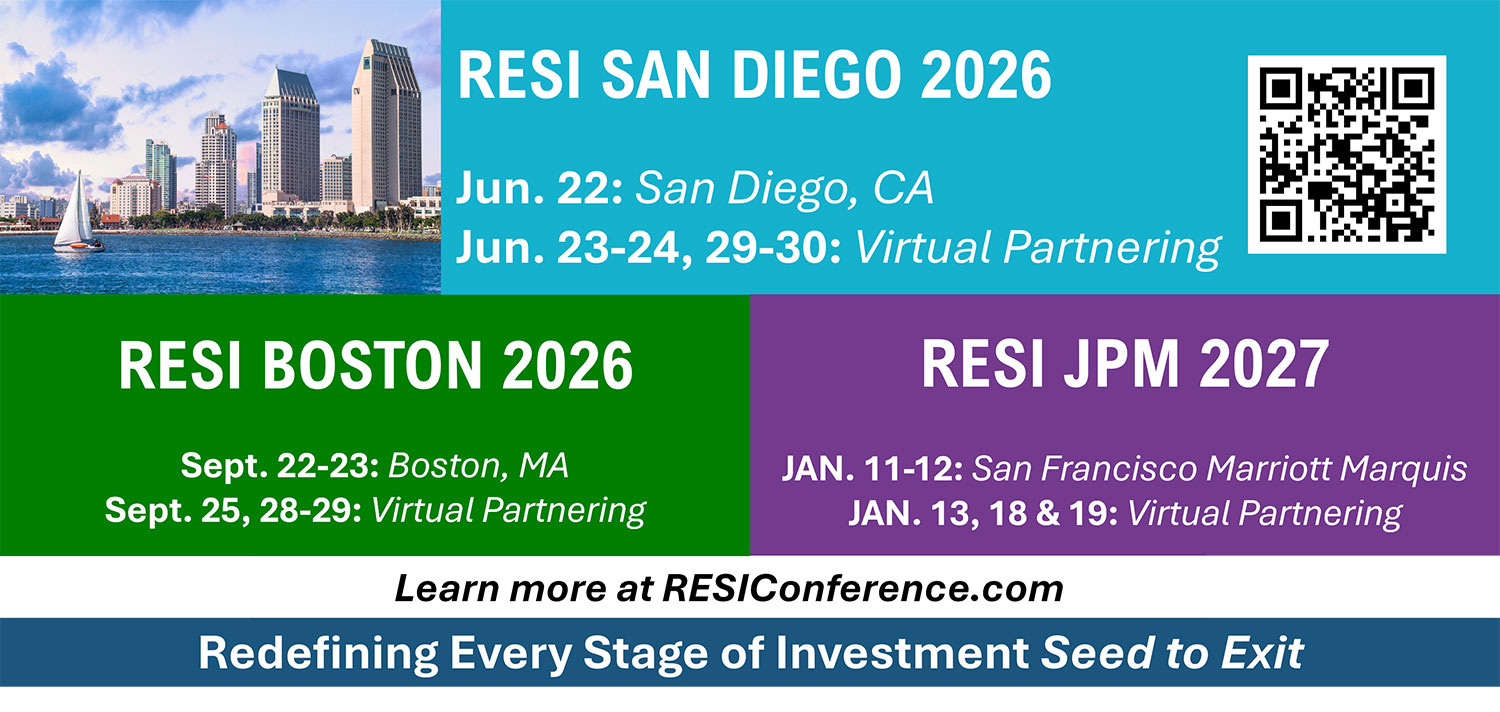
To maintain unstoppable momentum from summer into fall, look into options like the RESI San Diego & RESI Boston Bundle, which locks in your 5-Day Hybrid passes for both the June San Diego and September Boston events. Plan your milestones around the RESI calendar, start your outreach early, and put your best foot forward this June!

Register for RESI San Diego