
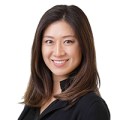
 Sara Choi |
An interview with Sara Choi, Partner of Wing VC
By Rory McCann, Marketing Manager & Conference Producer, LSN |
 Rory McCann |
Sara Choi is an investor who has seen it all. Her successful VC career started on the other side of the deal-making conversation as an early-stage founder. In our candid conversation, Sara discusses how her early experiences shaped her perspective working with fundraising CEOs. We discuss the industry of AI in digital health and life science, and her best advice for CEOs who are looking to stand out while avoiding burnout.
Rory McCann (RM): Where are we at right now with AI in digital health and life science?
Sara Choi (SC): First of all, we’ve come a long way, haven’t we? AI has only been here as a field since 1956 when it was started – about 60 years ago – at Dartmouth College. I think back then no one had any idea of just where it’d be applied and the power it could have, but now, we’re starting to see it really take shape and transform so many different industries. Specifically for digital health and the life sciences, AI has finally reached a point in maturity of the actual technology (hello, GPT-3!) – and also, ease of use – where we – founders, technologists, consumers etc. – can finally take advantage of vast data troves and really use AI to have transformational effects. I keep using that word transformation – it’s not just about a specific application, now I’m talking about AI and its power to terraform trillion-dollar industries, which I just don’t think could’ve happened before.
RM: You were an early-stage founder yourself. Tell us a little about your career path and how you got involved in VC?
SC: My path to venture was kind of circuitous. After my time at Google, I joined my co-founder’s company, and that business, like all my businesses, was in the enterprise space – using data in creative ways. That company had a pretty meteoric rise and then, unfortunately, a fiery crash. In that process, it was just me and my co-founder managing a team, managing a business really for the first time. That company had zero venture investors, and I really struggled as a founder to find my footing and to know what to do next because I didn’t really have the power of a community. So the next company (also a data-related company), we completely over-indexed. We had three venture investors in our seed round, we went through an accelerator, we really saw the power of surrounding ourselves with people that led to a better outcome.
We at Wing are enterprise investors, and we view our investments in health and life sciences as just that: truly an extension of core technology, but applied to a different vertical. A vertical obviously with nuances.
RM: What’s your investment theme with AI?
SC: I think the common theme running throughout both digital health and life sciences is that there has been a great proliferation of data that’s happened across the ecosystem… cost of sequencing dramatically decreasing, the rise of multi-omics and platforms that support that, EHR data capture, and better sensors throwing off data. We see a lot of opportunity at the intersection of data and bio taking advantage of these great vats of data using AI, math, and computation.
RM: What is your AUM?
SC: So we actually raised a fund over COVID, which was an interesting experience. I definitely have sympathy for and empathize with the founders who are trying to raise during this time. This fund was a $450M fund, and that is an increase from our last fund. This fund that we raised is extending our work early-stage, funding pre-seed, seeds, and Series A – we look forward to partnering with many founders with this capital.
RM: How many companies are in your portfolio presently?
SC: We are managing over thirty-five, and I think the exciting thing is that COVID has not stopped us. We continued to stay by our mission of helping entrepreneurs at the early stage, and actually since then, we’ve gone on to make three additional investments – all virtual – which is the world we live in.
RM: How has COVID changed your approach? Are you more likely to invest in a company you haven’t met face-to-face than you were before?
SC: The world has completely changed, so it’s pretty nutty to think about business-as-usual, but when our business is really helping early-stage founders try to achieve product-market fit, we felt compelled to continue our business to be able to back founders and their world-changing ideas. Some were founders we knew from before, and then, obviously, Zoom life can be a bit easier having developed that relationship already, but coming back to our post-COVID investments, the last Series A I invested in is a company I still haven’t met in person. We have done this all through Zoom. We spent effort getting to know one another, and I met with all the senior folks on their team, as well. That extra step of getting to know people as real people, as opposed to just a business or for their entrepreneurial endeavors, was really, really important to me during this time.
Zoom fatigue is very real. We should all just acknowledge that. Maybe it’s the person’s tenth hour on Zoom. Maybe they’re a little tired. Maybe they should be a little bit late because they haven’t gotten anything to eat all day because they’ve just been at their desk pounding through meetings. I think we should just be considerate, and kind, and forgiving – in general, as people – but especially given this strange situation.
RM: How many slots do you have left for the year, and are you changing your projections based on how the year has been going?
SC: We’re definitely very hands-on investors. I’d say we’re typically the most active investor when we get involved. With our bespoke approach where we’re really helping build companies as true partners, it’s hard for me to say, “Oh we’ll make X number of investments per year” because a lot depends on the kind of companies we meet, if they fit our investment thesis, etc. I’d say it’s not unusual for a partner to make two or three investments per year, but definitely don’t hold me to that number because I think a lot just depends on fit.
RM: Speaking of fit, tell me a little about your tried-and-true approach to the evaluation process. What are the top factors you’ll consider?
SC: The team is the most important thing. It’s incredibly important, especially at the early stages, which is what we do, to find adept founders, typically with deep domain expertise, who really have a founder-opportunity fit. What I mean by that is, they are not just searching for a problem to solve. Typically, our founders have really felt this pain, know it intimately, and have first-hand knowledge about the things they can do to make a difference. There are certain qualities that come along with that: grit, resilience, ability to build a team. But it definitely doesn’t stop there.
Even if you have an incredible founder, an incredible founding team, in the wrong market or with the wrong timing, that team is still destined to fail, and that’s why I think an equally important consideration is market and timing. If you have a huge market, you just have more wiggle room. No company was founded on a straight line. There are always ups and downs. Things always go awry. But will the market be forgiving? Is there enough customer demand?
RM: I think that’s great that an early-stage company’s failings aren’t seen as a strike against them, but rather their response can instead be one in their favor.
SC: Oh, absolutely. We even have a term for that at Wing. We call it the Early Walk in the Woods.
RM: Well, that sounds lovely.
SC: All founders in the beginning have a little walk through the woods. It’s a journey, and I’ve been through that journey several times myself as an entrepreneur. And you know what? If you don’t deviate from your day one plan, maybe that’s because you’re missing something. Part of the founder’s responsibility is to be responsive to the market, to be nimble, to be flexible, to weigh and take in advice and change their company for the better. We think of companies as being discreet, rigid entities, when in reality, they’re organisms. They’re going to multiply and grow, especially at these critical early stages. They’re taking in nutrients – little bits of information – that help them grow in particular ways, so it’s definitely an evolution, definitely will take many tries and failures, even within the over-arching story of success. We look for that, actually. Can the founder be flexible enough to change to the market feedback?
RM: Let’s talk a little bit about numbers. What’s your typical bite size on initial investment and follow-on investment size?
SC: We typically will want to be there for the life of the company and support our portfolio companies well. After making the initial investment, we’ll reserve about 2X for follow-on. So if it’s a $1M seed, or a $5M-$6M power seed or $7M-$10M A-round. We’re really active investors, and really present as a resource throughout the life of the company to IPO.
RM: How long is your due diligence timeline?
SC: It can really depend. I’d say we’re pretty fast investors, but we do our checks to be responsible. We’re thematic investors, so that gives us a leg-up and a head-start. I try to do founder checks with people they’ve worked with in the past, just to get a sense of who they are. I always make sure to do customer checks, as well. I also might check in with some experts. Hopefully by the end, everyone feels like it was a good process. Hopefully, the founder gets something out of it, and we learn about the company, too.
RM: Do you have a typical timeline with that process?
SC: Can be faster but two weeks is really a bar to get to know someone, especially in this current environment. It’s a pretty nimble, fast process, one of the benefits for having a pretty flexible, small firm.
RM: Can you make a perfect profile of an investment that would catch your eye immediately?
SC: For digital life sciences, in particular, where it’s so critical to take advantage of the proliferation of data that’s happened through the revolution in genomics, multi-omics, etc., I look for founders who are technical experts. They don’t have to be the ones still doing the coding or CS, but they have to be technical enough that they are able to instruct their team and have an edge. They’re generally working on a platform or a tool for novel data capture or making use of data in a platform or tool. We don’t play in the space of medical devices or diagnostics. An ideal company for us is using advanced AI, ML, or math in order to create some sort of a platform selling to a customer like pharma, research, biotech.
On the digital health side, customers can be hard to sell so if you have demonstrable proof or a plan for selling into those unwieldy customers, it’s all the better.
RM: You’ve been an early-stage founder and investor. What insight do you have for a founder today?
SC: First of all, I applaud what you’re doing. Starting a company takes an enormous act of bravery, and it’s hard, even under the best of circumstances. Right now, we’re in a historically unprecedented time, and it’s really tough. Surround yourself with community, and not just a community of expert advice, also a community for your mental wellbeing. I found it extremely isolating to have gone through the rise and fall of my first company. If your mental health is not in order, there’s no way you’re going to be able to serve your company well, serve your employees well, etc. I really encourage you to seek companionship. Seek community. Open yourself up and be vulnerable to those people. I think that making that kind of investment of your time pays back in ample dividends down the road when you are in a position of strength, tackling a market in a fierce way.
RM: Can that advice be applied to your fellow investor?
SC: Absolutely, especially now as the days can blend into one another. We need to rally around community with shared purposes. It’s only together that we’re going to affect change, now more than ever.
RM: How do partnering events that bring buyers and sellers together, like 4D Meets AI, which we’re so honored to have you participate in, add value?
SC: Bringing together of people can result in pretty incredible things, if done right, and I have confidence that this one will be done right. Thank you for your very careful selection of speakers to be on narrow topic areas that are of relevant interest to the audience. I think that’s just fantastic. Congregation to bring together this ecosystem of people, and once you bring a lot of people together with smart minds and good intentions, I think wonderful things can happen.
 Lisa Alderson is the CEO and Co-Founder of Genome Medical, Inc., a leading genomics technology and services company that is transforming the delivery of medicine by enabling access to genomic-based medicine for everyday care. Through its nationwide network of genetic specialists and efficient Genome Care DeliveryTM technology platform, Genome Medical provides health expertise throughout the genomics journey. Prior, Ms. Alderson served as the Chief Commercial Officer and Chief Strategy Officer of Invitae (NYSE: NVTA), a rapidly growing genetic information company. She was also the former CEO and president of CrossLoop Inc., a marketplace for technical services (acquired by Nasdaq: AVG). Prior to that, she was part of the start-up team at Genomic Health Inc. (Nasdaq: GHDX), president of Cinema Circle Inc., (acquired by Nasdaq: GAIA) and the former manager of strategic planning at The Walt Disney Co. Lisa also serves on the board of the Kidney Cancer Association. She has a track record of creating, funding and managing high-growth ventures. Lisa has an MBA with distinction from Harvard Business School and a BA from Colorado State University, where she graduated Summa Cum Laude.
 Steve has over 25 years’ experience building world-class teams, products and companies including as Global Director of Research Informatics for Astra. He has raised venture funding in the UK, EU and USA to develop and market highly innovative and commercially successful products in the life science, healthcare and food industries. Steve specialises in AI enabled precision medicine, drug discovery, large-scale genomics, semantic data integration and complex data analytics for life science, healthcare and clinical decision support. Steve is an Advisory Council member for Breast Cancer Now and is on the Steering Committee of the UKCRC Tissue Coordination Centre.
 Jay Goth is the CEO of Murrieta Genomics and President of SimplSeq, Inc. He is the former Managing Partner of Forentis Fund, a biotech venture capital firm that was focused on biomarker discover, data analytics and precision medicine. He serves as Executive Director of InSoCal CONNECT, a nonprofit that has structured mentorship and training programs for entrepreneurs, was a Senior Consultant with TriTech SBDC, one of seven technology designated Small Business Development Centers operating under the SBA, and served as an Entrepreneur in Residence at the University of California, Riverside. He holds board positions with several for-profit and non-profit enterprises.
 Committed to the delivery of Precision Medicine for cancer care, Yatin Mundkur leads Cellworks Group in transforming the treatment of cancer through personalized medicine. As CEO of Cellworks, Yatin Mundkur develops company strategy and commercialization of both its Precision Medicine and its Stratified Medicine businesses. Over the last 25 years, Yatin has launched businesses in medical diagnostics, technology and communications, delivering strong returns to investors consistently. As a Partner of Artiman Ventures he focuses on early-stage Technology and Healthcare investments. He is also on the Boards of Prysm, mSupply, Virsec, Xambala, Yantra and zSpace. Prior to joining Artiman Ventures, Yatin Mundkur was Managing Director at TeleSoft Partners, where he led investments in over twenty companies, in the early stage semiconductor and software sectors. Formerly, he held executive and engineering roles in multiple technology companies. He has been awarded fourteen patents, in the areas of computer architectures, digital consumer electronics, semiconductor design, and software. Yatin holds a B.S.E.E. from MSU of Baroda, India, and a M.S.E.E. from the University of Texas at Austin.
 Dr. Leila Pirhaji is the Founder and CEO of ReviveMed with a PhD in Bioengineering from MIT, where she developed a pioneering artificial intelligence (AI) technology to identify a large number of small molecules or metabolites from blood or tissues of patients rapidly, and translate their data into drug discovery insights. She then founded ReviveMed to bring this technology to the market. Her innovative work has received several prestigious awards and featured in TV and media outlets. In 2019, Leila gave a TED talk on the medical applications of AI and metabolomics, which has been viewed >1.7 M times. In 2020, Leila was named as a 35 innovator under 35 by the MIT Technology Review.
 Annette Bakker, the Children’s Tumor Foundation’s President, holds a PhD in cell biology from the University of Antwerp. Her past experience includes serving as Oncology Group Leader at Janssen Pharmaceutica, and postdoctoral fellowships at Yale University and La Salpetriere, Paris. Before joining the Children’s Tumor Foundation, Dr. Bakker served as head of the Oncology R&D department for a biotech company in Siena, Tuscany. While there, she designed and created a neuro-oncology department from the ground up, and managed large oncology research initiatives both nationally (Italian networks) and internationally (European and Asian networks). Dr. Bakker’s research has been internationally recognized by more than 30 peer-reviewed papers, patents, and awards, and she has extensive experience liaising and negotiating with biotechnology and pharmaceutical companies. In her role at the Children’s Tumor Foundation, Annette and her team will continue to build a strong NF community, design and execute innovative business models to accelerate the path from basic discovery to clinical benefit for NF patients, develop partnerships with pharmaceutical and biotech industries, and attract new scientists and funders to the NF field. Annette is originally from Belgium, and speaks four languages (English, French, Dutch, and Italian). She lives happily in Westchester, NY with her family.
 Ali is Director at DHVC, an early-stage fund based in Palo Alto, where he leads the fund investment in digital health and therapeutics startups. Some of his past investments include PathAI, Engine Biosciences, Mammoth Biosciences, and Beam Therapeutics. Ali received PhD degree in Engineering from MIT, and MBA degree from Chicago Booth.
 Dr. Ser-Chen Fu was previously trained as a clinical neurologist and served as an attending physician during his clinical practice. At Pacific 8 Ventures, he provides a clinical and medical perspective in assisting healthcare startups realize their visions. Experience: Tzu-Chi University Medical School; Neurology Resident, Chang-Gung Memorial Hospital; Attending Physician, Taipei Tzu-Chi Hospital; Attending Physician, Hualien Tzu-Chi Hospital.
 Sara Nayeem, MD is a Partner at New Enterprise Associates (NEA), a large diversified venture capital firm. Sara joined NEA’s healthcare team in 2009 and focuses on investments in biopharmaceutical companies. She serves on the boards of Centrexion, Complexa, Cydan, Imara (IMRA), Tiburio, and a stealth targeted oncology company. She previously served on the boards of Vtesse (acquired by Sucampo), Mersana (MRSN) and Therachon and as a board observer for Loxo Oncology (LOXO, acquired by Lilly), Tesaro (TSRO, acquired by GlaxoSmithKline), Clementia (CMTA, acquired by Ipsen), Nightstar (NITE, acquired by Biogen), Ziarco (acquired by Novartis), Omthera (OMTH, acquired by AstraZeneca), Epizyme (EPZM), Millendo (MLND) and Zyngenia. She has also been involved in other NEA investments such as Prosensa (RNA, acquired by BioMarin), Metacrine, and 3-V Biosciences. She also serves on the boards of the New England Venture Capital Association and BioHealth Innovation Management, and on the Advisory Council of Incubate Coalition. She was included on Fierce Biotech’s 2019 list of the Fiercest Women in Life Sciences and was selected three times as one of GrowthCap’s Top 40 Under 40 Growth Investors. Prior to joining NEA, Sara was an Associate with Merrill Lynch’s Global Healthcare Group, where she advised biotechnology, pharmaceutical and medical device companies on numerous mergers, acquisitions and financing transactions. Previously, she worked as an Investment Banking Analyst at Morgan Stanley. She has conducted basic science research in mammalian cardiac development and clinical research in age-related macular degeneration. Sara concurrently earned her MD (cum laude) and MBA from Yale University, where she was a Yale MBA Scholar. She received her AB (magna cum laude) in Biology from Harvard University.
 João Ribas is an Associate at Novo Holdings (Seeds team), a life science investor with offices in Copenhagen, Boston, and San Francisco. João invests in and helps build disrupting life science companies in Europe, served from the Copenhagen office. João mentored healthcare startups and taught innovation methodologies around the world and co-founded a medical device company. He started his VC career at M Ventures, the corporate VC arm of Merck KGaA, before joining the Novo Seeds team. João did his PhD research in bioengineering in Boston, at Harvard Medical School & Brigham and Women’s Hospital. He currently hosts a podcast series (The Future Labs) where he interviews thought leaders on the technologies and ideas that will shape our future.
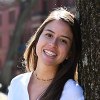 Emi is a Principal for Social Starts and Joyance Partners based in Boston. Our focus is to help catalyze innovation by investing in the emerging science and technology of health and happiness as well as delightful moments. Her main areas of investments include healthcare, life sciences, and biotechnology. She is an entrepreneur, running-enthusiast, investor and world traveler. Prior to Joyance Partners and Social Starts, she founded a diabetes digital health company, consulted for Half Court Ventures, an early-stage VC firm, and was the Director for Harvard’s premier undergraduate competition, i3 Innovation Challenge. She holds a BA in Molecular Biology from Harvard College.
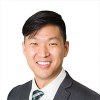 Noel is a Principal at Illumina Ventures and focuses on investments in therapeutics, diagnostics, and tools. Prior to joining the fund, Noel worked at L.E.K. Consulting as a management consultant specializing in the life sciences. He has consulted on strategy engagements for companies in the pharmaceuticals, biotech, and diagnostics industries. He obtained a dual BS degree from the University of Maryland College Park, and his PhD in Chemistry and Chemical Biology from the University of California San Francisco.
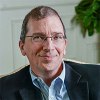 After receiving a degree in Nuclear Engineering from the University of Massachusetts at Lowell, Tom studied Medical Physics at the Harvard/MIT Health Sciences and Technology joint program graduating with a Master’s degree in 1982. During his academic career, he worked at Los Alamos, the Swiss Institute for Nuclear Research (now the Paul Scherer Institute), Brookhaven National Laboratory, and the Massachusetts General Hospital as a research associate in radiation biophysics. Tom then joined Siemens Medical Systems where, after 9 years, he became the first non-German CEO of a German factory and business unit. He left Siemens after 15 years to become CEO of the global medical operations of Carl Zeiss. Completing a successful turnaround, he joined Analogic Corporation as CEO. After three years and a doubling of the stock price, Tom left to become CEO of LightLab Imaging, a start-up that he helped to establish. Completing a profitable sale of LightLab, Tom re-joined Siemens eventually serving as a member of the operating board of Siemens Healthcare and the CEO of Customer Solutions Division, responsible for 26,000 employees in over 130 countries. Tom co-founded GreyBird in mid-2013 with an investment focus on technologies enabling precision medicine diagnosis.
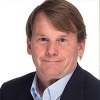 Tad currently leads the Agilent team that manages the partnership/investment relationships with about 30 early stage life science tools companies. He has been in the life science tools industry for 20 years, serving in a variety of research, business development, financial and management roles. Prior to joining Agilent, Tad co-founded and successfully exited two companies; thus, is very familiar with the funding, commercialization and growth issues that entrepreneurs face. Additionally, he has worked in both the venture capital and petrochemical industries, serves on multiple Boards, holds several patents and is a Wharton MBA and chemical engineering graduate of UT Austin and UC Berkeley.
 Roy is a Managing Director at aMoon. He has nearly 15 years of investment experience, first as an M&A and Private Equity lawyer in New York, Hong Kong and Tel Aviv, and later as a venture capitalist. Before joining aMoon, Roy was the CEO of Hutchison Kinrot, a global leading incubator and seed investor in water technologies & Cleantech, owned by Hong Kong conglomerate CK Hutchison Holdings. He led numerous investments in early stage Israeli start-ups, serving on the boards of all portfolio companies and guiding them from technological concept to early commercialization. Prior to that he was a Partner at the International M&A and Capital Markets department of a leading Israeli law firm, also heading its international private equity practice. Roy spent nearly five years with international law firm Weil Gotshal, working on complex M&A and Private Equity transactions, and was a member of the founding team of the firm’s Hong Kong office. He holds an LLB from the Hebrew University of Jerusalem, and dual MPA (Public & Economic Policy) from the London School of Economics and Columbia University. He is a certified lawyer in Israel and New York.


 Next Phase Newsletter