By Gregory Mannix, Vice President International Business Development, LSN
I have been spending a great deal of time in Europe developing the LSN European Ecosystem, and this culminated in bringing the RESI Conference Series to Europe for the first time in 2019. The second RESI Europe conference will take place in a few short weeks in Paris on March 23rd. Here is a snapshot of what I have learned from my travels over the last 18 months.
What I see is many early-stage life science companies with great technology, moving and developing within a mostly regional ecosystem. This includes investors, government agencies, angels, family offices, VCs, PEs and Pharma and Medtech players. The inevitable result is a huge bottleneck in which startups can’t find nearly enough regional investment partners, forcing scientist-entrepreneurs who are looking to raise their series A and B rounds to look outside of the region. The challenge is that most are not prepared for this change and struggle with cultural and business practice differences. This is where LSN comes in, with valuable insight through our Fundraising Bootcamps and by bringing the global-focused RESI Conference Series to Europe.
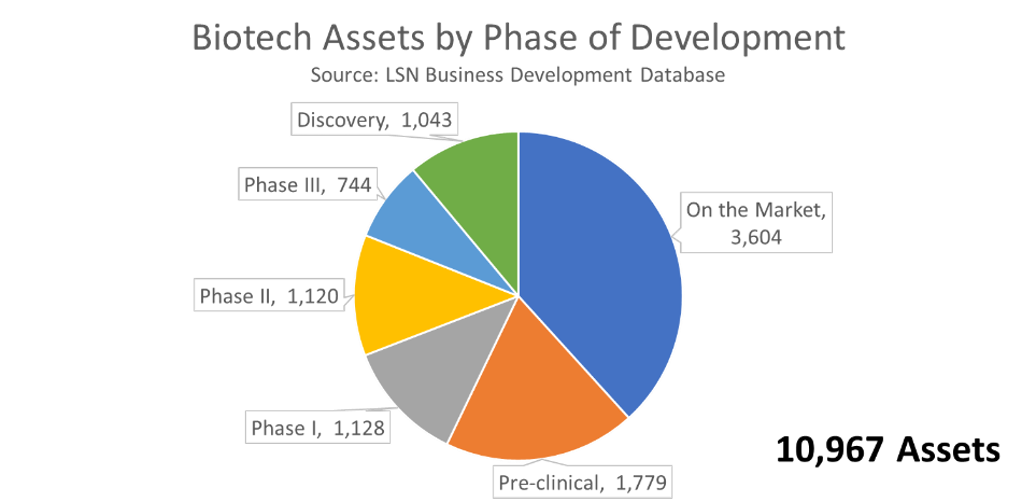
Europe has a vibrant early-stage community of startups across the 4 Ds: Drugs, Devices, Diagnostics and Digital Health. Within the broader life sciences sector, including CROs and other service providers, research institutions and investment firms, our data tracks over 5,000 such companies around Europe that we have broken down below. In addition, the role startups play in moving the industry forward is evidenced by the fact that 2/3 of the assets in therapeutics are still in development.
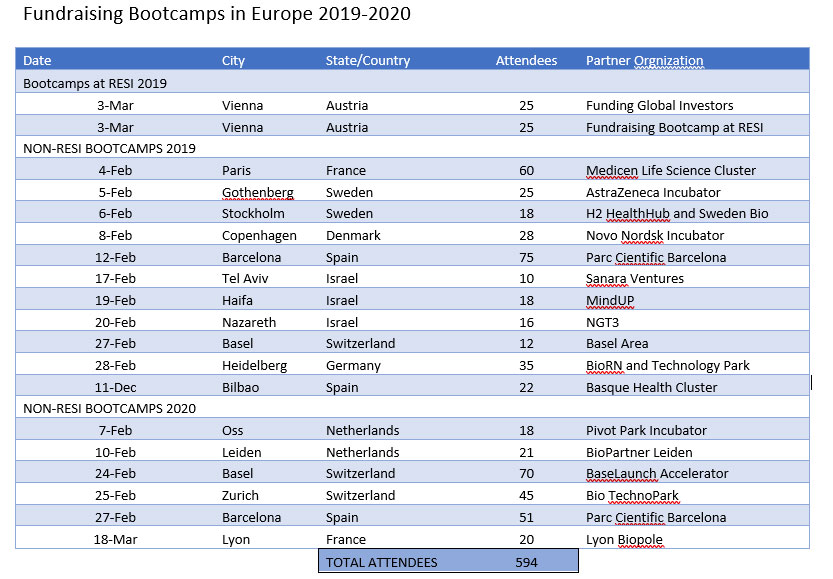
Below is a list of all of the locations where LSN has been holding our Fundraising Bootcamps over the past 18 months, where we have recruited, trained and held one-on-one coaching sessions at some of the main tech hubs in Europe. All told, LSN has reached almost 600 companies in the last year through our on-site Bootcamps, helping these companies expand outside their regions and enter LSN’s global ecosystem.
By Chris Kennedy, Vice President Strategic Initiatives, 4D Meets AI, LSN
Artificial Intelligence (AI) is a transformative force in healthcare industry. From hospital care to clinical research, drug development and insurance, AI applications are revolutionizing how the health sector works to reduce spending and improve patient outcomes.
Seeing such tremendous potential of AI in the life science and healthcare domains, LSN created the 4D Meets AI Conference. Registration is now open for the September 22, 2020 event to be held at the Copley Marriott, Boston. www.4dmeetsai.com
Stemming from our long-standing RESI conference series, 4D Meets AI will continue doing what LSN does best – connecting early-stage companies that develop cutting-edge AI technology in drugs, devices, diagnostics and digital health, the ‘4Ds,’ with the right investors and decision-makers in the industry.
The 4D Meets AI conference is organized around those early stage companies in the drugs, devices, diagnostics and digital health verticals that are advancing the state of the art by using new tools and methodologies that AI brings to this dynamic sector. The conference is first and foremost a partnering conference for both buyers and sellers of early stage companies leveraging the power of AI technology.
A venture capital firm based in Switzerland has raised 4 funds to make equity investments into internet and health tech companies at seed and early stages. The typical investment size ranges from €0.2 million to € 5 million. The firm plans to make 15-20 investments in the next 3 years and it will invest in companies based in Europe with a focus on Switzerland and Germany.
The firm is currently looking for new opportunities in the area of platform technologies, diagnostics, digital health, medtech etc.. The firm focuses on companies developing biotech platforms, research tools and digital health startups. The firm will not invest in pure drug development companies. In the past, the firm was active in companies developing proteomics platform technology, 3D micro tissues technology, diagnostic services, vaccines, antibody development platforms and a technology platform to develop virus envelopes.
The firm typically seeks to invest in private companies with convincing founders or managers. The firm will consider pre-revenue companies.
If you are interested in more information about this investor and other investors tracked by LSN, please email mandates@lifesciencenation.com.
A major provider of preventative and diagnostic services in Europe has a $50M seed stage fund through which they invest mainly in Seed to Series A companies across all geographies. The firms are separate entities and as an institutional venture capital firm, financial return is an important factor. However, because of this affiliation, the seend fund is able to leverage corporate benefits to support the growing needs of their portfolio companies. The firm has invested in Europe and the USA. Initial sizes of investment can largely vary, from $250K to 3M and a portion of their fund is reserved for follow-on investment.
Traditionally, the fund has been most interested in healthcare IT and services companies that address important problems in the healthcare industry, including reducing healthcare costs and improving patient outcomes. However, the firm has been pushing beyond healthtech and pursuing investments in the fields of diagnostics, genomics, and medtech. The firm is not interested in biotech.
The fund is able to leverage their relationship with the parent company to provide hands-on support for their portfolio companies. The firm is open to both leading and co-investing and has done both. The firm does not have specific requirements for the company or management team as long as they have compelling technology.
If you are interested in more information about this investor and other investors tracked by LSN, please email mandates@lifesciencenation.com.
A healthcare focused fund, headquartered in Shanghai and with a presence in US and Europe is broadly focused in Life Sciences with strong preference for early stage opportunities. The senior team members have strong operating experience in biotech and pharma companies, would like to lead investments and play active roles in their portfolio companies.
The firm is particularly keen on cardiovascular, regenerative medicine, and ophthalmology related opportunities. The firm is otherwise agnostic in regards to specific disease indications and is willing to look at all opportunities within the early stage, however diagnostics is currently considered as a low priority.
As the firm seeks to be an active lead investor, the firm strongly prefers a board seat in companies that they have invested in. Outside of the board requirement, the firm is looking for strong management teams that demonstrate the capability to move their technology forwards.
If you are interested in more information about this investor and other investors tracked by LSN, please email mandates@lifesciencenation.com.
The corporate venture arm of a bank has a €250M evergreen fund, with about half of their investments in the life sciences. The firm invests primarily during series A-B rounds, but will occasionally invest in seed-stage companies as well, and will follow on in subsequent rounds. The firm invests in medical device, diagnostics and digital health companies, and can invest throughout Europe, but focuses mostly in France. The firm will invest anywhere from €1-20M.
The firm invests in medical devices, diagnostics and digital health technologies. Generally, the firm does not invest in therapeutics companies, nor companies in clinical stages. The firm will usually not invest in companies before they have earned their CE mark, and is generally opportunistic to indication.
The firm will only lead or co-lead investments, and always takes a board seat after investing.
If you are interested in more information about this investor and other investors tracked by LSN, please email mandates@lifesciencenation.com.
– By Dennis Ford, Founder & CEO, Life Science Nation; Creator of RESI Conference Series
Dennis Ford
Dennis Ford(DF): Todd, please tell us about your new position and what you are trying to accomplish?
Todd Haim(TH): I began working on small business grant programs at the National Institutes of Health (NIH) more than 10 years ago when I joined the National Cancer Institute (NCI) as an AAAS Science and Technology Policy Fellow. After 9 years at NCI, I was asked to lead the launch of a new Office of Small Business Research (OSBR) at the National Institute on Aging (NIA). NIA’s OSBR was created just over 1 year ago. It serves as the main coordinating office for Small Business Innovation Research (SBIR) and Small Business Technology Transfer (STTR) grants that are awarded to companies working on solutions to address aging and aging-related diseases.
One exciting aspect of our work at NIA is that the Institute does not have a singular disease focus; rather, we are interested in wide variety of new technologies related to aging and older adults. OSBR’s key goals include strategic coordination of the SBIR/STTR programs across NIA’s Scientific Divisions and connecting with small businesses across the U.S. interested in NIA funding to develop promising innovative technologies. We are also responsible for developing programs and resources to enhance the success of our awardees and funding projects in areas that both meet NIA’s scientific priorities and are ripe for commercialization.
Although OSBR’s overall goal is to fund innovative new technologies that will improve health and quality of life in our rapidly aging population, we also hope to raise awareness of the small business programs among first-time applicants and individuals who would not typically apply for NIH funding.
DF: What kind of funding is available to scientist-entrepreneurs through your new office?
TH: Most small businesses interested in improving the health of older Americans can find a funding opportunity from NIA that’s right for them. Through OSBR, NIA participates in several funding opportunity announcements (FOAs) that fall into two general categories: omnibus and targeted solicitations. Almost all NIH Institutes and Centers (ICs) as well as other government agencies within the Department of Health and Human Services (e.g., Food and Drug Administration, Centers for Disease Control and Prevention, etc.) participate in the annual Omnibus FOA, and applications are accepted three times per year. This FOA does not focus on a single disease area, rather, it focuses on any health-related small business innovation of interest to these agencies. If a proposal submitted through the omnibus FOA relates to NIA’s mission, it may be considered for assignment to NIA.
In contrast, NIA’s targeted small business FOAs are specifically focused on aging and related diseases including Alzheimer’s disease (AD) and AD-related dementias (ADRD). In July 2019, NIA released a broad funding opportunity to encourage applications for the development of technologies addressing AD/ADRD.
We also offer programs designed to provide additional funding and technical/business assistance to our funded companies and potential applicants. One example is I-Corps™ at NIH, which provides entrepreneurial training, mentoring, networking, and market research. The Concept to Clinic: Commercializing Innovation (C3i) entrepreneurial training program is designed for medical device innovators. And the Applicant Assistance Program provides first-time or previously unsuccessful SBIR/STTR applicants with a dedicated mentor and step-by-step coaching to maximize their chances of obtaining funding. Finally, the Commercial Readiness Pilot Program, provides technical and R&D assistance to businesses at a later stage in their development.
DF: Who are you seeking? Is there a particular indication you are currently looking to fund or are you opportunistic in the arena of aging?
TH: One area of particular focus for NIA, and the nation, is Alzheimer’s disease and related dementias. Because the prevalence of AD is predicted to triple within the next 3 decades, Congress has provided significant AD/ADRD funding that has enabled NIA to fund a greater diversity and variety of projects in this area to advance research into a treatment, prevention, or cure for these devastating disorders. NIA also welcomes grant proposals for technologies and innovations in the broader scientific areas around aging, such as fall detection, biomarkers, interventions to help older people maintain independence, research to understand the mechanisms of aging, and methodologies to treat conditions commonly associated with aging.
DF: Have you evaluated and funded any startups to date? If so, how many? Are there funds remaining?
TH: Currently, NIA is funding close to 200 unique startup companies through the SBIR/STTR programs; details are available in the NIH RePORTER database. As the overall NIA budget has increased over the past few years, the SBIR/STTR budget for NIA has also increased. For instance, the NIA SBIR/STTR budget in fiscal year (FY) 2013 was only $27.5 million. In FY 2019, that number was estimated to be over $100 million, which is nearly a four-fold increase over a 6-year period.
NIA has a diverse portfolio of funded technologies. Approximately 32% of our funded technologies are drugs/therapeutics, but we also fund medical devices, including monitoring (18%) and supportive (10%) technologies. Digital and mobile health applications (19%) are also growing in utility, so we are seeing more applications in this field. The remainder of our portfolio consists of research tools (9%), in vitro diagnostic tools (7%), and imaging tools (5%). However, the proportions of each type of technology in our portfolio fluctuate over time based on the applications submitted during each funding cycle.
DF: Do you have a message for any of the U.S. companies developing solutions within the aging arena?
TH: One of the key goals that NIA’s OSBR is trying to achieve is to not only target academic scientists-turned-entrepreneurs, but also small business owners who are less familiar the NIH grants process. Though we are facing a lack of awareness of our programs by this group, many of their technologies are still supporting the NIH mission.
I would like entrepreneurs in the aging sphere to know that they have my highest respect and admiration because they are working to address a looming public health crisis. The difficulties that the biomedical enterprise has had in successfully targeting aging and AD point to the importance of NIH’s efforts to fund early-stage, meritorious projects being undertaken by startups and translational researchers. At NIH, it is our mission to invest in research and innovation that will ultimately benefit the health of everyone, and we encourage all eligible businesses developing aging-related technologies to apply for our small business grants. You are doing incredible work, and we are here to support you every step of the way. We encourage potential applicants to connect and seek guidance from us ahead of submitting an application and can be reached at niasmallbusiness@mail.nih.gov.