Come Join These Registered Investors @ RESI Asia

By Karen Deyo, Senior Investor Research Analyst, LSN

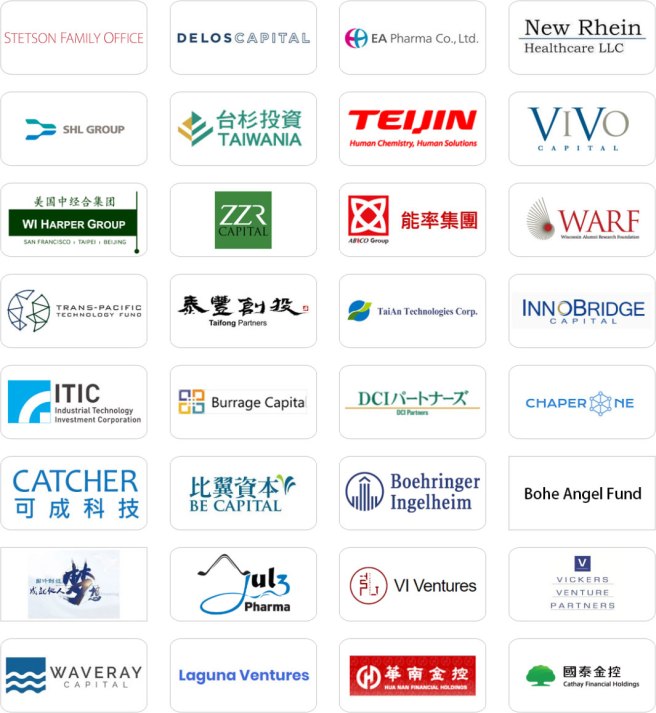
With the RESI Asia fast approaching, we are excited for our first events taking place in Shanghai and Taipei. Together, these conferences will enable companies and investors to connect with the Chinese and Pacific Rim markets. Companies also have an unprecedented opportunity to be selected to present a poster and pitch at both events, greatly increasing their exposure (apply now for the RESI Innovation Challenge). Below is a partial list of registered investors for the RESI Asia conferences – register now to join them. We hope to see you in Shanghai on Nov 12th and Taipei on Nov 14th!

CONFIRMED RESI ASIA INVESTORS AND STRATEGIC PARTNERS

As of  September 26th, 2019

And More…


Meet with Life Science Nation @ BioJapan

By Claire Jeong, Director of Research, Asia BD, LSN

claireThe Life Science Nation team is continuing active preparations for our inaugural RESI Shanghai and Taipei conferences in November 12th and 14th, respectively. We are also excited to announce that we will be attending BioJapan and Regenerative Medicine Japan at the Yokohama Pacifico from October 9th – 11th. With over 1,000 organizations from around 34 countries expected to attend, we look forward to meeting a wide range of groups including startups, research universities, large pharmaceuticals, among others.

Creating a global ecosystem for early stage healthcare funding has always been the core business objective of LSN since inception – with RESI’s expansion into Europe earlier this year and the upcoming events in Asia, our global network is only getting stronger. Japan boasts the second largest pharmaceutical and medical device markets in the world, and the startup ecosystem is continuing to grow with the support of groups like Life Science Innovation Network Japan (LINK-J), who are actively working to foster open innovation. With close to 320,000 patent applications filed in 2018 (ranking third in the world), Japan continues to be in the forefront of promoting novel innovation – translating this into new company creation among other effective commercialization strategies would be key to the industry’s growth.

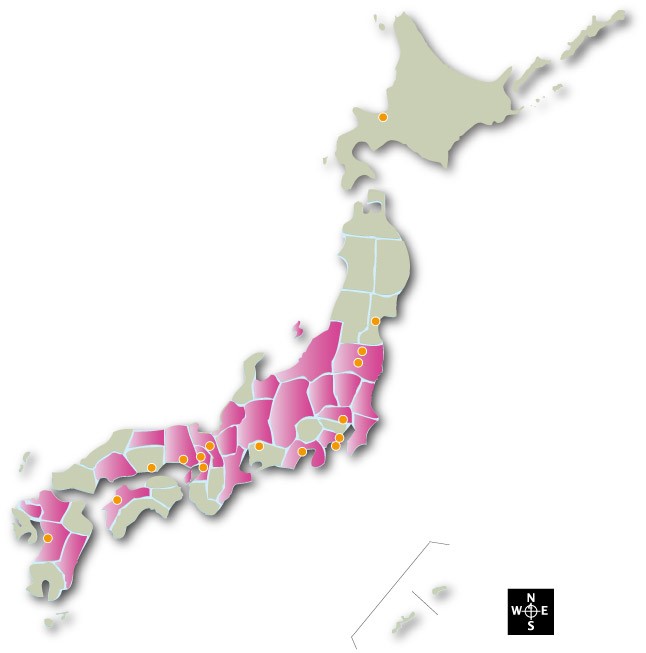
▲ Japan – Life Science Cluster Map (source: JETRO, a full chart with detailed descriptions is available here)

In terms of RESI, a significant number of global pharmaceuticals headquartered in Japan have been regularly attending RESI for years, seeking promising technologies for licensing and partnership. We have also seen a steady increase in the number of startups and service providers attending the conferences to seek new business opportunities. LSN looks forward to creating new relationships with leading industry players in Japan, as well as continuing existing relationships with groups that support our activities.

If you are attending BioJapan and interested in meeting, please feel free to contact me at c.jeong@lifesciencenation.com.

VIDEO – Medical Device BD Experts Provide Advice to Early Stage Entrepreneurs

By Lucy Parkinson, VP of Investor Research, LSN

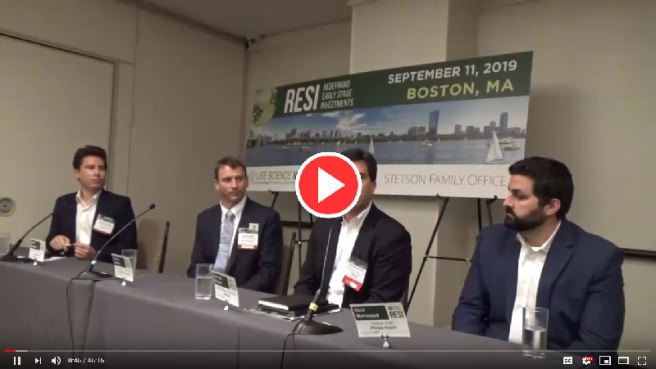
Just like major pharma firms, large medical device corporations are increasingly looking to early stage startups for innovative technologies to bolster their pipelines.  At RESI Boston, four experienced business development executives from the medtech world gathered for a panel to explain how they invest strategically in new technologies.

Moderated by Geoff Dacosta (Director, Business Development and Licensing – Medtronic), the panelists were George Russo (VP, Strategic and Business Development – Hologic), James Kaiser (Director of Venture Capital – HOYA Corporation), and Nick Morwood (Director of Business Development – Philips Healthcare).

While some entrepreneurs might see strategic investors as untethered from the crowd, the panelists noted that they’re affected by the activities of other types of investors such as VCs.  George Russo said that while Hologic doesn’t have an investment fund, they can work alongside startup partners at key stages when capital is hard to come by. “The last mile in medtech – from FDA approval to the marketplace – is where it’s hardest to find investment, and some companies fall into this chasm.”

Nick Morwood discussed the importance of having the right investors at an early stage.  He noted that early stage companies are finding more creative ways to get funded, such as by healthcare systems (Geoff Dacosta also mentioned family offices as an emerging source of investment dollars for medical device startups).  While it can be helpful to have an early investor like a health system that can act as a partner, early adoptor and tester of the technology, it would be a mistake to build too closely to one customer’s specifications rather than addressing a broad market.  James Kaiser also mentioned this issue, saying that it’s important to only take on sophisticated investors who can help your company develop and provide experience and connections that will carry you forward.

One problem Geoff highlighted is that an awful lot of medtech entrepreneurs are interested in talking to a big strategic, but don’t know how best to start that conversation.  Nick stressed the importance of knowing the corporation that you’re targeting; of the early stage companies that reach out to him every day, for many it’s difficult for Nick to understand how they will fit into Philips’ portfolio.  It is helpful if the entrepreneurs do their research and can tell the story of how their product will fit.  Nick suggested that entrepreneurs look at a corporation’s annual reports and new product releases in order to build a story of how their product could be strategically relevant.

George agreed, saying that while early stage science is interesting, that’s where it ends unless you can establish a business relationship.  “Firstly, IP must be buttoned up.  Secondly, you must understand the regulatory path for your product, and preferably have already spoken to the FDA.  Third, you must have a business case that includes a strategy for payment and reimbursement.”

Geoff also asked the panel to describe their expectations for what a company needs to have in place before they reach out – not just from a development perspective, but administratively?  “Rational market projections,” James replied.  “Don’t just say ‘We have a $1 billion market’ – go deeper.  I want to see a rational dive into medial economics and reimbursement.”  To that point, George wants companies to know how their procedure will be coded, and what the current level of reimbursement is.

Investors also raised their appreciation for concise pitches.  “I want a high level deck, not 40 pages of slides that depict the science,” George said.  Nick stressed the importance of having a page in your deck that describes your regulatory and quality control strategy, as both the FDA and Philips’ due diligence process will require attention to these issues.

The final question Geoff put to the panelists was a simple one, which might surprise some entrepreneurs: “Sales vs clinical data – which do you invest in?”  All four investors said that clinical data was their primary focus for assessing an early stage startup, not sales traction.  As Nick pointed out, these corporations already have strong sales teams that they can leverage to sell a new product.  VCs, on the other hand, often focus on sales figures when making medtech investments.  The investors all agreed that for their firms, it was more important to invest in a clinically meaningful asset.

If you missed the panel at RESI, you can watch it here now!  Thank you to all our panelists for participating.
 

Hot Investor Mandate: VC Fund Looks for Opportunities in Digital Health, Technology-Enabled Services, Medical Devices and Diagnostics

A VC firm based in Massachusetts recently raised a fourth fund of $100 million and is structured to make investments ranging from $500,000 to $1 million into companies raising rounds sizes in the $3-5 million range, primarily in Series A and B rounds. The firm also has the ability to provide capital in follow on situations when appropriate through its own resources and its network of syndicates and LPs, all of whom are strategic investors such as healthcare systems, vendors and payers. The firm primarily invests in the Northeastern US although they have also invested in companies throughout the United States.

The firm focuses on healthcare IT, technology enabled services, medical devices and diagnostics companies. The firm is most actively interested in companies in the healthcare IT space and software enabled devices, and they look much more selectively at companies in the medical device and diagnostics spaces. The firm is open to all indications.

The firm looks for privately held companies with experienced management teams. The firm looks to work side by side with entrepreneurs helping them form strategic relationships, recruit management talent, and assemble vital resources necessary for growth.

If you are interested in more information about this investor and other investors tracked by LSN, please email mandates@lifesciencenation.com.

Hot Investor Mandate: Cross-Border PE Firm Invests Opportunistically in the Life Sciences

A PE firm with offices in California and China recently closed two funds, one of USD 750 million and one of $100 million. The firm invests exclusively in the life science sector; the firm invests primarily in the USA and China, but will also invest in other regions such as Europe and Canada. Within China, the firm makes growth investments in companies that have existing revenues; in the USA and other regions, the firm makes both venture and growth-equity stage investments in both pre-revenue and revenue-stage companies. The firm’s allocations are highly varied. From the main fund, investments typically range from $10-30m, though larger investments are of interest as well; the second fund makes investments of typically $2-5 million, generally in financing rounds of $10 million or less. The firm is open to syndication. The firm is also particularly interested in working with companies that are open to or actively interested in seeking partnerships or opportunities in China.

The firm invests in therapeutics, medical devices, diagnostics, healthcare services, and clinically-oriented healthcare IT, and will consider investing in any indication area or technology subsector; however, orphan indications, dermatology/aesthetics, oncology, and blood diseases are of particular interest in the biopharma space; general surgery, neurovascular, cardiovascular, minimally invasive technologies, women’s health, respiratory care, novel diagnostics and orthopedics are of particular interest in the device space. The second fund focuses on early stage opportunities in biotech; from the main fund, the firm in most cases makes investments in products that have obtained market approval or are very close to commercialization, but earlier investments may be considered for highly innovative products or products that can demonstrate strong efficacy signals at an earlier stage (such as anti-infectives). For devices and diagnostics, the firm only invests in commercial-stage companies. Generally, the firm does not invest in imaging.

The firm is flexible regarding management teams, and works with both serial entrepreneurs and entrepreneurs who lack industry experience. In addition to investing in private companies, the firm is able to invest in public companies by means of PIPEs or public market placements. The firm is interested in investing in companies with products that can demonstrate cost-effectiveness.

If you are interested in more information about this investor and other investors tracked by LSN, please email mandates@lifesciencenation.com.

Hot Investor Mandate: Large Manufacturing Company Interested in Partnering with Companies Developing Drug Delivery Systems, Medical Devices, Biosensors and Wearables, and Digital Technologies

The firm is the largest, privately-owned designer, developer and manufacturer of advanced drug delivery systems and is active in R&D, design and manufacturing in all areas of healthcare. The firm is capable of a variety of deal structures, but prefers to enter into joint ventures and strategic partnerships as the firm seeks to be a value-added investor providing their expertise and capabilities in design and manufacturing as well as the resources of a large company while allowing the entrepreneur to drive the development of the technology.

The firm’s expertise lies in drug delivery devices, but has capabilities and is highly interested in all areas of medical technology/devices, biosensors and wearables, B2B or B2C healthcare IT applications including data analytics and cloud computing as well as robotics and AI as it applies to surgery prosthetics, rehabilitation and drug discovery. The firm has a particular interest in the diabetes space and has done work in this area in the past.

The firm is open to working with all entrepreneurs and is open to companies on a global basis. The firm does look for a board seat along with an investment, but strives to not be restrictive in any way and let the management team run the company.

If you are interested in more information about this investor and other investors tracked by LSN, please email mandates@lifesciencenation.com.

Hot Investor Mandate: A Foundation Making Venture Investments to Advance All Cancer-Related Technologies

The foundation operates a $25 million fund focused on capitalizing translational opportunities – that is, the commercialization of academic technologies / financing the first round of commercialization. The fund provides funding to early-stage translational companies via $1M – $5M recoverable grants which are essentially structured as convertible notes with 1) no expiration date and 2) no liquidity preference. Such grants do not reflect as debt on the investee’s balance sheet, and are converted to equity at very reasonable terms only in the event the valuation of the company increases about a pre-determined level.

The foundation has also helped to organize, and is a General Partner of, a $350 million fund focused on pre-clinical, Phase I, Phase II, and Phase III investments. The foundation issues grants primarily within the United States, and via its subsidiary, throughout Asia. The foundation’s funding vehicles invest primarily within the United States, but have a small allocation for foreign investments.

Sector interests include drugs, medical devices, and novel approaches. The firm is also open to funding technologies designed to accelerate cancer research and drug development, such as novel drug discovery tools or algorithms. By using its multiple funding vehicles, the foundation finances projects from the early discovery stage through to Phase III clinical trials. The foundation considers projects in any type of cancer.

If you are interested in more information about this investor and other investors tracked by LSN, please email mandates@lifesciencenation.com.