Investing in Cell and Gene Therapy: How Investors View the New Frontier of Life Science Technology

By Lucy Parkinson, VP of Investor Research, LSN

RESI’s panel and workshop sessions explore many topics in early stage life science funding.  At RESI Philadelphia, the Investing in Cell & Gene Therapy panel took an in-depth look at how investors approach the most complex new therapies.

The panel was moderated by Shyam Patel (Associate Director, Portfolio Development and Review, California Institute of Regenerative Medicine), and the panelists were:

  • Jane Hollingsworth (Managing Partner, Militia Hill Ventures)
  • David Xu (Chief Business Officer, Viva Biotech)
  • Peter Young (Venture Partner , Pappas Capital)
  • Hannah Shen (Associate Director, BridgeBio)

While the cell and gene therapy space is still at the cutting edge of life science technology, the field is inching closer to mass adoption.  As Shyam Patel says, following recent landmark drug approvals, there is now a huge pipeline of potentially transformative cell therapies and gene therapies in development, with a thousand clinical trials ongoing right now, and $13 billion in investment in this space last year.  “There’s a lot of money, a lot of products, and a lot of choice for both investors and companies.”

However, these therapies present unique challenges for investors.  Peter Young noted the difficulty for traditional VC investors of managing a fund with a 10-year life cycle and investing in science that takes a generation to mature to the point where it’s it’s suitable for routine use.  Additionally, the industry needs time to adapt to these new technologies, in terms of regulation, manufacturing and reimbursement.

According to David Xu, manufacturing is a key piece of the puzzle.  How can a company consistently and effectively produce a cell therapy or a gene therapy?  As an investor, he pays attention to this technical angle, along with the unmet need involved.  “If you are addressing a problem in which the unmet medical need is not obvious and you don’t have a new angle addressing the manufacturing/technical side of the problem, it’s probably not a good project to look into.”  By investing in technical improvements, it will also be possible to reduce the cost of these therapies, which at present can run to over a million dollars per treatment.

The investors also explored the regulatory issues involved, and noted that the FDA are adopting policies that enable innovation, such as being open to trials that involve fewer patients.  But there’s a challenge for startups in terms of getting the right regulatory expertise.  Per Jane Hollingsworth, “The regulatory part is difficult as there are only so many people out there who really know this space from an FDA perspective.  The FDA is overwhelmed as the result of the successes of this sector.  Now there are many clinical trials taking place and it’s incredible how busy they are.  They want to work with people who understand the pressures they’re under in this sector.  It’s important to attract the right regulatory consultants who can help your company navigate the FDA.”

Circling back to the issue of how an investor’s fund structure can make investments in new fields difficult, Hannah Shen described how her firm BridgeBio has found benefits from using a different structure, in which a subsidiary company is created for each of the assets they invest in.  Hannah says that one benefit of this model is that it makes it pososible for the firm to focus on rare disease programs as part of the portfolio.

So how do investors find the right opportunities in cell and gene therapy?  The investors’ dealsourcing methods include referrals, conferences like RESI and also scientific conferences, tech transfer outreach and academic collaborations, and of course inbound inquiries.  David said that of the pitches his team received, half didn’t pass initial screening.  As his firm (Viva Biotech) is a very early stage investor, they focus on the quality of the team and the market potential of the product.   For dealscreening at BridgeBio, Hannah Shen focuses on the scientific understanding of the asset, and whether BridgeBio’s resources are a good fit for moving the product forward.

Jane Hollingsworth went into depth on Militia Hill Ventures’ strategy – and said that issues like manufacturing and pricing are not as important in their consideration: “Either we identify a problem and look for the best way to solve it by gathering the best scientific expertise around the world, or alternatively, a really hotshot scientist comes and tells us the problems they’re working on.  It’s always the problem and the people.  If those two factors get through our screening, then manufacturing is just a detail – and reimbursement is even less so. If it’s an unsolved problem that gene therapy could solve, and the best team in the world is working on it, and scientifically it looks viable, we’re going to assume that if it’s successful it will be paid for.”

So will these new technologies become a significant piece of the biopharmaceutical market soon?  Shyam Patel has some pause.  “I would differentiate between clinically promising and commercially promising projects.  The most clinically advanced projects that CIRM [California Institute of Regenerative Medicine] has supported are focused on diseases with small patient populations, and it’s not clear if these projects will be commercially successful.  That’s where they see the most clinical success right now.  What’s commercially promising could be something completely different.”  Nevertheless, the investors continue to look for revolutionary new technologies in this space that could become success stories for their portfolios.

Hot Investor Mandate: Growth Capital Firm with New Fund Invests in Biotech, Medtech, and Research Tools with Capacity to Invest At Least $20M

A life sciences-focused growth capital firm recently raised almost $1B for their new fund, which will invest broadly in the healthcare space. The firm seeks to make venture and growth stage investments ranging from $20M-$70M in the form of equity. The fund prefers to lead or co-lead most deals and may or may not seek a board seat along with an investment. The firm has a diverse team of pharmaceutical and finance professionals and seeks to add value to portfolio companies through strategic guidance and a steady flow of capital, allowing companies to focus on developing their products and executing their business plan.

The firm focuses on the following healthcare verticals: biotech/biopharma, medical devices, and life science / research tools and diagnostics. The fund is agnostic to therapeutic area and therapeutic modality, but does favor companies developing and commercializing solutions for significant unmet and under-met medical needs. As for biopharma drug companies, the fund typically likes to see at least GLP toxicology data for pre-clinical assets but ideally early safety/tolerability and biological activity/biomarker data in humans.

The firm has no strict company or management team requirements, but favors experienced/proven management teams and entrepreneurs who are highly skilled and knowledgeable in the specific area (technology and indication area) they are pursuing.

If you are interested in more information about this investor and other investors tracked by LSN, please email mandates@lifesciencenation.com.

Hot Investor Mandate: Asia Pacific Venture Fund Invests $5-25M in Therapeutics & Medical Device Companies with Preference for USA-Based Opportunities

A life sciences venture capital fund founded in 2014 with a base in the Asia Pacific region currently manages two funds with $330 million assets under management and is actively seeking investment opportunities. On average, the size of investment is $5-25M in venture rounds. The firm prefers to act as the lead investor but is also open to co-investing. The firm looks for companies located around the globe, with a preference in the US and China. The firm is actively seeking new investment opportunities.

The firm is focused on Therapeutics and Medical Devices opportunities. The firm’s core focused therapeutic areas include oncology, immunology and CNS diseases, but is also opportunistic in other indications (modality agnostic) and willing to consider orphan indications. The firm is also interested in interventional, novel medical devices in cardiovascular, neuro-vascular diseases.

The firm prefers management team with strong scientific background and expertise, successful track records would be a plus but is not required. The firm generally takes a board seat.

If you are interested in more information about this investor and other investors tracked by LSN, please email mandates@lifesciencenation.com.

Hot Investor Mandate: New USA VC Fund Invests in Early-Stage Digital Health & Enterprise Companies with Novel Technologies that Address Unmet Needs

A new venture fund, founded in 2019, based in the East Coast, is focused on investing in digital health technologies, with a secondary focus on enterprise software. The firm will consider all digital health companies, but has a particular interest in novel applications. The fund will invest between $50,000-1M in companies with a pre-money valuation of $2-12M, with some money reserved for follow-on investments. The firm will invest only in companies based in the US.

The firm is willing to consider all types of digital health technologies but is primarily focused on software and technology enabled services. The fund is most interested in products/services that address unmet needs and offer novel solutions, as opposed to those that are improving on products that already exist. For solutions that appear incremental, The firm applies a higher standard in terms of market validation and evidence of a repeatable sales process.

The firm looks to invest in companies with a pre-money valuation of no greater than 12M.

If you are interested in more information about this investor and other investors tracked by LSN, please email mandates@lifesciencenation.com.

Hot Investor Mandate: Cross-Border Investment Firm with USA and China Offices Invests Up to $10M in Life Science Companies in North America

A private investment firm with offices in USA and China consists of limited partners who include institutional investors from US and China. Typical equity investments range from US$5-10 million in businesses from Series A to pre-IPO and publicly traded companies. The firm is open to leading or following a syndicated round. Good Health Capital is now focusing on opportunities in North America.

The firm invests across therapeutics, medical devices, diagnostics, platform technologies, and digital health and is looking for companies that are top 3 in their niche sector. Within therapeutics, the firm prefer clinical stage projects. The firm is opportunistic in terms of disease areas including orphan indications. Within device and diagnostics, the firm prefers post-prototype products with clinical validation.

The firm may request board representation or board observership on a case-by-case basis.

If you are interested in more information about this investor and other investors tracked by LSN, please email mandates@lifesciencenation.com.

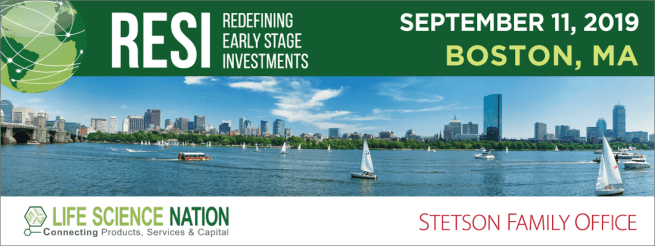
Life Science Nation Brings RESI Boston and the First Coast Innovators’ Gathering Back On September 11th at the Westin Copley.

By Nono Hu, Director of Marketing, LSN

Boston is the home town of Life Science Nation (LSN) and the RESI conference series, and RESI has never officially been part of “other” events going on in Boston that week. LSN relishes being independent, bringing over 350 global investors to Boston, with a unique one-to-one investor to CEO ratio in RESI Partnering. LSN’s annual RESI Boston event typically brings over 5 billion in vetted early stage investment mandates to the RESI Conference.

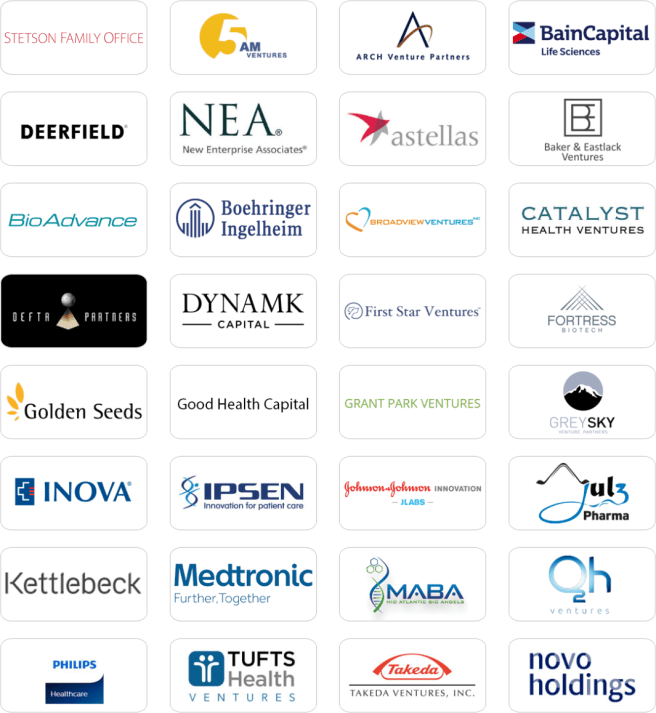
The RESI Boston event is September 11th at the Westin Copley Place, and LSN is proud to announce we already have signed up many top life science venture capital firms including NEA, ARCH Venture Partners, 5am Ventures, Bain Capital Life Sciences, and Deerfield Management. Once again, LSN will be bringing the First Coast Innovators’ Gathering which showcases technology hubs, incubators and accelerators from the Boston to DC corridor this year we will feature a bevy of the top hospital, university, state and federal early-stage technology innovators.  Last year RESI Boston held over 1200 meeting between fundraising CEOs and investor channel partners. You can review the agenda here.  Early sign up offers are available – register now.

Confirmed RESI Boston Investors

As of June 13th

And More…

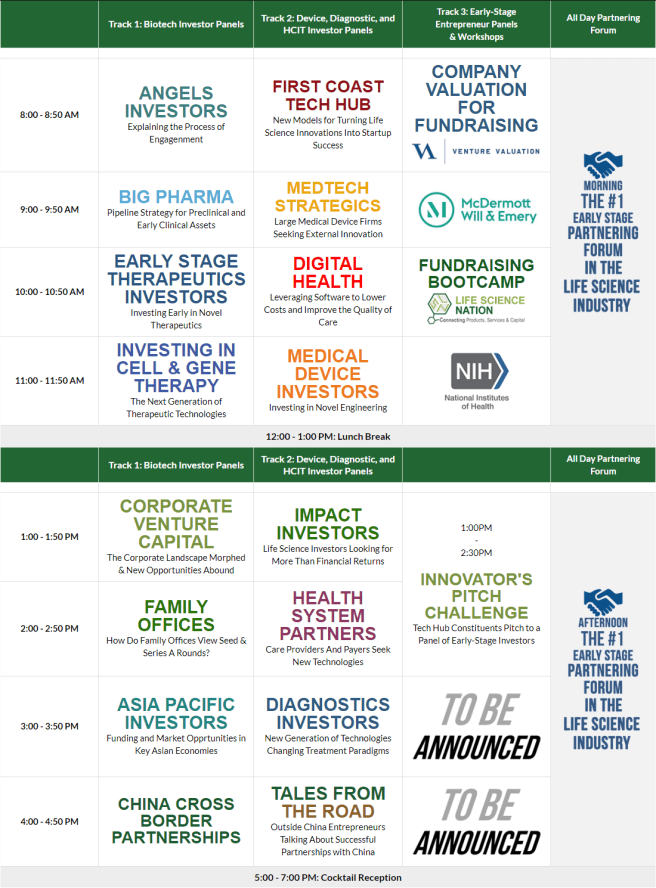
RESI Boston: Check Out the Panel Agenda

By Karen Deyo, Investor Research Analyst, LSN

RESI’s focus is on gathering hundreds of investors together to meet with entrepreneurs.  In addition to one-on-one RESI Partnering meetings, RESI’s panel tracks provide entrepreneurs with the opportunity to hear advice and candid insight on the fundraising process directly from experienced investors.

You can view the agenda below – this RESI event provides the opportunity to hear from medical device exit partners in Medtech Strategics, a panel of Impact Investors who seek opportunities to have a positive social outcome as well as financial return on their investments, a gathering of First Coast Tech Hubs that will explain how they support the earliest stage companies up and down the East Coast, and a new special session on the complex field of China Cross-Border Partnerships. Join us at RESI Boston to see these and other exciting panels and workshops!