A firm based in Europe has raised a new venture fund of €100 million and is looking to make 4-5 investments over the next 6 to 12 months. The firm could lead any investment up to $15M EUR but will also look for syndicate participation in bigger rounds. Allocations are in the form of equity. Allocations are typically made at the venture stage of development but are open to consider seed through IPO rounds. The firm seeks to invest in any European country and Israel.
The firm will look at a broad spectrum of products and services within the life science space. However, they will not consider drug discovery investments. They will consider anything related to medical devices, diagnostics, in-vitro diagnostics, healthcare IT. They will look at any stage of development within those categories and long as the product or service shows substantial market potential and has proof of concept.
The firm is willing to work with all types of management teams as long as entrepreneurs/founders have a solid knowledge in the industry. A board seat is required for all investments.
If you are interested in more information about this investor and other investors tracked by LSN, please email mandates@lifesciencenation.com
A Venture Capital fund based in Toronto, Canada, looks to make investments in companies ranging from $1 – $5 million initially and up to $10 million over the life of the investment. The firm is looking for companies based within 1000 miles of Toronto. The firm makes approximately 2-3 new investments per year.
Within the life science space the firm is looking for medical device and diagnostics companies that have a clear path to FDA approval. The firm is open to all technology types and indications although they have experience working with assisted living devices and Imaging devices. The firm is looking for companies that have managed to demonstrate market interest in their product prior to investment.
The firm looks to be a very active investor in chosen companies and always pursues a board seat. The firm looks for strong experienced management teams and looks to bring their own entrepreneurial experience to aid in the growth and expansion of companies.
If you are interested in more information about this investor and other investors tracked by LSN, please email mandates@lifesciencenation.com
The in-licensing arm of an Asia-based pharma company with several US offices is seeking partnerships with companies based in the USA.
The firm seeks specialty biotech therapeutics in neurobiology, dermatology, respiratory, oncology and ophthalmology indications. The firm focuses on technology that are 2-3 years from the market and with a 505(b) (2) regulatory pathway. The firm will consider in-licensing and acquisitions in these specialty areas.
If you are interested in more information about this investor and other investors tracked by LSN, please email mandates@lifesciencenation.com
Nature Magazine has published an article written by Dennis Ford (CEO) and Bill Kohlbrenner (CSO) that draws upon LSN’s expertise to provide practical guidance on capital raising for early stage life science companies.
If you are an aspiring entrepreneur spinning out a new biomedical technology or launching a biotech startup, one of your first tasks is to understand the funding process and how to tackle it. Five years ago, the accepted investment path was to write a proposal for Small Business Innovation Research (SBIR) grants, hit up a list of friends and family and canvass the local regional angel groups for ‘seed’ funding. After this first wave of funding, the next money was expected to come from venture capital (VC) entities or through collaborations with partnering companies.
What you need to know is that the world has changed, and the investor landscape has morphed.
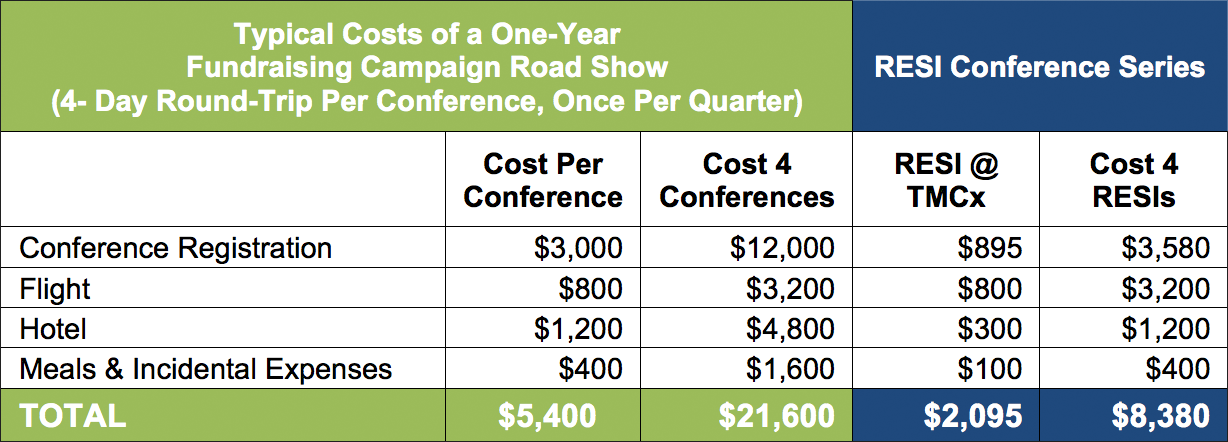
What does it cost to raise capital? In LSN’s experience, one signal that consistently distinguishes a company that is committed to raising capital is that the company has a realistic plan and budget for their fundraising campaign. And when a company has a budget, it’s vital to ensure that they’re getting the most return on investment (ROI) possible from their campaign expenses.
That’s where the Redefining Early Stage Investments (RESI) Conference fits in. As a one-day event with a 1:1 ratio of investors to startup companies, RESI inundates attendees with opportunities to connect. Companies can book up to 16 face-to-face investor meetings in advance of the event; by providing so many opportunities to meet investors in one day, RESI is a high-value event for fundraising CEOs.
RESI Provides a Higher ROI for Cost Conscious CEOs
Startups can now benefit from both grants and R&D Tax Credits
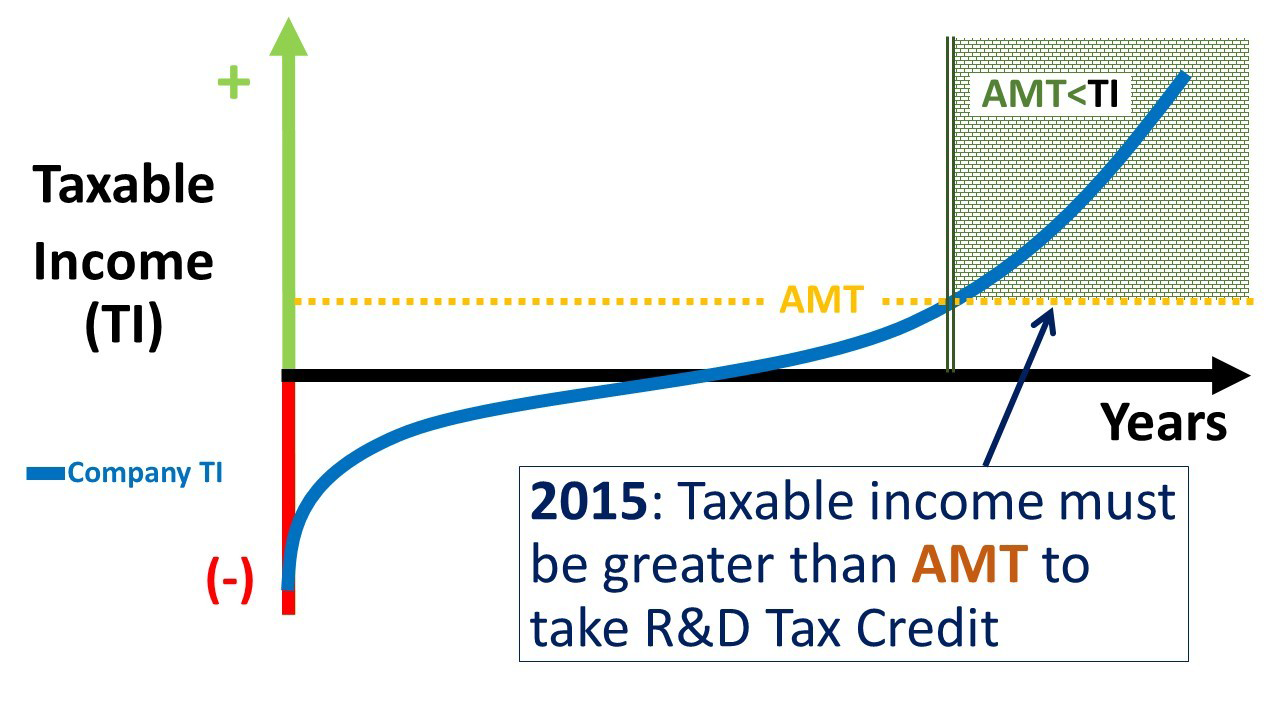
The R&D Tax Credit was created by Congress to encourage R&D investment within the United States. In the past, however, R&D credits were only available to companies that are profitable, as companies that have yet to turn a profit had no tax burden to be reduced by the credits. It seemed unfair that life science startups, which primarily perform R&D but typically pay no income tax for years, could not benefit from the R&D Tax Credit (FIGURE 1).
FIGURE 1: In the 2015 tax year, there is limited eligibility for the R&D Tax Credit.
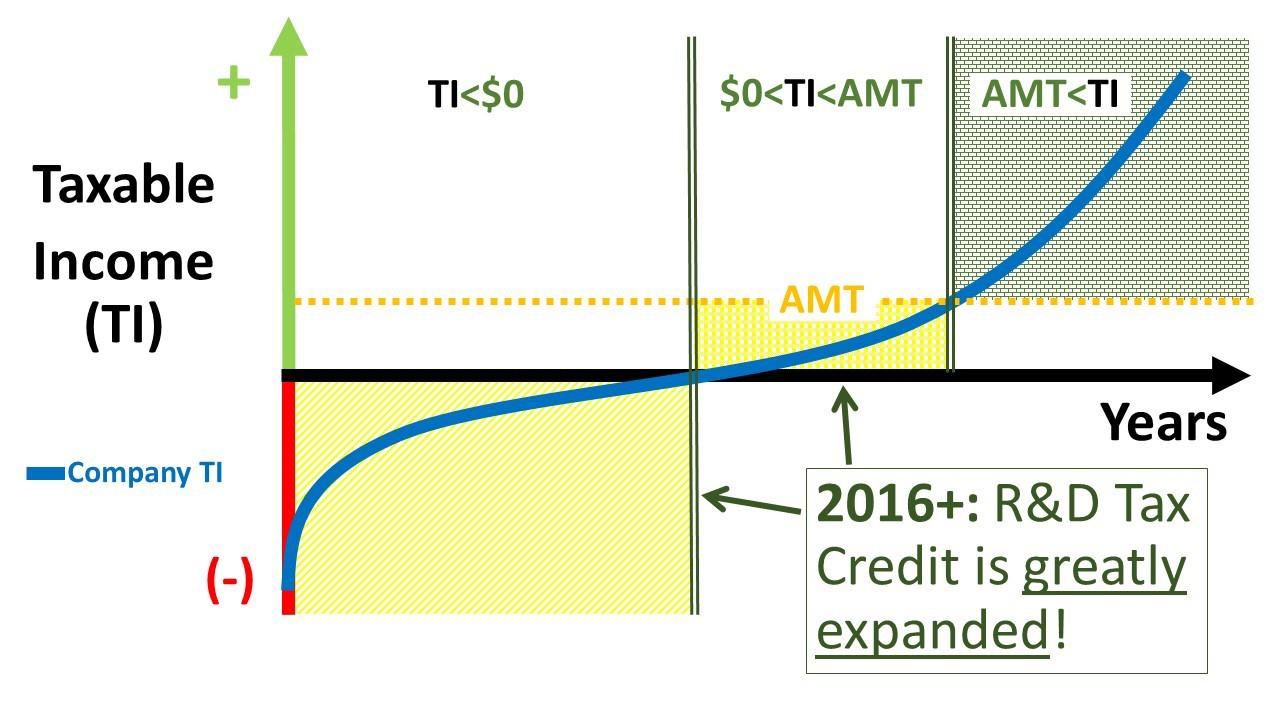
This disparity between profitable companies and startups has finally been resolved, and startups can finally benefit from R&D Tax Credits. The gap was closed by the PATH Act, signed on December 18, 2015 (FIGURE 2). In addition to making the R&D Tax Credit permanent and allowing it to be applied against the Alternative Minimum Tax (AMT), the PATH Act allows startups to use the R&D Tax Credit to offset payroll taxes for up to 5 years. This change is particularly beneficial for life science startups, because it often takes several years before their income exceeds their expenses. Plus, everyone has to pay payroll taxes!
FIGURE 2: In the 2016 tax year and beyond, even startups are eligible for the R&D Tax Credit.
Grants and tax credits are similar in that they are non-dilutive (you don’t lose equity) and you don’t have to pay them back. Their main difference is that grants are forward-looking whereas tax credits are backward-looking. For grants, you have to convince reviewers (often professors) that your proposed future project is significant, innovative, and will have a great impact on public health. The national “success rate” for SBIR/STTRs is typically somewhere around 15-20%. For tax credits, you just have to be able to prove that you performed R&D the previous year. While you must confirm your eligibility, understand what is considered “qualified research expenditures,” and know how to calculate the credit, I can assure you that the “success rate” for R&D Tax Credits is near 100% if you follow the rules.
As a life science entrepreneur, it is in your best interest to seek various funding sources. Grants are an excellent source of non-dilutive funding that can push your project forward, but, as noted on www.sbir.gov, they are “highly competitive.” Fortunately for startups, the new R&D Tax Credit rules allow you to offset your payroll taxes if you perform R&D in 2016. Like grants, these tax credits are non-dilutive, but, unlike grants, they are nearly a sure bet when calculated correctly.
Jacob will be presenting an upcoming RESI Workshop on R&D Tax Credits at RESI@TMCx in Houston on April 11. View the full RESI agenda here.
A Japan-based corporate VC fund primarily makes early stage investments solely in the Life Sciences. The firm raised a new fund in 2014 and looks to make about 2-3 new investments in the next 12 months. The firm typically allocates USD 1-2 million per round and up to USD 3 million per company. The firm can invest globally, but at present has a primary focus on opportunities in the USA. The firm acts as a co-investor.
The fund focuses on therapeutic drug discovery platforms. For therapeutics, the firm looks for small molecules, biologics, as well as biosimilars and reformulated drugs. The firm is opportunistic in terms of indications and is particularly interested in orphan indications and in products that are targeting Japan as a future market. The firm will consider products in all stages of development, but typically invests in products that are in pre-clinical and early-clinical stages.
The firm will only co-invest with other institutional investors in opportunities outside of Japan; companies backed solely by angel investors are not of interest. The firm prefers opportunities with a syndicate and/or lead investor in place. The firm typically requests board observation rights in its portfolio companies.
If you are interested in more information about this investor and other investors tracked by LSN, please email mandates@lifesciencenation.com