A venture capital firm based in China makes early-growth stage investments in the life science sector, preferably in series A and B; the firm may also consider series C opportunities. The firm typically invests RMB 100 million (USD 16 million) or more per company. The firm prefers to invest in companies based in China, but is open to outstanding opportunities from around the globe. The firm is actively seeking new investment opportunities.
In the life sciences, the firm is most interested in mHealth, gene sequencing, immunotherapy, stem cells, and antibody therapeutics. The firm is indication agnostic. The firm is also opportunistic to other cutting edge technologies in the healthcare industry. The firm is open to investing in companies in the pre-clinical phase of development as well as those that have clinical data.
The firm seeks a strong and experienced management team and generally looks to take a board seat following investment.
If you are interested in more information about this investor and other investors tracked by LSN, please email mandates@lifesciencenation.com
By Shaoyu Chang, MD, MPH, Senior Research Analyst, LSN
The global diagnostics market continues to show robust growth, fueled by aging populations and rising awareness of the value of preventive care. In our recent series of articles, we’ve explored the therapeutic space for cardiovascular diseases, neurology, and oncology. This week, we dive into the diagnostics innovation and investor landscape.
Two major categories stand out in this space: diagnostic imaging devices and in vitro diagnostics (IVD). Diagnostic imaging devices claimed a global market of US$25.7 billion in 2013, with an estimated annual growth rate of 5.7% for the coming six years.[i] More impressively, IVD claimed a US$47.3 billion global market in 2013, with an annual estimated growth rate of 7.3%.[ii]
Practitioners use a variety of diagnostic imaging technologies, such as X-rays, CT scans, MRIs, PET scans, and ultrasounds, to rapidly determine a medical issue with minimal discomfort for patients. A wide spectrum of IVD technologies, such as point-of-care tests, molecular diagnostics, and hematology tests, can be used to detect or monitor various disease indications in both healthcare and home-care settings.
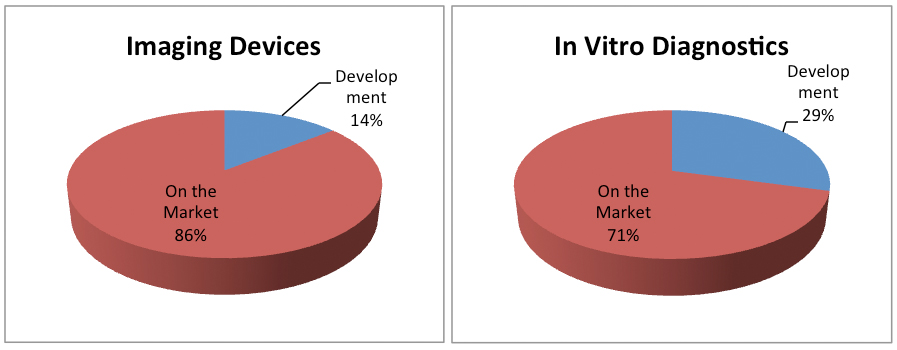
The LSN company database is currently tracking more than 2,500 diagnostic assets globally. As shown in Figure 1, 86% of the imaging assets that we track are approved and on the market. These mature technologies are dominating the imaging market, so innovators are exploring new territories, such as portable and handheld imaging devices and cloud-based digital systems to process, store, and transfer medical images. By contrast, IVD shows more innovation thanks to the past decade’s advances in biology, genomics, and biomarkers for various disease areas.
Figure 1
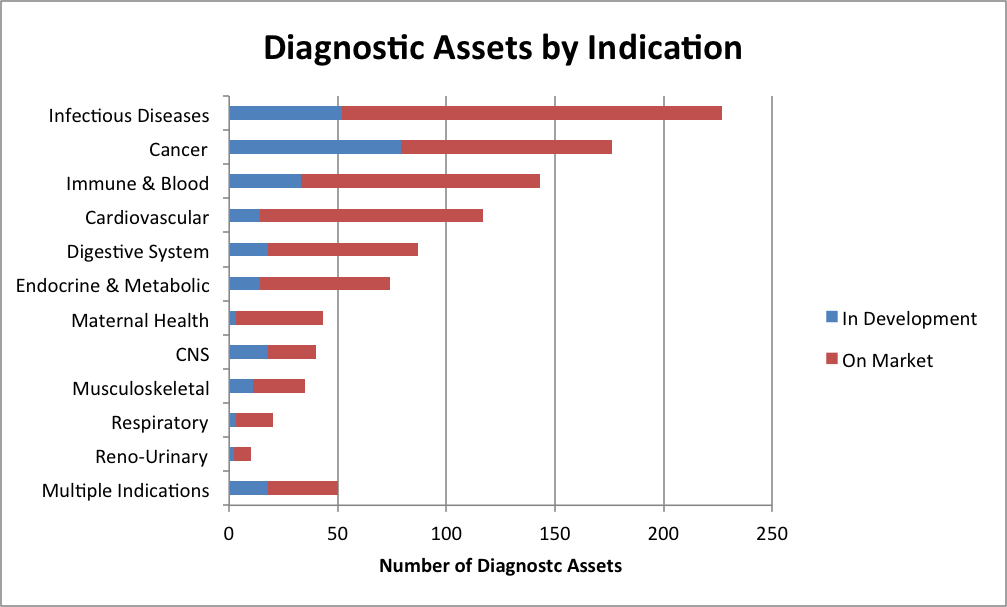
Diagnosing infectious diseases, such as hepatitis, respiratory infections, HIV, and food-borne illnesses, has created a strong demand for diagnostic tools, which is clearly reflected by the data gathered by LSN’s research team and shown in Figure 2. Recent scientific and technical advances are bringing exciting innovations to this field. Examples include microbiome analytics and point-of-care tests that have a wide variety of applications in healthcare institutions and consumer self-care and low-resource settings.
Cancer accounts for the greatest number of assets in development. Cancer diagnostics innovation is partially fueled by personalized medicine and by companion diagnostics that use novel biomarkers to detect traces of tumor cells and differentiate cancer genotypes.
Neurology is a space with a significant amount of product development underway, led by R&D efforts in Alzheimer’s disease and brain imaging technology. Maternal health and cardiovascular diseases have less innovation. Although these areas may present opportunities for innovative companies, they will face a market saturated by well-established products.
Figure 2
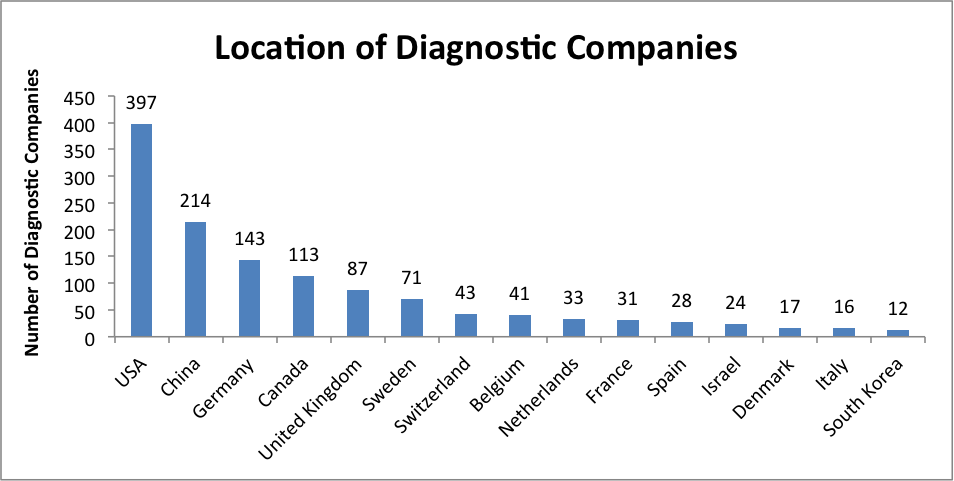
As shown in Figure 3, the U.S. leads other counties in terms of the number of diagnostic companies. Although Western European countries play significant roles in diagnostics, China claims a strong second place with a robust diagnostic industry. As discussed in a previous article, an increasing number of large diagnostic companies in established economies are seeking to penetrate emerging markets though M&A activity. The global diagnostic landscape is changing rapidly, and it is fascinating to watch this space evolves.
Figure 3
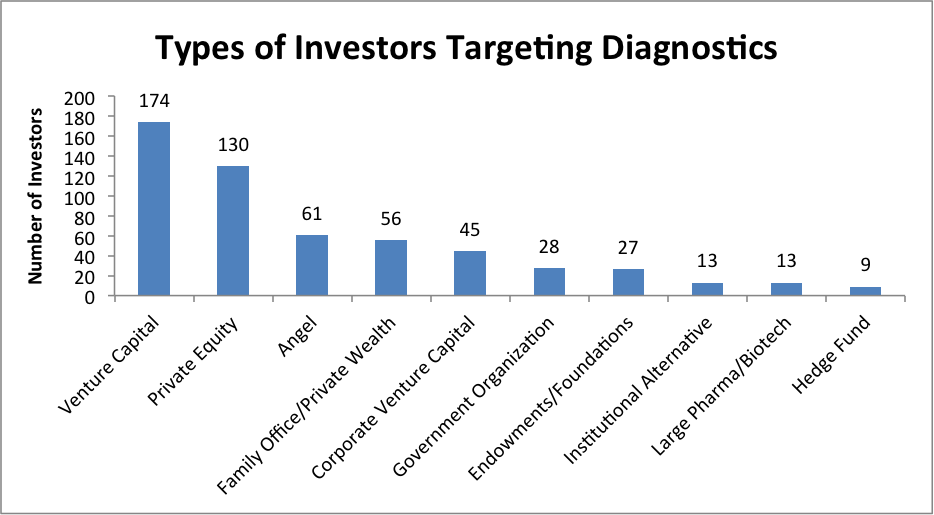
Let’s take a look at the investors in this space. LSN analysts have interviewed more than 500 investors who are interested in imaging and diagnostic devices. As shown in Figure 4, many traditional investors, including venture capitalists, private equity firms, and angel groups, find diagnostic devices attractive because of their short regulatory pathway to commercialization. Pharmaceutical corporate venture capital funds are looking for diagnostic assets to diversify their portfolios. Interestingly, several large corporations in industries other than life science, such as telecommunications and industrial supplies, are also considering using diagnostics and analytics as an entry point to the healthcare arena.
Figure 4
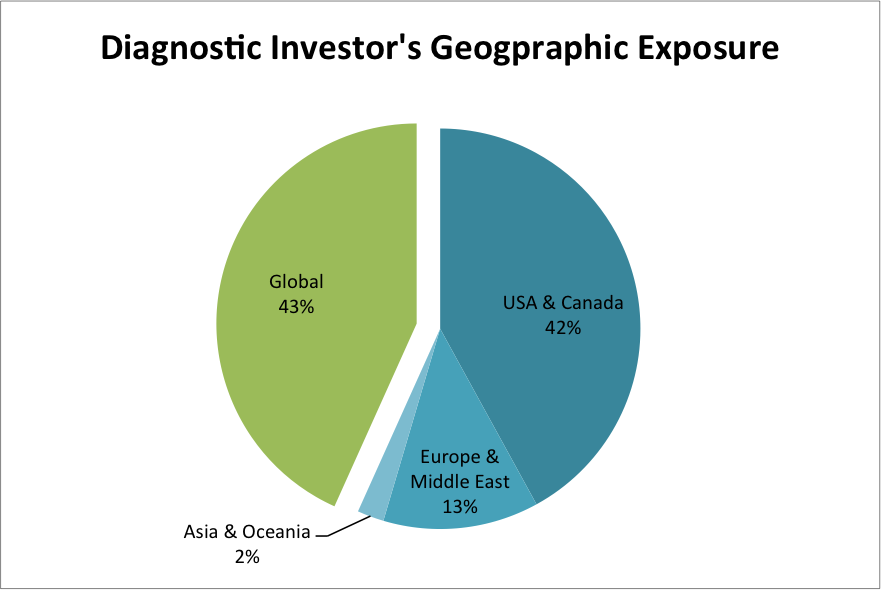
Contrary to the common notion that most investors are regional and only invest in nearby assets, globalization is occurring in the diagnostics investment space, as shown in Figure 5.
Figure 5
Global investors—investors who are active in two or more regions—are leveraging their expertise and extensive network to identify and develop new assets in emerging markets. In addition to raising capital, companies that partner with global investors can sometimes receive assistance navigating regulatory systems and gain a stepping stone into unknown markets. Cross-regional cooperation has become increasingly commonplace, and we expect the trend to continue in the future.
Attracting investors with interest in preclinical technologies has been a strong suit for the RESI Conference in the past, and the event’s premier on the West Coast is no exception. By reaching out to its deep roster of contacts from this investment stage, in which all investor types are now getting involved, LSN has brought together a unique mix of investors for the upcoming Preclinical session.
Moderated by Rajesh Rangantahn, Director of the Office of Translational Research for the NINDS, the audience will hear from:
If you’re looking for your first round of investment post-R&D, this diverse group will help you understand the nuances of positioning your company, how to approach the initial correspondence, and which classes of investors are currently interested in what types of technologies. If you’re looking to begin building a strong investor pipeline to get your company off the ground, this session is a good place to start.
Healthcare IT:
Healthcare IT has been a hot topic for investment recently, to say the least. From hospitals and healthcare providers implementing new electronic healthcare systems, to companies creating devices built to track your every move, it is clear that healthcare IT and big data are going to be huge players in life science world going forward.
Moderated by Randy Scott, Partner, HealthQuest Capital, the audience will hear from:
How should healthcare IT companies position themselves to look most attractive in the space? What subsegments of this space are investors currently most interested in? What does the future of healthcare IT have in store? All these questions and more will be answered on January 13th. If you are a fundraising executive working in Healthcare IT, this session will provide you with tactical advice on how best to move forward.
A private/family investment vehicle based in the Western United States is seeking to invest in the life science space. The fund is a structured organization for making angel investments in pre-seed or seed rounds. Investments are in the form of equity; in the next 6 months the firm expects to make about 5-10 seed investments of $50,000-100,000 and an additional 40 pre-seed investments of $25,000, and is hoping to increase their allocations in the healthcare sector. The firm also provides a three-month accelerator program. The firm will consider investing in companies worldwide.
The firm is interested in investing in medical technology, and invests in subsectors in which the firm can apply expertise; typically this means products that have a significant software component. Healthcare IT, biosensors, wearables and health monitoring devices are of interest. While the firm is open to investing in any indication, the firm is particularly interested in diabetes & blood glucose monitoring, personal fitness, and mental/behavioral disorders. In the healthcare IT sector, the firm is interested in both consumer applications and enterprise software, but is not interested in diagnostic software such as genomic, proteomic or molecular diagnostic algorithms; however, optimization and data analysis software for hospitals and diagnostic laboratories is of interest.
The firm prefers to invest in companies with at least two co-founders, one with technical expertise and one with business expertise; for the accelerator program in particular, the firm prefers to work with companies that have a technical expert co-founder. In addition to due diligence on the management team and technology, the firm also considers a product’s potential market opportunity.
If you are interested in more information about this investor and other investors tracked by LSN, please email mandates@lifesciencenation.com
The corporate venture capital arm of a global pharmaceutical company based in Mumbai, India is actively seeking new investments. The firm has been established to invest in early stage ideas with breakthrough technologies addressing major unmet medical needs. The firm seeks to make equity investments in Seed and Series A/B rounds. The firm has a global mandate and is currently seeking new investment opportunities.
Sectors and Subsectors of Interest
The firm is currently seeking to invest in early to mid-stage repurposed drugs, repositioned drugs, combination therapies, and new delivery technologies and devices for old drugs. In terms of indications, the firm is focused on oncology, neurology, infectious diseases, and metabolic diseases, but will consider other indications on a case-by-case basis. The firm will prioritize 505(b)(2) opportunities.
Company and Management Team Requirements
The firm seeks companies with a strong and experienced management team. The firm may take a board seat/board observer rights.
If you are interested in more information about this investor and other investors tracked by LSN, please email mandates@lifesciencenation.com
A global private equity firm is looking to make direct equity investments into life science companies ranging from $5-25m, primarily in the USA and Europe, with the potential to invest in other areas if the right syndication opportunities are available. The firm typically makes 10 new direct investments per year across a diverse range of sectors, including healthcare IT, therapeutics and medical devices. The firm leads or co-leads financing rounds in about 60% of cases and takes a board seat in these instances, but on other occasions may syndicate with other investors and not take a board seat.
The firm prefers to invest in medical devices and therapeutics with the potential to become the standard of care in a large clinical area with unmet needs. Focus indications include oncology, immunology, cardiology, diabetes, neurology, infectious diseases, respiratory disorders, pain management and psychiatry. The firm prefers to invest in the later clinical stages (Phase II + III), but will consider opportunistic investments in earlier stage opportunities if the firm sees the potential for outsized risk-adjusted returns due to a market dislocation.
The firm also invests in healthcare IT companies that have a product already on the market and have attained revenue and customer adoption. These investments are in a variety of market segments, including enterprise software, clinical management software, connected devices/equipment and direct-to-consumer products.
In the therapeutic and medical device sectors, the firm seeks to invest in companies with unique intellectual property and with strong investor syndicates who can fund late-stage clinical trials to completion. In the healthcare IT sector, the firm prefers to invest in companies with at least $5m in revenue and strong, experienced management teams. The firm performs thorough due diligence, looking at factors such as historical performance, size of market opportunity, revenue per customer and customer stickiness in addition to vetting the product itself and the management team.
If you are interested in more information about this investor and other investors tracked by LSN, please email mandates@lifesciencenation.com
LSN has partnered with Meeting Mojo, an emerging partnering portal developer based in the UK. RESI attendees can use the system to find other attendees who are a fit for their product, development stage, and other relevant factors. This highly customized solution uses metatagged profiles that can be searched by the scientist entrepreneur attendees to pinpoint a specific fit for an investment mandate by one of the investment firms present at RESI. The RESI Partnering Platform provides the foundation for a one-of-a-kind partnering experience based on current investor mandates, easily matchable to the emerging biotech and medtech startups that fit the investment criteria.
RESI partnering therefore provides an opportunity for life science companies and investors to meet the right people, create compelling dialogues, and foster long-term relationships.



 nical Investors:


