
By Chris Cummings, Senior Business Development Manager, LSN
Christine A. Wu, Senior Research Analyst, LSN

 RESI is coming home to Boston and so is the RESI Innovation Challenge. This September’s life science innovation competition will showcase the most promising new health technologies in the RESI Innovation Challenge. If you are fundraising and aim to build a presence in the Boston’s booming healthcare scene, we’d like to see your application.
The RESI Innovation Challenge invites the top-tier early-stage companies in therapeutics, medical devices, diagnostics and healthcare IT to present from around the globe. All applicants will be vetted on the crucial balance of the quality of the company’s scientific innovation and the investment potential based on the company current standings and management team.
On September 26th, RESI’s estimated 1000 attendees will receive “RESI Cash” to “invest” in the company whom they believe to be the most “investible” of the contestants. The top three winners with the most RESI cash will receive prizes and be featured in our RESI newsletter recap that will go out to LSN’s 20,000 newsletter readership.
In the past we have seen around 50% of Innovation Challenge companies receive funding within a year from their exhibition at RESI. Be sure not to miss out on the chance of adding to this statistic – apply for the Innovation Challenge.
See below for the previous RESI Innovation Challenge testimonials.
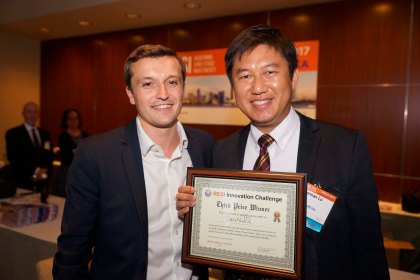
“RESI Innovation Challenge was a fantastic way for us to increase exposure to investors attending the event. We highly recommend leveraging the Innovation Challenge with the one-on-one partnering platform to get more face time with investors.”
– Herman Lo, CEO, ViewsIQ Inc.
3rd Place in San Diego IC
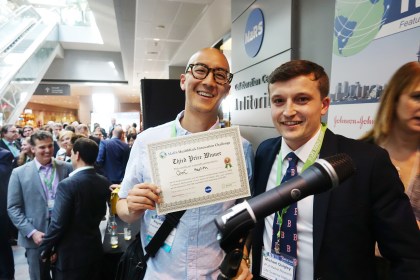

“The RESI Innovation Challenge is a really good opportunity to meet investors and other companies in the space. It’s a good showcase to reach that audience.”
– Jessica Ching, CEO, Eve Medical
2nd Place, RESI San Francisco, January 12, 2016

“The RESI Innovation Challenge is a unique way to pitch, and provides a great opportunity to see what other companies are doing in the industry, while allowing you to meet with potential investors and strategic partners outside of the partnering meetings.”
– John Connolly, VP Corporate Development, Rna Diagnostics
1st Place, RESI Boston, September 16, 2015




 Click to enlarge


 Next Phase Newsletter