Synaptic Bio, First-Place IPC Winner at RESI Boston: Building a Next-Generation Checkpoint Therapy

Synaptic Bio, the First-Place winner of the Innovator’s Pitch Challenge at RESI Boston, is advancing a tetravalent bispecific antibody designed to improve both the efficacy and tolerability of cancer immunotherapy. In this interview, the team shares how SYB302 applies immune synapse biology to PD-1 therapy, its path toward the clinic, and the investor and partnering conversations sparked at RESI. 
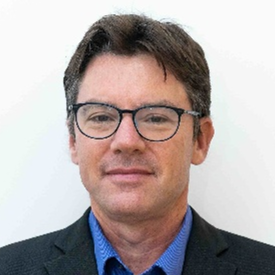
Yotam Levin
CEO and Co-Founder at Synaptic Bio
Caitlin Dolegowski
Program Director, LSN

Caitlin Dolegowski (CD): Introduce Synaptic Bio and the unmet need you are addressing in cancer immunotherapy. 

Yotam Levin (YL): Synaptic Bio is a spinout from Dr. Adam Mor’s lab at Columbia University, building bispecific antibodies around the biology of the immune synapse, the interface where a T cell and a tumor cell engage. Our lead program, SYB302, pairs a next-generation PD-1 blocker with IL-25 neutralization in a single asset. Checkpoint inhibitors (ICIs) transformed oncology, but they leave a lot of patients behind. Roughly 800,000 people in the US are treated with ICIs each year, but an estimated 480,000 don’t respond. About half overall develop immune-related adverse events, an expected side effect of bolstering the immune system, and an estimated 140,000 patients have to stop therapy because of severe ones. So there are two problems: too few patients respond, and too many who do respond are forced off a drug that was working. We designed SYB302 to address both concerns.

CD: How does your tetravalent bispecific platform, including SYB302, leverage immune synapse biology to differentiate it from existing checkpoint therapies? 

YL: Today’s PD-1 antibodies mainly work by blocking PD-1 from binding its ligand. SYB302 adds a physical mechanism. Its PD-1 arms are long, and the molecule is larger than a standard antibody. That size pushes PD-1 out of the immune synapse so it can’t suppress the T cell. We have a cool movie on our website at www.synaptic-bio.com to show this. The tetravalent design adds a second mechanistic layer. IL-25 is a homodimer, so each IL-25 molecule can bridge two SYB302 antibodies. That clusters PD-1 on the T cell surface and drives its internalization and degradation. IL-25 is abundant in the tumor microenvironment, so the effect is strongest where we want it. IL-25 is also a driver of immune-related toxicity. Neutralizing this cytokine gives us a built-in safety brake. In preclinical models, including colon, melanoma, and bladder tumors, SYB302 showed stronger tumor control than anti-PD-1 with markedly less organ damage. A single antibody designed to improve both efficacy and tolerability – we have not seen any other antibody that does both.

CD: What are the most important scientific or development milestones over the next 12 to 18 months? 

YL: Our focus is moving SYB302 from a mature Development Candidate toward the clinic. The key milestones are:

  1. Stable cell line and process: completing cell line development and defining the manufacturing process, targeted around month 9 after funding.
  1. FDA engagement: a pre-IND meeting, targeted around month 12.
  1. GMP and toxicology: starting GMP manufacturing and GLP toxicology, leading to an IND submission at about month 24.

In parallel, we’ll expand our preclinical data in colorectal cancer and other indication-specific models, characterize IL-25 as a potential patient-selection biomarker, and advance the manuscript describing the SYB302 data. Colorectal cancer, particularly the MSS subtype that responds poorly to current checkpoint inhibitors, is our lead indication. CRC is a very prevalent disease with few treatment options. As supported by the biology of IL-25, this tumor shows that having high levels of IL-25 correlates highly with poor overall survival.

CD: What did being named First Place winner of the Innovator’s Pitch Challenge at RESI Boston mean to your team? 

YL: It was a meaningful validation, especially coming from an audience of investors and industry experts who evaluate hundreds of stories a year. Our science comes from a university lab and takes a different approach to PD-1 biology, so it’s rewarding to see that message resonate with people who understand the field. It also reinforces our conviction that the next generation of checkpoint therapy needs to deliver both better efficacy and better tolerability.

Preparing for the pitch was fun, because we had to distill a 30 to 60-minute story into a mere six minutes. This forced substantial simplification on one hand, but it also required us to ensure a sophisticated audience gets what they came for – understanding the essence of what we do. The most critical listener in the audience was, of course, Professor Mor – the fact that he liked the presentation was yet another award.

CD: What aspects of the RESI experience, including the pitch, judge feedback, or partnering conversations, were most valuable? 

YL:

  1. The pitch: We had to make multiple decisions on what to leave behind and not share. It’s like asking – of the 12 major value propositions of your assets, what are the one and a half that you really need to focus on?
  2. Judge feedback: The judges were very insightful, despite the brevity of the presentation and lack of detail. One asked about breakdown of budgets and its assumptions, identifying some assumptions we’ve taken without showing them. I was happy we could answer the questions quickly without to use backup slides for an answer.
  3. RESI Sessions: We really enjoyed the panels because they brought industry leaders and experienced investors. We could get a much better feel for what individual fund managers expect to see, how they differ from one another, how to overcome the overwhelming noise of hundreds of pitches and business plans, and whether or not there is a likely fit with certain parties. Meeting these investors in person instead of through email, Zoom, or networking apps made all the difference.

CD: Did RESI Boston lead to any meaningful investor, strategic partner, or scientific conversations that you expect to continue? 

YL: Yes. We had productive conversations with a few investors and potential strategic partners, and several are in the funnel. I can’t share specifics of course, but the interest has been in both SYB302 and the broader platform.

CD: What types of investors or strategic partners would be most valuable, and why should other early-stage companies consider the Innovator’s Pitch Challenge? 

YL: We’re looking for partners who understand the immuno-oncology landscape and can support a long development path. That includes biotech-focused venture investors for our seed financing, and strategic partners in oncology and immunology who see the value of a differentiated PD-1 backbone. For our lead asset, we prefer traditional seed funding; for our additional assets in Type2 inflammation we also foresee single-asset licensing, option-based co-development or a strategic investment. We think corporate VCs could be a natural fit, because they have deep scientific expertise but also an eye for market access. Our strongest asset is our science, data, and results – having experienced investors in our team would go a long way.

Apply to Pitch at RESI JPM 2027

From the Innovator’s Pitch Challenge Podium to the Clinic: FELIQS Advances Vision Saving Therapies 

Third Place winner of the RESI San Diego Innovator’s Pitch Challenge, FELIQS is developing innovative therapies for neonatal ophthalmology and other serious retinal diseases with the goal of preserving vision at the earliest stages of life. In this interview, Kenichiro “Nobu” Kuninobu discusses the company’s lead clinical program, the value of participating in the RESI Innovator’s Pitch Challenge, and the milestones that will shape FELIQS’ next phase of growth.

Kenichiro “Nobu” Kuninobu
Co-founder & CEO, FELIQS
Caitlin Dolegowski
Program Director, LSN

Caitlin Dolegowski (CD): FELIQS is focused on developing therapies for neonatal ophthalmology and other serious retinal diseases. Can you tell us about your lead program and the impact it could have on patients and their families?

Kenichiro Kuninobu (NK): FELIQS’ lead program, FLQ-101, is being developed for the prevention of retinopathy of prematurity, or ROP, a serious retinal disease affecting premature infants that can lead to lifelong visual impairment or blindness. Today, treatment is generally initiated after ROP has already progressed to a clinically significant stage. Our goal with FLQ-101 is to intervene earlier and prevent disease progression before invasive treatment becomes necessary. If successful, this approach could give premature infants the best possible opportunity for healthy visual development. For families, the impact could be profound. Preserving vision at the very beginning of life can influence a child’s development, independence, and quality of life, while potentially reducing a lifelong burden of care for families and healthcare systems.

CD: Your work bridges scientific innovation and international collaboration. How has that global perspective influenced the company’s development?

NK: FELIQS was founded on scientific discoveries originating in Japan, but from the beginning we have approached drug development with a global perspective. Our lead clinical program is being developed in the United States, while we continue to work closely with researchers, clinicians, regulators, and partners across Japan and other regions. That international approach has shaped how we think about clinical development, regulatory strategy, patient access, and partnerships. It also allows us to bring together complementary expertise from different regions. For diseases such as ROP, which affect premature infants around the world, we believe that building a globally relevant development strategy from an early stage is particularly important.

CD: Earning Third Place in the RESI San Diego Innovator’s Pitch Challenge highlights the strength of your innovation. What did this recognition mean to your team?

NK: Earning Third Place at the RESI San Diego Innovator’s Pitch Challenge was very meaningful to the FELIQS team. It provided encouraging external recognition of both our scientific approach and our mission to address serious retinal diseases in vulnerable patient populations, particularly premature infants. For our team, it was especially valuable to see investors and industry experts respond positively to our strategy and the potential of our programs. The recognition gave us additional confidence that FELIQS is pursuing an important and differentiated approach, while also increasing our visibility within the global life sciences community.

CD: Were there any conversations with investors, judges, or strategic partners at RESI that stood out or created new opportunities?

NK: RESI created a valuable forum for high-quality conversations with investors, judges, and potential strategic partners who understood both the unmet need in retinal disease and the importance of early intervention in ROP. Several discussions helped us refine our communication of the clinical and commercial opportunity, and some opened the door to follow-up conversations about financing, development strategy, and potential collaboration. The event was particularly useful because the feedback was practical, thoughtful, and directly relevant to our next stage of growth.

CD: What are the most important clinical, regulatory, or business milestones FELIQS hopes to achieve over the next 12 to 18 months?

NK: Over the next 12 to 18 months, our highest priority is to advance FLQ-101 clinically and build the foundation for its next stage of development. This includes progressing our ongoing clinical study in ROP, expanding our clinical network, generating additional data, and continuing regulatory discussions to define an efficient path forward.

At the same time, we plan to advance our broader pipeline, including FLQ-103 and FLQ-105, while continuing to strengthen the company financially and strategically.

From a business perspective, we are actively engaging with investors and potential strategic partners who can help us accelerate these programs. Ultimately, each of these milestones is focused on one objective: moving promising science into meaningful therapies for patients as efficiently and rigorously as possible.

CD: What qualities are you looking for in investors or strategic partners as you continue to grow?

NK: We are looking for investors and strategic partners who share our commitment to developing meaningful therapies for serious retinal diseases and who understand that building innovative medicines requires both scientific rigor and long-term perspective.

Beyond financial support, we particularly value partners who can contribute strategic insight, experience in ophthalmology, rare diseases, or global drug development, and access to networks that can help accelerate clinical and commercial progress.

Most importantly, we want partners who are collaborative and aligned with our mission. We believe the strongest partnerships are built when both sides share a long-term commitment to creating meaningful value for patients.

CD: Looking ahead, what is your long-term vision for FELIQS, and what advice would you offer companies considering participating in a future RESI Innovator’s Pitch Challenge?

NK: Our long-term vision is to establish FELIQS as a leading biotechnology company in neonatal ophthalmology and rare diseases. Building from our work in ROP, we aim to expand into additional diseases where early and innovative therapeutic intervention could preserve vision and meaningfully change patients’ lives.

For companies considering participating in a future RESI Innovator’s Pitch Challenge, my advice would be to come with a clear story, a focused objective, and an openness to feedback. RESI is not simply an opportunity to pitch your company. It is a platform to refine your strategy, understand how investors perceive your opportunity, and build relationships that may continue well beyond the event.


Additional Innovator’s Pitch Challenge (IPC) slots are now available, giving companies the opportunity to pitch directly to investors, receive live feedback, and boost visibility ahead of the event. Applications close August 26.

Apply to Pitch at RESI Boston

Finding Investment Opportunities At RESI: An Interview with Andy Li (Biosense Global)

Andy Li
An interview with Andy Li, CEO & President, Biosense Global

– By Jessica Yang, Investor Research Analyst, LSN

Jessica Yang

Earlier this week, I had the pleasure of speaking with Dr. Andy Li, the founding partner of Biosense Global LLC. Andy has attended nearly every RESI event in the last 2 years. RESI is a partnering event that enables early-stage life science, MedTech and digital health companies to meet and interact with investors and strategic partners based on mutual fit. Recently, we learned that Biosense Global has invested in two companies that Andy first met at RESI.

In this interview, Andy discusses his perspectives on his RESI experiences, Biosense Global’s investments in companies attended RESI, and some suggestions for fundraising CEOs.

Jessica: To begin, please tell us a little bit about your background and your fund.

Andy: My name is Andy Li, and I am the founding partner of Biosense Global LLC. I have more than 25 years of biomedical research and biopharmaceutical industry experience with proven track records in global drug development in multiple therapeutic areas, alliance management, and business development. Currently, Biosense Global invests in early to mid-stage biopharma and Medtech projects. With our R&D facilities in China, in-licensing assets from the U.S. and Europe to China would be an important consideration.

Jessica: How many RESI conferences have you attended? What was your first impression of the RESI Conference series?

Andy: I’ve attended RESI conference six times to date, and the upcoming Boston one will be the seventh. One thing I enjoyed about attending RESI is that I think RESI attracts early-stage companies with good qualities. The companies I met in the previous RESI have solid science and great teams, and RESI allows investors and companies from around the globe to build connections easily.

Jessica: What successes have you experienced through RESI?

Andy: We’ve invested in a company focusing on immuno-oncology that I first met in RESI. The company is called PrimeVax, and this company uses a combination of the dengue fever virus and autologous dendritic cells to induce a strong immune response along with personalized tumor targeting. In addition, we’ve invested in another company call Curtana Pharmaceuticals. I met this company at a previous RESI conference, and we continued a great relationship that eventually led to an investment. Curtana is developing therapies for the treatment of brain cancer, including glioblastoma in adults and pediatric high grade glioma in children.

Jessica: In your opinion, what are the greatest strengths of RESI?

Andy: RESI is a well-organized conference, especially in its online partnering system. Compare to many conferences I’ve attended before; I think RESI has a solid platform that allows investors to have a better understanding of attending companies and book meetings easily online. Also, since Life Science Nation has great connections with many companies in your platform, I think this helps you in organizing the RESI conference, and your significant portion of company connections also help us to find ideal companies that match our investment criteria. Another thing is that I think you choose great times to hold RESI conferences, for example, you hold RESI concurrent with BIO or JPM, and this attracts investors to attend all these events at one time to reduce travel inconvenience.

Jessica: What were some aspects that differentiated the companies you’ve invested in vs. others?

Andy: Overall, I’ll look at three aspects. First and the most important one to me is whether the company’s technology is unique and innovative. Second, I’ll look at the company’s management team – I prefer a solid team with relevant experiences. Last, I think it’s also essential that the company’s investment value is reasonable.

Jessica: How can companies better prepare for an initial meeting with your group?

Andy: Sometimes, early-stage companies that founded by scientist-entrepreneurs may only focus on the technologies. I’ll suggest companies try to touch on technology, IP, commercial potential (more important for not well-known indications), competitor analysis, and fundraising plans, etc.

Jessica: Do you have any suggestions for RESI?

Andy: It would be great for you to give suggestions for attending companies to know what aspects they can cover in their presentations and slide decks. This will help increasing companies’ qualities in RESI.

About Biosense Global LLC:

BioSense Global, LLC is an NJ-based venture investment firm that was founded in 2016 and focused on bridging Eastern and Western innovations and investment opportunities. Biosense invests in early to mid-stage biopharma and medtech projects. In addition, the company has R&D operations in China. Biosense is currently looking for new opportunities globally.

Interview with Kouris Kalligas, Winner of the Innovation Challenge in RESI Toronto

Kouris Kalligas
An interview with Kouris Kalligas, Founder & CEO, Therachat

– By Greg Mannix, VP of International Business Development, LSN

Greg Mannix

The San Francisco digital health startup Therachat came in 3rd at the RESI on MaRS Innovation Challenge in Toronto. Therachat is a mental health platform which simplifies homework in therapy for therapists & psychologists & their clients. Therapists & Psychologists can customize the homework experience for their clients via a simple web application and their clients can do their homework on an easy-to-use, HIPAA Compliant, mobile application. We believe that homework needed a simpler way and that’s what we have built!

CEO Kouris Kalligas registered early for the conference and put a lot of time and effort into his partnering strategy. When he was notified they would compete in the IC as finalists, he decided to bring along his colleague Sajid Reshamwala so they could maximize their presence at the conference.

Greg Mannix:  Kouris, how did you prepare for the RESI conference?

Kouris Kalligas:  I actually spent several solid days preparing our company profile on the RESI Partnering Platform and then reaching out to as many investors as possible who looked like a fit for us. The RESI Partnering is the best match-making platform I have seen! I could get a good idea of what each investor was looking for so I could decide who to request a meeting with.

GM: That’s great! How many meetings were you able to book?

KK: I was able to book 16 meetings! And what was really cool is that 10 investors who couldn’t meet with me at RESI gave me their emails through the messaging system, so I was able to contact them afterwards. I have been doing that since I got home. Fantastic!

GM: Wow! That’s impressive. Why do you think you got so much traction with investors?

KK:  I actually used 3 different messages and tried each one out on a handful of investors. I saw right away the one that was getting the most responses, so I focused on that message with the rest of investors I reached out to.

GM:  That is a great approach Kouris! I take it Sajid spent most of his day at the Therachat poster talking to people. How many Ad-Hoc meetings did Sajid have?

KK: I would guess about 20. Also, I sent every investor I spoke to check out our poster and invest their RESI cash in us! That’s so important:  Don’t be shy, just ask them to invest. I guess it was a good strategy!

GM: What would you say is the thing you liked most about RESI?

KK: That’s a tough one because we had a super productive day. But I would have to say it is the Partnering Platform. It really allowed me to identify the target investors I wanted to meet with and I could communicate with them through the messaging system. I probably sent out 200 or 300 messages!

Kouris Kalligas, Founder & CEO, Therachat

CEO & Founder of Therachat. I am passionate about technology & mental health. I have already one product under my belt called Addapp (check addapp.io) which I drove to 100k downloads and 10k daily active users. I believe that mental health is important and underserved. Technology can be a big enabler in the revolution that is coming to improving our mental health!

Greg Mannix, VP of International Business Development, LSN

Greg Mannix is Vice President of International Business Development at Life Science Nation. After graduating from the University of California, he moved to Europe where he began a career in the life sciences and obtained a Master’s degree from IE Business School in Madrid. He has extensive experience in sales and marketing management in the medical devices field. He has worked extensively in Europe, North America and Latin America and he speaks English, Spanish and French. Greg’s role at LSN is to provide international early-stage companies with the tools and strategies to succesfully fundraise and to facilitate cross-boarder investments, licensing and M&A transactions.

About Therachat

Therachat is a mental health platform which simplifies homework in therapy for therapists & psychologists & their clients. Therapists & Psychologists can customize the homework experience for their clients via a simple web application and their clients can do their homework on an easy-to-use, HIPAA Compliant, mobile application. We believe that homework needed a simpler way and that’s what we have built! Check www.therachat.io to find out more!

Interview with Yasaman, Winner of the Innovation Challenge in RESI Toronto

Yasaman Soudagar
An interview with Yasaman Soudagar, Founder & CEO, Neurescence

– By Greg Mannix, VP of International Business Development, LSN

Greg Mannix

Interview with Yasaman Soudagar: This year’s winner of the Innovation Challenge at RESI on MaRS was Neurescence, a Toronto-based company that has combined the power of novel optical imaging technology with advanced machine learning and quantum machine learning techniques for intelligent drug discovery for the diseases of the central nervous system.

CEO Yasaman Soudagar got a late start preparing for RESI, since she didn’t decide to attend until about 10 days before the conference, when she was informed that she would compete as a finalist in the Innovation Challenge. So I wanted to ask her how she managed to have such a successful conference, not to mention winning the Innovation Challenge, on such short notice.

Greg Mannix: Yasaman, you attended RESI alone, How did you get so many players to “invest” their RESI dollars in Neurescence and win the IC? Did you spend the whole day at your poster?

Yasaman Soudagar: Actually no! I moved around and looked for the places where the most people seemed to be hanging out, and I brought a tablet around so I could show them what our technology does, in a video of the actual imaging we do.

GM: Who did you target?

YS: One thing I really like about RESI is that all the investors are easy to spot because they have a red ribbon on their nametags. So it was really easy to approach investors and start a conversation.

GM: Was it difficult to get a conversation going, or did you find that most of the investors were approachable?

YS: I just went up to them and said “Hi, I am the founder of the coolest company on the planet”, which always at least drew a smile and a funny comment. Once I got their attention, then I had the chance to say “Here, let me show you”.

GM: Did you have very many one-on-one partnering meetings?

YS: I didn’t really have time to book a lot of meetings—I only had 2 scheduled, which I took at the poster. But I made a lot of great connections just by networking. In fact, I have already had follow-up meetings with investors I met at RESI.

GM: So all in all, it sounds like you had a good experience at RESI. What did you like most about the conference?

YS: It was a great event for me. I liked the density of relevant people and that it was easy to identify the investors. It was a great opportunity to network.


Yasaman Soudagar, Founder & CEO, Neurescence

Dr. Yasaman Soudagar holds a PhD in the field of experimental quantum optics, under the supervision of Dr. Nicolas Godbout at École Polytechnique de Montréal and Dr. Aephraim Steinberg at the University of Toronto. She then tenured an NSERC IRDF scholarship at Attodyne, a picosecond laser manufacturing company in Toronto. The exposure to the demands of a startup gave her the confidence to start her own, which is called Neurescence Inc. Soudagar has been building up Neurescence full time since Aug. 2015. Since then the product is developed and commercialized to the scientific research market.

Greg Mannix, VP of International Business Development, LSN

Greg Mannix is Vice President of International Business Development at Life Science Nation. After graduating from the University of California, he moved to Europe where he began a career in the life sciences and obtained a Master’s degree from IE Business School in Madrid. He has extensive experience in sales and marketing management in the medical devices field. He has worked extensively in Europe, North America and Latin America and he speaks English, Spanish and French. Greg’s role at LSN is to provide international early-stage companies with the tools and strategies to succesfully fundraise and to facilitate cross-boarder investments, licensing and M&A transactions.


About Neurescence

Neurescence has developed and commercialized a miniature microscope initially targeted to the Neurology research market. Our Quartet™ system gets implanted in multiple regions of the brain and spine and follows the activities of 100s of neurons in each region for months while the subject freely moves around. Our hardware-software suite is the only technology that allows establishing a causal connection between the effect of the treatment, such as a drug, on both the neuronal micro-circuitry and the disease phenotype. This extremely powerful approach takes the process of discovering and developing treatments from a trial and error method to an intelligent design.

Sourcing Investments Through RESI: An Interview with Julz Co

Zishan Haroon
An interview with Zishan Haroon, Chairman and General Partner, Julz Co

– By Claire Jeong, Research Analyst, LSN

Claire Jeong

Earlier this week, I had the pleasure of speaking with Dr. Zishan “Z” Haroon, Chairman and General Partner of Julz Co. Z has been a tremendous supporter of the Redefining Early Stage Investments (RESI) Conference Series and a frequent contributor to several of our ongoing investor panels. As many of you already know, the RESI Conference is a one-day partnering conference dedicated to early-stage life sciences technologies, from therapeutics, medical devices, diagnostics, and digital health. In fact, we have recently learned that the firm’s latest investment was in a company Z had met through RESI! In this interview, Z discusses his perspectives on his RESI experience, Julz’s most recent investment, and some tips for fundraising CEOs.

Claire Jeong: First of all, please tell us a little bit about your background.

Z Haroon: My name is Zishan “Z” Haroon and I am the Chairman and General Partner of Julz Co, an investment management firm which invests in healthcare companies internationally including the USA, Europe, and China.  I am an MD, Ph.D. by education.  I graduated from Duke University and initially worked in academic and pharma research.  Later, I moved into venture, private equity, and corporate/business development.  I have worked on helping entrepreneurs with commercialization for many years, and have been involved in transactions and operations in China for 15+ years before founding Julz.

Claire Jeong: How many RESI conferences have you attended? What was your first impression of the RESI Conference series?

Z Haroon: I have attended 5 conferences to date and found them to be a very fast-paced and active environment. The timeline of RESI is great because it allows us to go through companies we have interviewed in depth and make our decision regarding next steps and then prepare for the next event. Overall, the experience we have had with companies at RESI has been very positive.

Claire Jeong: In general, what do you think of the companies that attend RESI?

Z Haroon: There has been a constant improvement in the quality of attending companies, and our interaction with them has always been positive. In comparison to other similar events, there are more early-stage companies and we like that mix. Some conferences are therapeutics-focused, some are medical-device-focused, but at RESI there is a very good mix of all sectors and we enjoy this diversity.

Claire Jeong: What successes have you experienced through RESI?

Z Haroon: We just closed an investment in a company called PhotoniCare. This is our first successful investment in a company we’ve met at RESI.  We first met the company at RESI San Diego in June 2017 and continued a great relationship that eventually led to an investment. (You can read more about this investment in-depth at http://www.julzco.com/2018/03/09/photonicare-secures-series-seed-funding.)

Claire Jeong: In your opinion, what are the greatest strengths of RESI?

Z Haroon: One of RESI’s greatest strengths is the partnering platform, which is a very approachable system for reviewing companies and scheduling meetings. You make it extremely easy for investors to attend your conferences and engage with companies. It is only a one-day event but highly efficient and a win-win for both sides.

Also, from the investor perspective, it is helpful to be able to touch base on a periodic basis with companies that we previously spoke with.  This enables us to continue to build and strengthen relationships with companies. What we have found from many companies is that they are very responsive to the feedback we provide, and we find them significantly improved since our initial RESI meeting.

Claire Jeong: Do you have any suggestions for RESI?

Z Haroon: I would suggest RESI expand to other geographies, such as the Midwest. Currently, most of your events are done in the West or East coast in major biotech hubs, but we would be curious to explore technologies in different areas. Companies with innovative technologies that may not have enough bandwidth for travel would find your conferences very helpful and valuable.

RESI would also do well internationally, in regions like Europe or China. RESI’s partnering system is great for small companies, so a start-up-focused event like RESI would definitely gain a lot of international momentum.

Claire Jeong: As an active investor and partner seeking early-stage opportunities, do you have any advice you would like to give to startups?

Z Haroon: The biggest gaps we see in early-stage companies when they present to us is that they themselves are not very well caught up with their technology and business plan. Like other sophisticated investors, we get to the nitty gritty very quickly. I would encourage start-ups to do their homework: understand what they are trying to accomplish and be focused about it. If we see that the management team is not on top of the technology and commercial landscapes and are vague or elusive in answering our questions, we will likely pass on the opportunity.

The initial meeting is where you have to create the right impression about the company and the management team, educate us on the market opportunity and technology, and explain how you are seeking to scale and enter the market. Answering these questions well and leaving us with a good impression will lead to a great, long-term relationship and potential investment.

We obviously enjoy our time at RESI and it is always very exciting. Keep it up!

About Julz Co:

Julz Co is an investment management company focused on investing in early-stage healthcare companies in the area of therapeutics, medical devices, services and digital healthcare. The company has offices in Chapel Hill, North Carolina, USA and Suzhou, China. Julz invests globally in companies that have novel and proprietary technology addressing a vital market need and are driven by experienced management teams.

Next Phase Interview: NCI Program Director Todd Haim Explains How RESI Boston Became A Showcase For NIH SBIR Grantees

For the third year in a row, the NIH has sponsored a group of grantees to be part of the RESI Boston Innovation Challenge. This week, Dennis Ford(DF) interviews Program Director Todd Haim(TH) to explore how this relationship benefits the NIH’s grantees, and how RESI stands out as a venue for these companies to present.

Dennis Ford
Founder & CEO, Life Science Nation; Creator of RESI Conference Series
Todd Haim
SBIR Program Director, National Cancer Institute


DF: What is the basic reason NIH is showcasing technology at RESI?

TH: The NIH is supporting the SBIR awardees to showcase their own technologies, and we do this at a variety of industry conferences. And the real goal from the NIH´s perspective is that we realize that we cannot support these companies forever; and that each individual company, in order to reach the patient and the market, will need a lot more funding than can be provided just through SBIR. They will need downstream partners and funders, and it is in our interest to help as much as we can to facilitate those partnerships.  RESI along with other early stage investor conferences provides a forum for our portfolio companies to interact with these parties. The conference hosts a unique set of investors and partners that are a good match for our Investor Initiatives program. This is the third year that we will be sending our companies to RESI.

DF: How many NIH-funded companies apply for the RESI Innovation Challenge and how many are selected as finalists?

TH: Over the past 3 years, over 150 companies have applied, and 60 of those have been featured as finalists. 20 at each conference.

DF: What are some key differences you see in the RESI conference compared to other conferences you attend?

TH: I would say two things stand out about RESI. One is the inclusion of Family Offices and groups that you don´t see at many other industry forums and showcases. The other benefit of RESI is the broad base in terms of technology types. Many of the other conferences we have participated in are really focused on one technology area, whether it be devices or therapeutics. RESI has individual tracks that represent devices or that represent therapeutics, which really allows us to present a greater variety of our companies there, and I think that broad focus is very helpful at this early stage.

DF: Is this type of showcasing of NIH-funded technology going to continue?

TH: We continually evaluate the outcomes of our companies’ participation in conferences like RESI to ensure the value of such events to our portfolio companies. We recently found out that CellSight Technologies, one of the companies that attended RESI as part of NCI SBIR’s Investor Initiatives, signed an agreement with Boehringer Ingelheim to partner on a clinical study using CellSight’s technology. We hope that participation in NCI SBIR’s Investor Initiatives will result in additional partnerships and investment for our portfolio companies. Should RESI participation continue to prove effective for NCI SBIR’s portfolio companies and our program continue to have sufficient funding for these efforts, we are likely to continue considering participation in RESI.

DF: Typically, we see for the Innovation Challenge participants up to 50% get funded or get involved in partnerships but we haven’t correlated that to SBIR participants specifically (though I know of around a half dozen off the top of my head that have fared quite well by participating in RESI). 

DF: Tell the readers some great stuff that is happening right now in the NIH funding domain:

TH: Sure. NCI and many of the other Institutes participate in both the Omnibus grant funding opportunity, which is available three times a year and the next receipt date is September 5th. About two thirds, if not more, of the funding for the NIH/SBIR program is actually through the Omnibus solicitation, which is an investigator initiated solicitation. You submit the application and you tell us what you’re working on; then it gets peer reviewed and we consider it from there. Then we have some of the Institutes within the Health and Human Services (HHS) including NCI, using a SBIR Contract Solicitation that goes out once a year to fund high-priority areas for each of those Institutes. The solicitation is now available and applications are due by October 20th. You can find the solicitation on NCI SBIR’s website (https://sbir.cancer.gov), as well as on https://sbir.nih.gov. I would definitely encourage all of the readers to look at both of those funding opportunity announcements with upcoming due dates and consider applying. We are here to work with potential applicants and help them understand how the program works, and how an application can be competitive.  So I encourage you to reach out to our office (ncisbir@mail.nih.gov) or to the SBIR Program Officers and Coordinators across the NIH before you apply. If you would like to speak to a Program Officer before you apply, that is definitely something we can arrange and provide guidance. Come and talk to us, we’re always interested in supporting new companies through the SBIR program and new projects.