
By Alejandro Zamorano, VP of Business Development, LSN
Most early stage biotech assets have the potential to target several disease areas. However, it is critical for entrepreneurs to maintain focus in a specific area – this helps to efficiently bring a product to market, and to show investors a firm commitment to a specific goal. But how do you choose which indication to pursue? Of course, there are advantages surrounding orphan drug regulation, hot disease areas, and other major factors. However, one area that many entrepreneurs do not investigate thoroughly is the early stage competitive landscape in their target indication area. This should, however, be a consideration in any entrepreneur’s mind.
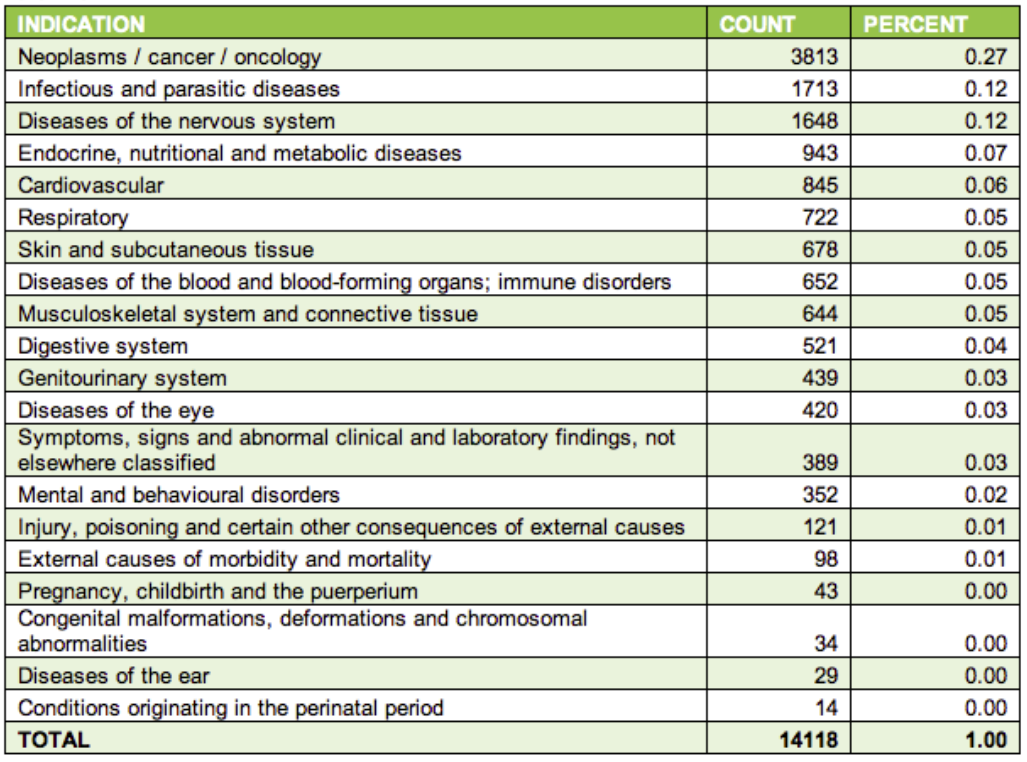
This article seeks to offer a 30,000-foot view of the therapeutic landscape, based on a sample of over 14,000 therapeutic assets. As demonstrated by the graphic below, there is a dense concentration of therapeutic assets in a select few disease areas. In fact, the top 3 main indications represent over 50% of all therapeutic assets currently being developed. This high concentration means that differentiating your asset will potentially be more challenging.
Number of Therapeutic Assets by Disease Area
 Click to enlarge
Competition will surface not only in the form of showing clinical significance, but also in the fundraising process. However, on a positive note, the clinical path for development should be much clearer, as companies have most likely traversed the same regulatory path your therapeutic is now embarking on. Learning from your competitors always pays dividends.
At the end of the day, you know your asset best, and how you fit into the competitive landscape. What is true for one company may not be true for another, but it is undeniable that every company looking to commercialize an asset needs to understand the therapeutic landscape and how to maneuver it most effectively.


 Next Phase Newsletter