Archive | Redefining Every Stage Investments (RESI) RSS feed for this section

Join LSN at Taiwan Biotech Forum in Philadelphia on June 2nd

18 Apr

By Jessica Yang, Investor Research Analyst, LSN

The day before RESI Philadelphia, the 2019 Taiwan Biotech Forum will be held at Temple University Science Education and Research Center on June 2nd, 2019.

Hosted by the Development Center of Biotechnology (DCB), the forum aims to bring innovative emerging biotechnologies in Taiwan to the audience. Topics include Biologics and AI for biomedical product development, regenerative medicine, and microbiome. Keynote speeches and panels will discuss these topics from the prospective of investment and innovation. Additionally, innovative companies from Taiwan will pitch their novel technologies to the audience.

The Taiwan Biotech Forum will provide a global arena for biotech companies to increase cross-border partnering, investment, and business opportunities.  LSN will help DCB to invite academic institutions, biotech companies, and investors to participate.  We hope you can join us for this event prior to RESI Philadelphia.

Investors are Heading to RESI Philadelphia (June 3rd) – Are You?

11 Apr

By Lucy Parkinson, VP of Investor Research, LSN

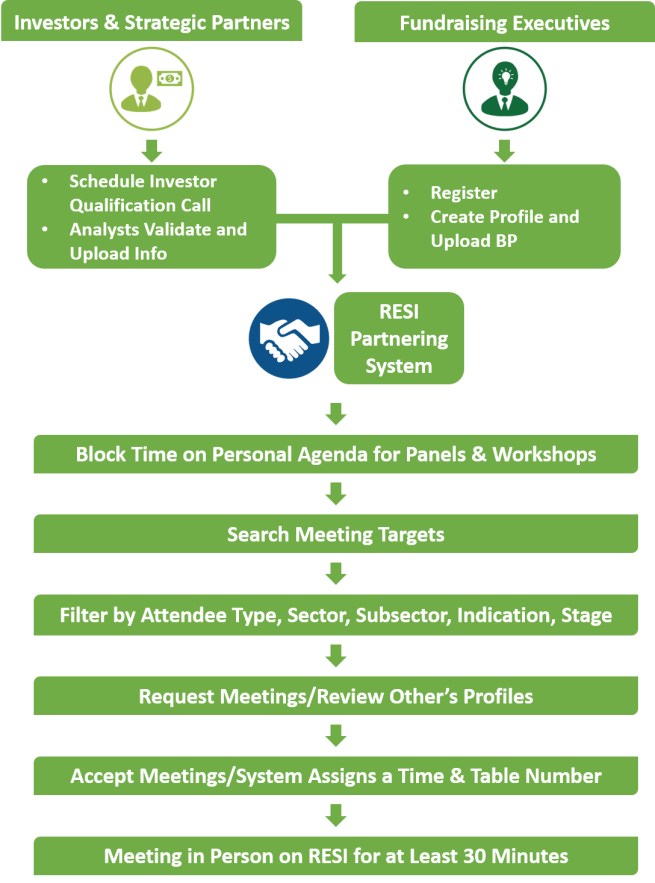
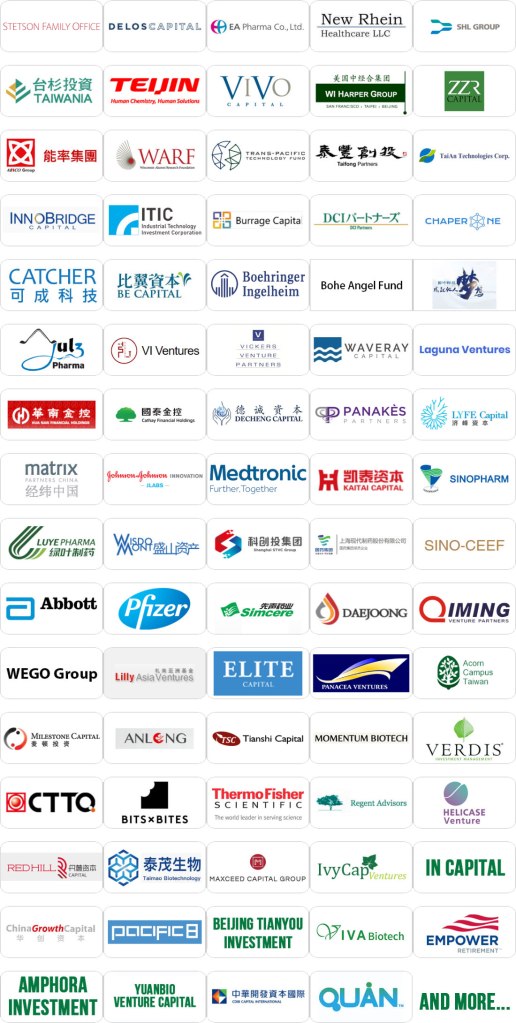
Life Science Nation (LSN) is looking ahead to our Philadelphia event on June 3rd.  With many investors from LSN’s network coming to the Mid-Atlantic region for the international conference week, and many others based locally, RESI has already attracted a flurry of investor registrants.  We are expecting a total of over 300 investors at the event. Below, you can check out those who are already committed.

The end of RESI Philadelphia’s Early Bird period is approaching next week – if you’re interested in networking with the hundreds of investors who will be attending, you have til April 19th to take advantage of the Early Bird opportunity.

Partnering with Big Pharma: How and When?

11 Apr

By Karen Deyo, Investor Research Analyst, LSN

Securing a partnership with a Big Pharma is widely considered as the Holy Grail for therapeutics startups. However, companies need to consider: is this the best path forward? What does the partnership entail and how do you go about getting there? Can companies outside of therapeutics partner with a Big Pharma? At RESI Europe on March 25th in Vienna, the Big Pharma panel addressed these questions, and more.

The panel first addressed the biggest question: should a company seek out a Big Pharma partnership? The panelists stressed the need to have a strategy in place before approaching a Big Pharma. It isn’t enough to want a partnership – the company needs to have a plan in mind for what form this partnership will take. Partnerships between startups and Big Pharma can take many forms, including support for animal or pharmacology studies to which the company doesn’t have access, clinical trial or manufacturing and optimization assistance. All of this can come in the form of in-kind partnerships, MTAs or partnerships with milestone payments, so a clear plan for the collaboration needs to be in place before approaching a Big Pharma. That being said, it is important to be flexible, as the deal may not end up as you had originally planned.

A common misconception with therapeutics companies is that engaging Big Pharma later in development is better. However, all of the panelists stressed the importance of reaching out sooner rather than later, even in discovery phase. Not only is this a good way to get on their radar, this helps build a relationship and trust, both of which are very important if a partnership is in the offing. In addition, scientists within the Big Pharma can help direct companies to the data they want to see, recommending animal models that are particularly important for their evaluation. Even if you don’t have contact with the company, the panel suggested looking at data packages the companies publish to see what models they use, and which you can use to demonstrate the efficacy of your product compared to what is currently on the market, or even to see if your therapeutic is more effective than what is currently in their pipeline.

The panel also addressed the big question of how to get your foot in the door, and what is the best way to approach a Big Pharma. The answer, for the most part, was to get in contact with BD, as these people will be your advocates throughout the process, although knowing a scientist who will champion your company is also an option. However, when reaching out to a Big Pharma, it is key to make your approach targeted and concise – make sure that you align with the strategic areas of interest for the company and make the value of your technology clear. It is also key to be honest, both about your product and about your competition – remember that the people you are reaching out to know the market very well, and know what your competition is. This also applies to companies outside therapeutics, as many of the Big Pharmas have interests in partnering with companies outside of therapeutics, such as digital health or combination devices that support their efforts. As with any investor or partner, it is important to know your audience. Below are some highlights from the panel, featuring discussions prompted by the questions listed.

The panel was moderated by Ralph Lin, Senior Director, Corporate Development at Arena Pharmaceuticals and featured:

  • Olaf Koenig, Director, International Business Development at Amgen
  • Florence Dal Degan, R&D Innovation Sourcing Director at Novo Nordisk
  • Chris Church, Manager, Partnering & Strategy at AstraZeneca
  • Natalia Novac, Director, Emerging Technology & Innovation, Corporate BD at Eli Lilly & Co.

Why partner with Big Pharma?

How early is too early to engage, if the company is still in discovery stage?

How to get foot in the door? 

Dos and don’ts?

To watch the full panel video, click here.


LSN’s Global Network was on Display at RESI Europe

11 Apr

By George Kamphaus, Business Development Representative, LSN

Life Science Nation and the Redefining Early Stage Investments (RESI) conference always bring together a truly global group of attendees. On March 25th, at RESI Europe in Vienna, the investors, channel partners and entrepreneurs present represented 31 countries, and 5 different continents. When LSN says that we have a global ecosystem, it’s not hyperbole! The Innovation Challenge finalists were equally diverse, with the presenting companies coming from 13 different countries (including Argentina – the first finalist from South America) and 5 states in the US.

The companies attending RESI, 35% of registered attendees, represented all of the silos, including therapeutics, diagnostics, medical devices and digital health, with some companies representing multiple sectors. As with all RESI conferences, the investor-to-startup ratio was 1:1, with investors as 36% of the attendees. Attendees also represented the earliest stage companies in tech hubs, as well as strategic partners, such as Big Pharma, and service providers. These demographics show that LSN has the capability to bring its global life science ecosystem to venues around the world. Next year in Europe, the goal is an even larger global reach and participation. Come join us next in Philadelphia, then Boston and wrapping up the year in Shanghai and Taipei!

Interview with M2D2: How Global Tech Hubs Showcase Startups to Investors at RESI

4 Apr

Mary Ann Picard

An interview with Mary Ann Picard, COO of the M2D2 Incubator

– By Greg Mannix, VP of International Business Development, LSN

Greg Mannix

One of the clear trends in Life Science funding is that investors are taking a keen interest in earlier and earlier-stage companies. Some investors will put money in at a very early stage, while others will come in a bit later, but what is very clear is that they all want to identify the most significant new technology breakthroughs in the life sciences and put those companies on their radar as soon as possible.

A majority of these hot, early-stage technologies are being developed in tech hubs all around the world. The Redefining Early-Stage Investments (RESI) conference series is an excellent opportunity for these Tech Hubs to gain visibility among investors who will want to track the technologies being incubated and accelerated in their facilities. This is why at LSN we have made a purposeful effort to create a nexus between these two key players in the life science ecosystem.

I recently spoke to Mary Ann Picard, COO at Massachusetts Medical Device Development (M2D2) Center about how RESI plays a part in the success of her program and its constituent companies.

Greg Mannix: First of all, I consider M2D2 a perfect example of a Tech Hub. Could you give me some context as to what M2D2 is?

Mary Ann Picard: M2D2 is an incubator program for medical device and biotech early stage startup companies. M2D2 is a joint project with UMass Lowell and UMass Medical School. No affiliation with UMass is required and no equity taken. Resident companies have access to a whole host of university resources and mentors.
GM: M2D2 has participated in several RESI conferences with a table in the Exhibition Hall. How does that visibility benefit your project?

MAP: The visibility is extremely beneficial for us. It helps us maintain a pipeline of resident companies and it provides ample opportunity to meet potential investors and industry partners.

GM: Did you meet with any early-stage investors while at RESI? If so, what is your goal for these meetings?

MAP: Yes, we did. Our goal is to match them up with early stage startups in their specific areas of expertise.

GM: By virtue of your presence at RESI, M2D2’s constituent companies have been able to attend the conference at a discounted price. Is this an opportunity that your companies have taken advantage of?

MAP:  Yes, they have taken advantage of the discounted price on several occasions.

GM: Any other observations?

MAP:  RESI provides a setup that is supportive to startups and conducive to establishing investor and business relationships.

With years of both business development and fundraising experience, Mary Ann Picard’s objective is to combine these areas of expertise to establish interaction among entrepreneurs, inventors, scientists, industry, investors, state agencies and others to contribute to a rich entrepreneurial business ecosystem in the Commonwealth.

Pitfalls to Avoid when Meeting Investors – an Interview with Diana Saraceni of Panakes Partners

4 Apr

Diana Saraceni

An interview with Diana Saraceni, Co-Founder & General Partner, Panakes Partners

– By Karen Deyo, Investor Research Analyst, LSN

     Karen Deyo

One question that is commonly addressed during RESI panel sessions is: What should a company NOT do in initial meetings with investors? At RESI Europe, Diana Saraceni was a speaker on the Medical Device Investors panel and offered a list of six mistakes companies often make – some all the more important since they are mentioned less frequently. I spoke with Diana following RESI Europe, to recap this important advice.

Karen Deyo (KD): Thank you again for speaking on the panel, Diana. Let us start with the more basic, well-known advice. What are some of the things companies do in discussions with you that send up red flags?

Diana Saraceni (DS): One common issue we see is either too much or too little background information in an introductory pitch deck. On one hand, you do not need to spend several slides discussing what diabetes is, its prevalence and how it is currently treated. On the other hand, make sure to give an overview of the current standard-of-care, as a way to highlight what makes your technology unique. Another issue is a lack of flexibility with regards to valuation. Especially in early-stage, pre-revenue companies, even if they have received advice from a third party, this is never set in stone. You have to be open to negotiate with the investor, and remember that they and their experience are an added value for you.


KD: Any more commonly discussed mistakes you see in companies when approaching investors?

DS: Many companies want investors to sign an NDA before starting any sort of conversation. There is a common misconception that investors will copy your business or steal your idea, but in reality, they are not going to take the time and effort to do so. Signing an NDA before showing unpublished data or starting deep due diligence, both scientific and financial, is accepted, but do not expect an investor to sign an NDA before your first meeting. In addition, don’t expect detailed feedback on your technology or business plan unless the investor has done some sort of due diligence. Remember that investors themselves often turn to experts and advisors when evaluating companies so it is up to you to make sure to consult with KOLs before reaching out to investors.

KD: What are the less commonly discussed, but equally important, errors in fundraising strategy that you’ve seen?

DS: First, when starting your fundraising campaign, don’t immediately go to your top-tier targets right from the beginning. Start with smaller, more flexible, investors who can point out what questions need to be addressed in your initial presentation, helping you hone your pitch. Lastly, if a deal falls through after some due diligence, it is critical to follow up and find out what problem the investors identified. This can be an opportunity to initiate discussions in the future, by coming to the investor with the issue solved. It is important to remember that investors take note of their reasons for passing on an investment opportunity, and they will know if you approach them again without having addressed those issues, and that will not help your case.

KD: Thanks for all of this valuable feedback! I look forward to hearing what other insights you can provide at future RESI events!

Diana Saraceni is an investor with long experience in Venture Capital. She is currently Co-Founder & General Partner at Panakes Partners (www.panakes.it), an Italian Venture Capital firm dedicated to early stage investments in healthcare in Europe and Israel. Diana can rely on over 15 years of Venture Capital experience. She has also co-founded and managed 360 Capital Partners (www.360capitalpartners.com), one of the leading Venture Capital firm in Europe. She has led investments in a significant number of companies all over Europe, not only in the medical device sector, and generated several exits as IPO and M&A transactions. Ms Saraceni has a strong knowledge of the Venture Capital community in Italy and Europe. Ms. Saraceni holds an Msc in Engineering and an MBA from Luiss University.

Spotlight on Taiwan: How to Connect with a Rising Power in Life Sciences

4 Apr

By Jessica Yang, Investor Research Analyst, LSN

Taiwan is establishing its presence in the life science industry and becoming an important player on the global stage. As Taiwan moves ahead to build its life science innovative ecosystem, Life Science Nation has partnered with Ministry of Science and Technology (MOST) to organize an inaugural RESI Conference in Taipei, Taiwan on November 14th. RESI Taipei will be a great chance to get plugged into the Taiwan’s rising life science ecosystem and meet emerging startups, both local and drawn from RESI’s global network.

Last month, the Taipei City Government, BTBA (Boston Taiwanese Biotechnology Association), and ITRI (Industrial Technology Research Institute) co-organized the “Taipei Bio Forum” event in Boston. As a media partner, LSN also promoted this event to invite life science industry players in Massachusetts. This event was a great chance to tap into Taipei’s rapidly developing ecosystem of innovators and long-established network of sophisticated capital providers.

During the forum, Dr. Ko Wen-Je, the mayor of Taipei City, gave a keynote speech about the current status and industrial strategy of Taiwan’s biotech industry. The mayor described their current action plan to establish Taiwan as a major hub in the Asia Pacific biotech and pharmaceutical industries, following in the footsteps of Boston. Indeed, their first goal is to improve the ecosystem to build a Boston-like environment that will welcome and foster innovation, starting by implementing changes in regulations, increasing protections for intellectual property, recruiting and cultivating new talent, and providing access to larger amounts of funding. In addition, to promote the spread of ideas and collaborative environment conducive to innovation, the government plans to integrate different science parks and R&D centers in Taiwan into one biocluster. Lastly, Dr. Ko also emphasized their goal of both integrating a global presence locally and differentiating Taiwan from other global players by focusing on specific key industries and developing their own niche. These key industries may include precision medicine, and aging-related technologies.

Boston is regarded as a global center of the life science industry, and Mark Sullivan, Executive Director of Massachusetts Office of International Trade & Investment, highlighted how the city fosters international collaborations and, with the success of many Boston-based biotech companies, has promoted an environment for startup success. This included the presence of many companies, based in Boston or Taiwan, demonstrating these cross-border partnerships.

Overall, the forum was a great success and provided an opportunity to forge connections between these two key life science hubs.  By launching RESI Taipei, LSN aims to bridge the global life science ecosystem with Taiwan and bring Taiwan startups and investors together with their counterparts from the rest of the world.