Category: Redefining Every Stage Investments (RESI)
The Redefining Every Stage Investments (RESI) Conference is an ongoing conference series that provides an international venue for life science companies across Biotech, Medtech, Diagnostics and Healthcare IT and to source investors from around the globe, create relationships, and eventually, secure funding.
By Karen Deyo, Senior Investor Research Analyst, LSN
Israel is frequently referred to as ‘The Startup Nation,’ with a lot of innovative technologies being developed in a multitude of sectors, including in healthcare. Over the past year, LSN has worked with the Israel Ministry of the Economy, the Israel Export Institute, the Israel Innovation Authority, the New England-Israel Business Council and several incubators and accelerators within Israel to bring these companies into the global RESI ecosystem.
In the 4 RESIs that have taken place so far in 2019, about 20 Israeli companies have been selected as finalists in the Innovation Challenge, with a few companies among the winners of these conferences. Yesterday, at RESI Boston, a group of these Israeli companies came to meet with the global investor attendees, including Novotalk, 1st place winner at RESI SF, PhotoPill Medical, 2nd place winner of RESI Europe, and Resmetrix, 3rd place winner yesterday. We look forward to seeing many more exciting companies from Israel at future RESIs, and hope that they will be as successful as the companies that have attended so far!
Izik Itzhakov of AEYE Health | Zohar Beeri of Novotalk | Ram Ben-Yehuda of PhotoPill Medical | Sharon Ben-Yehuda of PhotoPill Medical | Carmit Levy of Resmetrix Medical | Karen Deyo, Senior Investor Research Analyst, Life Science Nation
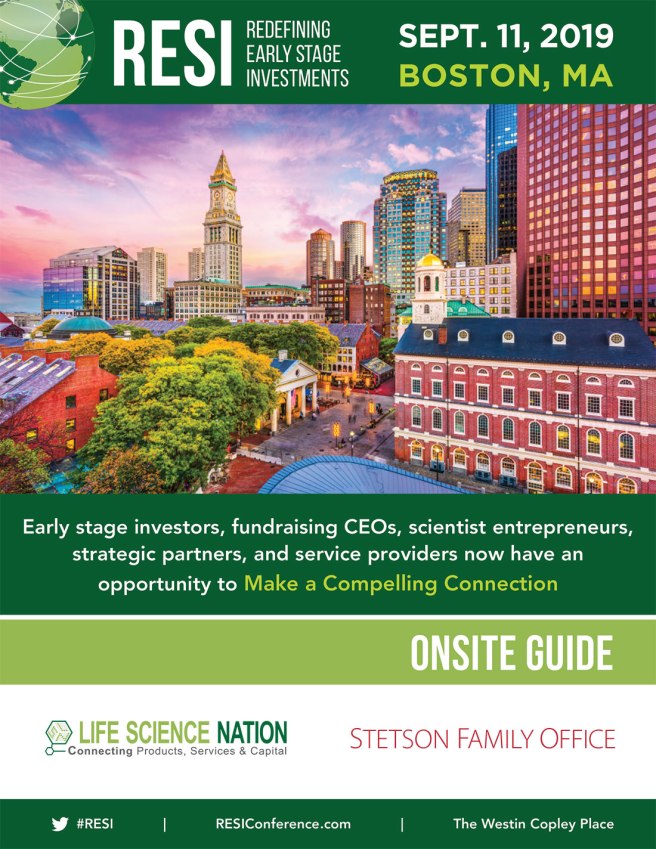
It’s less than a week to go until RESI Boston, and we’re excited to share the digital RESI Program Guide with you! Inside, you can take a look at our RESI Innovtion Challenge participants, investor panelists, exhibitors, and more. If you want to know who’s making waves in the early stage life science world, look inside this guide.
We look forward to seeing you all next Wednesday at the Westin Copley Place for this one-day partnering and entrepreneurship extravaganza, RESI Boston 2019.
By Gregory Mannix, Vice President International Business Development, LSN
One of the highlights of the RESI Boston First Coast Innovators’ Gathering (which features 16 top Tech Hubs from the US’s Northeast Corridor) is the RESI Pitch Challenge. After reviewing dozens of applications submitted to the Expert System by the constituent companies from these great programs, the LSN Review Committee has selected 9 companies as finalists to pitch at RESI before a panel of 5 investors. See below to meet these innovative startups.
The Pitch Challenge is a fantastic booster for these early-stage companies, providing the chance to pitch to a top line-up of investors, getting valuable questions and feedback that will help them hone their pitching skills, plus the chance to follow up with the investors on the panel after the conference is finished.
Good luck to all the RESI Pitch Challenge participants!
By Claire Jeong, Director of Research, Asia BD, LSN
In one of our recent newsletters, Dennis Ford, CEO of Life Science Nation, wrote about the Redefining Early Stage Investments (RESI) Conference series’ expansion into Asia Pacific. LSN has established a global partnering ecosystem, and by bringing RESI to Asia we are forming a bridge between promising early-stage innovation and investors/strategic partners. Last month, several colleagues and I traveled to different parts of Asia with the ultimate goal of expanding LSN’s network, promoting the inaugural RESI Asia (11/12 Shanghai & 11/14 Taipei), and identifying synergies with various groups in the life science industry, as well as attending BIO Asia Taiwan.
I had the privilege of presenting a high-level overview of Life Science Nation and RESI to a very intriguing gathering in South Korea called “Innovative Medicine Salon”. The Innovative Medicine Salon started in 2012 in Daejeon – one of South Korea’s leading hub in science and technology – as a small gathering of life science professionals (scientists, professors, doctors, etc.) who would organize talks highlighting various thought-provoking topics regarding the theme of “innovative drug discovery”. As South Korea’s biotech ecosystem rapidly grew, the Innovative Medicine Salon continued to expand into other key cities such as Pangyo, another emerging city in the fields of biotech and IT, as well as Osong, Daegu, and Songdo. Earlier this year in May, South Korea President Jae-In Moon visited the Innovative Medicine Salon gathering in Osong as part of his Nationwide Economic Tour. During his visit in Osong, President Moon announced plans to help foster the South Korean biotech ecosystem, especially in the early stages of research and development (for those who are interested, I’ve added a more detailed history of the Innovative Medicine Salon at the end of this article).
▲ South Korea President Jae-In Moon visits the Innovative Medicine Salon in Osong (May 2019).
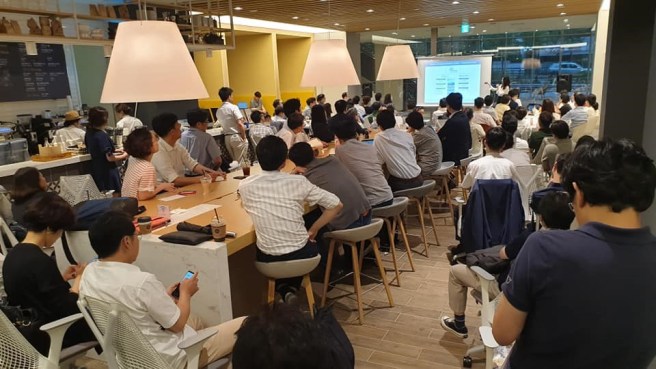
I participated in the July “Innovative Medicine Salon” in Pangyo, speaking alongside James Jungkue Lee, CEO of Bridge Biotherapeutics, a venture-stage biotech company that recently entered into a collaboration and global license agreement with Boehringer Ingelheim for their BBT-877 (autotaxin inhibitor for the treatment of idiopathic pulmonary fibrosis). Despite the session taking place on a weekday evening, there were over 100 life science professionals in the audience; from budding scientist-entrepreneurs to researchers, everyone in the audience shared a genuine curiosity for novel research and the global promise of South Korea’s biotech industry.
▲ LSN presented at the Innovative Medicine Salon in Pangyo (July 2019).
South Korea is a key example of the emergence and growth of biotech industries globally. With the ever-increasing surge of new therapies and technologies, the need for a global platform that can successfully connect early-stage innovations with investors and strategic partners is evident. LSN was founded in 2012 to fulfill this very purpose, when no full-fledged infrastructure for early-stage life science technologies existed.
Now could not be a better time for people to take advantage of the global ecosystem LSN has fostered, and we hope that our expansion into Asia could lead to more valuable connections that will ultimately lead to investment, licensing, and/or other win-win partnerships.
Special thanks to Sung Joo “SJ” Lee, Founder of Innovative Medicine Salon, for contributing to this article. SJ remarked that LSN and Innovative Medicine Salon have a lot of similarities – both were established in the same year and are working on growing the life science ecosystem with their own unique approaches. SJ has been inspired by LSN’s role in connecting early-stage innovations with investors and strategic partners, and hopes that LSN and Innovative Medicine Salon can continue to positively impact the life science community.
In previous years, South Korea’s bio industry was focused on the development of incrementally modified drugs (IMDs) and biosimilars. As the field of novel drug discovery and development continued to grow, so did the need for a “first mover” approach, as opposed to the existing “fast follower” strategy. The need for collaborating and interacting with various external experts, creating new ideas, and fostering open innovation became a high area of need in the industry. The “Innovative Medicine Salon” started in 2012 with a small group of researchers in Daejeon who shared this vision.
The group members gathered and listened to seminars of domestic and global experts on the theme of “innovative medicine” and debated about various topics. Their passion for innovative drug discovery and thirst for knowledge and exchange of information fueled discussions in the casual networking sessions that followed.
Information about the Innovative Medicine Salon quickly spread via word of mouth among academia, researchers, and other industry professionals. Attendance from other regions of South Korea grew, with people often trekking 2 hours or more to reach the event. It was only a matter of time before the Innovative Medicine Salon expanded to Pangyo, a city well-known for their thriving biotech and IT startup community. At Pangyo, 50 to as many as 180 attendees gathered every month, continuing the exchange of valuable opinions to everyone’s mutual benefit. Naturally, IMS fortified its position as an important support system for everyone embarking on new challenges in the field of innovative drug discovery. From thereon, Innovative Medicine Salon gatherings expanded into (1) Osong (home to the Ministry of Food and Drug Safety and other institutions dedicated to accelerating new drug development), (2) Daegu (home to the Korea Brain Research Institute and several biotech companies), and (3) Songdo (home to leading CMOs such as Samsung Biologics and Celltrion).
IMS is unique in that it is volunteer driven, independent from large institutions or corporations, which enables a more free, spontaneous academic exchange – the members who voluntarily take on operating roles include full-time biotech CEOs, professors, service providers, patent lawyers, and more.
Apart from offline meetings, the Innovative Medicine Salon operates a thriving Facebook group with over 4,000 members through which people regularly share and exchange information.
By Karen Deyo, Senior Investor Research Analyst, LSN
The panels at RESI are designed to help companies in their approach to their fundraising campaign, learning from investors what’s trending, what’s oversaturated, what to expect of the process and what red flags they should avoid. However, there is also a lot to be gained from learning from those who have been there before.
On the Tales from the Road panel, CEOs who have raised capital share their stories. These CEOs have succeeded in the fundraising process in the not-so-distant past and will share their perspective on what was absolutely crucial to their success.
Moderated by Greg Mannix, LSN’s VP of International Business Development, these five CEOs share their experiences, what worked and what didn’t, in their fundraising campaigns. Taking place from 4:00-4:50 PM at RESI Boston, come hear their stories and learn from their successes (and mistakes)!
Greg Mannix – VP at Life Science Nation (Moderator)
Greg Mannix is Vice President of International Business Development at Life Science Nation. After graduating from the University of California, he moved to Europe where he began a career in the life sciences and obtained a Master’s degree from IE Business School in Madrid. He has extensive experience in sales and marketing management in the medical devices field. He has worked extensively in Europe, North America and Latin America and he speaks English, Spanish and French. Greg’s role at LSN is to provide international early-stage companies with the tools and strategies to succesfully fundraise and to facilitate cross-boarder investments, licensing and M&A transactions.
Ilana Odess – CEO at Woven Orthopedics
Ms. Odess has spent her entire career within the healthcare & science industries and has held senior executive roles for multinational companies and start-ups such as Israel Chemicals, Johnson & Johnson, Advanced Stent Technologies, CID. As an operator, Ms. Odess is an expert in leading companies from concept to clinical application and has created multiple businesses acquired by multi-billion dollar medical device companies, negotiated over 30 worldwide partnerships, and commenced direct corporate operations in Israel for Johnson & Johnson. As an investor, Ms. Odess has led international medical technology investments and management buyouts for an international family office and led Johnson & Johnson’s acquisition of two businesses. Ms. Odess has been recognized for her ability to create successful innovative solutions and has received both a Frost & Sullivan award for innovation and the state of Connecticut’s “2014 Woman of the Year” award for Entrepreneurial Innovation and Leadership. Ms. Odess graduated with a BS in Biochemistry and an MBA from Bar-Ilan University.
Kasper Roet – CEO at Quralis
Kasper Roet is CEO and co-founder of QurAlis Corporation, is an experienced entrepeneur and worked both in industry and academia. Kasper has relevant expertise in ALS and other neuro indications. He received his PhD at the Netherlands Institute for Neuroscience working on gene therapies for paralysis. He co-founded Netfase, was BD and alliance manager at the Harvard Stem Cell Institute and fellow at the Boston Children’s Hospital. He worked at Janssen Vaccines as adjunct technical integrator and assay development lead.
Hank Wu – CDO at Luminopia
Hank Wu serves as serial entrepreneur and advisory board member in the Boston, Taipei and Jerusalem digital health communities. His startup highlights include advanced analyticsfor electronic health records, Flagship / Google-backed biotech, digital therapeutics for neuro-visual disorders and multi-sided healthcare platforms.
Previously, Hank led digital strategy and innovation at Biogen, where he worked on digital biomarkers using computer vision, machine learning and wearables; created the talent development program for digital health; and put the company on the map as thought leader at Bio-IT World and AWS:reInvent.
Hank received his left brain from the University of California, Berkeley (electrical engineering and computer science), his right brain from Johns Hopkins University (biotech) and his hindbrain from MIT Sloan. He is a co-author of peer-reviewed scientific publications and patents through his early work at the University of California, Berkeley, the J. Craig Venter Institute and the National Lab for Cancer Research.
Alejandro Zamorano – VP Business Development at PainQx
Handles all strategic and partnering opportunities for PainQx. Alejandro has 10 years of experience in business development finance, marketing, and fundraising in the life sciences. PainQx is an A.I. powered medical device company that has developed a method to objectively measure chronic pain. The PainQx platform achieves this by assessing neural activity using EEG from a patient’s brain and processing and decoding the data through proprietary algorithms. The output is a scaled pain biomarker correlates to a patient’s pain state. The PainQx platform will be used by physicians as a biomarker to gauge the dosage of medication and the efficacy of a treatment regimen. This is an especially pressing need given the opioid epidemic which in 2017 claimed 49,068 Americans. Previously Alejandro was Co-Founder & VP of Business Development at Life Science Nation (LSN), an online platform that helps entrepreneurs connect with investors that fit their investment needs. During Alejandro’s tenure at LSN, the business grew from 1 to 22 employees, opened of a broker-dealer (Boston Innovation Capital), created a quarterly conference (Redefining Early Stage Investments), and the launched the LSN Company and Investor Platform. Previous to LSN Alejandro was Business Development Executive at Abpro a CRO specializing in the development of recombinant proteins, monoclonal antibodies, and the associated assay development. Alejandro joined Abpro as a financial analyst responsible for securing funding. He was then promoted to a role in Business Development. In this role, Alejandro formed discovery and development-stage collaborations with the industry’s largest pharmaceutical companies such as Novartis, Astellas, Boehringer Ingelheim, and Abbott (Now Abbvie).
By Gregory Mannix, Vice President International Business Development, LSN
We are happy to anounce the finalists who will compete in the RESI Boston Innovation Challenge on September 11th at the Westin Copley Place hotel. As is always the case, we received many great applications from cutting edge technologies across the four main life science silos: Drugs, Devices, Diagnostics and Digital Health. Also, we will again feature a number of grant recipients from the NIH/SBIR program, a program we have coordinated with the NIH for 4 years now. In total, 40 companies will present a poster on the day of the conference, taking advantage of this unique opportunity to “socialize” their projects to conference attendees and seek their RESI cash to win one of the top places in the competition for valuable prizes. As always, competing in the RESI Innovation Challenge has no cost for companies, but offers much to gain. Congratulations and good luck to the finalists!
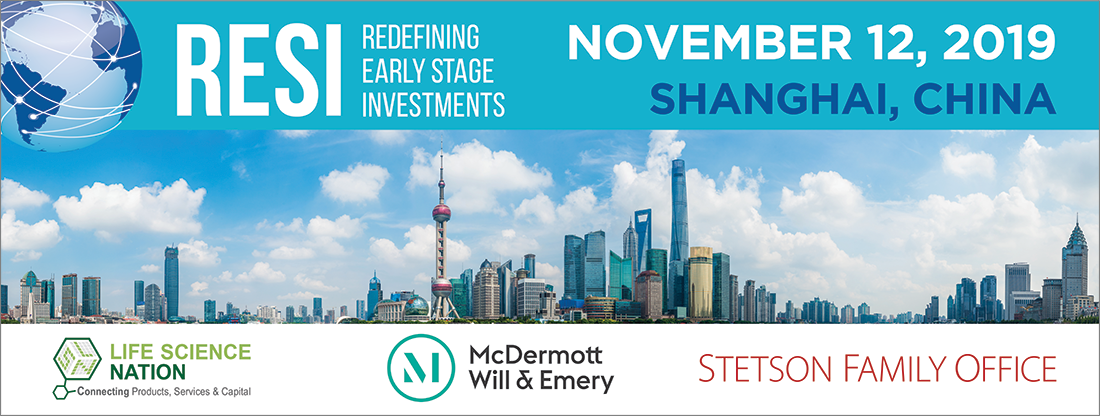
The first RESI event in China will be held in Shanghai on November 12, 2019. LSN is partnering with Enmore Healthcare to bring RESI to China. As the Co-Organizer, Enmore Healthcare will reach among investors and early-stage life science companies in China, this partnership will help bring China’s world of early-stage life science innovation into RESI’s global ecosystem.
LSN is excited to bring the world-renowned RESI Conference to China with our title sponsors McDermott Will & Emery and Stetson Family Office, and our partnership with Enmore Healthcare will build a bridge between the US/Europe and Asia.
About Enmore Healthcare
Enmore Healthcare is affiliated to Shanghai Enmore Commercial Development Co., Ltd., a part of Enmore Group. It has hosted industry conferences in the medicine and healthcare fields on a regular basis since 2009, forming service models such as conference, media outreach and expert network. We are committed to building a service platform focusing on life sciences and healthcare, enhancing understanding between international and local peers, promoting cooperation between companies, research and medical institutions and investors and enhancing communication between governments, associations and businesses.










 Greg Mannix is Vice President of International Business Development at Life Science Nation. After graduating from the University of California, he moved to Europe where he began a career in the life sciences and obtained a Master’s degree from IE Business School in Madrid. He has extensive experience in sales and marketing management in the medical devices field. He has worked extensively in Europe, North America and Latin America and he speaks English, Spanish and French. Greg’s role at LSN is to provide international early-stage companies with the tools and strategies to succesfully fundraise and to facilitate cross-boarder investments, licensing and M&A transactions.
 Kasper Roet is CEO and co-founder of QurAlis Corporation, is an experienced entrepeneur and worked both in industry and academia. Kasper has relevant expertise in ALS and other neuro indications. He received his PhD at the Netherlands Institute for Neuroscience working on gene therapies for paralysis. He co-founded Netfase, was BD and alliance manager at the Harvard Stem Cell Institute and fellow at the Boston Children’s Hospital. He worked at Janssen Vaccines as adjunct technical integrator and assay development lead.
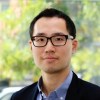 Hank Wu serves as serial entrepreneur and advisory board member in the Boston, Taipei and Jerusalem digital health communities. His startup highlights include advanced analyticsfor electronic health records, Flagship / Google-backed biotech, digital therapeutics for neuro-visual disorders and multi-sided healthcare platforms.
 Handles all strategic and partnering opportunities for PainQx. Alejandro has 10 years of experience in business development finance, marketing, and fundraising in the life sciences. PainQx is an A.I. powered medical device company that has developed a method to objectively measure chronic pain. The PainQx platform achieves this by assessing neural activity using EEG from a patient’s brain and processing and decoding the data through proprietary algorithms. The output is a scaled pain biomarker correlates to a patient’s pain state. The PainQx platform will be used by physicians as a biomarker to gauge the dosage of medication and the efficacy of a treatment regimen. This is an especially pressing need given the opioid epidemic which in 2017 claimed 49,068 Americans. Previously Alejandro was Co-Founder & VP of Business Development at Life Science Nation (LSN), an online platform that helps entrepreneurs connect with investors that fit their investment needs. During Alejandro’s tenure at LSN, the business grew from 1 to 22 employees, opened of a broker-dealer (Boston Innovation Capital), created a quarterly conference (Redefining Early Stage Investments), and the launched the LSN Company and Investor Platform. Previous to LSN Alejandro was Business Development Executive at Abpro a CRO specializing in the development of recombinant proteins, monoclonal antibodies, and the associated assay development. Alejandro joined Abpro as a financial analyst responsible for securing funding. He was then promoted to a role in Business Development. In this role, Alejandro formed discovery and development-stage collaborations with the industry’s largest pharmaceutical companies such as Novartis, Astellas, Boehringer Ingelheim, and Abbott (Now Abbvie).