Archive | Redefining Every Stage Investments (RESI) RSS feed for this section

Robot Wins Innovation Challenge! What’s Next?

27 Sep

Dwight Meglan

An interview with Dwight Meglan, Founder/CTO, HeartLander Surgical, Inc.

– By Greg Mannix, VP of International Business Development, LSN

Greg Mannix

Dwight has a fascinating background in robotics. In fact, there are probably not many people out there who can rival his experience applying robotics to medical applications, which he has been doing since the 1990’s in companies ranging in size from start-ups to Medtronic, where Dwight still collaborates. So it shouldn’t come as a surprise that Dwight has started a company, HeartLander, that was the talk of the Exhibit Hall at our past RESI conference because of it’s surprising technology. Imagine a tiny robot that can move along the surface of a beating heart—simulating the movement of an inchworm—to deliver therapy to places not accessible until now. That’s what HeartLander does, and Dwight got so much interest in his little robot that he was the winner of the Innovation Challenge.

Greg Mannix (GM): Congratulations Dwight on winning the IC. Did you make some good connections at the RESI conference?

Dwight Meglan (DM):  Yes, we did. I think we caught the eye of quite a few walk-bys because we had a prototype of the robot with us and were doing a demo. We met a lot of people right there at our poster. We also had some good partnering meetings.

GM: How did you juggle the partnering meetings and time at the poster? You seem to have done very well.

DM: Actually, we were very selective about who to meet with. We are very early stage. But the meetings we did schedule, we met the investors at the assigned table and said “Hey, would you like to come see our poster?”. And we ended up having our meetings right there.

GM: Did you get any traction with the investors you spoke to?

DM: Yes, I think we did. We are following up with several of them, and some others want to stay in touch and reconnect when we have more preclinical data. My focus was to try to get across two things to the investors: one, how this technology will help make the world a better place; and two, how this technology will make economic sense. If they understood those two points, I think we were successful.

GM: Why do you think you won the IC?

DM: I just asked everybody to invest their RESI cash in us. If you don’t ask, you don’t receive!

GM: Sound words of advice. Thanks, Dwight.

HeartLander Surgical, Inc.

The HeartLander System’s new approach to debilitating ventricular (heart) conditions comprises low cost disposables and an inexpensive, reusable controller: 1. Disposable sensor array placed on the outside of the torso 2. Disposable, tethered, percutaneously delivered, epicardial walker with multimodal sensing (e.g., Doppler ultrasound for avoiding coronaries) and insertable needle for saline-enhanced radiofrequency ablation (creates small, precise lesions) or for delivering therapy into the myocardium 3. Control System that integrates sensor data, maps the heart defect, actuates the walker, plans actions, and provides a visualization display screen and control interface for the physician. Our first clinical focus (NIH-funded through animal PoC) is ventricular tachycardia, but the technology platform can be used for myocardial regeneration therapies, ventricular reshaping, and biventricular pacing.

First Coast Innovation Challenge Brings Top Tech Assets to Global Investors at RESI Boston

27 Sep

By Bryanna Allison, Business Development Manager, LSN

RESI wrapped up its 19th conference this month in Boston, with a record turnout and plenty of great connections made to move the needle in the life sciences. For some time now, the investors and strategic partners who regularly attend RESI have asked us to help them gain exposure to the earliest stage technologies being developed. Our idea was to create a new addition to the traditional RESI content and call it the First Coast Innovator’s Gathering, an event to showcase technology hubs from the “First Coast” – DC to Boston – and the early-stage companies being developed within their programs.

The feedback we got was extremely positive as the data below attests to:

  • 21 Tech Hubs had a table at the Gathering
  • 75 entrepreneurs from these Hubs attended
  • 36 projects presented a poster in the First Coast Exhibit area
  • 25 companies applied to the Pitching Competition
  • 8 finalists pitched to a panel of 6 investors
  • All the finalists were offered the chance to follow up with the panelists

RESI has become the conference of reference for connecting key players in the early-stage life science space. The turnout and level of engagement of investors, strategic partners, fundraising CEOs and specialized service providers is completely unique, and the Innovator’s Gathering in Boston has added a new dimension to the conference.

All of the positive feedback has encouraged us to adopt this format at future RESI conferences, so we are busy getting the word out to tech hubs in the Greater New York area for our upcoming New York conference to be held in Midtown Manhattan on November 5th.

Seed Funds – Investing Early

27 Sep

By Karen Deyo, Investor Research Analyst, LSN

The last Redefining Early Stage Investments (RESI) conference on Sept. 6th in Boston launched the inaugural First Coast Innovator’s Gathering featuring the earliest stage companies and technologies from incubators, accelerators, universities, hospitals and research organizations. These companies, when seeking seed funding, often look for more than just the funds that investors can provide – they may also rely on the investors’ expertise and experience to help them grow. The Seed Funds panel featured five investors from funds focused on seed-stage investing, willing to take the larger risk to support companies at an earlier stage.

In their discussion, the panelists brought to light the differences that exist between various seed funds. Some provide funds, guidance and contacts with experts, but otherwise use a light hand. Others work closely with the founders, often scientists with no entrepreneurial background, guiding the business and the founders until they have the knowledge needed to direct the company. Also discussed was the complex issue of valuation at such an early stage and how many seed investors use convertible notes as a way to postpone the firm valuation until more milestones are reached and a bigger round is raised.

One thing the panelists agreed on – investing early is part of their mission, even though the risk is bigger. As Sunil Shah from o2h Ventures said, by focusing on building great companies, a great exit will follow. Below are some highlights from the panel, featuring discussions prompted by the questions listed.

The panel was moderated by Sunil Shah, CEO of o2h Ventures and featured:

  • Atul Varadhachary, Managing Partner at Fannin Innovation Studio
  • Chris Hanson, Partner at Grant Park Ventures
  • Mackenzie Lowry, Entrepreneur In Residence at Rock Health
  • Mike Wiley, Vice President at Foundation Venture Capital Group

What support do investors provide portfolio companies, apart from funds?

What do investors look for in these companies and how do they get a ROI? 

How do investors approach valuation? 

Given the additional risk, why invest so early?

What information do investors want when companies approach them?

What level of involvement do investors have after investing?

This panel will be featured again in our upcoming RESI conference on November 5th in NYC.

Please be sure to join us if you are interested in hearing more!

Investor Participation is Taking Off at RESI NYC

20 Sep

By Lucy Parkinson, VP of Investor Research, LSN

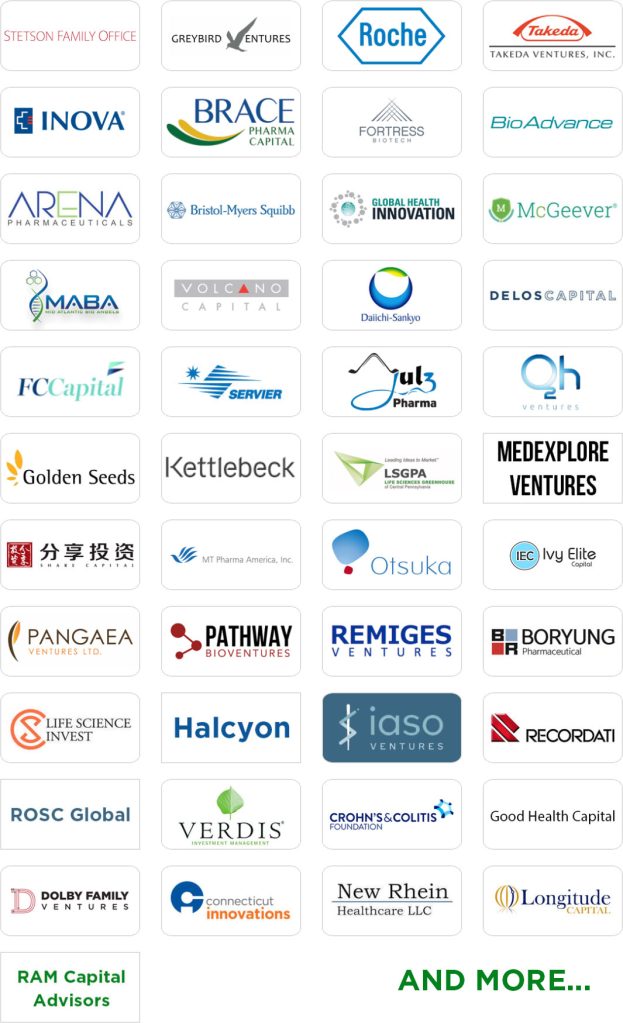
With RESI returning to NYC on November 5th, investors are flocking to sign up to participate. RESI’s unique high-touch partnering and breadth across the four key life science verticals of biotech, medtech, diagnostics, and digital health have attracted an audience of active investors from all over the globe.  The ratio of startups to investors at RESI events runs close to 1:1; there’s no better opportunity to find the right investor for your life science technology. See below for a selection of the registered investors.  We hope you can make it to RESI NYC to meet them.

Confirmed Investors and Strategic Partners

As of September 20, 2018

How to Be Successful in the RESI Innovation Challenge

20 Sep

By Gregory Mannix, Vice President International Business Development, LSN

LSN holds a high-profile life science competition at every RESI conference – the Innovation Challenge. Thirty early-stage fundraising companies with top-tier life science technologies are selected as finalists to exhibit a poster display of their programs to hundreds of investors and other conference attendees.  These companies compete for the exposure and visibility of being named as the top Innovation Challenge company. So you might ask: out of the hundreds of applications we receive, how do we choose the top thirty?  The LSN scientific review team has compiled a list of attributes we look for in a company and its IC application.

While the following applies to the Innovation Challenge application itself, the criteria and the tips we provide are also guidelines for companies to use in their fundraising efforts. Much of our evaluation and the questions we ask are based on standard criteria that entrepreneurs will face when speaking with investors.

What are the key elements of a high-scoring company?

The LSN scientific review team uses a detailed rubric with a 200-point scoring system. Our evaluation process is based not only on scientific merit, but also on how ready the company is to present to an investor (“investor-readiness”). A perfectly scored company would have a transformational technology that can achievably address a highly unmet need using a differentiable, novel approach or target. Alongside high innovation, differentiation, unmet need and market fit, the 200-point company would have a broad IP position, an experienced management team and CEO with top-tier advisors and strategic alliances with manufacturing, commercial or clinical partners. The company will also receive high marks for having what we call “investor-ready” marketing collateral (executive summary, pitch deck, website).

Application Tips

Clearly describe your technology.

Like any marketing material, you need to be clear. Be sure you understand and answer the questions fully. The team has seen unclear descriptions of a company’s technology is and its significance in improving on current technology, making it difficult to evaluate.

Be forthcoming in your answers.

The team frequently reviews applications that state they have no competitors in the space, when that is not actually the case. Even novel products have competitors; there is a standard-of-care for any given disease or condition.  If your product represents an incremental improvement, just say so.  It can still be compelling!

For example, competitors for your disease-modifying therapeutic may be symptom-treating therapeutics in the same indication that are either commercialized or being developed. You should identify these symptom-treating therapeutics and highlight your novel, targeted approach that makes your product disease-modifying.

Explain your current status in detail.

Outline everything you have in terms of your current standing, while also providing your outlook on where you hope to go. Avoid ambiguous statements such as, “CEO is an experienced entrepreneur”. Instead, provide details that highlight the CEO’s experience – years as an entrepreneur, number and names of companies exited, background expertise, etc.

Provide near-term and-long-term projections.

If you do not have certain criteria, such as a strategic alliance or IP, it’s OK. State your current standing and provide what steps you are currently taking to reach those milestones. For Alliances and Collaborations, state your partners and likely partners (even if you just have a verbal commitment); for IP status, state how many patents you have filed or are planning to file. Providing us with your strategy is better than a simple yes or no.

Provide sufficient detail, but no need to overdo it.

You shouldn’t finish this application in 5 minutes, nor should it take you 5 hours. Your answers should be brief but detailed.  We have received hasty, effortless applications that were subsequently quickly given a low score. On the other hand, as a fundraising company, you shouldn’t need to spend an excessive amount of time on the application. These are all straightforward questions that you should be familiar with and be comfortable answering, as your executive summary should contain all of this information. This application is the backbone of our evaluation process and is, essentially, your executive summary to us.

Send us your marketing collateral.

If you have marketing collateral, send it. This includes your pitch deck, executive summary, website, videos – any supplemental material that can boost our understanding of your technology and whether your company is investor-ready. The application provides limited space – while this forces you to get straight to the point, supplemental material explains what an application cannot (i.e. figures, graphs, pipeline, non-confidential data, etc.).

Overall, applying for the Innovation Challenge is great practice for fundraising companies. For those who have yet to apply, be sure to take note of these suggestions and apply here by October 3rd!

Health Systems Partners Panel at RESI Boston, September 6th, 2018

20 Sep

By Claire Jeong, Senior Research Analyst, LSN

claireAn increasing number of health systems are seeking to form strategic partnerships with early-stage companies that could serve as a meaningful solution for the various complexities within the healthcare system. These strategic partnerships would be tremendously valuable for a start-up entrepreneur, as the value-add that health system organizations can provide are not limited to direct equity investment. Through working with large health/hospital systems, companies gain access to various channels, abundant resources, and relationships with key clinicians or medical professionals that they otherwise may not be able to manage on their own.

So how can companies seek to access these channels, and what exactly does each organization have to offer? At RESI Boston on September 6th, we had the tremendous pleasure of inviting 5 panelists from health systems – all with a unique approach to working with early-stage innovations – to speak about their work and perspectives in fostering novel innovations that can impact the course of healthcare.

For those who missed this session, we have prepared a shortened video of the panel that highlights the main discussion points. If you are someone seeking to leverage relationships with health systems, I hope you find these insights helpful!

Our panelists included:

  • Brent Stackhouse, Vice President, Mount Sinai Ventures, Inc. (Moderator)
  • Richard Gordon, Director, Inova Strategic Investments
  • Anne Wellington, Managing Director, Cedars-Sinai Accelerator
  • Eric Feinstein, Investment Director, Northwell Ventures
  • Sarah Lindenauer, Product & Portfolio Manager, Boston Children’s Hospital IDHA

A brief profile for each organization:

Mount Sinai Ventures – Mount Sinai Health System is a hospital system in New York. Their venture arm, Mount Sinai Ventures, started in 2008 with the goal of investing in care delivery (urgent care, ambulatory services). About 4 years ago, their interests diversified into medical devices and digital health. The group invests $500K in average, as little as $50K and as much as $1.5M, with about 20 investments in the portfolio. Mount Sinai Ventures is constantly trying to find ways to partner with other individuals within the health system and build or create value for portfolio companies.

Inova Personalized Health Accelerator (Inova Strategic Investments) – Inova is a hospital system in the Northern VA area, and IPHA is their accelerator arm. Inova has historically made several strategic investments, generally to drive innovation into the hospital system. They have a $150M balance sheet commitment which they are aiming to allocate over a 24-month period. The firm invests in multiple ways – they are a fund of funds and have a LP position in several like-minded funds. With regards to their seed portfolio, the average investment size is around $500K-1M. IPHA has a fixed price, fixed equity structure ($75K for 10% equity stake, with potential for $250K investment in follow-on).

The Cedars-Sinai Accelerator – Cedars-Sinai Accelerator is the accelerator program of Cedars-Sinai Medical Center, through which they invest $120K in participating companies. This has been in partnership with Techstars in the past but they will soon be operating independently. In partnership with MemorialCare, Cedars-Sinai is also involved with seeking investments through Summation Health Ventures that focus on Series A/B investments in the $5-10M range.

Northwell Ventures – Northwell Ventures is a venture equity practice at Northwell Health. Northwell is the largest health system in NY state, with 23 hospitals in the network. They are about to close on their 16th investment. Their investment areas of interest ranges from medical devices through digital health and other services. They also participate in corporate carveouts, where they put seed capital into non-core assets within the system and partner with external capital in efforts for revenue cycle management.

Boston Children’s Hospital IDHA – Based in Boston, MA, Boston Children’s Hospital’s Innovation & Digital Health Accelerator (IDHA) is Boston Children’s Hospital’s accelerator arm and is supported by a 50-person team. Of this team, about 25 people are technologists, software developers, etc. and is very deep on team/resources. While there is no investment arm, IDHA provides very high-touch, customized support, and software development resources that provides strategic value beyond capital.

RESI Boston 2018 Innovation Challenge – Check Out the Winners

13 Sep

By Nono Hu, Director of Marketing, LSN

On September 6th, more than 700 scientist-entrepreneurs and investors entered the exhibition hall at Boston Marriott Copley Place to participate in the RESI conference. They were greeted by 30 Innovation Challenge finalists across therapeutics, medical device, diagnostics, and digital health sectors. The 30 companies, evaluated by LSN’s expert system and scientific & commercial review team, competed directly on merits of innovation and commercial viability. We wish all our finalists the best in bringing their products forward toward commercialization, but there could only be 3 top prize winners.

First Prize: Heartlander Surgical

The HeartLander System’s new approach to debilitating ventricular (heart) conditions comprises low cost disposables and an inexpensive, reusable controller: 1. Disposable sensor array placed on the outside of the torso 2. Disposable, tethered, percutaneously delivered, epicardial walker with multimodal sensing (e.g., Doppler ultrasound for avoiding coronaries) and insertable needle for saline-enhanced radiofrequency ablation (creates small, precise lesions) or for delivering therapy into the myocardium3. Control System that integrates sensor data, maps the heart defect, actuates the walker, plans actions, and provides a visualization display screen and control interface for the physician. Our first clinical focus (NIH-funded through animal PoC) is ventricular tachycardia, but the technology platform can be used for myocardial regeneration therapies, ventricular reshaping, and biventricular pacing.

Dennis Ford, Founder & CEO, Life Science Nation | Rick Berenson, CEO, Heartlander Surgical | Dwight Meglan, CTO and Founder, Heartlander Surgical | Lucy Parkinson, VP of Investor Research, LSN

Second Prize: BrainStem Biometrics

At BrainStem Biometrics we’re pioneering a new multi-billion medical device category to measure the most important part of the brain that no other company measures. Our first target is ICU medication safety- a much better way to administer essential but powerful sedative drugs to our most vulnerable ICU patients; the old and the young. Today most patients are over-medicated roughly 60% of the time because we have no effective way to measure the level of sedation. Administering sedatives in an optimal manner is proven to reduce length of stay and direct costs by 25% and to reduce 180-day risk of mortality significantly by 10% for tens of millions of intensive care patients. The company has initial sales, 510(k), long-life patents and is raising $800K to complete outcome studies and develop reference accounts.

Dennis Ford, Founder & CEO, Life Science Nation | Mike Baltay, CEO, Brainstem Biometrics | Lucy Parkinson, VP of Investor Research, LSN | Haig Armaghanian, Investor & Advisor, Brainstem Biometrics

Third Prize: PhysioCue

PhysioCue is on a mission to provide superior quality of life through revolutionary and scientifically proven technology to address epidemics of hypertension and migraine headache with noninvasive devices without side effects. Multinational proprietary technologies that specialized in thermoelectric and bio-sensors are empirically supported by renowned medical experts.

Dennis Ford, Founder & CEO, Life Science Nation | Jonathan Leong, CEO, PhysioCue | Lucy Parkinson, VP of Investor Research, LSN

Thank you to all who competed in the RESI Boston Innovation Challenge, and to all the RESI attendees who took part by investing their votes in their favorite competing companies.

Now Offering RESI NYC Early Bird Rates