Check out the Agenda and Speaker Spotlight for 2019 Taiwan Biotech Forum

By Jessica Yang, Investor Research Analyst, LSN

The 2019 Taiwan Bio Forum is coming up on June 2nd! The forum will include some of the leading minds in innovative emerging biotechnologies within medical AI, regenerative medicine and the microbiome.

This event will feature more than 20 speakers, including experts from the biologics giant Regeneron, leading seed stage capital provider Ben Franklin Technology Partners, and next-generation AI solution builder Graphen. Join leading professionals in Philadelphia for business insights into the latest wave of advanced technology shaping the face of modern-day therapy.

Take a look at the agenda and the speaker spotlight:


Dr. Andrew E. Mulberg, Head, Senior Vice President, Global Regulatory Affairs of Amicus Therapeutics, Inc.

Andrew E. Mulberg is currently the Head, Senior Vice President, Global Regulatory Affairs of Amicus Therapeutics, Inc. which focuses on rare disease drug development. He is the former Division Deputy Director of Gastroenterology and Inborn Errors Products, Center for Drug Evaluation and Research (CDER), U.S. Food and Drug Administration (FDA) since 2010.

Andrew is Adjunct Professor of Pediatrics at the University of Maryland School of Medicine ,Adjunct Associate Professor of Pediatrics in the University of Pennsylvania School of Medicine and Associate Professor of Pharmacy at the University of the Sciences in Philadelphia.

Dr. George Yancopoulos, Founding Scientist, President & Chief Scientific Officer, Regeneron

George D. Yancopoulos, MD, PhD, has built and managed Regeneron alongside Dr. Schleifer since 1989. Dr. Yancopoulos is currently President and Chief Scientific Officer and has served on the board since 2001.

Dr. Yancopoulos, along with key members of his team, is the principal inventor of Regeneron’s six FDA-approved drugs and foundational technologies, including the TRAP technology, VelociGene® and VelocImmune®. He has been named an Ernst & Young Entrepreneur of the Year.

Get to Know Family Offices and Angels at RESI Philadelphia

By Lucy Parkinson, VP of Investor Research, LSN

Ever since Life Science Nation (LSN) first launched the Redefining Early Stage Investments Conference Series (RESI), we focused on bringing investors from beyond venture capital to meet face to face with entrepreneurs.  Angels and family offices are two of these alternative sources of early stage capital. These investor types are distinct from each other in many ways, and at RESI Philadelphia, the Angels & Family Offices panel will introduce RESI’s entrepreneurs to these distinctions and also the ways in which these private capital pools are working together to fund healthcare innovation.

This discussion will be led by Chuck Stetson (CEO, Stetson Family Office), and the panelists are:

  • Loretta McCarthy (Managing Partner, Golden Seeds)
  • Deanna Belsky (Associate, Dolby Family Ventures)
  • Yaniv Sneor (Founding Member, Mid Atlantic Bio Angels)
  • Richard Anders (Managing Director, Mass Medical Angels)

Chuck Stetson, CEO, Stetson Family Office

Eugene W. Stetson started the Stetson Family Office shortly after he personally led the buyout of The Coca-Cola Company through a public offering in August 1919 by the Guaranty Trust Company of New York, where he subsequently served as Chairman and just before he died and organized, he organize with the much smaller J.P. Morgan. At his death, Eugene was Coca-Cola’s longest serving member of the Board and of the Executive Committee. Chuck Stetson, the third generation running the family office, is an entrepreneur, venture capitalist, and philanthropist. The Stetson Family Office started Healthcare Impact Foundation, a 501-c-3 organization, in 2017 to bring capital and management expertise to local life science companies and to build and maintain an efficient life science eco-system composed of R&D facilities, incubation facilities, venture capital investors, angel investors, family office investors, and networks of experts in science, management, industry, reimbursement and public policy. Stetson Family Office has set up a unique Global Family Office BioForum with family offices around the globe working closely with their local healthcare innovation. Family Offices are responding with excitement.

Loretta McCarthy, Managing Partner, Golden Seeds

Loretta McCarthy is a Managing Partner and Founding Member of Golden Seeds, an investment organization that invests in early-stage, women-led companies in the United States.  Golden Seeds is one of the largest and most active angel investment networks in the country.  It was founded nearly 15 years ago and is recognized for its advocacy of women entrepreneurs, gender diversity and a commitment to education.   Since 2005, Golden Seeds has had over 800 investors who have  invested nearly $120 million in over 150 companies.   Loretta manages the national Golden Seeds angel network.  Previously, she was on Wall Street for over 20 years, at both American Express and OppenheimerFunds.

Deanna Belsky, Associate, Dolby Family Ventures

Deanna currently works at Dolby Family Ventures as an Associate where she is responsible for diligence efforts and portfolio management across the life sciences sector with a focus on neuroscience. Dolby Family Ventures invests in accelerating the path to a cure for Alzheimer’s disease. The portfolio includes novel disease-modifying therapeutics, diagnostics, and technologies that facilitate better science in clinical trials and basic research.

Prior to joining the Dolby Family Ventures team, Deanna worked at both a biotech hedge fund and a life sciences consulting firm where she conducted scientific, clinical, and commercial diligence around novel therapeutics. Before that, she served as a postdoctoral fellow at Stanford University where she studied molecular mechanisms of neurodegeneration. Deanna received her PhD from Rockefeller University studying underlying cell death mechanisms in a mouse model of ALS. She received her BS in Biochemistry and BA in Asian Studies from Indiana University of Pennsylvania.

Yaniv Sneor, Founding Member, Mid Atlantic Bio Angels

Yaniv Sneor is a (reformed) physicist, who made the transition into the business world after being bitten by the entrepreneurial bug.

Yaniv has been involved in founding, growing, managing and re-engineering companies for the past 25+ years, in multiple industries. He ran companies of different sizes and at different life-stages, led re-structuring activities, purchased and sold multiple companies, and negotiated and integrated joint ventures and strategic relationships.

Yaniv is one of the founders of MABA – Mid Atlantic Bio Angels (bioangels.net) a life science angel investor group.  He is president of Blue Cactus Consulting (bluecactusconsulting.com), and CEO of Native State Therapeutics, a recently-formed biotechnology company, in the neurodegenerative space.

Richard Anders, Managing Director, Mass Medical Angels

Richard Anders is is an investor and long-time entrepreneur. He founded the legal software publishing company Jurisoft, which he sold to Lexis/Nexis, published newspapers including Boston Digital Industry and New York Digital Industry and currently serves as managing director of Rubin/Anders Scientific, which places scientists as consultants in patent projects. He has invested in approximately two dozen early-stage startups.

Richard is a long-time trustee of the Museum of Science in Boston, where he is a member of the food committee, exploring science education around the issues of food and its preparation, a trustee of the Forsyth Institute and an overseer at the Brigham & Women’s Hospital and the Gardner Museum. Richard founded and currently runs MA Medical Angels (MA2), one of the country’s leading angel groups focused exclusively on life sciences. He has founded the angel group Launchpad, the nationally renowned Science on Screen event at the Coolidge Corner Cinema and was a founding trustee of the Massachusetts Interactive Media Council. He served for many years as a member of the Dana Farber Cancer Center Institutional Review Board. He is a board observer at Avaxia Biologics and Siamab. Richard teaches medical device entrepreneurship at the Harvard/MIT HST program. He is a graduate Summa Cum Laude in Mathematics from Harvard and holds a J.D. from Harvard Law School.
The Power of Partnering at RESI

By Gregory Mannix, Vice President International Business Development, LSN

The Redefining Early-Stage Investments (RESI) conference has become the point of reference in the global early-stage funding space. In fact, RESI has grown from one conference in 2013 to five conferences around North America in 2018, with a steady growth in the number of attendees. In 2019, RESI is expanding to both Europe and Asia.

Although everybody agrees that the quality of the Investor Panels and Workshops at RESI is excellent, and the Innovation and Pitch Challenges attract a fantastic turnout of some of the hottest new companies from seed to series B, the true draw of the RESI conference is the one-on-one partnering powered by RESI’s proprietary Partnering Platform.

What immediately comes to mind is the opportunity for fundraising CEOs to meet with potential investors to secure funding for the progress of their projects. And while this is the core of the conference, there are many other valuable connections going on that are equally necessary and beneficial to move the needle in the industry:  investors meeting with other investors to discuss collaboration and investment syndicates; service providers discussing novel and unique services to aid companies in their development; regional organizations, tech hubs, research institutions and others who play a key role to better the life science ecosystem. RESI is a meeting spot for all of this activity.

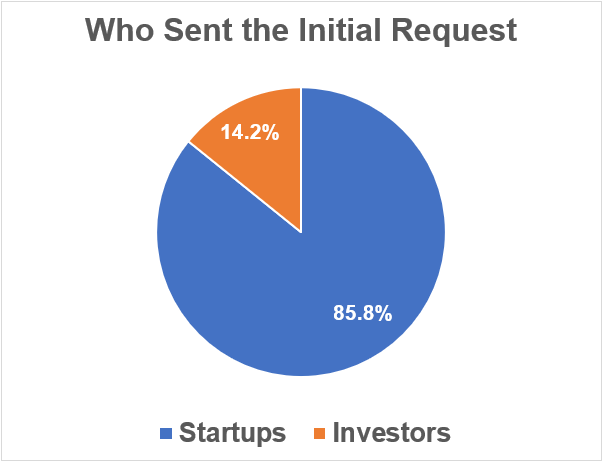
Breakdown of meeting types at RESI:

Most would imagine that it is always the fundraising companies who reach out in the most compelling way possible to the investors and strategic partners with whom they hope to land a meeting. So, you might be surprised to know that, in many cases, the investors and strategics take the initiative to meet with the companies developing technologies that fit with their investment mandate.

The power of partnering, in all its diversity, is what has made RESI the most efficient forum for moving the needle in early-stage funding in the life science arena. We hope to see you in Philadelphia on June 3rd!

Finding Your Voice

By Dennis Ford, Founder & CEO, Life Science Nation; Creator of RESI Conference Series

As a writer, I have my colloquial style (informal and conversation) – it just falls out of my fingers. My voice has naturally surfaced through lots of practice communicating: through speaking and writing, which is seminal to my work in the world of business development. If you do a half-decent job at the crafts of speaking and writing, then the listening/reading public can hear your voice.  It is a combination of speaking through words, to your audience, translating and surfacing your knowledge feelings, and passion, and mostly, feeling like you have something important to share. This should be communicated in the way that you want and that feels natural.  Most importantly, the voice that you decide to develop and use has to be understood by the target reader/listener.  For me, It is very natural to communicate informally, conversationally, telling stories to make things easy to comprehend, using easily understood metaphors that help net out a point I want to make. It works for me and it can work for you. So you, dear reader, have to spend the time to see what works for you, and this is called practice, practice, practice. Practice your pitch, practice your writing, learn as you go, pivot, recalibrate and repeat the process on and on until you find your true voice or you collapse and die. C’est la vie.

When you find your authentic voice it will resonate with who you are speaking to. How will you know? You will know because you can see it and you can feel it.  When you resonate with your audience, you become engaged in dialogue. This dynamic is the holy grail of voice because it fosters relationships.

If you think about it, you will see the gravitational impact of finding your voice. Drum roll please…you voice will resonate with the subject and the audience.  Later in the series we will talk about your brand and your message, but what we will be really building on is your authentic voice.  Entrepreneurs pay big money to professionals to get help developing their brand and their message and what these consultants will do is sit in a room with you to try and listen for your voice. It ain’t easy to hear and find.

The entrepreneurial voice that you need to develop is a hybrid of your authentic voice and the potential validation of your product and market.  The entrepreneur has to first believe in him or herself, and second, but just as important, is the integrity of the product they are creating for a market.  Your entrepreneurial voice is your message to your marketplace.


Partnering Launches for RESI Philadelphia

By Karen Deyo, Investor Research Analyst, LSN

On Monday, May 6th, partnering will launch for RESI Philadelphia, and registered attendees will have the opportunity to start requesting meetings. With 150 investors registered so far, this is a great opportunity for companies and investors to schedule meetings with partners who will be a fit for them. Previously, we have published articles on the importance of sending a lot of good, focused messages to get a full schedule of meetings at RESI, so getting a head start as soon as partnering launches is important. Take a look below and see some of the investors already registered to attend!

CONFIRMED RESI INVESTORS AND STRATEGIC PARTNERS

As of April 30th, 2019

And More…

Global Investors are Increasingly Important to Life Science Startups

By Lucy Parkinson, VP of Investor Research, LSN

There’s a common perception that if you’re raising money to finance a life science startup, your best bet is to fundraise from local investors, such as a nearby angel group or a regionally focused VC.  While these groups are valuable in supporting innovation, it’s vital to look globally for potential investors for your company, because global investors are increasingly looking for you.

Life Science Nation’s core mission is to bring early stage startups together with early stage investors, strategic players and channel partners, and we are finding increasing traction for these efforts at a global level.  LSN’s Investor Research team speaks to investors all over the world about what areas of life science they are focused on investing in and what criteria they have, including geographic restrictions.  Of the investors from whom LSN has gathered active mandates, nearly 40% have no geographic restrictions at all; many more invest across continents, such as cross-border investors who focus on both Asia and North America.

It’s no coincidence that LSN is increasingly speaking to these groups; to cite one specific cross-border situation, in 2017 and 2018 investors from China accelerated their allocations to US-based biotech companies, according to Pitchbook. 

To serve this increasingly international community, LSN held our first RESI Europe event in March, bringing together hundreds of investors and startups – not just from across Europe, but also from the USA, Asia and beyond.  In November, we will be hosting our first RESI Asia events.  As LSN’s global ecosystem becomes richer due to these efforts, an increasing number of international investors are coming to all of our RESI partnering events, including the upcoming RESI Philadelphia.  This means that startups attending RESI can tap into this vast pool of international capital that’s looking for novel healthcare technologies, and can make global connections face to face in RESI Partnering.

The Battle with Balancing Authenticity

By Dennis Ford, Founder & CEO, Life Science Nation; Creator of RESI Conference Series

I cannot tell you how important it is to be authentic in the world of a startup, especially if you are going to try and raise capital or find partners who have channels for your product. The big challenge for most scientist entrepreneurs is that they are typically deep into their chosen field of endeavor and being so “deep in” causes some to lose perspective with their positioning in the current market. Let’s just say that this form of tunnel vision can leave you lopsided when you need to be balanced in your perspective when in dialogue with future partners.

It is understandable that the entrepreneur becomes overly engrossed in their products and technologies and is quite common – no one is going to be more passionate about your product than you are, and investors want to see passion. However, being in too deep can leave you out of context. I cannot tell you how many times I have meet a startup CEO who has a challenge carrying on a conversation outside their domain of expertise. They are so engrossed in all things relating to their technology and have difficulty adjusting or normalizing to the level of a non-expert. Try to remember that always going “deep in” makes the conversation one-sided and not understandable to the listener. This leaves the listener just trying to guess what this person is saying, with the entrepreneur potentially unaware that they have lost the listener and both are out of context. An entrepreneur has to maintain a balance, giving a technical explanation, but doing it in a way that a non-expert can understand. Also, appearing too absorbed in your technology can have other negative side effects – investors need to know that you can impartially determine the value and marketability of your products and that you can put together a team that can build a company, not just continue to do research.

All this begs the question: can you be too authentic? The answer is yes – if you lose perspective and stay totally absorbed in your technology, you will not be able to get out of your own way. Part of the conundrum is that to get to a point where you have a breakthrough product or technology, you have to commit and immerse yourself into the arena. However, you cannot go so far down the rabbit hole that you wind up in your very own entrepreneurs wonderland.

Perhaps now you can see why I decided there is a need to have this type of seemingly esoteric conversation with thousands of founders who are scientists and engineers “deep in”. Being deep in means you are authentic with your knowledge and expertise, but the other side of the authenticity coin is being able to honestly translate your knowledge and visions to the rest of the world with the proper perspective and complete business understanding. It is one of the key challenges you, the entrepreneur, will face. To bridge the inventor’s world with the rest of the world is to find your entrepreneurial voice.