Diagnostics Investors Speak to How They Are Looking at Opportunities

By Christine A. Wu, Research Analyst, LSN

chrsitine

What defining elements make a diagnostic company stand out? What do diagnostic investors look for and why should the healthcare marketplace care about diagnostics? What should these companies do to get their foot in the door of these investors? These are the types of questions our Diagnostic Investors panel answered at our RESI Conference in Boston last week.

Moderated by Parker Cassidy, Executive in Residence, RA Capital, the audience got to hear from:

The panel revealed the key elements they seek when evaluating a diagnostic company and the reasons behind them. Together they discussed four main criteria—the impact in the healthcare delivery marketplace, the regulatory and reimbursement pathway, the “push” and “pull” from investors and clinicians, and the ability to prove positive patient impact with the tests results—before closing with advice for fundraising companies.

Diagnostic companies can get their product on the market faster, according to Steuart. The attractiveness of diagnostics is that they “capture a disease before it gets bad and expensive.” Cunningham further explains the general desire in healthcare to invest in huge pain points, yet the difficulty of finding diagnostic opportunities that directly address those pain points and really drive change. There is a big explosion in testing in oncology now, in which predicting difficult cancers early while they are still treatable is huge and will continue to grow in the diagnostics space. The argument of course will always be whether finding certain cancers earlier will improve chances of length of survival, Cunningham points out.

Diagnostic investors look at every obstacle to a successful product. Williams explains that regulatory and reimbursement bodies are not subsiding as much in the diagnostics space, and as an entrepreneur that needs to be expected. Because of the tough reimbursement landscape, investors want to know if the technology will take money out of the system or drive cost. “If the payer thinks it will open a bunch more people up to confirmatory procedures they are going to pay for, then that’s a mountain to climb over,” Cunningham explains.

Then there is the push and pull dynamic, the final hurdle that a company faces that is often overlooked but can actually be the most costly. Companies and their investors push their technologies through reimbursements and regulatory approvals. Yet the “pull” from the clinician that will be administering the test is a keystone to the strategy. “Just because you get the ‘push,’ doesn’t mean the clinicians will ‘pull,’” Williams describes. Williams has worked with a number of companies that have spent far more money on getting key opinion leaders (KOLs) to pull products than on the development of the technology. “If you can get the key opinion leaders and physicians on board, you are golden.”

Summer finishes that among it all, investing in the diagnostics space is all worth it. Companies just have to know how to prove the impact of its worth. Steuart provided the example of Genomic Health, a diagnostic company with an assay that paved its way via studies and endorsements with KOLs that by the time they went to CMS, they had a pharmaco-economic study to prove that they were worth millions of dollars.

To close, here are two pieces of advice from our panelists’ when fundraising:

Come prepared – You must completely understand and follow the money: who owns the patient, who is getting the benefit, and who is paying for the benefit. You cannot just come with better patient outcomes. Once you reach a certain threshold, you need to come prepared with friends, such as clinical advisors and KOLs. Practice your pitch with people who you will never invest in you, then once you’ve mastered it, pitch to those who will actually invest in you.

Most importantly, tell a story – Cunningham describes (followed by applause), “For any of us, you have a few minutes to capture our attention. You must inspire vision and tell the story to get people to see the vision and follow it. I want to go on that journey with you.”

RESI Innovation Challenge Winners Announced

By Nono Hu, Senior Manager, Branding & Messaging, LSN

Nono 2

Yesterday, the sixth Redefining Early Stage Investments (RESI) Conference was held at the Westin Copley Place, Boston. Featuring approximately 200 investors, 250 biotech, medtech and healthcare IT entrepreneurs, and 130 service providers, this event is the biggest RESI ever.

In the exhibit hall, 30 of the most innovative early stage life science companies at the event were chosen to participate in a virtual investment contest – The RESI Innovation Challenge, showcasing cutting-edge life science technologies in poster displays and competing to raise the most RESI Cash. Without further ado here are the top 3 contestants!

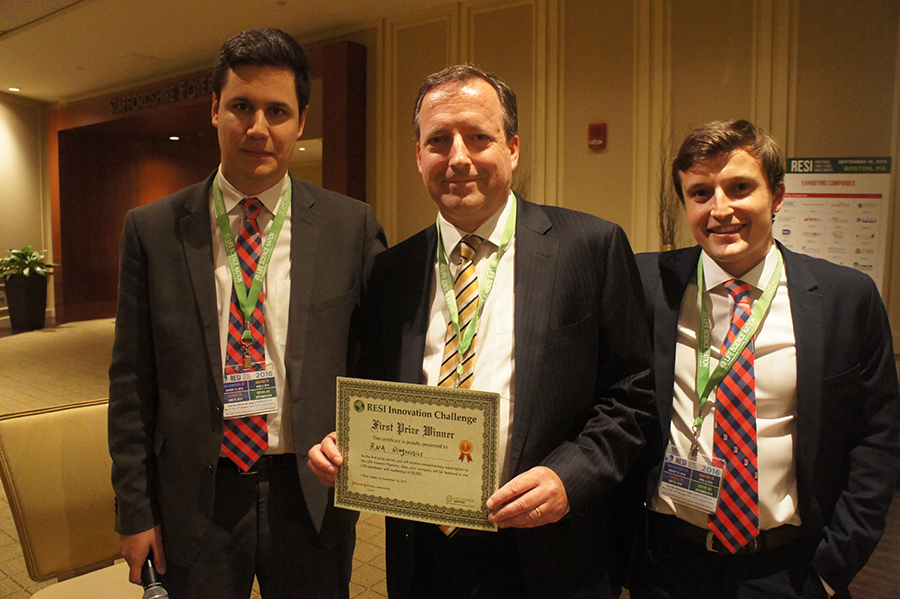
First Prize Winner: Rna Diagnostics

Rna Diagnostics is commercializing the RNA Disruption Assay (RDA™) to address the serious problem of over-treatment of cancers with ineffective chemotherapy. RDA accurately assesses effectiveness of chemotherapy in real-time. Chemotherapy effect is assessed as early as 14 days after therapy initiation by quantifying tumour RNA disruption. High RNA disruption is strongly correlated with pathological complete response and enhanced long term disease free survival. RDA assesses treatment efficacy of conventional and targeted cancer drugs in breast cancer. RDA is delivered as a lab developed test service. No FDA approval required. Collaborations and prospective trials of RDA in multiple cancers are underway / planned in North America, Europe & Asia. RDA provides patients with improved outcomes while reducing cost for healthcare payers.

As a first prize winner, Rna Diagnostics will receive complimentary subscription to the LSN Investor Platform.

Alejandro Zamorano, Director of Business Development, LSN | John Connolly, VP Corporate Development, Rna Diagnostics | Michael Quigley, Director of Research, LSN


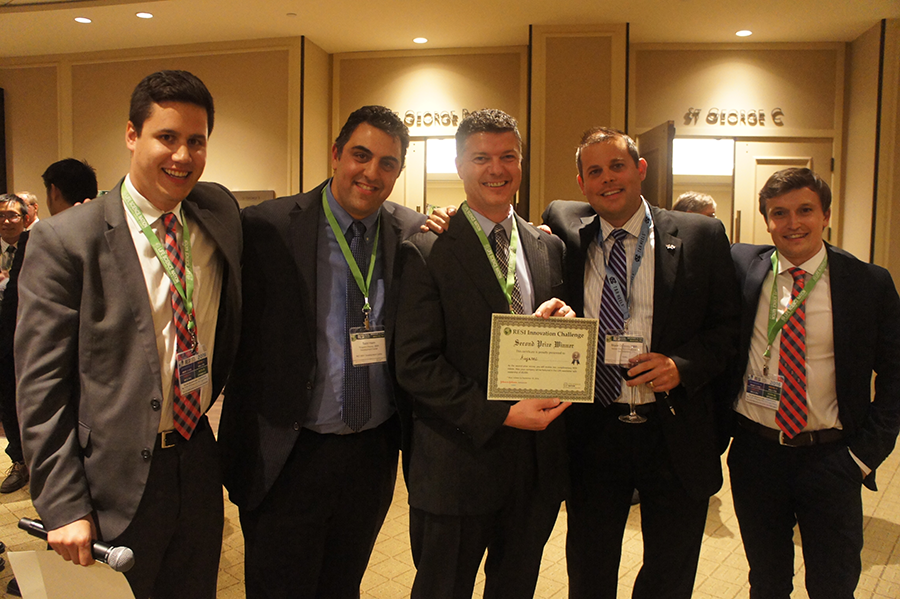
Second Prize Winner: KIYATEC

KIYATEC prioritizes accurate ex vivo prediction of patients’ drug response, focused primarily on data correlation to human clinical outcomes. Our drug response profiling services utilize phenotypic 3D cell-based models for predicting patient response. KIYATEC’s 3D perfusion tissue microenvironments are particularly useful for investigating efficacy and modeling resistance of cancer therapeutics.

As a second prize winner, KIYATEC will receive two complimentary RESI tickets.

Alejandro Zamorano, Director of Business Development, LSN | Todd Haim, Program Director, SBIR Development Center, NCI | Matthew Gevaert, CEO, KIYATEC | Bryce Chaney, Senior Director of BD, KIYATEC | Michael Quigley, Director of Research, LSN


Third Prize Winner: Synthonics

Metal coordination, or attaching a metal to an active agent to control its absorption and release, represents a significant advance in drug delivery and development. It is a powerful, flexible and elegant means to create a new generation of safer and more effective patent protected drugs (“MCPs”). In addition to imparting a range of desired characteristics, metal coordination enjoys significant regulatory advantages. MCPs of approved drugs are eligible for approval under section 505(b)(2), which allows for faster and less expensive drug development. Moreover, they are patentable as new compositions of matter even if the parent molecule is well known. Synthonics intends to begin human trials in 2016 on its controlled release formulations of levodopa for Parkinson’s disease and liothyronine (T3) for hypothyroidism.

As a third prize winner, Synthonics will receive one complimentary RESI ticket.

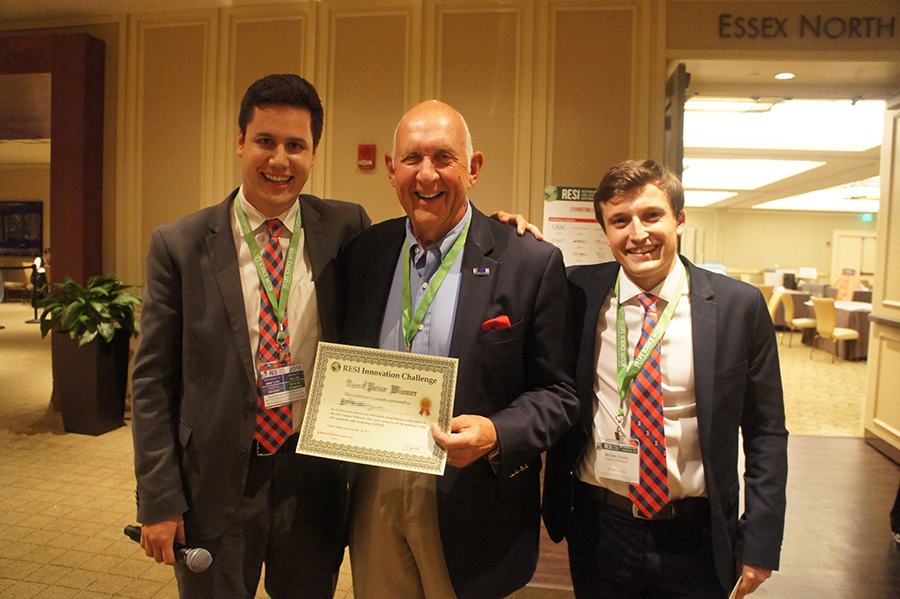
Alejandro Zamorano, Director of Business Development, LSN | John Borling, Board Member, Synthonics | Michael Quigley, Director of Research, LSN

Congratulations! We hope to see you at RESI San Francisco on January 12, 2016.

Life Science Nation and MaRS Collaborate with Johnson & Johnson Innovation, JLABS to Host RESI Conference in Toronto

By Dennis Ford, Founder & CEO, LSN 

Dennis book

BOSTON-September 16, 2015 – Life Science Nation (LSN) and MaRS Discovery District (MaRS) are collaborating with Johnson & Johnson Innovation, JLABS (JLABS) to bring the Redefining Early Stage Investments (RESI) Conference to Toronto on June 23, 2016.

The RESI Conference series brings together fundraising CEOs and early stage investors from around the globe, providing the opportunity for dialogue and relationship building, with the goal of eventual capital allocations.

“MaRS supports over 250 Canadian-grown early stage health technology startups,” said Dr. Zayna Khayat, Lead, MaRS Health. “Our goal is to provide these young emerging ventures with the best connections to investors and industry to help them scale internationally. The Redefining Early Stage Investments (RESI) conference series has a strong track record of attracting global early stage investors. We’re delighted to bring them to MaRS in 2016 to build on the success of our HealthKick conferences and support new technologies that will achieve better health outcomes.”

Johnson & Johnson Innovation, JLABS, MaRS, the Ontario Government, University of Toronto and other collaborators announced last week that JLABS will be opening its first ex-U.S. incubator in Toronto. Called JLABS @ Toronto, the site is expected to open in the Spring of 2016. JLABS @ Toronto, MaRS and RESI will connect cutting-edge health technologies with a broad audience of investors and industry leaders including: angel syndicates, family offices/private wealth firms, corporate venture capitalists, venture philanthropy groups, foundations and endowments, pharmaceutical companies, mid-level private equity firms, government organizations, and venture capital investors.

“The MaRS Centre in Toronto represents the 4th venue for our North American RESI Conference series. Now fundraising CEOs and scientist entrepreneurs can meet investors every 90 days – Boston in September (RESI Boston), San Francisco in January (RESI @ JPM), Houston in April (RESI @ TMCx) and now Toronto in June (RESI on MaRS),” said Dennis Ford, CEO of LSN and creator of the RESI Conference Series. “Fundraising is essentially a numbers game and the entrepreneur needs to get in front of as many investors as possible. Having as many as 20 investor meetings every 90 days can dramatically help with funding in the healthcare arena.”

Speakers and participating health ventures will be announced in early 2016.

About Life Science Nation

Life Science Nation (LSN) accelerates the funding of early stage life science firms through its Match.com-like sourcing platform for private investment and enables CEOs to be more efficient in their capital-raising efforts. LSN owns and operates the Redefining Early Stage Investments (RESI) conference series.

About MaRS Discovery District

MaRS Discovery District in Toronto is the one of the world’s largest urban innovation hubs supporting a new generation of makers and innovators who aim to make the world a better place by creating solutions that address key societal challenges. It is a community that encourages entrepreneurial thinking through education programs and events, and helps start-ups launch, grow and scale. MaRS supports over 1,000 ventures.

###

PR Contacts: Nono Hu

Marketing/PR Manager, Life Science Nation

(617) 580-5011

m.hu@lifesciencenation.com

Lara Torvi

MaRS Discovery District

(416) 673-8100

ltorvi@marsdd.com

RESI Kicks off in 6 Days – Check out the Program Guide!

By Nono Hu, Senior Manager, Branding & Messaging, LSN

Nono 2

With 6 days left until RESI Boston 2015, LSN is pleased to announce that this event is the largest RESI since its first kickoff. We have over 550 meetings booked through the RESI Partnering Platform, and have registered nearly 180 early stage investors and more than 400 emerging life science entrepreneurs. As our largest event yet, we have increased your odds of making a compelling connection.

Check out the RESI Program Guide with the schedule of a full day of panels, workshops, and partnering! We hope to see you on September 16 at the Westin Copley Place, Boston.

program-guide-wp

How to Write a Compelling Partnering Message

By Alejandro Zamorano, VP of Business Development, LSN

Alejandro 10*10

Life Science Nation attends many partnering conferences, in addition to hosting our own quarterly Redefining Early Stage Investments (RESI) Conference series. After taking the time to study the most successful partnering requests and interviewing investors about what they look for in an introductory note, we have created a template email, which should increase your response rate when soliciting investment:


Frank,

My name is John Doe, CEO, Sample Therapeutics, an early stage therapeutic company based out of New York developing an antibody drug conjugate (ADC) for pancreatic cancer. Our lead asset (OK-101) is in the middle of Phase 1 clinical trials and is open to partnership opportunities.

OK-101 leverages Sample Therapeutics’ proprietary ADC technology to deliver doxorubicin to cancer tissue more efficiently, thereby reducing toxicity and increasing its efficacy. Unlike traditional ADCs, Sample Therapeutics’ platform uses a two-part ADC system in which antigen-specific antibodies are injected into the body first, followed by the small molecule that then binds to the antibodies in the cancer tissue. This system increases the versatility of known ADC technology and avoids the common liver toxicity problems found in traditional systems.

Currently we are at the beginning stages of our fundraising campaign to complete our Phase 2 by Q4 2016. Given your firm’s experience in clinical stage oncology assets, and what I read in your profile our company seems to match your investment interests.

I think we are a good fit for your investment strategy and would like to have an opportunity to connect with you at the RESI Conference.


Let’s break down the email in order to understand its structure.

1st — Introduce Yourself

Introduce yourself, your title, and the name of your company. Although obvious, you might be surprised by how many people don’t do this.

2nd — Introduce Your Company

Give a brief overview of your company so that an investor can determine from the first sentence whether you are a fit for their investment mandate. Remember, every investor is unique and therefore not every investor is a fit for your opportunity. Here are five key data points that are likely to affect investor fit:

  • Where your company is based
  • What sector your company is in (biotech, medtech, diagnostics, healthcare IT, etc)
  • The modality you are using
  • The indication you are treating or problem you are trying to solve
  • Your product’s development phase

3rd — Key Value Proposition/Elevator Pitch

Use the next part of the email to describe the key value proposition of your technology. This should include a high-level description of the core technology and its major differentiators from currently available products or solutions. This is the core of your messaging and should reveal enough information to pique interest.

4th — The Stage of Your Fundraising Campaign

You should clearly state where you are in the fundraising process (beginning, middle or end) and what the use of those proceeds will be. This way an investor can gauge if your round is a fit for their capital allocation.

5th — Reaffirm

You should do your homework on every investor you reach out to and reference a relevant data point to reaffirm the reason you are reaching out.

6th — The Next Step

Finish the email by laying out when you plan on connecting with them and how the both of you should connect. As this is a conference partnering message, this can be as simple as telling them to accept the meeting request if they would like to meet up.

By sticking to these fundamentals you will make it a lot easier for an investor to identify you as a fit for their investment strategy. This will lead to higher response rates and more productive meetings.

RESI Panel Announcement: Preclinical & Phase I Investors, Investing Early in Novel Therapeutics

By Lucy Parkinson, Senior Research Manager, LSN

If you’re developing a biotech asset and you’re raising funds in order to complete pre-IND studies, or to embark on your first human clinical trial, this panel will provide an opportunity to hear from investors who focus on companies at this challenging stage of the development process.

Moderated by Steven Gullans, Managing Director, Excel Venture Management, this panel features:

These investors will offer their insights on the challenge of assessing a biotech opportunity prior to attaining human proof of concept data. What factors do they consider indicative of future success? Which fields of technology are the most promising for early-stage biotech investment today? How do you demonstrate the value of a new breakthrough product to a potential investor? We’ll look forward to hearing the panel’s insights on these and other vital questions faced by Preclinical and Phase I biotechs.

Summer Reading Series Final Issue: The View Beyond Venture Capital

By Michael Quigley, Director of Research, LSN

mike-2

To wrap up the entire Summer Reading Series we bring you an article we wrote for Nature Magazine entitled “The View Beyond Venture Capital”. This piece discusses many of the shifts that are currently taking place in the life science investment ecosystem including the rise in relevance of family offices for early stage life science companies, different types of investor mandates, the changing role of Big Pharma, and more.

Click here to download/print the chapter PDF

It has been our pleasure to share these past 15 issues of the LSN Summer Reading Series with you and we hope you found some practices to bring back to you own campaign. If you missed out on any chapters thus far here are the links!

Enjoyed the preview? Buy now from Amazon.com or Barnes & Noble

Bookcover-Front