Archive | Redefining Every Stage Investments (RESI) RSS feed for this section

See It For Yourself! LSN Investor Database Demo

23 Jan

By Mengwei Hu, Marketing Manager, LSN

Nono 2LSN’s marketing team is proud to release a digital demonstration of the LSN Investor Database! For those in our readership who are unfamiliar, the LSN Investor Database is a web-based matching platform for companies seeking to raise capital in the life science arena.

LSN tracks 5,000 life science investors globally. These investor profiles are maintained by LSN’s research staff, who update these investor profiles through 1-on-1 investor interviews every 90 days. Using LSN’s proprietary search ontology, emerging therapeutic, diagnostic, and medical device companies can quickly target investors that may be a fit for their offering.

Click the video below to see how the LSN Investor Database may be able to help your fundraising efforts.

A Word On When To Go Outbound

23 Jan

By Jack Fuller, Business Development, LSN

Jack 2Many of the people we talk to here at LSN are convinced that a pre-existing relationship or a referral from a close associate are the only ways to engage potential investors.  LSN has gone to great lengths to dispel this deeply engrained myth in the life sciences.  However, helping an entrepreneur to grasp the significant advantage of approaching investors based on fit is not nearly as difficult as convincing them to actually do it. All too often, fundraising executives agree that the principle of “fit vs. referral” makes absolute sense, yet they exclusively reach out to people within their network to source a new round of capital.

The universal problem facing all startups is that every day is critical.  When it comes to fundraising, the result is binary – either you secure funding, or you don’t and have to start over.  This fear keeps fundraising executives awake at night, as the ability to raise capital can be the difference between bringing a life saving device or therapy to market, or squandering a great technology. Veteran entrepreneurs understand this through and through, yet the question persists: When should I go outbound?

LSN’s emphatic answer: YESTERDAY!

While this may seem cliché, the logic is very simple and powerful: If you only raise capital from your network, you will either be successful or fail.  Once your network is exhausted, you may then go outbound. However, valuable time has been wasted in the process (potentially dooming your prospects). Those individuals who pursue both an internal effort within their network, as well as an outbound campaign with a global target list of qualified investors, have significantly more shots on goal and are not running the risk of relying solely on one method. Anecdotally, one of LSN’s clients was able to increase his number of meetings with qualified investors several times over in just a few weeks using a well-constructed global taget list (GTL) and an outbound strategy!

Every biotech and medtech CEO faces the same problem of limited time and (even more) limited capital.  At the end of the day, fundraising tends to be the most vexing problem in a life science company.  Trusting the fate of the company to a small group of prior relationships is idealistic at best, and can put an organization at risk.  Pragmatic fundraising today requires utilizing every available lead, and the drive and commitment to develop a tactical approach to raising capital.

Corporate VC is Heating Up In Medtech: Trends for 2014

23 Jan

By Maximilian Klietmann, VP of Marketing, LSN

Max 2

As we enter 2014, LSN has compiled some insight into three of the hottest subsectors being targeted by investors in the medical technology space. As new technologies emerge, the healthcare sector is undergoing profound shifts that spell change for entrepreneurs, investors, and patients alike. LSN has identified three critical trends in the marketplace that we are likely to see unfold over the coming months. These are increased corporate venture activity in the medical device space, a massive increase in the funding of digital health solutions, and continued interest in mobile-enabled implantable devices.

Corporate Venture Capital Activity:

Medical technology continues to gain an increasing amount of attention from corporate venture capital. However, unlike the biotech therapeutics space, where corporate venture activity is largely being generated by big pharma venture arms, medical technology is getting attention from a broad range of corporate entities. Most interestingly, many consumer electronics corporate venture firms are getting into what could become a major profit driver down the road. Google’s recently announced glucose-monitoring contact lens is only the most recent instance of electronics players moving deeper into the healthcare space.¹ Wearable biosensor companies received over $140 million in the last twelve months², (heavily from corporate entities), and are another example of an increasing health focus by a number of household electronics companies. The good news here is that there will likely continue to be an influx of capital for early stage biotech companies to take advantage of. The key for fundraising companies will be identifying relevant corporate entities that constitute a fit.

Funding for Digital health

Digital health encompasses the intersection between medical technology and information technology. This includes healthcare IT solutions such as electronic health records, big data analytics, and cloud-enabled devices. This subsector is responsible for a disproportionate amount of the growth that has taken place in the medical technology space in the last year: Investment has doubled in 2013 to almost $2 billion in annual investments relative to 2011 levels. More interestingly, there is an increasing focus on early stage players in this piece of the market: Series A deals constituted 51% of financings in 2013, relative to only 39% in 2012². Due to the “multi-industry crossover” represented by digital health, this subsector stands to profit from the aforementioned corporate venture interest, not to mention other investor categories seeking to join in the trend.

Mobile-Enabled Active Implantable Devices

Active electronic implants enabled with mobile technologies will continue to gain momentum within the device space. The FDA issued preliminary guidelines on this subject in the second half of 2013 in anticipation of increasing focus in this area.³ A number of devices in this category – such as diabetic and cardiac monitoring systems with wireless capabilities – are already being successfully used in patients. These can compile extensive patient data, which can be helpful not only for treatment personalization, but a number of other tasks, such as complex trial data capture.

Early stage medical technology companies should watch these trends and seek opportunities to capitalize on them. Moreover, the influx of new investors into the healthcare space via these technologies constitutes a shift that savvy entrepreneurs should be aware of. Keep your eyes peeled as LSN continues to follow these investor trends as they evolve over the coming year.

  1. http://www.medicalnewstoday.com/articles/271389.php
  2. http://www.slideshare.net/RockHealth/digital-health-funding-2013-year-in-review-by-rockhealth
  3. http://www.fda.gov/MedicalDevices/DeviceRegulationandGuidance/GuidanceDocuments/ucm077210.htm

LSN Published in Nature Bioentrepreneur: “Beyond Venture Capital”

9 Jan

By Dennis Ford, CEO, LSN & Barbara Nelsen, Founder, Nelsen Biomedical

Dennis 10*10

LSN is officially announcing the release of “Beyond Venture Capital” in the January 8th edition of Nature Bioentrepreneur! This piece, appearing in the current issue of Nature, is an in-depth analysis of the new life sciences fundraising environment, detailing what caused the paradigm shift in the investor landscape, who is active, and how fundraising executives should adapt. This is a must-read piece for anyone involved in the early stage life sciences arena, and an excellent primer for newcomers to the Redefining Early Stage Investments Conference.


LSN Investor Database Feature: What are investors seeking in 2014?

9 Jan

By Lucy Parkinson, Research Manager, LSN

lucy 10*10

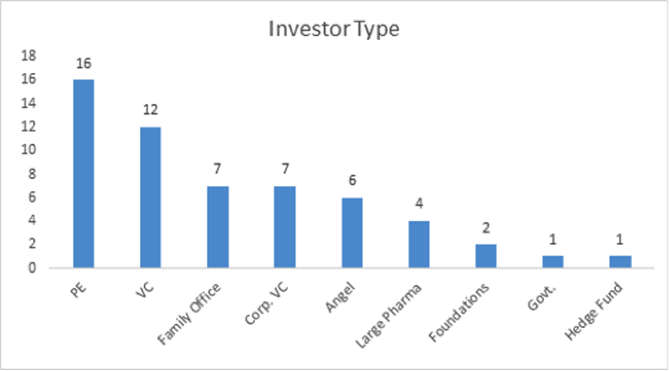
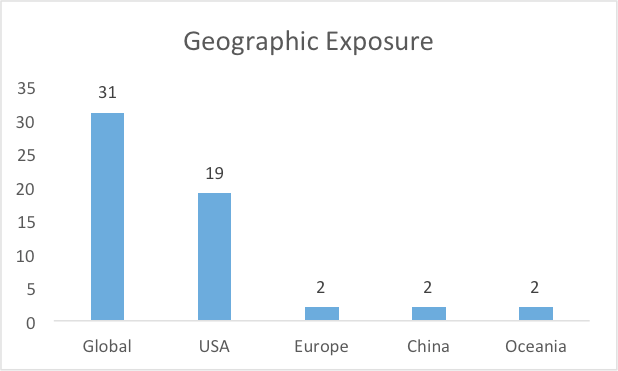
LSN tracks about 5,000 life science investors around the globe. In the last issue, I took a dive into the LSN Investor Database, and looked at who was planning to back early-stage innovation in 2014. In this article, we’ll look at where in the life science sector these investors plan to put their funds. This data is based on the last 250 investor mandates LSN’s research team has collected from 1-on-1 interviews with investors. Some major trends we’ve uncovered include:

  • VC comprises under 25% of investors active in the life sciences, based on LSN’s most recent investor mandates.
  • Most investors have multiple sector interests.
  • Devices are hot for many investors, but especially very early stage investors such as angels.
  • Corporate venture and private equity represent some of the most opportunistic investor groups.

image002

A fascinating piece of information that is presented by the mandate data is that VC comprises less than 25% of the active investors in the space based on forward-looking mandates. LSN has identified about 1,500 VCs in life sciences broadly, and about 500 that claim to be active. However, based on the last 250 mandates collected by LSN research, they are comprising a shrinking percentage of total capital available to companies. This shows that the number of non-traditional investor categories, such as family offices that are going direct, is increasing on a relative basis.

Many of the active life science investors we’ve spoken to have multiple sector interests; only about 30% restrict their life science mandate to only one sector (such as therapeutics, diagnostics, or medical devices).  Foundations are a major exception; almost half of the foundations we’ve spoken to are solely interested in supporting therapeutic and diagnostic companies.  Pharma firms and large biotech search and evaluation groups tend to be focused in this area; however corporate VC funds are more opportunistic, and many of these funds are willing to look at other sectors where they see the potential to complement their parent company’s portfolios.

What about the device space?  LSN meets many emerging device companies that claim there is a dearth of capital available to them. Perhaps surprisingly, about a third of angel networks in the life science space are focused only on medical devices.  While there are many angel groups out there who back therapeutic companies, the shorter exit-horizons associated with devices, makes them compelling opportunities for very early stage investors.

Another possible reason is that the former entrepreneurs who join angel networks usually invest in areas where they can apply their expertise; those who made their fortunes in the technology industry may have more confidence in their ability to assess a device technology than a molecular technology. Family offices may similarly be guided by the family’s expertise and existing business network, and these investors are notably more focused than most; about a quarter of those we’ve spoken to are only interested in medical devices, whilst another quarter are interested only in drug development.

At the other end of the scale, who are the life science sector’s most generalist investors?  Private equity funds are largely interested in making established businesses more profitable across a variety of industries, and if they know the life science sector they tend to seek their opportunities widely.  Notably, very few PEs invest only in therapeutic companies, although several have a focus on medical devices; these tend to be funds that have a general interest in high-tech manufacturing.

So what’s going to be the hot sector in 2014 – medical devices or drug development?  It’s almost neck and neck, but overall we’ve spoken to slightly more medical device investors than therapeutic investors.  Stay tuned as we revisit the data as the year progresses!

The Myth of JP Morgan

9 Jan

By Alejandro Zamorano, VP of Business Development, LSN

Alejandro 10*10Early January in the life sciences tends to revolve around preparing for what is believed by many to be the most important investor week in the biotech industry – JP Morgan. 2,500-3,000 biotech and medtech professionals representing a significant part of the industry will come together in San Francisco next week. The conference, and all of the smaller satellite events surrounding it, will seek to deliver compelling content, and provide executives a central location to facilitate face-to-face conversations with much needed strategic partners and investors.

However, though JP Morgan provides some great opportunity, the industry has created (and perpetuated) a myth around the event. It is often falsely considered the single defining moment for networking and partnering in the industry. When talking to life science executives during the past weeks, many have told me that they are waiting for JP Morgan to launch their fundraising campaigns. They act as though JP Morgan is a fundraiser’s paradise, where they will serendipitously find their perfect investor match. The reality is that very few life science executives will find their investor match at JP Morgan. Those who have success there will have most likely have been in dialogue with their prospective investors for some time.

The most successful fundraising executives understand that JP Morgan is not a place to initiate conversation; it is a way of organizing a week of meetings as a part of an ongoing fundraising campaign. Waiting until JP Morgan (or any other conference, for that matter) to launch a fundraising campaign is the wrong way to approach the process. More importantly, if you have waited to start your fundraising campaign based on an arbitrary date (rather than when you are ready to go outbound) you have already failed. Fundraising is not a baton race (raising money at each interval), it’s a marathon (it never stops). The most successful biotech executives are constantly in fundraising mode. They build relationships with investors over a long period of time and reach out to prospects well in advance of needing capital. This allows them to build long-term relationships with qualified investors making the fundraising process more efficient and effective.

The most successful approach to managing your fundraising campaign around the conference calendar is to start as early as possible, and then manage the subsequent relationships face-to-face at events. Of course, you’ll always meet some new people, and conferences are valuable for keeping a pulse on the industry. However, it is key to keep in mind that fundraising is a numbers game, and the more people you are able to get in front of, the better. Remember, JP Morgan is not the beginning or the end of your fundraising journey. It is another stop along the road.

Announcement: LSN Company Database Updates

19 Dec

By Alejandro Zamorano, VP of Business Development, LSN

LSN’s ongoing commitment to provide the highest quality offering to our clients, we are excited to launch a new software release for the LSN Company Database and the Licensing Deals Database! Here is a brief overview of the new functionalities that have been implemented based on feedback we’ve gotten from our users:

  • Save Search + Bookmarks – Allows you to receive targeted alerts about your bookmarked companies, technologies, and products.
  • Enhanced interface for Licensing Deals – Allows for more intuitive navigation of search results and includes new filters such as the ability to search deals across specific territories
  • Enhanced interface for bookmarking – provides you with the ability to search within your book marked companies, and products
  • Direct links to each bookmark section on the toolbar – Allows for quicker navigation

LSN continues to carefully evaluate all of our clients’ comments and suggestions to make our products more powerful. Stay tuned for more new features to help you and your organization operate smarter and more efficiently!