Panel Announcement – Medical Device Investors Panel @ RESI Boston

By Karen Deyo, Investor Research Analyst, LSN

Medical device startups often face difficult challenges when seeking funding. Many investors have limiting criteria in their investment mandates when it comes to medical devices – whether limiting the regulatory pathway or the need for regulatory approval at all, consideration for traditional devices vs. the combo devices with digital components that are becoming so prevalent, or even the size of the market or complexity of use. With the increased challenge of either penetrating an already crowded market with an improved iteration of an existing device or attempting to introduce a new type of device to the market, it can seem like medical device startups can’t win.

At RESI Boston, taking place on Sept. 11th, the Medical Device Investors panel will feature the following five speakers who will share their perspective on investing in early-stage device companies, whether as strategic partners or financial investors. They will share their thoughts on what startups can do to catch the attention of investors, despite the challenges that may exist in today’s market. The panelists are:

Shahram Hejazi, Partner, BioAdvance

Shahram Hejazi, Ph.D., is a life science investor & entrepreneur. Over his 25+ year career, Shahram has invested and/or directed more than two dozen startups.  Since 2008, he has been a Partner with BioAdvance, where he serves on the Boards of 6 portfolio companies and is responsible for leading investments in medical devices, diagnostics, digital health. Shahram has also been on the faculty of Princeton University, since 2014. Previously, Shahram was the president of Kodak’s life science division, and before that, he was the founding CEO of Zargis Medical Corporation (a Siemens’ spin off). Prior to that, Shahram was the Global Head of the Strategic Business Development at Siemens Medical. Shahram is also the Chairman of the advisory board of Integral Molecular Inc., and the Chairman of PPDC at CHOP. Shahram has a Ph.D. in electrical engineering and an executive business education.

Darshana Zaveri, Partner, Catalyst Health Ventures

Darshana Zaveri is a Managing Partner of Catalyst Health Ventures (CHV). Darshana joined CHV in 2006 and has 13 years of experience in the life science and pharmaceutical industries. She is actively involved in all aspects of fund management including investments and capital raising. She led investments in nVision Medical (acquired by Boston Scientific), Augmenix, Inc., (acquired by Boston Scientific), Lantos Technologies, Inc., Maxwell Health Inc. (acquired by Sun Life Financial), and Aria CV Inc. She previously represented CHV on the Boards of nVision, Augmenix, and Maxwell Health, and is currently a Director of Lantos Technologies and Aria CV. Prior to CHV, Darshana was an investigator within the cell biology department at Vertex Pharmaceuticals, Inc., where she led drug development programs in oncology, metabolic disease, and immunology. Darshana received an MPA from Harvard University, a Master in Cell and Molecular Biology from Boston University, and a BS in Biochemistry from Bombay University in Bombay, India

Lu Zhang, Managing Partner, Fusion Fund

Lu Zhang, Founder and Managing Partner of Fusion Fund. Recently, Lu is selected as 2018 Young Global Leader by the World Economic Forum. Before this, she also got selected as Silicon Valley Women of Influence 2018 and Top 10 all America Chinese Youth. In 2017, she was awarded the Forbes US 30 under 30 & Featured Honoree of VC category and also awarded as the Town & Country 50 Modern Swans Influencer. Prior to starting Fusion Fund, she was the Founder and CEO of a medical device company (acquired in 2012). Lu is active in the entrepreneur and investor communities providing mentorship and serves as an advisor to programs like Microsoft AC, Singularity University, StartX at Stanford, and Youth Council of Future Forum. Lu received her M.S. in Materials Science and Engineering from Stanford University and holds several patents.

Michael Thomas, Director, Inova Strategic Investments

A veteran med-tech CEO, Michael Thomas is venture capital investor with the Inova Health System Strategic Investments team (ISI and IPHA). Prior to Inova, Michael was CEO of Appian Partners, an Annapolis, MD-based life sciences consulting practice. His med-tech experience spanned several early stage, growth stage, and turn-around ventures as CEO of Appian Partners, ReGear Life Sciences, NuSomnea, Tanzen Medical, Appian Medical, iSonea, and Sleep Solutions. Mr. Thomas was founder and CEO of Appian Medical, a digital health firm that developed an algorithm to diagnose Obstructive Sleep Apnea. Mr. Thomas spent 2.5 years as CEO of iSonea Ltd (ASX:ISN), a publicly traded global, asthma digital healthcare company. He raised $25MM for iSonea and increased the company’s market capitalization from $4MM to $250MM. He is a member of the Board of Directors for Circadiance, a specialty CPAP mask manufacturer. Thomas graduated from Cornell University with a degree in Microbiology.

Aaron Sandoski, Co-Founder & Managing Director, Norwich Ventures

Aaron Sandoski is Co-founder & Managing Director of Norwich Ventures, a specialized venture capital firm focused on early-stage MedTech.  Aaron’s current investments include Affera, Arterys, Lexington Medical, Pelvalon, Podimetrics, ReThink Medical and Vaxess Technologies.  Previous investments include Rhythmia Medical (acquired by Boston Scientific) and Intelligent Bio-systems (acquired by Qiagen).  Prior to founding Norwich Ventures, Aaron worked for DEKA R&D, the engineering think tank of Dean Kamen.  He has also worked in start-up operations where he helped launch a subsidiary of Express Scripts and helped launch a venture-backed payments company. Aaron began his career as a consultant at McKinsey & Company, where he advised healthcare clients ranging from leading medical device companies to a rural hospital system.  Aaron is co-author of How the Wise Decide (Crown Business), a book on best practices in making tough decisions, which has been translated into 11 foreign languages.  Aaron earned an MBA from Harvard Business School and graduated summa cum laude from Dartmouth College with a double A.B. in Chemistry and Economics.

If you would like to attend this and other exciting panels taking place at RESI Boston, make sure to register!

Hot Investor Mandate: Europe-Based Fund Invests in Advanced Therapeutics

A London-based fund is focused on investing in advanced therapeutics. The firm invests both publicly and privately throughout the US, and Europe. For private deals, the firm makes equity deals in early-stage biotech therapeutic companies. The firm typically looks to make 8-10 deals in the private sector through each yearly cycle and typically allocates between $1M – $5M in each deal. The firm typically follows on these investments, preferring not to lead. The firm typically invests in seed and Series A rounds.

The firm is currently seeking biotech therapeutics that are considered advanced therapeutics. Examples of some therapies that the firm considers as advanced therapies are cell therapies and gene therapies. Currently, the firm is interested in immuno-oncology therapeutics, but is not interested in checkpoint inhibitors. For these therapeutics companies, they prefer that the asset is currently pre-clinical, in Phase I, or ready for phase II. The firm is agnostic in terms of specific indications.

The firm focuses on investing in companies located in the European Union, but typically finds that a good amount of their deals are based in the United States. The firm is open to other geographies, but has yet to see a deal that is particularly interesting to them from other areas.

If you are interested in more information about this investor and other investors tracked by LSN, please email mandates@lifesciencenation.com.

Hot Investor Mandate: Family Office Invests in Medical Devices and Diagnostics at Any Stage

A family office based in the US Southeast invests in healthcare in addition to other sectors. The firm makes equity investments ranging from early stage to full on commercialization, but also provides debt and convertible loan financing. The firm generally looks for USA-based opportunities but may consider deals outside of the USA and has a track record of working with companies globally. The firm seeks to make approximately 6-10 investments per year.

In the life sciences, the family office has a strong interest in medical device and diagnostic companies. The firm considers healthcare IT opportunities to a lesser degree, and will not consider biopharma companies for the most part. The family office is open to devices of all FDA regulatory pathways including 510k and PMA. The family office is very opportunistic regarding the company’s stage of development and will consider products that are both on- and off-market.

The family office is looking for privately held companies backed by an experienced management team. Companies should have a strong exit strategy, including having a direct line of contact with strategic or financial buyers. The firm is open to both leading and co-investing in a financing round.

If you are interested in more information about this investor and other investors tracked by LSN, please email mandates@lifesciencenation.com.

Hot Investor Mandate: New VC Firm Focuses on Big Data in Healthcare

A recently formed venture capital firm is focusing on the big-data aspect of personalized diagnostics. The firm is seeking early-stage companies raising seed to Series B rounds. The firm has a $200M target fund and seeks to make 15 –20 new investments within the year. The firm seeks to make $2M – $4M initial investments per company, but will make smaller initial seed investments. The firm prefers to be actively involved in their portfolio companies, and therefore prefers companies based near the west coast, though is open to other U.S.-based companies.

The firm is focused on early-detection diagnostics, such as discovering cancer when it is still monogenetic versus heterogeneous and already invaded in other parts of the body or detecting Alzheimer’s 8-10 years before dementia symptoms are present. The firm is interested in point-of-care diagnostics (for influenza A/B/bacterial, etc.) that can diagnose specifically and efficiently. The firm is especially interested in technology with a big-data component, and involved in genomics and personalized medicine to provide the right treatment as early as possible. DigitalDx seeks preclinical to clinical-stage technology, though will also look later-stage depending on the opportunity.

The firm requires a smart management team that is diverse in knowledge, and a company with good IP that may come from a leading institution. The firm will usually seek early-stage companies with less than half a dozen people.

If you are interested in more information about this investor and other investors tracked by LSN, please email mandates@lifesciencenation.com.

Hot Investor Mandate: Cross-Border Fund Makes Venture Stage Investments in Life Science Startups

A Venture Capital company with offices in the US and Switzerland is currently looking to make investments out of its 6th fund. For its earlier stage investments, the firm is looking to make venture-stage investment generally falling in the range of $2-$10 million, although the firm may invest smaller amounts in certain seed-stage opportunities, or more in other cases. The firm also reserves additional capital for follow on rounds. The firm is most interested in companies based in the US and Europe, although they will invest in Australia, East Asia and Israel as well. The firm could make as many as 7-12 investments over the next year.

The firm invests primarily (80%) in therapeutics, with the rest of their investments in diagnostics and medical devices. Within the therapeutics space the firm has historically invested mostly in the oncology space, but are open to all indications. The firm is willing to invest in small molecules, biologics, and cell and gene therapy. The firm is willing to consider opportunities from preclinical through phase III, and, in some cases, may even form a company around several assets of interest. For medical device companies the firm generally looks for companies with a strategy for the European market due to regulatory considerations.

The firm is willing to either lead or co-invest, depending on the deal and the size of their investment. When acting as a lead investor, the firm does seek board representation, but is also willing to be a more passive investor as part of a syndicate.

If you are interested in more information about this investor and other investors tracked by LSN, please email mandates@lifesciencenation.com.

Want to Connect with Investors? Innovation Challenge Winner Catherine Song Shares Her Success Strategies

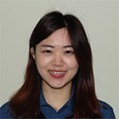
Catherine Song
An interview with Catherine Song, Founder & CEO of Soundable Health

– By Claire Jeong, Director of Research, Asia BD, LSN

Claire Jeong

The RESI Innovation Challenge provides participants with an opportunity to build their presence, get their message out, and make new connections at RESI.  For our RESI Philadelphia winner Catherine Song (Founder & CEO of Soundable Health), the Innovation Challenge led to many new investor dialogues. The Innovation Challenge truly helped Catherine get the most out of RESI, and this week, we interviewed her to find out how she had turned a poster display spot in the RESI Exhibition Hall into success.

The Innovation Challenge draws a diverse group of companies at each Redefining Early Stage Investments (RESI) Conference event.  At RESI Philadelphia, the 35 finalists represented 9 countries on 4 continents, featuring technologies in therapeutics, diagnostics, medtech and digital health. The winner Soundable Health, is a company with USA and South Korea offices, and is developing a diagnostic app for uroflowmetry. Catherine started from the ground up to build Soundable Health’s USA operations, and she continues to work tirelessly to grow the company. Catherine and I discussed how attending RESI and participating in the RESI Innovation Challenge has helped Soundable Health.

Lucy Parkinson, VP of Investor Research, Life Science Nation | Catherine Song, Founder & CEO, Soundable Health | Dennis Ford, Founder & CEO, Life Science Nation

Claire Jeong(CJ): It has already been over 3 weeks since you won the Innovation Challenge at RESI Philadelphia! How have you been?

Catherine Song(CS): We have lots of exciting news to share. First, we raised an additional $392K in seed funding, and we are looking to close our $2M seed round by the end of July through investors I have met at RESI, among others. Additionally, we are in the process of assembling a commercial team to fortify our USA operations including a senior business developer with a successful track record of commercializing multiple digital health products. We also pitched at the Plug and Play Summer Summit, and our real-world study that ran from late 2018 to early 2019 was published at the International Continence Society (ICS), one of the major conferences in the field of urinary disorders (https://www.ics.org/2019/abstract/664). In addition to investors, we are looking for strategic partners from hospitals and health systems who can support further clinical research.

CJ: Being a company with origins in South Korea, what was the most difficult part of expanding into the USA? How did RESI help in this aspect?

CS: The biggest challenge was overcoming the cultural differences between USA and South Korea. The investors from these two nations view investment opportunities from very different perspectives. Also, understanding how the startup-VC ecosystem in the USA works was challenging. “How do startups and VCs here connect with each other? Where do I even begin?” were big question marks for me. I just approached everything with an open mindset, made some mistakes along the way, and learned from these experiences.

Because RESI is an early-stage investment-focused conference packed in just a single day, you are forced to meet with various groups at a very rapid pace. From that one day, you learn so much! RESI’s panels are very informative. Another daunting aspect for me was getting accustomed to the healthcare system in the USA and strategizing our business model based on how USA health systems operate, as it is very different from what South Korea has to offer. Attending panels like “Digital Health” and “Investing in Mental & Behavioral Health” really helped me gain valuable insights from active industry leaders. Being able to network briefly with the panelists at the end of each panel is also a huge plus.

CJ: How did you find out about RESI in the first place?

CS: Word of mouth. A fellow entrepreneur who had attended RESI in the past spoke highly about the event, so I knew I had to check it out. My first conference was actually RESI San Francisco, where I was highly impressed with the quality of investors and panel sessions. If I didn’t enjoy the experience, I wouldn’t have joined again.

CJ: Did you meet a lot of investors and strategic partners at RESI Philadelphia? What were your meetings like at the partnering forum, and at the poster?

CS: Looking back at the number of investors I met and the quality of my meetings, I did much better than at RESI San Francisco. That was my first event so it was more of a learning experience for me, though I had very good meetings at RESI SF. By the time of RESI Philadelphia, I had a better understanding of how to make the most out of the conference.

I met so many people at my Innovation Challenge poster. What was nice about the meetings I had there, was that they were not strictly limited to investors. For example, I was able to engage ad hoc with fellow startups and identify potential synergies. A lot of the feedback revolved around how they saw my product and technology from a regular customer’s point of view, which is always a very important consideration for us. Another great part about presenting as an Innovation Challenge finalist was that I was able to meet almost everyone I couldn’t connect with through the one-on-one partnering system.

CJ: Are you following up with the groups that you met at RESI? What kind of strategies have you developed?

CS: Absolutely, I have existing dialogue with many groups. It’s an ongoing relationship with most of them. I found that figuring out exact next steps and asking them for honest feedback has helped tremendously with my investor meetings. The investors I have met at RESI are incredibly transparent and are not afraid to share candid, detailed feedback, such as required additional clinical data, what kind of pilots need to be done in the future, how we can improve our business model, etc.

For example, if an investor says “You’re too early”, then I ask specifically about the milestones I would need to accomplish to make our company more appealing to them in a future financing round. I would ask detailed questions such as “What milestone is considered a good milestone for your group? How can I best seek to mitigate risk?”, and they actually provide answers. You can really tell they are genuinely trying to help, given that our technology is of some interest. Meeting investors at RESI made me realize that one meeting is not everything. Even if our company is not an immediate fit, building and cultivating these investor relationships are so important. With these groups, I could continue to keep in touch regarding my updates and continue to receive valuable feedback. Who knows if this will eventually lead to an investment or a strategic relationship?

CJ: What was your strategy for the IC, and what tips do you have for future IC participants?

CS: I think we had a good advantage in that we have a valid product – an app – so it was easy to show and explain our product and technology. I tried to attract as many people as possible to my poster and attempted to speak with almost everyone who was passing by.

Another strategy that was useful for me was to invite investors to come to my poster. I had some investors who declined one-on-one meetings, mostly due to time constraints. With such investors, as well as groups they were not responding to my partnering requests, I followed up with them to visit my poster and offered to have a quick chat. And to my surprise, these groups actually stopped by and some of them ended up being fantastic meetings!

CJ: Do you have any other general tips for startup attendees?

CS: Making myself as available as possible is another strategy that worked for me. Obviously, it is best to meet at RESI but schedules fill quickly. I took advantage of the fact that a lot of investors stay a few extra days before and/or after RESI, especially when RESI is held concurrent with major industry events like JPM or BIO. When doing follow-ups, I let them know of my exact availability outside of RESI and offered to meet them at their convenience. I fully leveraged RESI’s partnering system, did my follow ups diligently, and this ultimately helped me generate a lot of meetings outside of RESI.

CJ: Will you be attending RESI again? Would you recommend the Innovation Challenge?

CS: Absolutely yes! The Innovation Challenge was a great way to boost my exposure. I will continue to attend RESI actively as my schedule allows, and I look forward to making new investors connections and continuing existing relationships at future conferences.

================

Soundable Health is targeting the multi-billion dollar urinary health monitoring market, which assesses changes in urine flow rate commonly seen in patients with lower urinary tract symptoms (LUTS). The core area of focus is uroflowmetry, a non-invasive screening urodynamic test recommended by the American Urological Association (AUA), but currently plagued by a variety of issues including limited efficacy and poor ease of use. Most notably, conventional uroflowmetry requires patients to visit a clinic to fill and empty their bladder to be tested, which does not allow for remote monitoring, a key drawback in being able to assess patients in the long run.

To address this problem, Soundable Health has developed PRIVY(R), a paradigm-shifting Mobile Medical App that could quickly become the gold standard for early detection, patient selection and treatment follow-up for various forms of urinary dysfunction, including BPH and OAB. PRIVY is the only one of its kind and uses a smartphone to record the sound of urine flow. This acoustic signal is immediately analyzed by our AI-engine and is used to infer key metrics of urine flow, including speed and volume. Real-time data capture also enables the development of proprietary analytics to detect and flag any marked changes in urine flow rate that may be indicative of underlying disease. Launched in early May, PRIVY currently has over 500 active users (including over 100 doctors) and over 3,000 analyses have been performed.

Check out the PRIVY app through these download links below:
Apple App Store:
https://apps.apple.com/us/app/privy-us-urinary-health/id1455952391
Android Apps on Google Play:
https://play.google.com/store/apps/details?id=com.soundable.privyandroid.us

Fundraising- You’re Either In or Out

By Dennis Ford, Founder & CEO, Life Science Nation; Creator of RESI Conference Series

From my experience in the fundraising arena, there is a pervasive lack of understanding regarding what it actually takes to raise capital. Entrepreneurs underestimate the associated time and resource commitment needed for a successful fundraising campaign, and that exacerbates the capital-raise dilemma. Part of the overall challenge is how to raise awareness among entrepreneurs as to the true effort required for a fundraising campaign. The first issue is that a campaign should be treated as a full-time undertaking – one or two people in the company have to commit to this endeavor as their primary focus. You can try and do it part time or catch-as-catch-can, by attending a few conferences a year as many companies do, but this is much more likely to be ineffective and unsuccessful, especially if your company has a limited runway left.

The fact of the matter is, fundraising takes a full-time commitment. Of course, a CEO or CSO has to continue their supervisory roles and company tasks (that’s the other 40 hours), but make no mistake about it, the majority of the setting up, launching and then executing a campaign should be your “primary effort” if you want to see results. Consequently, the BD staff at LSN spend most of our time explaining this critical fundraising dynamic to fundraising CEOs. The LSN mantra is:

  • Fundraising is not a part-time proposition
  • Before starting your campaign, make sure your branding and messaging is lucid and cogent. Your marketing collateral should be able to garner investor interest on the first read – this involves really working on your story
  • Fundraising is a numbers game, and because it’s a numbers game you need to move from a regional to a global mindset to increase statistical probability – your local region may give you 50 investors that are a fit for your firm, where looking globally will give you 500 or more targets
  • Get a list of investors that are a fit for your stage of development and product, The Global Target List (GTL)
  • Set up a CRM to manage the list of 500 or so global investor targets
  • Canvass and work the GTL: Get a “people person” resource to canvass the targets through phone and email campaign. It is great when CEOs cold call but much more productive when a professional admin or BD staff canvass and set up the calls
  • You need to get out of the building and out in your turf. LSN has six global RESI events that can make meeting partners very efficient. Fundraising involves creating a dialogue that turns into a relationship and then, potentially, a capital allocation.
  • Follow up is a great challenge and also another universe unto itself. Following up (or neglecting to) makes or breaks a campaign on many levels.

Most entrepreneurs fail because they think a fundraising campaign is just a side project. Part-time fundraising doesn’t scale and elongates the effort, increasing the timeline. On average, it takes 9-18 months to raise capital, data LSN has aggregated from discussions with many fundraising CEOs and early-stage investors. I am always shocked when, during my fundraising boot camps, I ask the audience how long they think it takes, and the answer is 6-9 months. Some people do get funded in that timeframe, but it is the exception and not the rule.

LSN has been in the middle of the early-stage life science fundraising arena for the past seven years and I am happy to share what I have learned. My challenge is trying to help educate startup executives in what it takes to do a fundraising campaign. Fundraising is a universe unto itself and isn’t a kinda sorta part time thing. The most shocking realization that a fundraising CEO has to deal with is that if you want to raise capital, make it your main priority, or find someone in your company who will, to maximize your chance of success.