MOWOOT Wins RESI EUROPE 2025 Innovator’s Pitch Challenge (IPC)

22 Apr

Interview with Dr. Markus Wilhelms, CEO & Co-founder by Greg Mannix, VP, EMEA Business Development, LSN

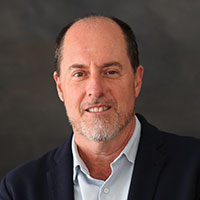
Dr. Markus Wilhelms Greg Mannix

Following their first-place win at the RESI Europe 2025 Innovator’s Pitch Challenge, Dr. Markus Wilhelms, CEO and Co-founder of MOWOOT, discusses their technology, fundraising plans, and what lies ahead for the company.

Greg Mannix (GM): What inspired the development of MOWOOT’s technology, and what unmet need are you addressing?

Markus Wilhelms (MW): Bowel dysfunctions and intestinal transit disorders like chronic constipation affect up to a quarter of the population, often caused by faulty colonic movement patterns. Current treatments are pharmaceutical or invasive and focus on managing symptoms, not addressing the root cause. Our ‘Intermittent Colonic Exoperistalsis’ technology, developed in collaboration with one of Europe’s leading neurorehabilitation hospitals, provides a non-invasive, wearable solution. The MOWOOT device acts as a pacemaker for the large intestine, mobilizing the feces and stimulating proper colonic movement in just 20 minutes a day. This easy-to-use and non-threatening approach offers high clinical response rates and strong patient adherence, without the side effects of conventional treatments.

GM: What stage of fundraising are you currently in, and what types of investors are you hoping to connect with?

MW: Our device is already available in several EU markets, with private & public case-by-case reimbursement secured. We aim for broad public healthcare reimbursement in the UK and Germany by 2025 and are currently raising €10M to support our EU expansion and US market entry in 2026. We are open to discussions with all types of investors, including business angels, family offices, VCs, and strategic corporate investors, as long as we align on deal terms, ticket size and vision.

GM: How has RESI Europe contributed to your fundraising or networking efforts?

MW: RESI Europe provided valuable networking opportunities with investors globally. We had productive meetings during the event as well as on the online platform and are now following up to deepen these conversations.

GM: What was the most valuable aspect of participating in the Innovator’s Pitch Challenge?

MW: Winning the IPC validated our investment opportunity and increased our visibility. It helped us reach investors who might have missed us due to packed schedules, creating additional endorsement and exposure.

GM: What kind of feedback did you receive from the judges or investors during the event?

MW: The feedback on our presentation was very positive, with the jury particularly highlighting the clarity of everything regarding technology, regulatory, and clinical evidence. Most of the questions focused on use of funds, market access strategy and details of reimbursement requirements across different regions, which we were able to address during the Q&A. Given the time constraints of the 6-minute pitch, the Q&A provided a valuable opportunity to fill in any gaps.

GM: How does your team plan to build on the momentum from RESI Europe?

MW: We are actively following up with all new contacts and continuing to receive investor inquiries, thanks to our IPC win. Our data room is prepared, and we expect to move into due diligence with several candidates soon.

GM: What’s next for MOWOOT in the coming 6–12 months?

MW: Over the next 6-12 months, our goal is to secure broad public healthcare reimbursement in the UK and Germany, and we anticipate that scaling in these markets will require robust marketing support. Additionally, we are preparing for a new clinical trial designed to meet the specific reimbursement requirements in France and the US, as confirmed in discussions with local authorities. It’s an exciting period ahead, marking the beginning of our scale-up phase!


Hot Investor Mandate: Global Life Science Focused Fund Invests in Therapeutics, Medical Device, Diagnostics Companies Addressing Unmet Medical Need

15 Apr

A life sciences focused venture fund with global vision and reach is dedicated to advancing innovative medicines. It has raised multiple USD funds from renowned institutional funds as well as strategic investors and has investments in more than 30 private companies and several public companies, one third of which it has seeded or incubated. The firm’s highly experienced investment Partners have greater than 100 years of combined investing experience, and along with their Venture Partners and advisors have collective experience in emerging and established biotech, multinational pharmaceutical companies, academic institutions, and key regulatory agencies. The firm has a strong preference for leading investments and play an active role in their portfolio companies supporting their success. The firm’s global team resides in New York, Boston, Silicon Valley, Singapore, and Shanghai. 
 
The firm invests in disease areas of high unmet need and invests across the sub-sectors of life sciences, across geography and development stage. The firm leverages a unique cross-functional talent base to create value from company formation all the way to public market investing. 
 
The firm is an active lead investor, and the firm has a board seat in most of its investments. It deploys its unique cross functional experts and assists portfolio companies with capital markets strategies, business development, clinical development, regulatory and commercial strategies. Outside of the board requirement, the firm seeks to back management teams with passion and capability in advancing the company’s technology. 

If you are interested in more information about this investor and other investors tracked by LSN, please email salescore@lifesciencenation.com

Hot Investor Mandate: International Asset Management Firm Invests Up to $50M in Therapeutics, Devices, and Healthtech Companies With US and China Market Potential 

15 Apr

Headquartered in Hong Kong, with offices in the US, an international asset management hub is actively investing in technology and healthcare. The firm focuses on early-stage and expansion opportunities, and can invest in both equity and debt. It typically participates in Series A to Series B rounds, with check sizes ranging from $1M to $50M. The firm primarily focuses on the US and Europe and is particularly interested in companies aiming to expand into Asian markets. The firm has partnerships with manufacturing, CRO, and distribution channels in China and is open to leveraging these resources for its portfolio companies. The firm is open to both leading and co-investing. 
 
The firm primarily considers opportunities in therapeutics, medical devices, and healthtech. For therapeutics, the firm prefers companies/assets in the post-IND phase or those generating clinical data. For medical devices, the firm is open to all classes: for Class I devices, the firm prefers products that have already received approval; for Class II and Class III devices, it prefers mid to late-stage products with CE/FDA approval. For healthtech companies, the firm prefers those already generating revenue. The firm focuses on indications with large market potential, particularly in the US and China. 
 
The firm does not have specific requirements for a company’s founding team. 

If you are interested in more information about this investor and other investors tracked by LSN, please email salescore@lifesciencenation.com

Hot Investor Mandate: Life Science Focused VC Firm Invests in Early-Stage, USA-Based Life Science Companies Across All Sectors and Indications

15 Apr

A life-sciences focused venture capital firm is currently making investments into US-based companies. The firm primarily makes equity investment into seed and early stage rounds ranging from $250,000 to $1 million initially and up to $2 million over the lifetime of the investment.  The firm could make as many as 3 new investments over the next 6-9 months. 
 
The firm is looking for U.S. companies in sectors of Therapeutics, Diagnostics, Medical Devices, Life Science Tools and digital health. The firm is agnostic in terms of subsectors and indications within these areas and is also interested in orphan indications and wireless medical devices. The firm looks to invest in early-stage companies including pre-clinical stage companies with some supporting in-animal data, although it is not a requirement. 
 
The firm is looking for privately held companies with experienced management teams. The firm looks to play an active role as an investor and generally looks to take a board or board observer seat following investment. 

If you are interested in more information about this investor and other investors tracked by LSN, please email salescore@lifesciencenation.com

Hot Investor Mandate: USA-Based Investment Firm Seeks Early and Growth Stage Companies in Medical Devices, Diagnostics, and Digital Health in Underserved Regions

15 Apr

An investment firm that manages innovative venture capital funds and is based in San Diego, California. The firm invests in early, growth, and expansion-stage technology and life science companies. The firm principally invests in early and growth-stage investments in Series A, B, and C preferred equity rounds with other top-tier institutional and corporate investors. The investment size is variable and dependent on the company’s capitalization plan and future capital requirements. The firm currently focuses its investment activities in parts of the western USA that are under-served by venture capital. The firm is actively seeking institutional investment limited partners and new investment opportunities. 
 
In the Life Sciences area, the firm seeks to invest in medical device, product, diagnostics, specialty pharma, and healthcare IT.  The firm is opportunistic in terms of sub-sectors and indications.  The firm generally seeks clinical stage therapeutics that are at least Phase II, and diagnostics and medical devices that are very close to or with FDA approval. 
 
The firm is led by a seasoned VC with a track record of investing.  The firm generally co-invests with other top-tier institutional and corporate investors, and will work with companies to help them organize an investment syndicate. The firm seeks investment opportunities in rapidly growing companies with world-class products and solutions that address major market needs; along with talented leadership, management teams, and boards with deep industry experience and track records of success. 

If you are interested in more information about this investor and other investors tracked by LSN, please email salescore@lifesciencenation.com

How Family Offices Are Cracking the Code on Biotech Investing 

15 Apr

RESI Boston to Feature Global Family Office BioForum Luncheon, June 16, 2025

By Dennis Ford, Founder & CEO, Life Science Nation (LSN)

DF-News-09142022Life Science Nation (LSN) is pleased to announce the Global Family Office BioForum (GFOB) return at RESI Boston June, which will take place on Monday, June 16, 2025, at the Westin Copley Place in Boston’s Back Bay. This luncheon, held from 12:00 to 1:00 PM, brings together a curated group of family office investors focused on healthcare and life sciences.
The GFOB luncheon is part of the Redefining Every Stage of Investment (RESI) partnering conference, GFOB creates a private setting where family offices can share strategies, exchange deal flow insights, and explore potential co-investment opportunities in early-stage therapeutics. A public Family Office panel will also be held earlier in the day as part of the broader RESI agenda.

This year’s RESI Boston event will be particularly significant:

  • Over 400 life science investors and licensing partners will attend, each actively seeking new portfolio companies or co-development partners.
  • 50–75 family offices are expected to participate in the conference, creating a powerful opportunity for companies to connect directly with mission-driven capital.
  • A dedicated public Family Office panel will feature five active family office investors, each sharing how they source, vet, and evaluate early-stage biotech and medtech assets for their portfolios.

 Two Keynotes. Two Models. One Mission: Smarter Access to Biotech.

This year’s GFOB Luncheon features two complementary keynote speakers who will share actionable strategies for how family offices can participate in biotech investing without building internal venture teams or becoming scientific experts.

Chris GarabedianChris Garabedian
Founder & CEO, Xontogeny | Portfolio Manager, Perceptive Xontogeny Venture Fund

Chris Garabedian will offer a playbook for how family offices can confidently invest in early-stage therapeutics by partnering with seasoned operators. At Xontogeny, Chris has created a model that pairs hands-on operational support with strategic early capital, guiding startups from idea to clinical inflection points while minimizing founder dilution and maximizing value creation.

Backed by the Perceptive Xontogeny Venture Fund, Xontogeny supports biotech, medtech, and healthtech companies with both funding and execution—giving family offices a way to co-invest alongside industry-proven teams and access a pipeline of high-quality, professionally guided ventures.

Rick BerensonRick Berenson
Executive Committee Member, Mass Medical Angels (MA2)

Rick Berenson will present a practical approach for how family offices can assess early-stage biotech without building a whole internal diligence team. As a 15-year leader at Mass Medical Angels (MA2)—a Boston-based life science group made up entirely of industry veterans—Rick has helped refine a model that quantifies risk and potential return by leveraging the “wisdom of an expert crowd.”

He’ll explain how MA2 has used targeted micro-investments to derisk promising projects and turn them into investable biotech companies and how family offices can take advantage of this model to build a capital-efficient, scalable biotech investment pipeline.

RESI: A Smarter Way to Partner

RESI is unique because it enables matches based on stage of development and product type, making it one of the most efficient and results-driven partnering events in the life science industry. Companies come to RESI to be found. Investors and licensing partners come to source assets. The structure, scale, and precision of RESI’s partnering model make it the go-to forum for early-stage innovation and global dealmaking.

The Trump Pharmaceutical Tariffs: Latest Developments 

15 Apr

Sougato-DasThe Trump administration made news yesterday by announcing pharmaceutical (and computer chip) tariffs are imminent, by which most assume mid-May. The stated purpose of the pharma tariffs is simple: move both branded and generic/biosimilar API and biologics manufacturing away from India, Ireland, China, and other countries, and relocate it to the US. Ostensibly, this is in the name of boosting manufacturing in the US, as well as increasing security by ensuring life-saving medicines are domestically produced. In fact, pharmaceuticals are the biggest export from the EU to the US, worth $127B, and for nearly 700 APIs approved in the US, the EU is currently the only supplier. 83% of the top generics in the US have no US source, exposing the US reliance on other countries.

The two strategies pharma companies are choosing between in response to the tariffs, as well as previous moves to curtail Chinese pharma imports, are 1) investing in US manufacturing e.g. Lilly, J&J, Merck and Novo Nordisk 2) not doing anything and waiting for an administration change instead, as setting up major regulated manufacturing operations takes 3-5 years, and could cost 25% more than usual due to steel tariffs.

In the biotech R&D community, the danger is the additional production costs big pharmas incur with either of the above scenario eats into their budgets for R&D, which could lead to less appetite for M&A, licensing, and investors. Additionally, some experts don’t believe tariffs will achieve Trump’s goals, and the way to do so is through tax incentives (deductions, credits and reduced rates for manufacturing), streamlined regulations, availability of low interest financing for manufacturing, and prioritized government procurement. On the consumer side, some experts believe the US will not be able to build a competitive level of manufacturing with India, China or Europe and instead of achieving manufacturing autonomy, the US will instead drive-up costs for patients.

Industry analysts have proposed more speculative scenarios as well, namely that Europe, no longer with a dependable production and R&D partner with the US, will implement the tax, regulatory, financing and procurement incentives mentioned above to boost the EU pharma industry to levels much more competitive with the US. The EFPIA, heading into crisis talks with the EU Commission said as much: “[The EU must] deliver rapid, radical policy change… strengthening… Europe’s intellectual property provisions… achieving a competitive EU market that attracts, values and rewards innovation in line with other economies at the forefront of patient care.”

As the saying goes, the one constant in life is change, and that seems to apply especially to tariffs of late. Early stage companies can reduce their risk by focusing on their cash runway, and leveraging investor partnering tools like RESI and the LSN investor database to accelerate their fundraising.