
Elevating an Ecosystem – Incubators, Accelerators, and New Models Panel at RESI on MaRS

By Caitlin Kramer, Research Analyst, LSN

caitlin-wp

Incubators, accelerators, and other organizations are increasingly emerging as conduits for early stage life science companies to plug in to pre-existing networks, infrastructure, and capital.  Entrepreneurs may find themselves faced with choosing whether to participate in such programs, and weigh and evaluate the benefits a given program may offer in helping them achieve their goals. At RESI on MaRS, five panelists from different groups in this sector discussed the topic from their own unique positions, each presenting the specialties and area of focus of their organization.

Moderated by Rebecca Yu, Head of JLABS @ Toronto, Johnson & Johnson Innovation (JLABS), panelists include

Each model has a unique value proposition which lies in its approach to network-building

Across the board, incubators, accelerators, and other models act as hubs for connecting startups to a wide range of entities; but which entities? Christopher Kim (KSL) shared how he brings in experienced Entrepreneurs in Residence to work with management teams on their project, as well as interfacing with potential customers through his contacts in Big Pharma. Linda Maxwell elaborated on the outbound offering of Biomedical Zone, where the “focus is getting clinicians involved with the technology, to not just look at the clinical outcomes, but the business case validation.” BioMedical Zone helps companies execute pilot programs to deploy products in their partner hospitals such as St. Michael’s, where traction is gained with the people who will ultimately champion the products. Autodesk’s approach, described by Gordon Kurtenbach, is “positioning ourselves in a community, opening up our doors, and establishing a social relationship to find out what is interesting to all of us.” Dianne Carmichael said that MaRS Discovery District adds value through providing expertise and preparation to companies, as well as exposure to investors and partners – so that when entrepreneurs finally pitch to a good fit investor, they are prepared and polished. “Gone are the days when fundraising CEO’s are thrown in front of organizations that have no intention of partnering or investing in them”, she said.

Elevating the early stage ecosystem

“With incubators and accelerators, there’s somewhere in the neighborhood of 7500 of them in North America”, said Carmichael.  She described how with this, there are many resources to “help companies that are starting…but I would argue that many of them don’t last.” At MaRS, a major focus is elevating the reputation of the entire early stage model ecosystem by carrying out due diligence on potential portfolio companies, and ensuring that the technology and management teams are well developed and prepared for talks with investors. Maxwell, herself an advisor to MaRS, described “working towards a new investment model, where investors are other hospitals, where we develop technology or pilot technology that people are mutually interested in.” This would result in “broadening the landscape for piloting and demonstrating clinical and business case validation.”

International collaboration is important at the earliest stages

For many companies, the “next stage” of success lies on penetrating international markets – particularly the US and Asian markets. Bringing in international investors is an excellent way to gain early exposure to global markets, competitors, and networks. For this reason, international collaboration is a key theme for firms like KSL and innovation hubs like MaRS. The relationship between people and hubs in the US and Canada are emphasized by Carmichael and Maxwell. “It’s easier to start a company in Canada than it is virtually anywhere else in the developed nations, but we have a real problem with scaling,” said Carmichael. Maxwell went on, “until we develop our own infrastructure for really adequate scaling of companies, early stage companies are going to go to the US” for that purpose.

Final Remarks

The early stage ecosystem is ripe with resources for entrepreneurs. There are a variety of models, some more hands-on than others. These will be the models that perform diligence, and bring in/coordinate with outside expertise and investors with a customized approach for their portfolio companies. Other models are more “open door”. Companies would not be expected to achieve milestones or need to wait for diligence, but should not expect the same level of guidance and support network that more rigid programs offer. Entrepreneurs should evaluate whether there is alignment between their goals and the specific “value proposition” of a given model.

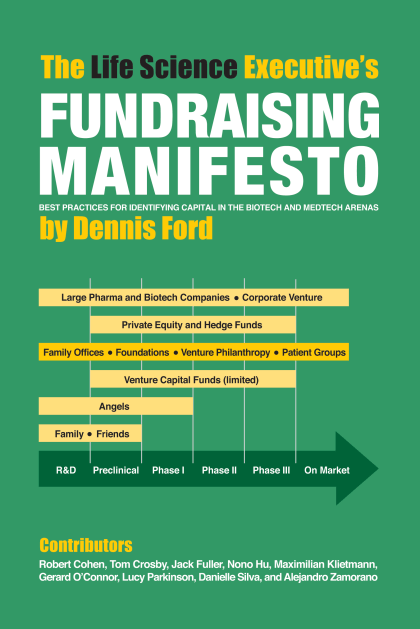
LSN Summer Reading Series Chapter 10: “Phone Canvassing”

By Nono Hu, Director of Marketing, LSN

Once you have a global target list of investors as we outlined in last week’s chapter, you will want to begin going outbound and contacting these groups. With this week’s edition of the summer reading series, we explain what goes into an effective phone canvassing campaign.

“Chapter 10: Phone Canvassing” goes through the process of reaching out to potential investors effectively via the phone. Now the idea of contacting investors, or anyone for that matter, via a cold call may sound daunting to many fundraising entrepreneurs; however, in the highly competitive marketplace for early stage investment, entrepreneurs should use this and all professional tactics available to them in order to separate from the crowd and garner more attention from potential investors.

Click here to download/print the chapter PDF

Join us next week for Chapter 11: “Email Campaigns”

Enjoyed the preview? Buy now from Amazon.com or Barnes & Noble

Bookcover-Front

Hot Investor Mandate 1: US Foundation Focuses on Diseases of the Eye

A foundation based in the US Midwest makes allocations to companies in the range of $1-$8 million and is capable of providing $10-$15m over the investments lifetime. The foundation’s goal is to support specific products or technologies to benefit patients. The foundation does not look to take an equity position in companies but they do look for an ROI to return capital to the foundation upon commercialization of the technology or change in ownership. The foundation primarily funds companies located in the United States but will consider opportunities located globally as well.

The foundation’s mission is to fund research that will provide preventions, treatments and cures for people affected by retinitis pigmentosa (RP),  usher syndrome, and the entire spectrum of inherited retinal degenerative diseases. The foundation is currently looking to fund companies in the therapeutics sector and will consider companies working in areas of small molecules, biologics, gene therapy, and regenerative medicine that target those indications. The Foundation primarily funds companies that are just preparing to enter the IND enabling stage, companies in pre-clinical through Phase II clinical trials will also be considered.

The foundation has a world class Scientific Advisory Board, and in addition to financial support, it provides significant technical and clinical guidance to the projects/companies it funds. Since the foundation often supports companies that do not have complete management teams, the the foundation provides expertise and access to many experts in the field that will help aid companies. In addition the foundation has a registry of potential patients for clinical trials and close relationships with key players in the ophthalmic pharmaceutical industry to help facilitate collaborations.

If you are interested in more information about this investor and other investors tracked by LSN, please email mandates@lifesciencenation.com

Hot Investor Mandate 2: Family Office Seeks Life Science Opportunites in the US and Europe

A private investment group founded by a wealthy family has operation in China and the US. The group is actively seeking new investments in the life sciences across the US, and it occasionally invests in companies in Europe. The group focuses on pre-clinical and clinical stage companies. The investment size will vary and typically it ranges from $2 million -$10 million. The group has no set number of allocations over the next 6-9 months.

In the life sciences, the firm is looking for new investments in the biotech therapeutics sector. The group will also consider investing in medical devices and diagnostics opportunities, however that is not their main focus area. The firm is open to both 510K and PMA medical devices. For therapeutics, the group is most interested in biologics. The group invests in a variety of therapeutic areas with a focus on oncology. The group generally invests in pre-clinical stage companies without clinical data, and it also syndicates with other investors for clinical-stage investments.

The firm invests in privately-held life science companies. The group is generally not interested in commercial-stage companies.

If you are interested in more information about this investor and other investors tracked by LSN, please email mandates@lifesciencenation.com

Hot Investor Mandate 3: Venture Firm Seeks Immunology Assets Worldwide

A US-based venture firm that builds companies around early stage technologies is investing from a $400 million fund.  The firm is seeking to invest in therapeutic assets and is open to opportunites globally.

The firm is currently interested immunology assets that aim to treat infectious diseases (viral and bacterial), with a focus on assets related to immune priming or changing the immune system. Any therapeutic modality is of interest, including vaccines. The firm is interested in reviewing immunology assets at any stage of development.

If you are interested in more information about this investor and other investors tracked by LSN, please email mandates@lifesciencenation.com

Hot Investor Mandate 4: Taiwan-based Fund Seeks US Life Science and Healthtech Deals

An early-stage venture capital firm based in Taiwan specializes in seed and early venture investments in technology-heavy sectors. The firm is currently investing from its $40 million fund that is set to close in 2016. Typical equity allocations range from $500K to $3M in seed to series A rounds. The firm generally leads a financing round but is also open to syndication. The firm is currently seeking opportunities from Taiwan and the United States.

Within life sciences, the firm considers medical devices, IVD tools, healthcare internet of things (IoT), and pharmaceuticals. Within medtech, the firm is looking for early stage projects that have significant entry barrier and can address unmet medical need. On-market products are less of interest. The firm is open to all risk levels and all disease indications. The firm is also interested in material science and agricultural biotech.

The firm is an active investor. The firm can work with incomplete teams, assist companies with regulatory strategy and product definition, and help overseas businesses find manufacturing partners in Taiwan. The firm typically takes a board seat in a portfolio company.

If you are interested in more information about this investor and other investors tracked by LSN, please email mandates@lifesciencenation.com

RESI Boston Panel Announcement: Medtech Strategic Firms Partnering for Innovation

By Lucy Parkinson, Director of Research, LSN

It’s well known that big pharma firms are often looking to partner early.  Many major medical device companies are also looking outward for innovation, and at RESI Boston, five experienced corporate investors will explain how they use early stage device investments to strategic effect.  This panel will cover how medical device entrepreneurs should approach a larger company for an investment or development partnership, and what kinds of investment these major players are currently focused on.

These five panelists will be sharing their expertise with RESI’s audience:

If you’re interested in hearing from these firms on their varied approaches to early stage innovation, you can register for RESI now.

RESI-Boston-2016_v2