Early Stage Medtech Investors Discuss Trends

By Christine A. Wu, Senior Research Analyst, LSN

chrsitine

On June 23rd, LSN gathered a panel of Early Stage Medtech Investors for RESI on MaRS in Toronto. Among a number of topics, panelists engaged in a stimulating conversation addressing common investment and geographical trends in the medtech space; the balance of management team and science in a company; and their final advice to entrepreneurs out there.

Moderated by Gordon Cheung, Partner & Chief Medical Officer of Epic Capital Management, panelists include:

Value Creation and Optimization is the New Investment Model

“The days to buy into a device just because they were sexy are largely over,” Charles Bridges (J&J) declared. Value optimization– the assessment of patient outcomes and health economics – is a recurring evaluation when considering investment in the medtech arena. For medical devices especially, there has become a significant focus on evidence generation. While it is true that a benefit of the early stage device market is a fast-track towards commercialization, “if the device is not coupled with important evidence that shows it has value compared to the standard-of-care, then we don’t think the device will have strong likelihood of success,” Bridges explained.

Garheng Kong (HealthQuest Capital) further defined value optimization: “We are happy to invest in the next Nobel Prize, but we are also happy to invest in the next ‘paper clip’ of healthcare – something out there that has been made a bit better and adds value to the healthcare system.” Nowadays, entrepreneurs need to prove their technology with better or similar outcomes at lower cost. Kong further addresses the significant value-add when the innovation removes steps from the current system. “We have found that one – people make fewer mistakes, and two – even if it’s something great and it takes 500 steps to do it, it won’t be adopted.”

Focus on Meeting Patients’ Needs

David Huizenga (TAO Life Sciences) emphasized the investment focus in technology that seeks improvement for patient quality of life. Huizenga addressed the importance of not only the therapy itself, but also the way in which patients can continue to live with a disease or episode –relearning how to walk for a stroke patient for example. This may involve a device that can bring the therapy home to the patient’s personal life. “This makes [the technology] more valuable here and around the world.”

Both Management Team and Science Matter

“You can’t have a great management team with no science and science with no management team,” Bridges stated. J&J focuses on science first, and only if the science is sound, then the next step is the management team. Though in the end, “it really is all the above,” Bridges concluded.

For earlier stage investors such as TAO Life Sciences, Huizenga explains that it can depend based on a thorough risk assessment. If the risk is execution, the management team is the determinant; if competition, the commercial property; if a scientific hurdle, the science and scientists. Ideally, of course, “be good at all of them!”

Yet while management team is a determinant, it makes it much more difficult for investors if the science and underlying technology are not quite right. “We can help the business model and management team, but we can’t actually help mother nature,” Kong pointed out, “no matter how experienced we are as investors, it’s hard to change science on a company.”

Companies should expect their investment partners to be supportive, but should also be realistic of what investors can and cannot do. “We think about the risk we are taking and risk we can mitigate ourselves,” Kong supplied, “We add it all up and apply some judgment on the risk return profile.”

Good Ideas and Geography are not Directly Correlated

“The capital flow doesn’t map onto the good idea map,” Kong described. Panelists addressed that the inefficiency in funding is reflected by where the funds are geographically held.

While this can be seen as a downside for companies outside of the science “epicenters” (i.e. San Francisco, Boston, New York), some investors have found these companies to have a competitive difference in their ability to attract capital, which ultimately can drive a difference in valuation.

Similarly, investors outside of the big epicenters have different perspectives and evaluation measurements. “While the money exists, it’s not used to seeing the types of opportunities that can be presented and the risks and how they look at it are very different,” Huizenga explained. Furthermore, investors based outside of these “epicenters” can bridge the knowledge gap companies stuck in outside regions may have.

Other epicenters are developing, as well. According to Lisa Boreanaz (OCHIS), Canada has seen less medtech companies leaving, largely due to its favorable ecosystem, tax credit, grants and contributions, and overall ability to attract foreign direct investments.

Final Advice

  1. Make your pitch credible. “You need to pitch that your team, technology, and market are all credible,” Boreanaz explained.
  2. Get a warm introduction. “Warm introductions with somebody that I vouch for or know are the best,” Huizenga stated.
  3. Think about your Subject Line. “Because of the amount in my inbox, good subject lines that actually capture my attention are actually pretty important,” Huizenga admitted.
  4. Know exactly what the investor is seeking. In terms of working with an investment bank or service provider, “the question is what the filter is. If I know you know exactly what I’m looking for and you’re calibrated to my wheelhouse, then thoughts are that’s a really good reference.” Kong explained.

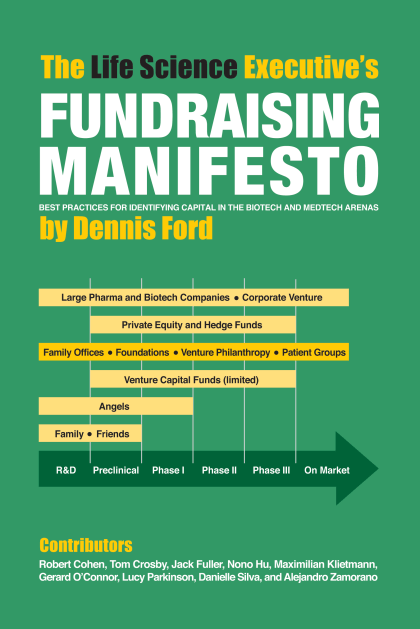
LSN Summer Reading Series Chapter 9: “Global Target List—Match Your Firm with Investors That Are a Fit”

By Nono Hu, Director of Marketing, LSN

Last week, we provided an overview of the infrastructure required to execute an outbound campaign.  This week, we take a deeper look at how to build your target list of investors.

Chapter 9: “Global Target List—Match Your Firm with Investors That Are a Fit” explains the importance of finding alignment between your life science company and an investor’s interests.  Here we outline how to use information on past financing rounds to uncover potential investors, and how to screen these leads to find active investors that may be interested in your company’s technology.  Finally, we’ll anatomize an investment mandate, and examine the factors that determine fit, including your location, the type of product you’re developing, and the stage of development your asset has reached.

Click here to download/print the PDF.

Next week, join us for Chapter 10: “Phone Canvassing.”

Enjoyed the preview? Buy now from Amazon.com or Barnes & Noble

Bookcover-Front

Hot Investor Mandate 1: Canada-Based Firm Seeks Life Science Deals Across North America

A venture capital firm based in Toronto, Ontario focuses exclusively on the life sciences industry. The firm is making seed and venture investments from its third fund, and usually seeks to be the first institutional capital in a company. Equity investments are the preferred capital structure; however convertible notes may be employed for seed investments. Initial investments may be as small as $1M (seed-stage companies) with up to $15M allocated over the life of the investment. The firm prefers to lead financing rounds of Canadian companies and co-lead investments based in the United States.

The firm is focused on investments in therapeutics, medtech and diagnostics, and is not interested in health IT or service-oriented companies within the life sciences – the firm invests in IP-centric devices and therapeutic assets. The firm is agnostic in terms of subsector and indication and invests in early pre-clinical up unto Phase III therapeutic assets with the caveat being that the capital needs of the company fall within the fund’s criteria for investment size. As for devices and diagnostics stage of development, the firm invests in products in development and in clinical settings given the aforementioned capital constraints for therapeutics. For medtech, the firm has a preference for 510(k) regulatory pathways but will also evaluate devices with a PMA pathway.

The firm has no strict criteria for management teams and will work with novice entrepreneurs, however those management teams with experience are favored. The firm looks to make about 2/3 of its investments in Canada and the rest in the United States, and typically seeks a board seat along with investment.

If you are interested in more information about this investor and other investors tracked by LSN, please email mandates@lifesciencenation.com

Hot Investor Mandate 2: Corporate VC Invests in Women’s Health, Regenerative Medicine and Life Science Tools


The strategic investment arm of a life science tools manufacturer invests from an evergreen fund, and is a multi-stage investor. Typical investments range from USD 1-5 million, but the fund may make larger trenched investments in the case of therapeutic opportunities. The firm invests in companies worldwide, and can act as either a lead investor or co-investor.

The firm has three current focus areas; women’s health, life science tools, and regenerative medicine. In women’s health, the firm is currently focused on building a cluster of technologies across the therapeutic, medical device, diagnostic and healthcare IT sectors. The firm is particularly interested in reproductive health, IVF, triple-negative breast cancer, and ovarian cancer, but will consider any opportunity in women’s health. The firm will invest in technologies at any stage of development, including very early-stage technologies. In the medtech space, the firm has a preference for 510k pathways but will look at PMA opportunities if the technology is sufficiently interesting.

The form prefers to invest in teams with a strong track record, but has also worked with first-time entrepreneurs. The firm may or may not take a board seat in a portfolio company. If a company is seeking to expand into Asia, the firm can leverage the capabilities of its parent group to help companies with global distribution and scale up.

If you are interested in more information about this investor and other investors tracked by LSN, please email mandates@lifesciencenation.com

Hot Investor Mandate 3: Global Pharma Looking For Therapeutic Assets in Cardiovascular, Metabolic Diseases, Oncology & Fibrosis

A global pharmaceutical company headquartered in Japan is looking for partnering and in-licensing opportunities across the globe.  The firm is dedicated to the creation and supply of innovative pharmaceutical products to address the diversified, unmet medical needs of patients in both mature and emerging markets.

The firm is currently looking for innovative therapeutics targeting cardiovascular-metabolic diseases including type 2 diabetes, obesity, and peripheral arterial disease, acute/chronic heart failure, stroke, and kidney disease. In the oncology space, the firm seeks biologics or molecular targets focusing on tumor cell proliferation, resistance to anti-tumor therapies, cancer immunotherapy, cancer stem cell, and cancer metabolism.

The firm also seeks new platform technologies targeting organ fibrosis and NAFLD/NASH, neurology, immunology, rare diseases, mitochondrial disease, and nucleic acid therapeutics. The following areas are currently out of focus: hypertension, thrombosis, dyslipidemia, psychiatric diseases, and immunodeficiency.

The firm partners with privately held life science companies with experienced management teams and innovative technologies in the abovementioned areas.

If you are interested in more information about this investor and other investors tracked by LSN, please email mandates@lifesciencenation.com

Hot Investor Mandate 4: Healthtech Fund Seeks Early Stage Deals in the US, Canada and Mexico

A venture capital fund based in San Antonio is actively looking to make new investments. The firm makes investments ranging from $25,000 – $500,000 generally in Seed and Series A rounds. The firm also has the ability to syndicate with its LPs for larger investments. The firm is open to leading a round but generally co-invests and strongly prefers to not be the only investor in the round. The firm is most interested in companies based nearby but will consider opportunities throughout the United States, Canada and Mexico as well.

The firm is currently interested in Healthcare IT. The firm is open to reviewing all categories within healthcare IT, but is mainly focused on B2B products, and other technologies where the end user is a medical decision maker. One of the fund’s portfolio companies is a care management system (application) that allows caregivers and patients to coordinate care.

The firm looks for experienced management teams, companies with significant traction and looks to take a board seat on a case-by-case basis. The firm looks to have a fairly hands on role post investment and looks to invest in companies where they can add strategic value outside of capital. The firm likes to see some other venture partners that have backed or are backing the company and does not get involved in rounds with only angels.

If you are interested in more information about this investor and other investors tracked by LSN, please email mandates@lifesciencenation.com

Drug Development: What Does It Cost, and Who Has The Capital?

By Caitlin Kramer, Research Analyst, LSN

caitlin-wp

Each phase of drug development offers its own unique challenges. The generation of lead compounds that may advance through the pipeline of FDA approval is a costly process, and new molecular entities that are advanced as leads through the process of FDA approval face abundant chances of failure: the likelihood of a given compound making it from Phase I through to approval is only 11.8%*.

Entrepreneurs and researchers developing drugs outside of big pharma will need to understand the costs facing an asset at every stage, and have a plan for how to efficiently structure their capital raises and outreach.

Figure 1 shows a breakdown of FDA-filing costs, estimated costs for each phase of FDA approval, and the likelihood of advancement between phases. The data portrayed in the figure come from the latest (published Feb 2016) in a series of research papers examining R&D costs in the pharmaceutical industry, authored by researchers at Tufts Center for the Study of Drug Development, the Department of Economics at Duke, and the Simon Business School at the University of Rochester. The data comes from a survey of 10 top multinational pharmaceutical firms which conducted in-house discovery and pre-clinical programs. The R&D costs incurred per approved drug in these settings were calculated to be $430 million, a figure which is likely larger than development costs incurred in academic settings. Once an IND is filed ($550,000), each subsequent phase of approval is more expensive. The estimated likelihood of advancement, or success in the phase, is lower in Phase II than other phases, making a Phase II success an important inflection point from an investment perspective.

c1
Figure 1. Estimated non-capitalized costs for new drug development and advancement between phases of FDA approval.

The LSN Investor database contains data about the phases of development that firms have expressed interest in. A breakdown of this data is shown in Figure 2. Venture capital firms have expressed the most interest in funding pre-clinical and Phase I therapeutic leads. Private equity firms, being more risk averse, express increasing interest in later phase assets. Interestingly, large pharmaceutical and hedge fund firms step in for the riskier Phase II trials while their corporate venture arms are more interested in earlier phases of development. Family offices express similar levels of interest across all phases of development.

Knowing the distribution of capital amongst the different firms can help entrepreneurs plan their raises to bring them through the various phases and hurdles of development.

Distribution of capital amongst investor types at different phases of development

c2
Figure 2. Data retrieved from LSN’s Investor Database on 27 July 2016. Representative of active mandates that are open to investment in the Therapeutics sector.