LSN Summer Reading Series Chapter 7: “Establishing a Web Presence”

By Nono Hu, Director of Marketing, LSN

If investors find interest in your slide deck and executive summary, what is the next thing they typically do? They look you up on the internet. A fundraising entrepreneur would not want to miss out on this opportunity to connect with interested investors. As a key component of your branding and messaging strategy, a good website provides a fully integrated and interactive package of information about your story, technology, team, and most recent updates. In this week’s edition of summer reading series, we will explore the issues a life science executive must consider when creating a strong web presence.

Chapter 7 of The Life Science Executive’s Fundraising Manifesto, “Establishing a Web Presence,” discusses what makes a simple and effective website, whether to do it yourself or hire a web designer, how to employ search engine optimization to drive traffic to your site, and the importance of constantly managing and updating your content.

Click here to download/print the PDF.

Over the past few weeks, we have laid the groundwork for a marketing campaign. Join us next week as we go outbound in Chapter 8, “Leveraging Cloud Infrastructure to Manage an Outbound Campaign,” where we identify useful tools for managing your outbound activities.

Enjoyed the preview? Buy now from Amazon.com or Barnes & Noble

Bookcover-Front

Hot Investor Mandate 1: Family Office Seeks Clinical-Stage Life Science Opportunities in Europe

A single family office based in Belgium makes equity investments in life science companies, typically at the Series B stage or later; the firm allocates a total of EUR 3-10 million over the life of an investment. The firm invests in Benelux and neighboring countries.

In the life science sector, the firm invests in therapeutics, diagnostics, medical devices, and healthcare services. For therapeutics companies, Korys only invests in companies with assets that have obtained data from in-human clinical trials (at minimum, human safety data is required). For medtech or diagnostic companies, the product must be no more than 1 year from commercialization. The firm invests broadly in the life science field, but has a specific interest in technologies at the intersection between the healthcare and food industries, including nutraceuticals and microbiomics.

The firm is a hands-on investor that prefers to take a board seat and work closely with management, and therefore prefers to invest in companies located within close travel distance to Brussels. The firm prefers to invest as part of a strong syndicate that includes experienced investors with whom the firm has pre-existing connections.

If you are interested in more information about this investor and other investors tracked by LSN, please email mandates@lifesciencenation.com

Hot Investor Mandate 2: Global Pharma Invests in New Solutions in Dermatology

An innovation center established by an international health care company is dedicated to advancing technologies/products/services that can improve life of people living with psoriasis and other dermatology conditions. The firm can acquire assets/companies outright or provide equity financing, but prefers to partner with companies to co-develop the technology, whether that be through one-off projects to evaluate the feasibility of the technology in a dermatology application or joint ventures. Along with capital, it also supports the company with access to patient population and a network of dermatologists and HCP’s. The firm places a strong emphasis on impacting patient’s lives. The firm will work with companies who are headquartered in, or plan to expand into, North America, Canada the United Kingdom or France.

The firm is focused on finding solutions “beyond the pill” for people living with a variety of dermatology conditions, with a particular focus on psoriasis and bridging the gap between digital and physical solutions. Current efforts are focused on psoriasis in particular, but will consider other technologies with applications in other dermatology indications. The company is not involved in traditional therapies in terms of therapeutics and/or medical devices, but rather any technology that can be used to improve the lives of psoriasis patients. These technologies could include wearables, connected devices, sensors, telemedicine, etc. that have applications in dermatology indications, preferably psoriasis. In addition, technologies in the wellness space that are relevant to patients are also a strong focus – nutrition, fitness, stress management, mental health, beauty, etc.

If you are interested in more information about this investor and other investors tracked by LSN, please email mandates@lifesciencenation.com

Hot Investor Mandate 3: VC Firm Invests New Fund for Advanced Materials in Medtech

A venture capital firm with offices in Canada and the US is making investments out of its vintage 2016, fourth fund and is exclusively focused on advanced materials.  The firm typically makes initial investments in the $1M-$5M range and up to $10M over the life of the investment (more or less may be initially invested depending on the deal). The firm prefers to lead deals but will also participate in a syndicate as a co-investor. With strategic LP relationships in Asia, Europe and the Middle East, the firm is open to companies globally and looks to make 3-4 new investments per year.

The firm’s primary investment thesis is technology driven, breakthrough IP. Within healthcare, the firm is interested in medical devices and diagnostics whose underlying value is in the material as well as advanced materials with antibacterial properties and the like. The firm does not make investments in pharmaceuticals/therapeutics of any kind.

The firm prefers to work with experienced management teams, but is open to working with less experienced entrepreneurs or incomplete management teams given the firm can add value through corporate strategy and operational experience to help accelerate development. The firm prefers to invest in revenue-generating companies but is open to evaluating pre-revenue companies as well. The firm seeks a board seat along with investment.

If you are interested in more information about this investor and other investors tracked by LSN, please email mandates@lifesciencenation.com

Hot Investor Mandate 4: California Fund Seeks Pre-Seed – Series A Deals in Propriatary Healthcare IT Software & Medtech

A fund headquartered in San Francisco is investing from its most recent fund, which closed in late 2015 at $50 M. The firm invests in pre-seed through Series A rounds in exchange for equity. Typical allocations fall between $0.1 M-$2 M. The three main areas of interest for the firm are enterprise software, smart hardware, and data-driven healthcare. They will look at deals globally, but tend to focus on companies headquartered in North America.

The sectors of interest for the firm span medical technology, healthcare IT, suppliers and engineering, R&D services, and diagnostics. The firm invests in software and hardware with proprietary algorithmic and design principles. For example, big data, virtual reality, robotics, and machine learning are of interest. Their portfolio includes companies involved in deep learning for medical imaging, genomics platforms, large scale custom DNA synthesis, and a digital health platform consisting of software and integrated wearable hardware.

The firm seeks to work with management teams that have prior entrepreneurial experience in the market they are targeting. They are a passive investor, and do not usually seek a board seat but may if their background lends expertise to the venture.

If you are interested in more information about this investor and other investors tracked by LSN, please email mandates@lifesciencenation.com

Semiconductors and Cells: Innovation and Investment In Cell Sorting Technologies

By Caitlin Kramer, Research Analyst, LSN

caitlin-wp

Advances in computer science and engineering in recent decades mirror and enable advances in the life sciences. The trends of miniaturization, massive parallelization, and faster processing are now applicable to cell handling, and investors are therefore taking a keen interest in this rapidly developing field.

Current instruments aim to separate and enrich desired cells from complex matrices using smaller sample sizes, all while shrinking device size to handheld or benchtop scale. Many of these new technologies make use of microfluidics and/or microelectromechanical systems (MEMS) which employ microscale electric, acoustic, or magnetic fields to separate cells on the basis of character.

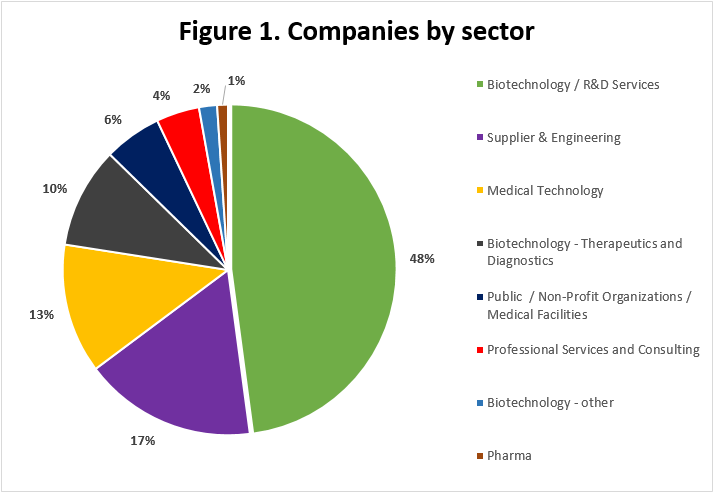
These novel cell sorting and isolation technologies have applications in R&D in CRO, pharma, and academic settings, as well as in point-of-care clinical settings. The LSN Company Database contains 285 companies with a description containing “cell separation” and “chip”. A breakdown of these companies by sector (Figure 1) shows an emphasis on development of technology for use in the R&D or industrial settings, followed by chips developed for use in medical care.

c1

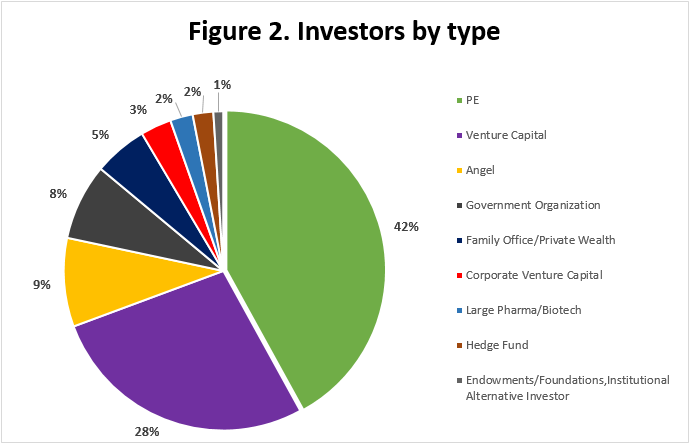
Within the LSN Investor Platform, we have identified 520 investors with a potential interest in “biochips” and “screening” for use in R&D Settings (Figure 2). Of these investors, private equity groups are the most prevalent followed by venture capitalists. The high level of interest shown by private equity groups is indicative of technologies that are becoming mature; PE groups feel comfortable and interested in providing later stage funds to companies seeking growth, expansion, and buyout. The second most prevalent investment type is venture capital, which speaks to the continuing interest in developing novel chip technologies.

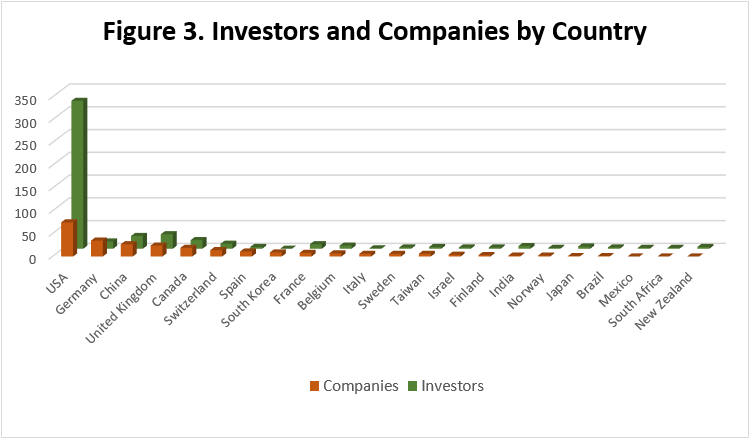
A breakdown of investors and companies by country (Figure 3) using the results of the aforementioned searches shows that the US, Germany, and China are leading in numbers of early stage companies with cell sorting chip technology. The greatest number of investors interested in these technologies are located in the US, followed by investors in the United Kingdom. However, many of these investors are looking globally for investment opportunities.  German cell sorting chip investment opportunities notably outnumber local investors, meaning Germany-headquartered companies might need to look abroad for investors.

c3

Cells isolated from their endogenous origins – bodily fluids and tissues, ground water, soil, etc, are truer representatives of nature and therefore have great advantage as research and diagnostic subjects. This growing awareness has resulted in a gradual shift away from stock strains, and is relevant to antibiotic drug discovery, microbiome research, cancer diagnosis, and personalized medicine. The cell sorting market is predicted to grow to $6.3 billion by 2020, and the space is becoming more competitive as new technologies hit the market and gain traction with researchers. LSN will be looking for future developments in this increasingly crowded landscape.

A Neurology Update: Pipelines Increasing in Parkinson’s & Neuropathies

By Lucy Parkinson, Director of Research, LSN

18 months ago, Next Phase took a look into assets under development in the neurology space. Revisiting that sector now, we see some fields moving ahead in spite of the great challenges involved in the development of neurology assets.

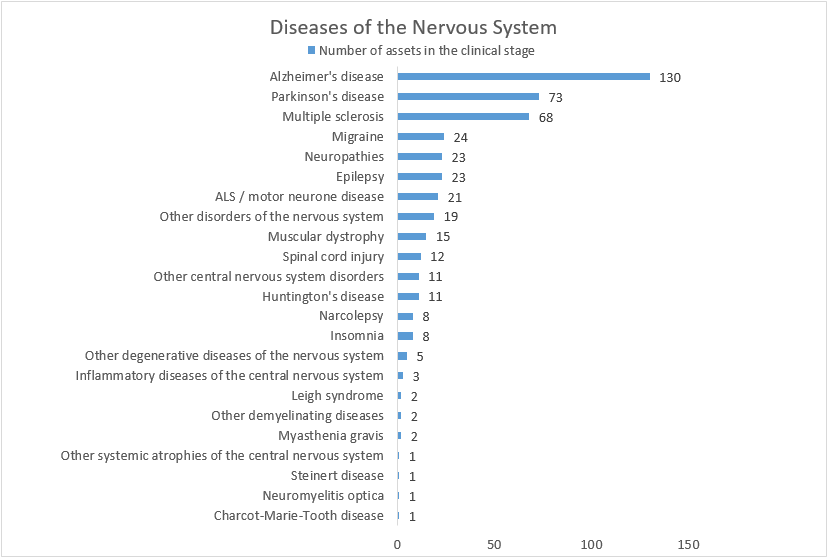
Drawing on a sample from the LSN Company Platform of assets under development worldwide, we can take a look at the top areas in both diseases of the nervous system and in mental and behavioral disorders. In diseases of the nervous system, this sample includes 647 assets, of which 464 relate to a specific clinical area, as shown in Figure 1 below:

l1

Alzheimer’s disease remains the field with the most assets under development, in spite of continuing setbacks in late-stage trials. However, among other top areas of neurology, Parkinson’s disease has undergone market pipeline growth, overtaking MS to become the second largest developmental pipeline in neurology. With large pharma companies taking increasing interest in Parkinson’s disease, we can expect significant competition in the future if these programs are successful. We also see a substantial increase in development of treatments for neuropathies. This may reflect the increasing rate of diabetes, a major population health concern that has attracted the interest of scientists and investors.

There remain many rare neurological diseases in which few cures are under development; however, there are now treatments under development for two of these rare diseases that we highlighted previously as having no potential cures within our data sample, Charcot-Marie-Tooth disease and Steinert disease. Given the strong investor interest in drugs that qualify for orphan designation, we hope to see treatments entering the clinic in the future in other rare neurological conditions.

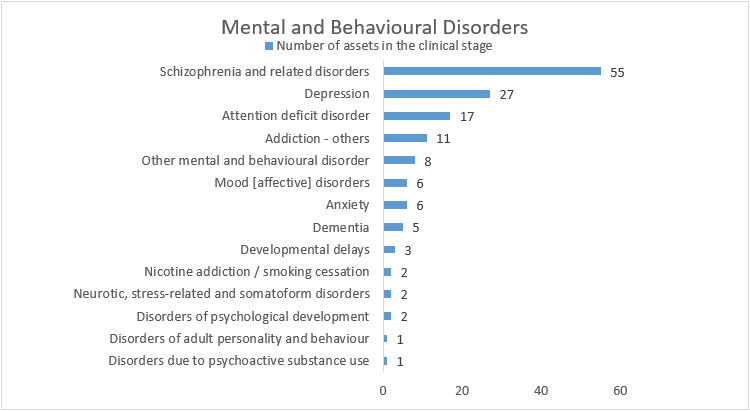
In the field of mental and behavioral disorders, the LSN Company Platform sample includes 146 drug assets. Schizophrenia and depression remain the most crowded pipeline areas; however, there are an increasing number of drugs under development to treat addictions.

l2

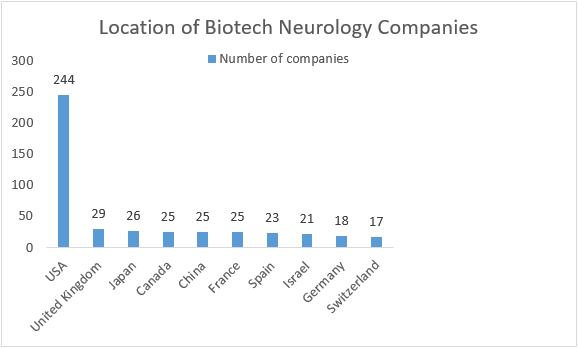
We still see new neurology therapeutics being developed by startup companies worldwide. The US remains dominant in neurology innovation, but China has seen an increase in neurology innovation. Figure 3 below shows the top 10 countries for clinical stage neurology assets.

l3

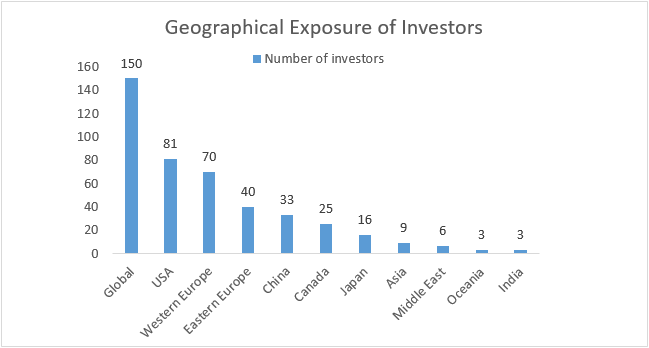
In spite of the well-known challenges in the sector, there remains significant investor appetite for neurology therapeutics, with investors chasing potential blockbusters in disorders that currently have few or no treatment options, such as Alzheimer’s disease and Parkinson’s disease. The LSN Investor Platform now includes detailed mandate information from 362 investors that are interested in clinical stage assets in neurology. 150 of these investors are looking globally for deals, and others are looking in several different regions. The below chart shows the number of investors we’ve contacted who are looking for deals in each region:

l4

Neurology remains a very active area for therapeutic development, with many severe diseases, some of them widespread, currently lacking any disease-modifying treatments. However, there are well known difficulties in bringing a product to market in neurology, including the difficulty in identifying the right patient populations for late stage trials. LSN will be tracking these assets through the pipeline, and will continue to reach out to investors who are focused on the future possibilities in neurology.