CRO Trends in 2015

By Alejandro Zamorano, VP of Business Development, LSN

Alejandro 10*10

LSN maintains regular dialogue with a broad spectrum of contract research organizations (CROs) – from top-tier full service organizations, to small niche-specialized research companies; some are customers of the LSN Company Platform, and others are friends.  Every year we talk to hundreds of business executives in the field. Based on our market insight, here are the top trends we see in 2015.

The Monetization of Data

CROs are beginning to realize the power of their clinical data after years of ignoring this information. Some established CROs are even monetizing their data set by anonymizing the data, providing incredible insight to researchers.  This should also help companies on deciding when a trial should be killed, and whether a drug is a worth pursuing when a sub-population seems to respond the treatment. In an ideal world all clinical data should be standardized for analysis, but this is a great first step.

The Death of the Undifferentiated CRO

The CRO industry has exploded over the past 5 years, and competition is fierce. By searching the LSN Company Platform, one can find profiles of 859 clinical trial providers globally. Standing out amongst the vast herd is becoming harder, and most are competing on location, speed and increasingly price. In order to stay competitive sales teams have started to target biotech companies as early as the discovery stage, in order to form a relationship before others come knocking on the door.

To differentiate themselves CROs are developing and in-licensing unique technology platforms such as unique analytics, manufacturing capabilities, animal models, and biologic expression technologies. In 2015, don’t be surprised if CROs start competing with big pharma for access to these unique technology platforms.

The Search for Patients

Finding patients is often the hardest part in putting together a clinical trial, especially if the trial is in a rare disease field. Today CROs are looking to partner with diagnostic companies to identify specific patient populations for future studies. This close collaboration between diagnostic companies and CROs will change the manner in which the industry conducts its business, and will reap huge benefit to patients looking for access new therapeutics.

Exclusive Agreements with Big Pharma

The majority of R&D expenditure is consumed by big pharma and some CROs are tired of competing with others for a slice of the pie. Thus, larger CROs that have the necessary capacity have started to offer their biggest customers massive benefits to form exclusive partnerships. These include reduced pricing, full time core employees, standardized reporting and analytics, increased transparency, and reserved excess capacity in order to provide services on short notice.  The industry is getting more competitive and exclusive structures is just one of the many ways CRO’s are adapting to this environment.

2015 will be an interesting year for CROs, as the increasing competitive nature of the industry will allow only the strongest, most adaptable companies to enjoy market growth. LSN will continue to track the key market dynamics affecting service providers going forward.


[Video] 5 Major Investors Discuss Clinical Phase I & Phase II Investing

By Nono Hu, Senior Manager, Branding & Messaging, LSN

Nono 2At the fourth Redefining Early Stage Investments (RESI) Conference, LSN put together 16 biotech and medtech investor panels, in which we are featuring five major investors actively investing in and working with therapeutic companies in phase I and phase II of clinical trials. If you have entered into clinical trials (or are preparing to), the panel can help you to understand the keys to positioning your opportunity at this stage and how best to approach investors in the initial outreach. The panelists answered a variety of questions, including: What types of things do you look for in an investment opportunity? Do you prefer companies with a platform approach or those focused on single assets? What do you think of build-to-buy partnerships with big pharma? What company profile is appropriate for venture funding? How do you manage an investment for success? What is the best way to approach you?

Moderator:

Neil Littman, Business Development Officer of the California Institute for Regenerative Medicine

Panelists:

Daniel O’Mahony, Partner, Seroba Kernel Life Sciences

Lisa Rhoads, Managing Director, Easton Capital

Mike Dybbs, Principal, New Leaf Venture Partners

Sam Hall, Principal, Apple Tree Partners

Hot Life Science Investor Mandate 1: Chinese Private Wealth Fund Seeking Global High-Growth Medical Device, Diagnostic, and Digital Health Opportunities

A venture fund formed by a group of high net-worth individuals in China is currently seeking investment opportunities globally with a focus on China and US. Projects based in Canada, Germany, and Switzerland may also be considered. The fund pays close attention to investment opportunities from seed and early stage to growth stage. For seed and early stage projects, the fund makes investments in convertible notes and equity and is flexible on investment size. For growth stage projects, the fund makes equity investments of US$1-5 million in businesses with valuation of up to US$18-20 million. The fund typically syndicates with co-investors. The fund would like to partner with local investors in case of overseas investments.

The fund focuses on high-growth fields in medical devices, diagnostics, digital health, and consumer products and is gnostic to therapeutic areas.In diagnostics, the fund is interested in portable imaging devices, high-intensity ultrasound, point-of-care diagnostics, and molecular diagnostics. In digital health, the fund is interested in technologies that can be applicable to the Chinese market, such as connected devices, telemedicine, and patient-physician platforms. In consumer products, the fund in interested in OTC, nutrition, and dietary supplements that have proven efficacy and are on market.

The fund is looking to work with serial entrepreneurs from seed and early stages to growth stage to form complete and strong teams. The fund typically cooperates with local co-investors who play a supervisory role in overseas operations.

If you are interested in more information about this investor and other investors tracked by LSN, please email mandates@lifesciencenation.com

Hot Life Science Investor Mandate 2: Venture Philanthropy Firm Seeking Seed Stage Highly Novel Life Science Opportunities

A venture philanthropy firm based in San Francisco, CA provides seed grants of $350,000 to 8-10 early stage companies per year.  Companies must reach specific milestones in order to receive instalments of the grant.  Grants are in the form of a convertible note that, if the company raises a Series A round, will convert based on the Series A valuation; however if the company fails before raising a Series A round, no debt will be due.  Additionally, when a portfolio company becomes revenue-generating or is acquired, the firm receives a 3% royalty payment capped at 3x the value of the grant.  The firm funds companies throughout the USA.

The firm invests in fundamental technological breakthroughs that intersect hard science (including life sciences) and technology.  In the case of therapeutic technologies, only novel technologies are of interest; repurposed/biosimilar assets are not of interest.  The firm is interested in platform technologies rather than companies developing a single biotech asset.  The firm works with very early-stage companies requiring capital to meet specific milestones, and therefore does not fund human clinical trials.  The firm has experience of investing in life science companies across the therapeutics, diagnostics, medical technology and biotech R&D tools sectors.

The firm funds companies that have raised less than $1 million of outside capital.  In addition to financing, the firm assists portfolio companies with business strategy, presentation, and finding strategic partners and investors.  Generally a company works with the firm for two years prior to raising a Series A round.

If you are interested in more information about this investor and other investors tracked by LSN, please email mandates@lifesciencenation.com

Hot Life Science Investor Mandate 3: Corporate Venture Capital Arm of Global Pharmaceutical Company Seeking Pre-Clinical/Phase I Therapeutic and Platform Opportunities

The corporate venture arm of global pharmaceutical company based in Japan is looking to provide equity capital to seed and venture stage companies in the life science space. The firm is looking to provide companies with as much as $5 million over the lifetime of the investment and plans on making 2-3 investments over the next year. The firm will invest in companies located anywhere around the world.

The firm is currently looking for companies developing Therapeutics and Platform Technologies. The firm is looking for companies in this sector working with small molecules, vaccines and biotherapeutics. Indications of interested include nephrology, cardiovascular, immunology, inflammation, stroke, metabolic disease and the firm is especially interested in companies working with therapies for CNS disorders and orphan indications. Ideal companies will have assets either in preclinical stages or in Phase I of clinical trials.

The firm strongly prefers that the company has a strong management team with experience in the industry. The firm is looking to allocate to companies that will eventually be able to partner long term with its parent company.

If you are interested in more information about this investor and other investors tracked by LSN, please email mandates@lifesciencenation.com

RESI 4 San Francisco: Compelling Connections Created, Dialogues Begun, the Game’s Afoot

By Dennis Ford, Founder & CEO, LSN

Dennis bookLast week, LSN moved its Redefining Early Stage Investment (RESI) Conference series from Boston to San Francisco to partake in the annual migratory life science industry gathering. I am happy to report that RESI 4 was a success.  Attendees included over 200 early stage investors, 200 early stage biotech and medtech entrepreneurs and 100 service providers participating in early stage funding panels, partnering and workshops.  Forbes made mention of RESI in their coverage of the JPM Healthcare event. 

Partnering-Forum
Partnering Forum at RESI 4

The big news is not the size of RESI, but the two compelling constituencies that attended and helped to create such a unique and dynamic event.  The first constituency consists of the 10 categories of global investors attending including angel groups, corporate venture capital, foundations, family office and private wealth funds, government organizations, hedge funds, institutional alternative investors, large pharma and medtech companies, private equity firms and venture capital funds.  The second constituency, the scientist-entrepreneurs from the biotech and medtech arena, are all actively fundraising and therefore want to be as efficient as possible with their efforts. These fundraising CEOs not only need to meet with investors that are a fit for their stage and sector, but also understand the current investor landscape and how best to navigate within it.  Take a look at the program guide and you will understand why RESI is a success and why we are garnering the attention of the industry.

RESI is the only conference that is totally dedicated to mapping out and interacting with the early stage life science investment domain. LSN started RESI because we had determined that there was a need specifically for early stage investment focus.  The life science universe is vast and most conferences do a good job at broad industry coverage but RESI wanted to be micro focused.  The glut of government funded companies with great data and the wealth of academic and pharma scientists spinning up their own firms called for a place for all to gather on a regular basis.

We hope to add a few more venues to augment the Fall Boston RESI conference and the January JPM event, so stay tuned.


Winners Announced for the RESI Innovation Challenge

By Nono Hu, Senior Manager, Branding & Messaging, LSN

Nono 2At LSN’s fourth Redefining Early Stage Investments (RESI) Conference, 31 selected medtech and biotech companies participated in a virtual investment contest: The RESI Innovation Challenge. RESI Innovators showcased cutting-edge life science technologies in poster displays throughout the exhibit hall, competing to raise the most RESI Cash.

The winners are in. Congratulations!

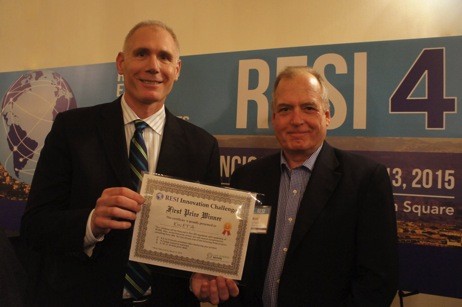
First Prize Winner: Kineta

kineta

Kineta is a nationally-recognized biotechnology company focused on developing leading edge therapeutics in three large high need therapeutic areas: autoimmune disease, viral disease and chronic pain. The company is focused on the development of novel drug candidates, each the outcome of years of scientific exploration and supported by an extensive body of peer-reviewed, NIH-supported research.

kineta 1st
Rob Hedequist, Senior Vice President, Corporate Development, Kineta
 Bill Brah, Executive Director, UMass Venture Development Center

As a first prize winner, Kineta will receive complimentary subscription to the LSN Investor Platform.


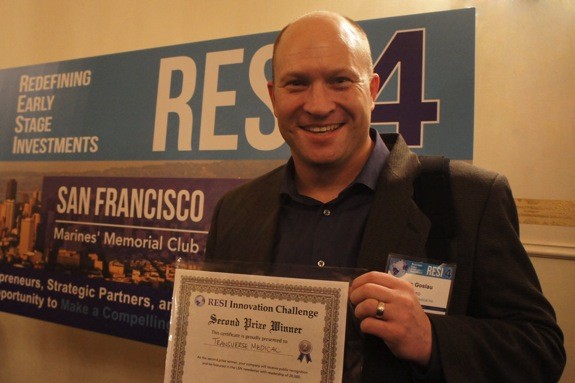
Second Prize Winner: Transverse Medical

transverse

Transverse Medical, Inc. is an early stage medical technology company in the evolving and rapidly growing area of Transcatheter Aortic Valve Replacement (TAVR). The TAVR procedure, along with other cardiovascular interventional and surgical procedures, is in need of cerebral protection options. TMI is meeting this need and the challenge of preventing neurocognitive stroke events during TAVR and other such procedures through development of the Point-Guard™ Cerebral Embolic Protection Device.

transverse 2nd
Eric Goslau, CEO, Transverse Medical

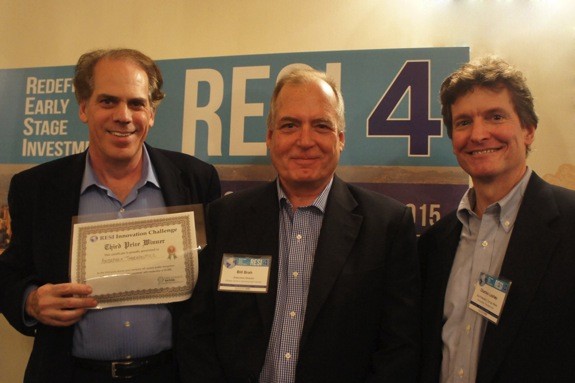
Third Prize Winner: Amorphex Therapeutics

amorpex

Amorphex Therapeutics was founded in 2010 to develop and license products for sustained ophthalmic drug delivery using the TODDD™ technology developed by Vista Scientific, LLC. The TODDD™ technology platform is an ocular insert for sustained delivery of drugs to the eye. This patented insert is based on controlled delivery polymer systems and a unique product design utilizing advanced comfort and stability features. In addition to the matrix materials that are used for controlled delivery, the TODDD™ device is also able to incorporate relatively large drug depots for the delivery of specific drugs. This affords the ability to deliver multiple drugs simultaneously. 

amorphex 3th
Robert Thompson, President & CEO, Amorphex Therapeutics
Bill Brah, Executive Director, UMass Venture Development Center
Charles Leahy, Vice President, Clinical Affairs, Amorphex Therapeutics