The healthcare conference week we all know as JPM began as a gathering for executives in the biotech, pharma and medical technology industries, but the rapidly expanding digital health industry is becoming increasingly a part of the annual San Francisco hubbub. We’ve seen that growth firsthand over the last 3 years of RESI San Francisco events. It’s a sector that investors approach from a diverse range of directions; some funds that previously focused on biotech have broadened into digital health, while traditional technology investors are getting to grips with the healthcare industry. Additionally, many large health systems or payers are looking to digital investments to strategically benefit their business. These investors each bring a unique expertise and perspective to their digital health investment mandates.
On January 9th, five experts in the space will share their strategic insights and advice with entrepreneurs at RESI San Francisco’s Healthcare IT panel. The participants are:
As the RESI San Diego event is now in the rearview mirror and we prepare to bring RESI home to Boston (Sept. 26th), we wanted to take a closer look at the Medtech Family Office panel session. Family offices are clearly a highly sought-after investor class and are not completely understood by a large portion of entrepreneurs. To that end, we’ve pulled out some of the most insightful points that were discussed and distilled the panel session into this summary video to help shed some light on how family offices evaluate early-stage investments, how to reach them and what differentiates them from VCs and other early-stage investors.
Family offices are not a silver bullet for your financing needs
A lot of entrepreneurs mistakenly believe that finding a family office will solve all their fundraising woes i.e. long-term investors with less rigid requirements. While it is true that family offices tend to be more patient capital and more flexible with terms and deal structures (a result of not having to answer to LPs), these groups are in fact looking for a return and typically will be active either at the board or management level to hit milestones and create value. Additionally, as your company grows and matures, the capital requirements and expertise required for the healthcare space oftentimes necessitate bringing in deep-pocketed institutional investors, who family offices maintain relationships with.
Family offices are purposefully low visibility
Given that family office investors have no mandate or timeline to allocate money, they can wait on the best deals and entrepreneurs to surface, therefore their deal sourcing channels are much different than a VC or another institutional investor. Further, these groups tend to be very much relationship-oriented. Networking is a must to uncover these investors and begin building a relationship, with some of the best events to attend being a part of universities and tech transfer offices as well as focused partnering conferences, such as the RESI conference.
Family offices are not homogenous
This point can’t be stressed enough. While there are some common themes among these groups (mostly dictated by structure or lack thereof), they are largely very different. Some may be more philanthropically motivated as they are looking to fund research/companies pursuing indications that have afflicted their family while others act more like an institutional fund with a focus on returns. It is essential to do as much research as possible on each specific family office to try and find mutual connections and the best way to approach them.
Moderated by Michael Quigley, VP of Investor Research, LSN, the panel includes the following speakers:
Sean Kearny, Managing Director, Three Leaf Ventures
Kyle Williams, President, Bootstrap Incubation
John Kinzell, Sr. Life Science Analyst, The McNair Group
Julia Belaya, Director – Corporate Partnerships, Plug & Play Tech Center
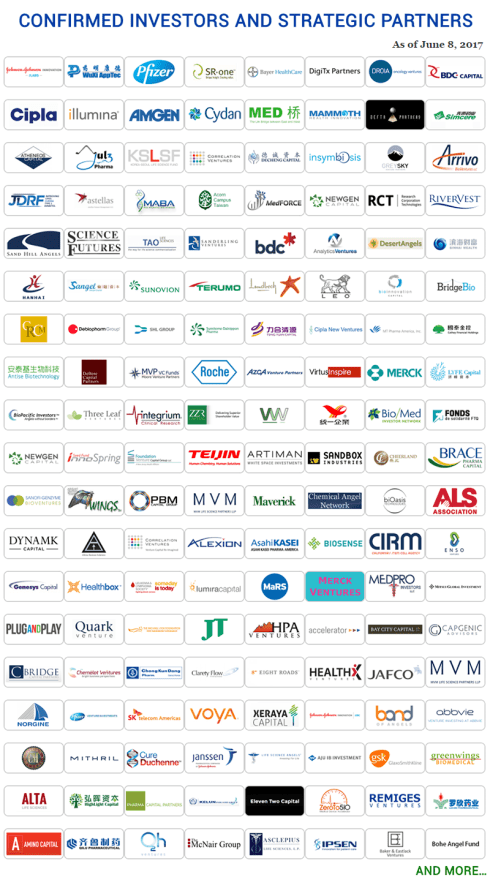
How do you get the most out of a day of networking and one-to-one meetings? It’s all about being able to connect with the right partners. At RESI, hundreds of highly innovative early stage companies in drug development, medical devices, diagnostics and healthcare IT come to meet with hundreds of early stage investors focused on those verticals. RESI gathers attendees from not just all over North America, but all over the world. The investors in attendance are very diverse, representing both traditional funding sources like venture capital firms and large pharmas, and also newer sources in early stage investment such as family offices and nonprofit foundations. Via RESI’s uniquely curated Partnering system, attendees can zero in on the most relevant potential investors and ensure that their meetings will have a strong basis in mutual fit. Want to take part?
Genomic innovation cuts across many technology verticals. The dawn of efficient and inexpensive gene sequencing enabled many breakthrough discoveries in biology by identifying genes that have a role in specific diseases. Patients can now be stratified by genetic subtypes in order to identify the most suitable treatment. Some startups aim to use sequencing to identify future health risks. Meanwhile, sequencing has created massive amounts of genetic data, which could yield many further discoveries with the right curation and analysis.
At RESI, a panel of investors with a focus on genomics will discuss what kind of breakthroughs they are looking to back, and what challenges still remain in the genomics field.
Moderated by Amanda Cashin (Head of Illumina Accelerator), the participants are:
By Dennis Ford, Founder & CEO, Life Science Nation; Creator of RESI Conference Series
Life Science Nation (LSN) and Johnson and Johnson Innovation, JLABS have launched San Diego’s first Redefining Early Stage Investments (RESI) Conference on June 19th, 2017 during the 2017 BIO week when the biotech and medtech world gathers in San Diego. RESI San Diego will bring together 400+ fundraising CEOs and 400+ early stage investors (a 1:1 ratio) from around the globe, providing the opportunity for dialogue and relationship building, with the goal of eventual capital allocations. Register for RESI now.
The medical device industry is consolidating rapidly, and many entrepreneurs find the medtech fundraising landscape challenging to navigate. However, there are a great diversity of early stage device investors out there looking for deals. This RESI panel brings together device investors from US and international VCs, a major device firm, and a private investment group to discuss how they assess medical device opportunities, and how an entrepreneur can build a productive dialogue with their firm.
Orphan diseases present a unique opportunity for a biotech investor; faster development, market exclusivity and the possibility of delivering a cure to patients with no current treatment options. However, these small markets also present unique challenges in development and strategy.
At RESI San Diego, five experienced investors who specialize in rare disease opportunities will explain their strategies in the sector. These investors will explore how they identify potential in a rare disease therapeutic, and how they turn tiny markets into significant ROI.
Moderated by Ken Kengatharan, General Partner, Atheneos Capital, panelists include:
The firm is focused on therapeutics companies and does not invest in medical devices, diagnostics, or digital health. The firm is open to considering assets of very early stages, even those as early as lead optimization phase. The firm considers various modalities, including antibodies, small molecules, and cell therapy. Currently, the firm is not interested in gene therapy. Indication-wise, the firm is most interested in oncology and autoimmune diseases but has recently looked at fibrotic diseases and certain rare diseases as well.
The firm is opportunistic across all subsectors of healthcare. Within MedTech, the firm is most interested in medical devices, artificial intelligence, robotics, and mobile health. The firm is seeking post-prototype innovations that are FDA cleared or are close to receiving clearance. Within therapeutics, the firm is interested in therapeutics for large disease markets such as oncology, neurology, and metabolic diseases. The firm is open to all modalities with a special interest in immunotherapy and cell therapy.
A strategic investment firm of a large global pharmaceutical makes investments ranging from $5 million to $30 million, acting either as a sole investor or within a syndicate. The firm is open to considering therapeutic opportunities globally, but only if the company is pursuing a market opportunity in the USA and is in dialogue with the US FDA.
The firm is currently looking for new investment opportunities in enterprise software, medical devices, and the healthcare IT space. The firm will invest in 510k devices and healthcare IT companies, and it is very opportunistic in terms of indications. In the past, the firm was active in medical device companies developing dental devices, endovascular innovation devices, and women’s health devices.
A venture capital firm founded in 2005 has multiple offices throughout Asia, New York, and San Diego. The firm has closed its fifth fund in 2017 and is currently raising a sixth fund, which the firm is targeting to be the largest fund to date. The firm continues to actively seek investment opportunities across a […]

 The healthcare conference week we all know as JPM began as a gathering for executives in the biotech, pharma and medical technology industries, but the rapidly expanding digital health industry is becoming increasingly a part of the annual San Francisco hubbub. We’ve seen that growth firsthand over the last 3 years of RESI San Francisco events. It’s a sector that investors approach from a diverse range of directions; some funds that previously focused on biotech have broadened into digital health, while traditional technology investors are getting to grips with the healthcare industry. Additionally, many large health systems or payers are looking to digital investments to strategically benefit their business. These investors each bring a unique expertise and perspective to their digital health investment mandates.








 Next Phase Newsletter