
Tag Archives: letter

Fundraising Experts in the Life Science Arena: The Emperor’s New Clothes

1 May

By Dennis Ford, CEO, LSN

Everyone is familiar with the tale of the emperor who cares only to show off his gorgeous fine attire. As the Hans Christian Anderson tale goes, he hires two tailors/swindlers who claim to make the finest clothes that are rendered invisible to anyone unfit for his/her position, or not smart enough to see the garments. Of course, being swindlers, they put on a grand spectacle, collect their fees, and leave the emperor with his invisible clothes. The emperor’s ministers know there are no clothes, but pretend to see them for fear of being deemed incompetent and the townspeople play along for fear of losing their positions. Finally, a child too young to understand the dynamic blurts out the truth. Soon enough, it is then picked up by the crowd that the “emperor has no clothes” and when the emperor hears the chorus realizes his folly but proceeds on anyways.

This little parable echoes in the back of my mind when I survey the fundraising landscape and talk with the myriad of “fundraising tailors.” Please keep in mind that in every category you have great super professional firms that can and will do what they say but on the other side of the coin you have the good the bad and the ugly. All pontificate about how money is raised, and what scientists need to do. In fact, many of them make quite a compelling pitch and value proposition, which can make it difficult for even seasoned life sciences entrepreneurs to accurately gauge how much (or how little) value these constituents really offer. Call me naïve, but what is being preached often simply doesn’t reflect reality. The emperor has no clothes!

I recently spoke with a few go-getter Scientist/CEO/Entrepreneurs that have enough experience in the space that I trust their opinions, and I asked them to identify all the players that they are utilizing (or have utilized) fund-raising efforts. Fasten your seatbelts for the cast of characters I am about to introduce you to:

The Finder & The Sourcer

This category claims the ability to source capital via special high-end personal networks. They come in two flavors – Either they have some technical expertise that allows them to vet deals, so that when they present an opportunity to someone with capital, they can claim to have gone through a first due diligence pass of sorts (The Sourcer). The other type claims connections in the “right places” through word-of-mouth, and their specialized connections can get you into introductory meetings with people who have money (The Finder). The right sources could be an investment bank, VC, family office, etc. However, they often claim that they are the only access point, and only they possess the inside knowledge required to reach these investors. Finders and Sourcers will find you at seminars/symposiums/conferences that revolve around informing or guiding entrepreneurs about how to raise funds. Either of these constituents can charge you for general services, charge for meetings, or get a piece of a deal – or a combo of all three.

The Third Party Marketer

The 3PMs, as they are referred to, come in two flavors as well – One that is a legitimate broker-dealer, meaning that they are blessed by the SEC and FINRA to represent a firm and be part of a transaction that involves the selling of securities. The other type of 3PM isn’t officially licensed but does it anyway. I do not know what the ratio is for licensed versus non-licensed 3PMs, but I would imagine it have to be around 50 to 1. The 3PM makes their money through a monthly stipend plus a success fee in the form of a cut of the money they raise.

Investor Conference Providers

These folks will typically charge you a fee to go to a preset/prequalified meeting with an alleged C-type executive or someone with a title who can do a deal. In these types of scenarios, if it sounds too good to be true, then it probably isn’t true. The word on the street is that a person from a well-known firm or institutional investor will be there, but typically not the person you would want to meet. Caveat emptor!

Investment Banks

The I-banks are typically certified broker-dealers, and do have access to life science entrepreneurs and a myriad of investors – some specializing in high net worth individuals, family offices, and institutional connections as well. The trick here is vetting and establishing a compelling relationship with the right I-bank. We’ve spoken about how to successfully do this previously, but at the most basic level, find an I-bank that is specialized and has access to the right kind of clients.

So Who is on the other side of the transaction? Here’s an overview:

The VC

We’ve discussed the unfortunate trend surrounding VC’s extensively, but in short – barring a few major players – the money is dried up and the terms can be predatory. The myth, of course is that this is the go-to source of capital after friends, family and angels.

The Institutionals

These are the foundations and endowments with a mandate to invest in life sciences. They are often indication-motivated and have the intention of moving science forward. These can make an excellent partner if you can identify the right ones due to their motivation to quickly push product to market.

Family Offices

These are wealthy families that have “gone institutional” and are making direct investments into life science companies. Typically, they are indication-motivated as well, and tend to invest with a long-term perspective. This category also includes patient groups backed by wealthy individuals and families looking to resolve specific diseases within their families. They are top notch partners, but can be tough to identify – LSN provides a database of family offices active in the space.

Mid-Stage PE & Virtual Pharma

These constituents have gotten smart, watched industry trends, and have begun to aggregate pools of assets around specific disease areas or molecule types. They are getting in early and shepherding them through clinical trials as efficiently as possible. The endgame is either spinning a portfolio into a large pharma with a dry pipeline, or using a rent-a-salesforce distribution model to bring product to market. These can be a very efficient capitalization option, but be careful – they are not idle, so don’t stand by!

The Strategics

Big pharma & corporate venture capital are the primary players here. The name of the game is scouting for assets that fit the strategic orientation of the company. This can take the form of a large pharmaceutical company looking to fill a pipeline gap, or a more non-traditional scenario such as a high tech company looking for an opportunity to enter the medical device space. They can be a great resource due to large budgets and infrastructure that can be put at your disposal.

The critical piece in the whole process is finding out how to effectively navigate the space without getting stuck in the mud or shelling out unnecessary fees for minimal value. This is where a roadmap becomes a key asset. Please remember the aforementioned parable, and be aware of what it teaches… People should have their own opinion and not depend solely on other people; the two tailors earned a lot of money without doing anything. The emperor pretends to be important but only worries about his clothes. For me, the big take away is preserve a bit of your child honesty and remember that if it sounds too good to be true, it probably isn’t.

Lastly, as I have stated before, having a current accurate roadmap is paramount. The database you choose to work with can be either the most efficient way to secure the right investor, or the ultimate waste of money. This is your roadmap to the landscape, but not all maps are created equal – far too many people are relying on outdated information that will get you nowhere. There are three critical pieces to focus on: Freshness, accuracy, and a forward-looking perspective. Freshness is critical, because the investor landscape is changing so rapidly, that data is very quickly outdated. VCs are dead or dying, government funding is shriveling up, and hardly anyone can identify the emerging opportunities for capital. Accuracy is critical, because almost no investor databases get their data from the horse’s mouth, which makes many investors identified as “fits” irrelevant. Finally, there is the issue of forward-looking perspective – this means a mandate of what investors are looking for, not a record of what they have invested in in the past. But be wary if considering a database, as they are certainly not all created equal.

By using the right database and working with the right partners, raising capital can be efficient, strategically aligned with your firm, and will make you more successful in your endeavor. However, it is critical to use the right map, and call things as they are. Too often, great ideas don’t make it to market, because no one is willing to say “the emperor has no clothes!”
CRO Offshoring Trend Migrates to R&D

1 May

By Danielle Silva, Director of Research, LSN

In the life sciences space, the idea of outsourcing R&D is certainly not novel. However, a new trend has emerged amongst companies in the biotech space over the last several years that is gaining more and more steam – companies are now not only outsourcing their R&D activities to other companies on a regional basis, but are also outsourcing these activities to on a global basis. What may come as a surprise to many, however, is that these companies are offshoring their R&D activities to CROs in these countries for reasons besides just their lower costs.

Two of the most popular locations for offshoring have been India and China – but now many companies are outsourcing to CROs based in other countries within Asia, and even to firms in Latin America and Eastern Europe. In the past, companies were mainly outsourcing activities such as data management, clinical development, and preclinical toxicology activities to CROs based in emerging markets. Now however, life sciences firms based in more developed companies are outsourcing more complicated projects to emerging markets-based CROs, such as target identification and assay development. This paradigm shift is largely due to the emergence of an educated workforce in these regions, allowing companies there to offer more value-added services.

Another major factor is that many emerging market countries offer large patient populations for indications less common in developed countries (particularly in the infectious disease space). Issues surrounding the recruitment (and retention) of clinical trial are the biggest causes of delays in clinical trials for companies based in developed countries. This makes clinical trial CRO’s based in emerging market countries compelling partners for trial management.

On the other side of the equation, many emerging markets CROs are getting wise about this trend as well, and have begun hiring western staff, and aligning themselves to western business culture. This makes it even easier for emerging biotech companies in developed countries to easily offshore projects without fear of cultural barrier.

Due to these trends, life science companies will have even more reasons to outsource and offshore their R&D activities. Emerging countries offer Western companies a larger patient population to conduct clinical trials – which will, in turn, reduce the time to bring the product to market.

Hot Life Science Investor Mandate 1: PE Provides Buyouts, Majority Recaps, Family Successions – May 2, 2013

1 May

A private equity group based in the Eastern US, which manages SBIC (small business investment company) funds, has around $200 million in total assets under management. They are currently deploying capital from their second fund, which closed in 2012. The group is interested in sourcing new firms in the life sciences space, typically making equity investments ranging from $1-10 million.

The most important criteria for potential investments for the PE group is the company’s structure. The group provides company owners capital to facilitate majority recapitalizations, majority management buyouts, as well as family successions. Accordingly, they would be especially interested in a firm where a manager is seeking to buyout the company’s owner, a business whose owner is looking to retire, or company owner who is looking for a strategic financial partner. The firm is thus most interested in management teams who are looking to retain or acquire a significant equity stake in their company.

The PE is seeking firms that have at least $1-10 million in EBITDA, and $10-100 million in revenue. The firm is most interested in the suppliers and engineering space. However, they are very opportunistic in terms of sector, and would consider companies operating within any subsector of the healthcare suppliers and engineering space.

Hot Life Science Investor Mandate 2: Eastern US-Based PE Interested in Deploying Funds to CROs, CMOs – May 2, 2013

1 May

A private equity group based in the Eastern US is currently deploying funds from the firm’s fifth fund, which closed at over $500 million. The firm is currently looking for new firms in the life sciences space, and will allocate to around 10 new firms in 2013. The firm provides growth capital to firms, and also executes buyout transactions. Typically, they invest in middle-market companies that have an enterprise value ranging from $10-100, but their preference is firms with values in the $20-80 million range.

The firm is most interested in biotech companies in the R&D services space, and is most interested in contract manufacturing organizations (CMOs), as well as contract research organizations (CROs). The PE is also seeking firms in the suppliers and engineering space and is looking for firms that are producing reagents.

Hot Life Science Investor Mandate 3: European Tech Transfer Office Eyes Several Allocations for 2013 – May 2, 2013

1 May

The technology transfer office of a university based in Europe is currently looking for new investment opportunities in the life science space. They anticipate investing in around eight companies by the end of 2013, and typically allocate between $20,000 and $20 million per firm. Because institutional shareholders back the firm, they have an evergreen structure, and thus can deploy capital as soon as a compelling opportunity is identified.

The tech transfer office is currently most interested in firms in the biotech space, specifically investing in biotech therapeutic and diagnostic firms. They have no particular preference in terms of what indication the company’s product is targeting, and will invest in firms that have products which target orphan indications.

Investing in both pre-revenue companies and companies that have positive cash flow, the tech transfer office will consider firms with products in the preclinical phase of development all the way through firms that have a product on the market. The firm has no strict criteria in terms of revenue and EBITDA for cash flow-positive companies.

Orphan R&D Shows Greater Returns over Conventional Drug Development

24 Apr

By Jack Fuller, Investor Analyst, LSN

A recent report that took a look at the current trends and future forecasts for drug development found that compared to conventional drug development, the research and development of drugs for orphan indications showed a greater overall return on investment. [1] Orphan drugs are classified as pharmaceutical products aimed at rare diseases or disorders, which in the US means a potential market of less than 200,000 patients. In 1983, the US government passed the financially incentivizing initiative, the ‘Orphan Drug Act of 1983’. Additional markets have emerged since 2000 with the adoption of similar acts in EU and Japan. Drug developers targeting orphan indications have the additional benefits of 7 years of market exclusivity from ‘same drug’ recombinant products (baring clinical superiority), a 50 % tax credit on R&D cost, special grants for phase I – III clinical trial, and user fees waived on revenues <$50 million. These incentives have allowed the development of therapeutics with a limited market financially feasible and as we will see, actually provide a stronger return on investment (ROI) than non-orphan drugs.

According to the new report, worldwide markets for orphan drugs are set to grow from $83 billion in 2012 to $127 billion in 2018 at a compound annual growth return (CAGR) of 7.4 % as compared to 3.7 % for the overall prescription drug market.  The financial incentives and expanding market make a strong case for investment in orphan indications; however, the true value to big pharma is derived from the smaller required patient size for approval. Phase III drug development costs can be cut in half or more with an average of 43 % reduced patient size. These results translate into big pharma achieving a 1.7 times greater ROI compared to non-orphan drugs.

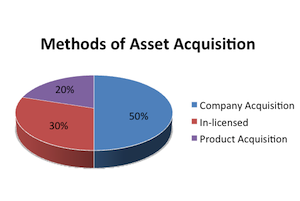
jack1So what is the end result for early stage life science investors? Companies such as Eli Lilly, Roche, and Biogen Idec are acquiring more orphan drug development companies. Of the top 10 orphan R&D products (by NPV) acquired externally, 50% have been the result of company acquisitions, 30% have been in-licensed, and 20% product acquisitions. This is good news for institutional investors looking to exit their investments and foundations looking to advance promising new therapeutics into later stage clinical trials.

Beyond the financial incentives for investors and life science companies, this push toward fostering development of previously underdeveloped diseases is benefiting patient groups who previously had scarce treatment options. Take the Cambridge, MA based Aegerion Pharmaceuticals, which is developing the orphan drug lomitapide for patients suffering from a rare form of familial hypercholesterolemia that causes cholesterol levels to soar, followed by almost certain death from heart disease by age 30. The success of the ‘Orphan Drug Act’ leads us to wonder if the poor market performance of other necessary indications will result in similar legislation and resulting financial opportunities.  Will we be seeing an ‘Antibacterial Development Initiative Act’ in the future? We’ll keep you posted.

[1] “EvaluatePharma Orphan Drug Report 2013.” EvaluatePharma, n.d. Web. 24 Apr. 2013.

Big Device Firms Focusing on Early Stage Opportunities

24 Apr

By Max Klietmann, VP of Research, LSN

It is no secret that venture capital firms are distancing themselves from early stage med-tech investments and are focusing more on later-stage opportunities. Interestingly, there is an emerging trend among the large, established players in the device space, whereby they are making strategic allocations to emerging device companies. What is especially interesting is that in certain indication areas, device companies are starting to see themselves as competitors to pharmaceutical products, meaning that we may be seeing the beginning of a new competitive landscape.

Medical devices were traditionally viewed as a distinct entity in the medical field, and not in direct competition with drug companies. However, as various major sectors in the space are converging, and the concepts of personalized medicine, companion diagnostics, and therapeutically-oriented devices are becoming mainstream, all this is changing. Take for example a major indication like cardiovascular disease – this is an area that has shown limited promise in terms of drug development over the past decade. However, devices might offer a solution for many patients that can be tailored on an individual basis. Consider the faster time to market and significantly lower risk surrounding devices, and you have a major new source of competition in the space.

Of course, the device firms recognize it, and have begun to outwit big pharma using their own strategy. Rather than develop devices in house or focus on later-stage products, many large device firms are investing in seed-stage companies or forging licensing deals early on in the R&D process to build a robust product portfolio. The implications are huge: Device companies may rapidly become the leading solution to many major indication areas, and pharma might be in even bigger trouble than anticipated. However, for the emerging biotechs and medtechs, this is excellent news – the emergence of a new industry-wide arms race means demand for product and a desire to invest capital, helping to accelerate the industry forward and bring cures to patients faster. Brace for impact!