Fundraising Requires More Than a Plan. It Requires Execution. (Part 2) 

By Max Braht, VP of Business Development, LSN

Max-Braht-Headshot

Experienced life science executives who have successfully raised capital understand something that first-time fundraisers often underestimate: a successful fundraising campaign is not built around a handful of investor introductions or a series of meetings at industry conferences. It is built around a large, qualified, continuously evolving list of investor and licensing-partner targets, supported by the disciplined execution required to keep that list working throughout the campaign.

Last week, I discussed why fundraising requires both a focused strategy and consistent execution. But there is another critical component that deserves more attention: the target list itself. It is the foundation of the entire campaign, and building, maintaining, and continually replenishing that list is one of the most demanding aspects of raising capital.

At Life Science Nation, we have found that experienced fundraising executives are often the first to recognize the value of our BD Assist program. They have been through the process before. They understand that a serious life science fundraising campaign can take 9–18 months, and that a campaign of that duration needs to begin with approximately 800–1,000 qualified investor and licensing-partner targets.

Just as importantly, they know that the original list will not remain intact. Investors respond, decline, change their investment mandates, move into diligence, or prove to be inappropriate targets. Some relationships advance while others are eliminated from consideration. Throughout this process, new qualified targets must continually enter the pipeline to replace those that have fallen away. The campaign is constantly moving, with prospects entering, advancing, and exiting at different stages.

The target list is not a static spreadsheet. It is the engine that drives the fundraising campaign.

Keeping that engine running requires much more than sending emails. It means identifying investors whose investment theses align with the company’s technology, development stage, financing requirements, and geography. It means researching investment activity, finding the appropriate contacts, developing compelling messaging, canvassing prospects, tracking responses, managing follow-up, and maintaining a steady flow of new opportunities.

Experienced executives know how difficult this is because they have done it themselves. They understand that maintaining a professional fundraising campaign often requires a dedicated full-time resource whose responsibility is to keep the target list accurate, active, and continuously replenished. They also know how tedious and time-consuming that work can become, particularly while managing the scientific, clinical, regulatory, financial, and operational responsibilities of an emerging life science company.

This is the fundamental value proposition of LSN’s BD Assist program. LSN has spent years building and maintaining a global database of investors and licensing partners, developing the market intelligence and processes required to identify appropriate targets and execute sustained fundraising campaigns. BD Assist combines that infrastructure with the daily canvassing, outreach, scheduling, tracking, and follow-up needed to keep a campaign moving forward. Rather than building this capability internally, executives can leverage LSN’s existing database, investor intelligence, and business development team to maintain the campaign engine while they concentrate on running their companies and advancing relationships with interested investors.

The value is not simply that BD Assist takes work off an executive’s desk. It provides access to an established fundraising infrastructure that would otherwise take considerable time, money, and effort to replicate.

Timing: Preparing for RESI JPM

The life sciences industry is now preparing for JPM Healthcare Week, when biotech, medtech, diagnostics, digital health, and investment professionals from around the world will gather to establish new relationships and advance existing ones. RESI JPM provides an important opportunity for early-stage companies to meet investors and licensing partners whose interests align with their development and financing objectives. But experienced fundraisers know that conferences are not standalone fundraising strategies. They are opportunities within a much larger campaign.

The companies that benefit most from RESI are those that arrive with a well-developed target list, know which investors they need to meet, have already begun their outreach, and are prepared to continue those conversations long after the conference concludes.

A meeting at RESI may initiate a relationship, advance an existing discussion, or reveal that an investor is not an appropriate fit. Each outcome provides information that helps refine the target list and determine the next step. Meanwhile, the broader fundraising campaign must continue generating new prospects, new conversations, and new opportunities.

RESI creates access. The continuously replenished target list and the execution behind it turn that access into a sustained fundraising campaign.

For executives who have raised capital before, none of this is new. They know what it takes to build a successful campaign, and they know how difficult it is to keep the engine running for 9–18 months. What LSN offers through BD Assist is the infrastructure, investor intelligence, and dedicated execution capability to help them do exactly that.

Ready to Put Your Fundraising Campaign into Motion?

If you are preparing for RESI JPM or planning a sustained fundraising campaign, LSN’s BD Assist team can help you build, maintain, and continuously canvass the global investor and licensing-partner target list that drives the process.

Because a successful fundraising campaign does not run on meetings alone. It runs on a continuously replenished pipeline of qualified targets.

Get Your LSN Labs Company Assessment Report

Fundraising Requires More Than a Plan. It Requires Execution. 

By Max Braht, VP of Business Development, LSN

Max-Braht-Headshot

For early-stage life science companies, fundraising and partnering are not one-time activities. They require an ongoing, focused effort to identify the right market, communicate a clear opportunity, build relationships, and follow through consistently.

Many companies have the science, the data, and the ambition to move forward, but do not have a dedicated business development resource to manage that work throughout the year. Leadership teams are often balancing scientific progress, regulatory planning, operations, and fundraising at the same time.

Life Science Nation’s BD Assist program was developed to provide hands-on support for companies that need help executing their fundraising and partnering campaigns.

BD Assist is the execution layer of Life Science Nation’s commercialization system. It builds on the work of understanding a company’s readiness, identifying the right investor and licensing-partner market, and creating a Global Target List that can support a focused campaign.

The result is not simply a list of contacts. It is a structured process for moving from market intelligence to outreach, follow-up, and meeting generation.

From target market to active campaign

Every BD Assist engagement begins with an understanding of the company’s goals, financing needs, technology, milestones, and partnering objectives. Life Science Nation then works with the company to refine its narrative and marketing materials so the opportunity can be communicated clearly to the market.

Using Life Science Nation’s investor and licensing-partner intelligence, the BD Assist team helps construct and prioritize a Global Target List of relevant investors and strategic partners. The target list is informed by company-specific attributes as well as investor behavior, helping companies focus their efforts on the market most relevant to their opportunity.

From there, BD Assist supports campaign strategy, personalized outreach, follow-up, and meeting generation. Outreach activity is tracked through the client’s CRM platform, allowing the company to maintain visibility into campaign progress and investor engagement.

This ongoing execution is a key part of the program. A target list has value only when it becomes a disciplined campaign that continues to build relationships and create opportunities over time.

Extending a company’s business development capacity

BD Assist is designed to become an extension of a company’s business development capability.

Rather than providing recommendations for a company to carry out on its own, Life Science Nation helps manage the campaign workflow. This allows company leadership to stay focused on advancing the science, reaching development milestones, and preparing for productive investor and partner conversations.

The program also includes regular strategy discussions and campaign refinement as the company receives feedback from the market. As priorities evolve, BD Assist can help ensure that outreach remains aligned with the company’s current fundraising or partnering objectives.

For companies participating in RESI, BD Assist can also support their partnering activity and help them make the most of the investor and licensing-partner marketplace.

Part of a broader commercialization process

BD Assist is one part of a connected Life Science Nation commercialization system.

The Assessment Engine helps companies understand their evidence, risks, milestones, capital readiness, and investability. LSN Labs helps companies address gaps and prepare for the market. The Investor and Licensing Partner Database provides market intelligence. The Global Target List helps companies identify and prioritize their target market. BD Assist helps execute the campaign. RESI creates opportunities to meet the global investor and licensing-partner community.

For companies seeking investment, licensing opportunities, or strategic collaborations, this creates a more connected path from preparation to market engagement.

Fundraising is not only about finding names. It is about executing a consistent process that helps the right companies connect with the right market at the right time.

To learn more about BD Assist and discuss whether it is a fit for your company, complete the LSN Labs Company Assessment Report.

Apply for LSN Labs Company Assessment Report

Secure Your Dedicated Session and Meeting Space at RESI JPM 2027 

By Max Braht, VP of Business Development, LSN

Max-Braht-Headshot

Every January, J.P. Morgan Healthcare Week transforms San Francisco into the global epicenter of life sciences, bringing together top-tier investors, corporate pharma scouts, and biotech innovators. For organizations seeking a visible, accessible base during the busiest week of the year, RESI JPM 2027 offers prime physical space inside the San Francisco Marriott Marquis.

Life Science Nation (LSN) is opening dedicated session and meeting spaces for booking across Monday, January 11 and Tuesday, January 12, 2027. Spaces can be reserved with flexible scheduling options: available by the hour, half-day, or full-day to accommodate presentations, private investor pitches, workshops, or ecosystem receptions. Additionally, hosting organizations receive official RESI JPM Sponsor status, featuring prominent brand exposure across RESI marketing and promotional channels.

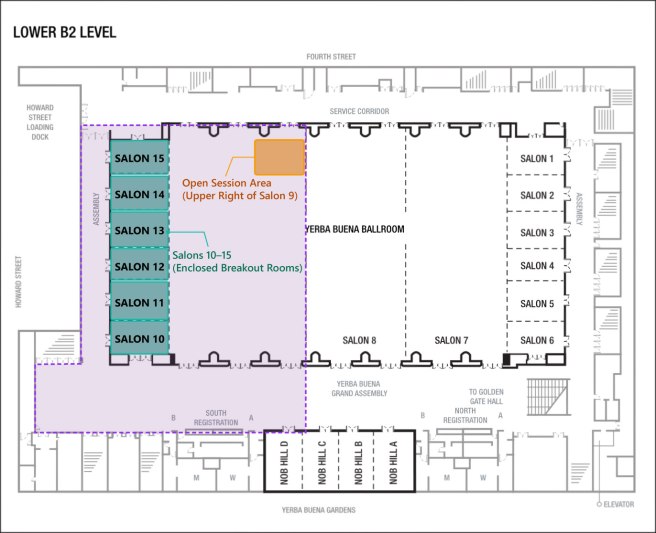
Available Spaces and Layouts: Yerba Buena Ballroom (Lower B2 Level)

Located within LSN’s 17,000+ sq. ft. conference footprint across Salons 9–15:

Private Breakout Salons (Salons 10–15):

  • Size and Capacity: ~800 sq. ft. per room, seating up to 70 attendees.
  • Configuration: Fully enclosed private salons ideal for proprietary pitch sessions, closed-door investor roadshows, regional delegation showcases, or a private executive lounge.

Open Session Stage (Salon 9):

  • Size and Capacity: Open ballroom setting accommodating ~60 attendees.
  • Configuration: Positioned directly alongside the high-traffic partnering floor, maximizing foot traffic and casual walk-ins for open panel discussions and cohort spotlights.

Flexible Booking Windows (January 11–12, 2027)

Spaces are available throughout both in-person conference days:

  • Hourly Rentals: For focused company presentations, quick investor roundtables, or press briefings.
  • Half-Day Blocks (Morning / Afternoon): For structured cohort pitch sessions, seminars, or partner workshops.
  • Full-Day / Multi-Day Buyouts: To establish a dedicated branded headquarters and continuous meeting base right inside JPM week.

Immediate Next Steps

Contact LSN: Reach out directly to salescore@lifesciencenation.com to review specific floor plans, pricing tiers, and associated sponsor marketing packages.

The 2027 RESI Conference Lineup: Global Capital, Strategic Partnerships, and Life Science Innovation

By Max Braht, VP of Business Development, LSN

Max-Braht-Headshot

The 2027 RESI Conference Lineup: Global Capital, Strategic Partnerships, and Life Science Innovation

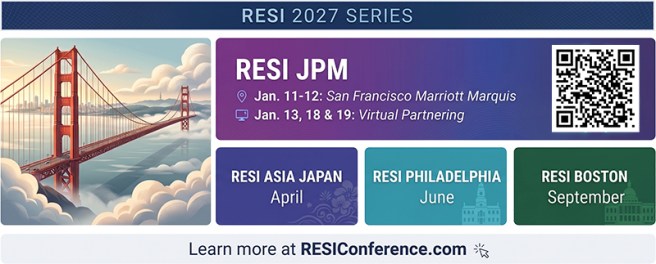
Life Science Nation’s 2027 RESI conference calendar will connect early-stage life science companies with global investors, pharma partners, and industry leaders across four major life science hubs: San Francisco, Tokyo, Philadelphia, and Boston.

The year begins during JPM week and continues through Asia, BIO International Convention week in Philadelphia, and Boston’s biotech week in September. Each event is designed to help emerging companies build the investor relationships and strategic partnerships needed to move their companies forward.

RESI JPM 2027: January 11–12

San Francisco Marriott Marquis, San Francisco

Registration is now open for RESI JPM 2027.

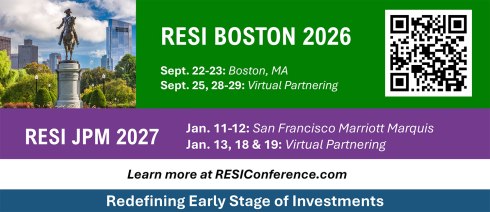
Held concurrently with JPM Healthcare Week, RESI JPM brings early-stage companies into San Francisco during one of the world’s largest annual gatherings for healthcare investment and business development. The two-day in-person conference will be followed by virtual partnering on January 13, 18, and 19.

Previous RESI JPM conferences have drawn more than 1,000 attendees, including over 600 early-stage life science investors, innovators, and industry experts. For companies raising capital, pursuing strategic partnerships, or preparing for a major financing milestone, RESI offers a focused setting to make the most of the week.

RESI Asia Japan 2027: April 13

ANA InterContinental, Tokyo

RESI Asia Japan launches in collaboration with the Kobe Biomedical Innovation Cluster (KBIC), Japan’s largest biomedical cluster.

Japan represents one of the life science industry’s most valuable and least accessible markets. Its leading pharmaceutical companies are active licensors and acquirers of external innovation, while the country offers deep clinical development capabilities and a progressive regulatory pathway for regenerative medicine, cell therapy, and gene therapy.

RESI Asia Japan will create a direct bridge between Japan’s world-class science ecosystem and global capital and partnering networks. The event is part of a broader collaboration between Life Science Nation and KBIC focused on strengthening commercialization pathways, entrepreneur education, capital formation, and international business development for Japanese life science companies.

RESI Philadelphia 2027: June 7

Convene, Philadelphia

RESI Philadelphia will take place during BIO International Convention week, complementing the broader industry activity in the city with a dedicated forum for early-stage companies and active investors.

Philadelphia is a leading center for cell and gene therapy, biopharma, medical innovation, and academic research. RESI provides companies and investors attending BIO week with a targeted environment for investor partnering, live pitch opportunities, and conversations that can turn promising science into fundable, strategic opportunities.

Virtual partnering dates will be announced soon.

RESI Boston 2027: September 22

Westin Copley Place, Boston

RESI returns to Boston during biotech week, bringing the global early-stage life science investment community together in one of the world’s most important innovation hubs.

Boston’s unmatched concentration of founders, investors, academic institutions, biotech companies, and strategic partners makes it an essential stop on the RESI calendar. The in-person event will offer targeted partnering, investor panels, educational programming, and the Innovator’s Pitch Challenge for companies seeking to raise visibility and advance fundraising conversations.

Virtual partnering dates will be announced soon.

A Global RESI Run

The 2027 lineup offers companies multiple opportunities throughout the year to engage the Life Science Nation network, deepen relationships with investors and strategic partners, and access new regional markets.

  • RESI JPM: January 11–12, San Francisco
  • RESI Asia Japan: April 13, Tokyo
  • RESI Philadelphia: June 7, Philadelphia
  • RESI Boston: September 22, Boston

Registration is now open for RESI JPM 2027. Register by October 2 to save $900 with Super Early Bird pricing. Learn more at resiconference.com.

Register for RESI JPM 2027

RESI Boston 2026 Innovator’s Pitch Challenge Finalists 

By Max Braht, VP of Business Development, LSN

Max-Braht-Headshot

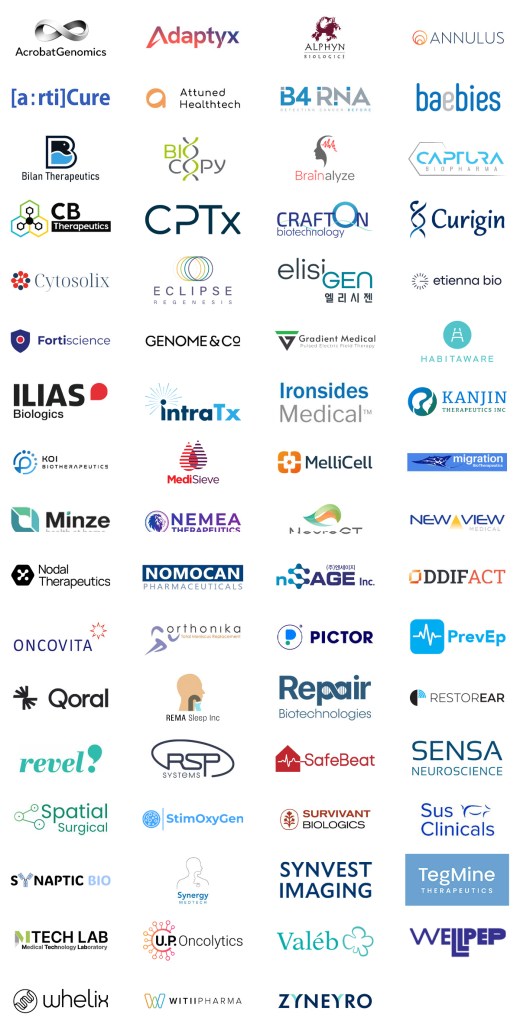
The Innovator’s Pitch Challenge (IPC) showcases early-stage companies developing breakthrough technologies across key sectors of life science and returns to RESI Boston with more than 65 innovative companies selected to pitch across 20 sessions over two days, September 22–23, 2026.

Each finalist will present to panels of active life science investors and industry leaders in sector-focused sessions spanning biotech, medtech, diagnostics, digital health, and more. The program gives fundraising companies the opportunity to share their technologies, receive practical feedback, and connect directly with investors and strategic partners seeking new opportunities.

For attendees, IPC is a chance to discover emerging companies and hear directly from the founders behind them. Finalists will also be available throughout the event exhibiting, networking, and attendees participating in partnering can schedule one-on-one meetings to continue the conversation.

Join Life Science Nation at RESI Boston during Biotech Week for two full days of company pitches, investor insights, and targeted partnering.

Register for RESI Boston 2026

Meet the RESI Boston Innovator’s Pitch Challenge Finalists:


Use RESI Innovation Challenge As Part of Your Global Marketing Plan

By Dennis Ford, Founder & CEO, Life Science Nation; Creator of RESI Conference Series

Market Your Life Science Startup to Investors

life science nation marketing

A fundraising campaign starts with presenting yourself and your technology to potential channel partners and investors who are a fit for your product and stage of development. As part of the Redefining Early Stage Investments (RESI) Conference, attendees can apply to the RESI Innovation Challenge which, if you are selected to participate, can greatly increase exposure for your company before, during and after the day of the conference. The partners and investors who frequent RESI know that the companies selected, routinely showcase compelling technology. Attending RESI and participating in the RESI Innovation Challenge are only one part of fundraising for CEOs and scientist-entrepreneurs. Here is Life Science Nation’s step-by-step process for a successful fundraising campaign and how and why RESI plays an important role.


Step 1: You need a list of investors and contacts

To raise capital, an early-stage CEO needs to create a Global Target List of potential investors. There are around 400-500 relevant global early-stage investors on a typical Global Target List, spanning 10 categories of investors in early-stage Biotech, Medtech, Diagnostics, and Digital Health. This list should be sourced from a curated platform to ensure the most up-to-date information. With a vetted list of qualified investors who are a fit, the fundraising executive can be more efficient in their outreach. This will lead to a higher response rate from your phone and email campaigns and thus result in a higher number of meetings booked to initiate dialogue with your partnering targets.

Step 2: Hire the right people

A fundraising campaign is something your company can execute internally with the right staff: phoning and emailing investors, setting up meetings, and organizing the campaign follow-up takes an enthusiastic personality. While many CEOs might be tempted to look for an outside service provider to manage the fundraising campaign, my recommendation is to do it internally. Personal outreach and clear messaging are equally important when reaching out to potential investors. At the end of the day, fundraising is a numbers game and having the right staff canvassing your Global Target List and initiating dialogue causes relationships to take root. However, initiating the conversation is never enough – the follow-ups, second and third meetings are when you’re generating real interest. This requires dedicated effort to ensure proper follow-through.

Step 3: Join opportunities to network

Face-to-face meetings are best for promoting relationships – that’s why we’ve created the RESI Conference. If you come to our next RESI, you may find 20-30% of your targeted investment firms are attending to find the earliest and hottest innovators within the healthcare industry. We offer one-on-one partnering all day for all global attendees at our Partnering Forum. By taking full advantage of our Partnering Platform, you have the opportunity to schedule one-on-one meetings with up to 16 of these investors, supplemented by ad hoc meetings, especially if you are a participant in the RESI Innovation Challenge.


the life science executive's fundraising manifesto by dennis ford

Want to learn more about fundraising?

If you read my free book The Life Science Executive’s Fundraising Manifesto, you will see that I am a big proponent of getting a complete Global Target List and then working the whole list. Establish a dialogue, go to RESI or other events and meet them–you must network. Follow up regularly by emailing all the targets with news on your company and how it is reaching milestones and getting compelling data: investor updates are key to your success and their vested interest in your company.

If you market to this list in an adroit and cogent way you will get on the investors’ radar screen. It’s a numbers game, and when you market to your Global Target List consistently you never know who will surface and what opportunities may arise. If you are just sending out material to investors who are attending an event, why not send out to all who are a potential fit for you? It only takes one interested investor to move a deal along.

It’s hard for fundraising CEOs to avoid cutting corners to save a few thousand dollars on campaign costs, but this can lead to a lot of missed opportunities. Putting your company out there as much as possible by investing in a high-quality marketing package and web presence, hiring staff who can conduct a campaign, and traveling to major investment events will maximize your odds of getting funded.

In addition, being selected as a participant in the RESI innovation Challenge has a compelling track record of helping companies get funded. The deadline to sign up for the RESI Innovation Challenge is soon! Click here to sign up.

Additional resources LSN has created for fundraising CEOs:

[Article] When Raising Capital, CEOs Should Understand the LSN Value Proposition

[Video] “The 10 Myths of Fundraising” Presentation at Freemind Group’s Non-Dilutive Funding Summit

[Article] Life Science Nation Ecosystem – A Matching Platform for Buyers and Sellers

[Book Chapter] LSN Summer Reading Series Chapter 9: “Global Target List—Match Your Firm with Investors That Are a Fit”

[Article] 10 Steps to a Life Science Fundraising Campaign

Partnering: Transitioning Conferences from Information-Centric to Relationship-Centric

By Dennis Ford, Founder & CEO, Life Science Nation; Creator of RESI Conference Series

Life Science Nation’s Redefining Early Stage Investments (RESI) conference is a partnering event that requires high touch on both the buy side (investors and pharma) and sell side (startup) constituents. To do partnering correctly takes a high human resource allocation; it is expensive to fund, and requires deep curation of a clientele database for each conference iteration. LSN has discovered that our database curation begets savvy list management, which in turn allows us to target constituents and provide them with customer support and training to use the partnering system efficiently. In today’s life science domain, conferences still lead as a place to make new business connections in addition to accessing the latest information on the advances in drugs, devices, diagnostics, and healthcare IT.

Informational-based life science conferences have worked for decades to successfully “break the profitability code”. Breaking the code means finding the precise point between internal resource output and maximum revenue gain, and balancing on it. The irony here is that if the conferences wish to be part of the industry’s new trend of relationship-based conferences with a strong partnering component, they will have to modify their view on resource allocation for partnering at their events. This may seem like a small issue that simply requires dedicating more resources to partnering, which causes a hit to the bottom line. However, it is actually a huge core issue that exposes an inherent dichotomy that must be traversed, or we will see a upheaval in the traditional conference market.

A lot of the information-based, super technical, scientific conferences that cater to academia and very early stage discoveries have found themselves in the crosshairs of big pharma and other large partners who are moving upstream to find technology that isn’t already identified and partnered up. This is another reason why these early stage scientific conferences are now in need of a partnering component, which will require higher capital spend and higher human resources to implement. This epiphany will go against the basic grain of the business philosophy of most of the conference providers. I will posit that if they don’t get partnering right, they will become vulnerable as there is a distinct and growing need from both buyers and sellers to build business connections at these conferences. The question is, can the conference providers change the lens on how they value their conferences?

The conference folks I talk to seem unconvinced that you really need a partnering effort that goes beyond a basic software application and a dedicated space at their venues. Indeed, it seems as if they are still trying to talk themselves into supporting partnering at all! Is this a fatal flaw?

Based on the 5 years of experience that I have garnered in the partnering conference marketplace, I will provide some of my insights. Great partnering is very hard to get right, it’s resource intensive and it is “high touch”. You do successful partnering by creating a consistent dialogue with your constituents. This entails focused marketing via newsletters promos, emails and phone canvassing. You need dedicated staff who reach out (yes, talk with!) and understand both the buy-side and sell-side needs of the clients. The staff’s job is to talk to the clients and understand their needs and keep a record of what the client needs, what technology they are interested in and who they are seeking to meet. If you initiate this compelling dialogue, it soon turns into a relationship, and having a direct relationship with your clients is the holy grail.

I also question whether the conference providers want great partnering or “me too” partnering? LSN’s style of interactive dialogue and relationship building through business development is very different than that of info-based conference organizations. LSN’s thesis is that we are NOT a conference company; we are a buyer seller matching platform with a conference, and that’s what gives RESI’s partnering platform its incredible power to forge new connections.