By Dennis Ford, Founder & CEO, Life Science Nation; Creator of RESI Conference Series

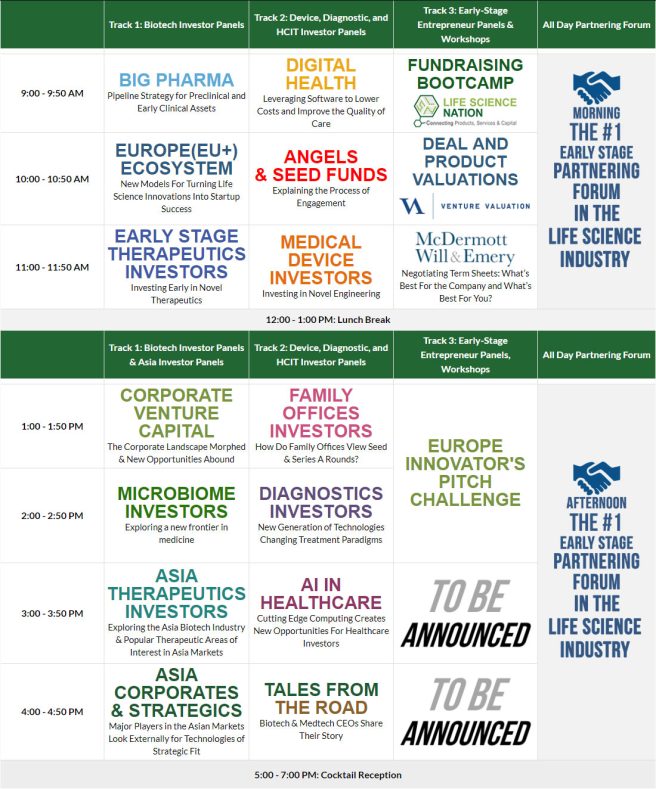
Life Science Nation (LSN) is bringing the Redefining Early Stage Investments (RESI) Conference series to Vienna on March 25th. In an effort to spread the word about RESI coming to Europe, myself, Greg Mannix (VP International BD, LSN) and Patrik Frei, (CEO, Venture Valuation (VV)) are heading out to give one-day boot camps on global fundraising, company valuation and licensing deal metrics. Click here for agenda.
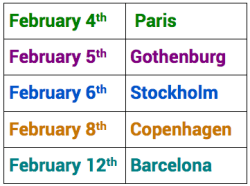
The road trip will be quite the adventure. Starting tomorrow, I arrive in London for a round of discussion with some tech hub players, then off to Paris to do a workshop at Medicene, then on to Gothenburg and the AstraZeneca BioventureHub, then up to Stockholm with Sweden Bio at the H2 Health Hub, then on to the Novo Nordisk BioInnovation Institute in Copenhagen and finishing in Spain at the University of Barcelona Science Park. The LSN Fundraising Boot Camp is a vehicle to help startups and potential RESI attendees sharpen up their partner pitches, improve their marketing packages and help them address the all-important topics of valuation and licensing strategy, in addition to informing entrepreneurs about the ten categories of global investors that will be attending RESI. RESI is expected to bring 200-300 early-stage investors to gather in Vienna, including VC, PE, Big Pharma, Foundations, Angels, as well as featuring the Global Family Office BioForum led by Stetson Family Office.
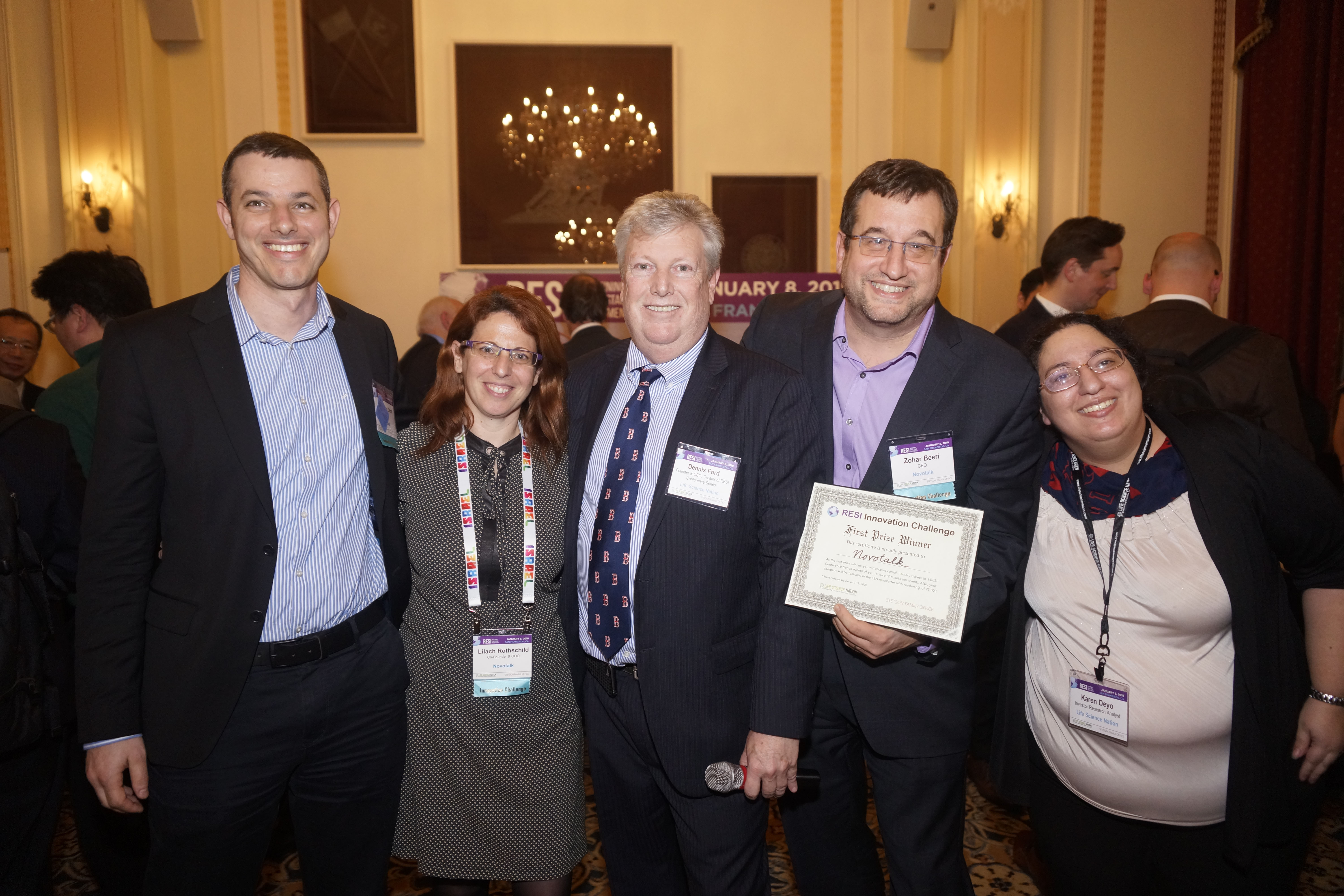
LSN wanted to take the time to “hit the road” and educate startups on how to produce a compelling message and marketing package, how to approach licensing deals, and to help them know how to answer all of the tough questions investors will ask about their technology and their valuation, in order to help them raise capital. LSN and VV have proven methodologies, which many companies have used to successfully raise early-stage capital; the LSN Fundraising Boot Camp events provide an introduction to these methodologies, and attending startups also receive a discount to RESI registration. RESI’s body of investor attendees have a global outlook on finding new technologies, and at our most recent event in San Francisco, all of the RESI Innovation Challenge winners were international startups (including MedTrace from Denmark, plus Novotalk from Israel and Heroic-Faith Medical Science from Taiwan).
LSN’s goal is to help early-stage companies connect with the most relevant early-stage investors and try and move the needle in life science. RESI caters to both the earliest stage companies that seek seed, grants and angel capital in the range of EUR 25K to 2mm, and also to early stage seeking series A and B round funding of 2-10mm. RESI is unique because the event gathers startups and early-stage investors from across all the main life science technology silos – drugs, devices, diagnostics and digital health. With an audience of global investors, RESI can boost your fundraising campaign from regional to global, and an LSN Fundraising Boot Camp will teach you how to get the most out of those investor connections.
Presenters:
Dennis Ford, Founder & CEO, Life Science Nation; Creator of RESI Conference Series
Dennis Ford is an entrepreneur and author with expertise in sales, marketing, and business development. He has spent most of his career finding, vetting and launching a myriad of technology-based companies. Over the last decade, he has worked extensively with global alternative investors and is deeply interested in getting funding for high-growth early-stage technologies. He is a big proponent of using profiling and matching technology to find that all-important business fit in the marketing and selling process. In today’s context Dennis can connect early stage life science companies with 10 categories of global partners thus making the finding of capital and distribution channels very efficient.
Dennis created the Redefining Early Stage Investments conference series to facilitate an interactive ongoing dialog between buyers and sellers in the life science arena. Before LSN, Dennis was the President and CEO of a company that improved the way hedge fund and private equity fund managers raised capital and marketed their funds to investors. Ford is the author of The Peddler’s Prerogative and The Life Science Executive’s Fundraising Manifesto, two well-received sales and marketing books.
Greg Mannix, VP of International Business Development, Life Science Nation
 Greg Mannix is Vice President of International Business Development at Life Science Nation. After graduating from the University of California, he moved to Europe where he began a career in the life sciences and obtained a Master’s degree from IE Business School in Madrid. He has extensive experience in sales and marketing management in the medical devices field. He has worked extensively in Europe, North America and Latin America and he speaks English, Spanish and French. Greg’s role at LSN is to provide international early-stage companies with the tools and strategies to succesfully fundraise and to facilitate cross-boarder investments, licensing and M&A transactions.
Patrik Frei, Founder & CEO, Venture Valuation
 Dr. Patrik Frei is founder and CEO of Venture Valuation AG, Switzerland. He started the company in 1999 when he noticed a need for independent valuation services during a collaboration with Novartis Venture Fund, which became his first client. Since then he has been involved in over 400 valuations. Venture Valuation also runs Biotechgate. Patrik graduated from the Business University of St. Gallen and completed his Ph.D at the Swiss Federal Institute of Technology, EPFL Lausanne. Patrik was a board member and a founder of Ineo. He is also the Chairman of Ophthalmopharma, where he out-licensed a portfolio of 4 products. Furthermore, Patrik is a board member of Kleinkraftwerk Birseck AG. Patrik’s articles have been published in a number of scientific journals and business publications. Patrik is a reviewer for the Nature journals. Patrik also headed the Venture Valuation APAC office in Singapore.
About Life Science Nation
Life Science Nation (LSN) accelerates fundraising using its matching platform to create highly compatible relationships between early stage scientists/entrepreneurs and emerging technology investors. LSN researches and curates market intelligence on two industry sectors: The first is emerging biotech and medtech companies, which by their ephemeral nature are challenging to find and track. Second, LSN tracks ten categories of early stage life science investors and identifies who is filling the void left by venture capital. LSN owns and operates the Redefining Early Stage Investments (RESI) conference series, which brings together global early stage biotech and medtech companies with early stage investors. Learn more at www.lifesciencenation.com
About Venture Valuation
Venture Valuation specializes in independent assessments and valuations of companies in high-growth markets, such as biotechnology, life sciences and medical technology. Venture Valuation offers independent company valuations for fund raising as well as product valuations for licensing deals. Learn more at www.venturevaluation.com



 Tony Chang, PhD, MBA, is an Investment Associate with the New Businesses team at M Ventures. In this role, Tony is focusing on the early stage venture deals in health-tech and digital health, with a particular attention on digital therapeutics deals. Tony has developed substantial experience in assessing digital health deals for both in-clinic and out-of-clinic applications. Prior to M Ventures, Tony was a technology commercialization officer at the University of Western Cape in South Africa where he was responsible for the development of several industry research collaboration and licensing deals. Previously, Tony was a consultant at the strategy practice of EY in Johannesburg.
 Diana Saraceni is an investor with long experience in Venture Capital. She is currently Co-Founder & General Partner at Panakes Partners (
 Chris de Souza, PhD, MBA, is a Director at Broadview Ventures. He started his career at Novartis as a scientist in the Metabolic and Cardiovascular Diseases group and then as Director of Strategic Alliances. After Novartis, Christopher was Vice President of Business Development at SkyePharma US Inc. He then founded a business development consulting practice with clients including JSB-Partners, Diagnostics For All and Metaome. Christopher has a Masters in zoology from the University of Bombay, PhD in physiology from Louisiana State University and MBA from Rutgers University along with post-doctoral training at The Upjohn Company and Joslin Diabetes Center/Harvard Medical School. Christopher currently serves on multiple Broadview Ventures portfolio company boards, the board of MassBio and several grant review committees.
 Natalia Novac –
  After receiving a degree in Nuclear Engineering from the University of Massachusetts at Lowell, Tom studied Medical Physics at the Harvard/MIT Health Sciences and Technology joint program graduating with a Masters degree in 1982. During his academic career he worked at Los Alamos, the Swiss Institute for Nuclear Research (now the Paul Scherer Institute), Brookhaven National Laboratory, and the Massachusetts General Hospital as a research associate in radiation biophysics. Tom then joined Siemens Medical Systems where, after 9 years, he became the first non-German CEO of a German factory and business unit. He left Siemens after 15 years to become CEO of the global medical operations of Carl Zeiss. Completing a successful turnaround, he joined Analogic Corporation as CEO. After three years and a doubling of the stock price, Tom left to become CEO of LightLab Imaging, a start-up that he helped to establish. Completing a profitable sale of LightLab, Tom re-joined Siemens eventually serving as a member of the operating board of Siemens Healthcare and the CEO of Customer Solutions Division, responsible for 26,000 employees in over 130 countries. Tom co-founded GreyBird in mid-2013 with an investment focus on technologies enabling precision medicine diagnosis.