Category: Redefining Every Stage Investments (RESI)
The Redefining Every Stage Investments (RESI) Conference is an ongoing conference series that provides an international venue for life science companies across Biotech, Medtech, Diagnostics and Healthcare IT and to source investors from around the globe, create relationships, and eventually, secure funding.
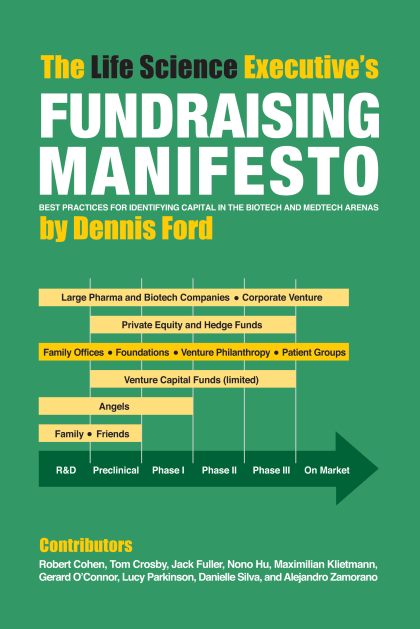
This week, the LSN Summer Reading Series covers one of the most powerful tools in your fundraising arsenal: the outreach email.
From basics like mail merging and segmenting your list to sophisticated tools such as delivery scheduling and analytical tracking, this chapter covers how to use email to introduce your company to an audience of potential investors. This chapter also explains the importance of targeting the right contacts when you send an email and of including clickable links in order to uncover which recipients are engaging with your message.
We hope you find this chapter useful in moving your fundraising campaign for us. Next week, join us to read “Chapter 12: Anatomy of an Allocation Process.”
Boston is often called the center of the global biotechnology industry, and it’s therefore no surprise that investors are flocking to RESI Boston to meet with early stage drug development entrepreneurs. LSN has gathered a panel of 5 top investors in therapeutics to share their tips and insights on the assessment of novel therapeutic technologies.
These five panelists will be sharing their expertise with RESI’s audience:
Mark Day, Senior Director, Corporate Development, Alexion
The panel will cover the challenges of raising capital for early stage drug development. It’s a high-risk, high-reward investment sector, and these five investors have a wealth of experience in searching for the strongest early stage opportunities. Representing diverse groups, from foundations to VC to pharma, these investors will explain how you can position your company to work with them. If you’re interested in catching this panel live, you can sign up for RESI Boston now.
Incubators, accelerators, and other organizations are increasingly emerging as conduits for early stage life science companies to plug in to pre-existing networks, infrastructure, and capital. Entrepreneurs may find themselves faced with choosing whether to participate in such programs, and weigh and evaluate the benefits a given program may offer in helping them achieve their goals. At RESI on MaRS, five panelists from different groups in this sector discussed the topic from their own unique positions, each presenting the specialties and area of focus of their organization.
Gordon Kurtenbach, Senior Director of Research, Autodesk
Linda Maxwell, Founder and Managing Director, Biomedical Zone
Each model has a unique value proposition which lies in its approach to network-building
Across the board, incubators, accelerators, and other models act as hubs for connecting startups to a wide range of entities; but which entities? Christopher Kim (KSL) shared how he brings in experienced Entrepreneurs in Residence to work with management teams on their project, as well as interfacing with potential customers through his contacts in Big Pharma. Linda Maxwell elaborated on the outbound offering of Biomedical Zone, where the “focus is getting clinicians involved with the technology, to not just look at the clinical outcomes, but the business case validation.” BioMedical Zone helps companies execute pilot programs to deploy products in their partner hospitals such as St. Michael’s, where traction is gained with the people who will ultimately champion the products. Autodesk’s approach, described by Gordon Kurtenbach, is “positioning ourselves in a community, opening up our doors, and establishing a social relationship to find out what is interesting to all of us.” Dianne Carmichael said that MaRS Discovery District adds value through providing expertise and preparation to companies, as well as exposure to investors and partners – so that when entrepreneurs finally pitch to a good fit investor, they are prepared and polished. “Gone are the days when fundraising CEO’s are thrown in front of organizations that have no intention of partnering or investing in them”, she said.
Elevating the early stage ecosystem
“With incubators and accelerators, there’s somewhere in the neighborhood of 7500 of them in North America”, said Carmichael. She described how with this, there are many resources to “help companies that are starting…but I would argue that many of them don’t last.” At MaRS, a major focus is elevating the reputation of the entire early stage model ecosystem by carrying out due diligence on potential portfolio companies, and ensuring that the technology and management teams are well developed and prepared for talks with investors. Maxwell, herself an advisor to MaRS, described “working towards a new investment model, where investors are other hospitals, where we develop technology or pilot technology that people are mutually interested in.” This would result in “broadening the landscape for piloting and demonstrating clinical and business case validation.”
International collaboration is important at the earliest stages
For many companies, the “next stage” of success lies on penetrating international markets – particularly the US and Asian markets. Bringing in international investors is an excellent way to gain early exposure to global markets, competitors, and networks. For this reason, international collaboration is a key theme for firms like KSL and innovation hubs like MaRS. The relationship between people and hubs in the US and Canada are emphasized by Carmichael and Maxwell. “It’s easier to start a company in Canada than it is virtually anywhere else in the developed nations, but we have a real problem with scaling,” said Carmichael. Maxwell went on, “until we develop our own infrastructure for really adequate scaling of companies, early stage companies are going to go to the US” for that purpose.
Final Remarks
The early stage ecosystem is ripe with resources for entrepreneurs. There are a variety of models, some more hands-on than others. These will be the models that perform diligence, and bring in/coordinate with outside expertise and investors with a customized approach for their portfolio companies. Other models are more “open door”. Companies would not be expected to achieve milestones or need to wait for diligence, but should not expect the same level of guidance and support network that more rigid programs offer. Entrepreneurs should evaluate whether there is alignment between their goals and the specific “value proposition” of a given model.
Once you have a global target list of investors as we outlined in last week’s chapter, you will want to begin going outbound and contacting these groups. With this week’s edition of the summer reading series, we explain what goes into an effective phone canvassing campaign.
“Chapter 10: Phone Canvassing” goes through the process of reaching out to potential investors effectively via the phone. Now the idea of contacting investors, or anyone for that matter, via a cold call may sound daunting to many fundraising entrepreneurs; however, in the highly competitive marketplace for early stage investment, entrepreneurs should use this and all professional tactics available to them in order to separate from the crowd and garner more attention from potential investors.
It’s well known that big pharma firms are often looking to partner early. Many major medical device companies are also looking outward for innovation, and at RESI Boston, five experienced corporate investors will explain how they use early stage device investments to strategic effect. This panel will cover how medical device entrepreneurs should approach a larger company for an investment or development partnership, and what kinds of investment these major players are currently focused on.
These five panelists will be sharing their expertise with RESI’s audience:
On June 23rd, LSN gathered a panel of Early Stage Medtech Investors for RESI on MaRS in Toronto. Among a number of topics, panelists engaged in a stimulating conversation addressing common investment and geographical trends in the medtech space; the balance of management team and science in a company; and their final advice to entrepreneurs out there.
Moderated by Gordon Cheung, Partner & Chief Medical Officer of Epic Capital Management, panelists include:
Charles Bridges, VP, Medical Devices, Cardiovascular Therapeutic Area Expert, Johnson & Johnson
Value Creation and Optimization is the New Investment Model
“The days to buy into a device just because they were sexy are largely over,” Charles Bridges (J&J) declared. Value optimization– the assessment of patient outcomes and health economics – is a recurring evaluation when considering investment in the medtech arena. For medical devices especially, there has become a significant focus on evidence generation. While it is true that a benefit of the early stage device market is a fast-track towards commercialization, “if the device is not coupled with important evidence that shows it has value compared to the standard-of-care, then we don’t think the device will have strong likelihood of success,” Bridges explained.
Garheng Kong (HealthQuest Capital) further defined value optimization: “We are happy to invest in the next Nobel Prize, but we are also happy to invest in the next ‘paper clip’ of healthcare – something out there that has been made a bit better and adds value to the healthcare system.” Nowadays, entrepreneurs need to prove their technology with better or similar outcomes at lower cost. Kong further addresses the significant value-add when the innovation removes steps from the current system. “We have found that one – people make fewer mistakes, and two – even if it’s something great and it takes 500 steps to do it, it won’t be adopted.”
Focus on Meeting Patients’ Needs
David Huizenga (TAO Life Sciences) emphasized the investment focus in technology that seeks improvement for patient quality of life. Huizenga addressed the importance of not only the therapy itself, but also the way in which patients can continue to live with a disease or episode –relearning how to walk for a stroke patient for example. This may involve a device that can bring the therapy home to the patient’s personal life. “This makes [the technology] more valuable here and around the world.”
Both Management Team and Science Matter
“You can’t have a great management team with no science and science with no management team,” Bridges stated. J&J focuses on science first, and only if the science is sound, then the next step is the management team. Though in the end, “it really is all the above,” Bridges concluded.
For earlier stage investors such as TAO Life Sciences, Huizenga explains that it can depend based on a thorough risk assessment. If the risk is execution, the management team is the determinant; if competition, the commercial property; if a scientific hurdle, the science and scientists. Ideally, of course, “be good at all of them!”
Yet while management team is a determinant, it makes it much more difficult for investors if the science and underlying technology are not quite right. “We can help the business model and management team, but we can’t actually help mother nature,” Kong pointed out, “no matter how experienced we are as investors, it’s hard to change science on a company.”
Companies should expect their investment partners to be supportive, but should also be realistic of what investors can and cannot do. “We think about the risk we are taking and risk we can mitigate ourselves,” Kong supplied, “We add it all up and apply some judgment on the risk return profile.”
Good Ideas and Geography are not Directly Correlated
“The capital flow doesn’t map onto the good idea map,” Kong described. Panelists addressed that the inefficiency in funding is reflected by where the funds are geographically held.
While this can be seen as a downside for companies outside of the science “epicenters” (i.e. San Francisco, Boston, New York), some investors have found these companies to have a competitive difference in their ability to attract capital, which ultimately can drive a difference in valuation.
Similarly, investors outside of the big epicenters have different perspectives and evaluation measurements. “While the money exists, it’s not used to seeing the types of opportunities that can be presented and the risks and how they look at it are very different,” Huizenga explained. Furthermore, investors based outside of these “epicenters” can bridge the knowledge gap companies stuck in outside regions may have.
Other epicenters are developing, as well. According to Lisa Boreanaz (OCHIS), Canada has seen less medtech companies leaving, largely due to its favorable ecosystem, tax credit, grants and contributions, and overall ability to attract foreign direct investments.
Final Advice
Make your pitch credible. “You need to pitch that your team, technology, and market are all credible,” Boreanaz explained.
Get a warm introduction. “Warm introductions with somebody that I vouch for or know are the best,” Huizenga stated.
Think about your Subject Line. “Because of the amount in my inbox, good subject lines that actually capture my attention are actually pretty important,” Huizenga admitted.
Know exactly what the investor is seeking. In terms of working with an investment bank or service provider, “the question is what the filter is. If I know you know exactly what I’m looking for and you’re calibrated to my wheelhouse, then thoughts are that’s a really good reference.” Kong explained.
Last week, we provided an overview of the infrastructure required to execute an outbound campaign. This week, we take a deeper look at how to build your target list of investors.
Chapter 9: “Global Target List—Match Your Firm with Investors That Are a Fit” explains the importance of finding alignment between your life science company and an investor’s interests. Here we outline how to use information on past financing rounds to uncover potential investors, and how to screen these leads to find active investors that may be interested in your company’s technology. Finally, we’ll anatomize an investment mandate, and examine the factors that determine fit, including your location, the type of product you’re developing, and the stage of development your asset has reached.