Global Neurology Landscape: Dry Pipelines in Rare Neurological Disorders

By Lucy Parkinson, Senior Research Manager, LSN

lucy 10*10

In last week’s newsletter, we presented an overview of innovation and investment in the cardiovascular space. This week, we continue this series, analyzing LSN data on the neurology sector. Investors often tell us that neurology is a challenging space, particularly when it comes to evaluating early stage opportunities; some investors feel that it’s harder to assess animal data or prototype studies in this space than it is in many others. Here, we take a look at the competitive landscape for neurology and the investors.

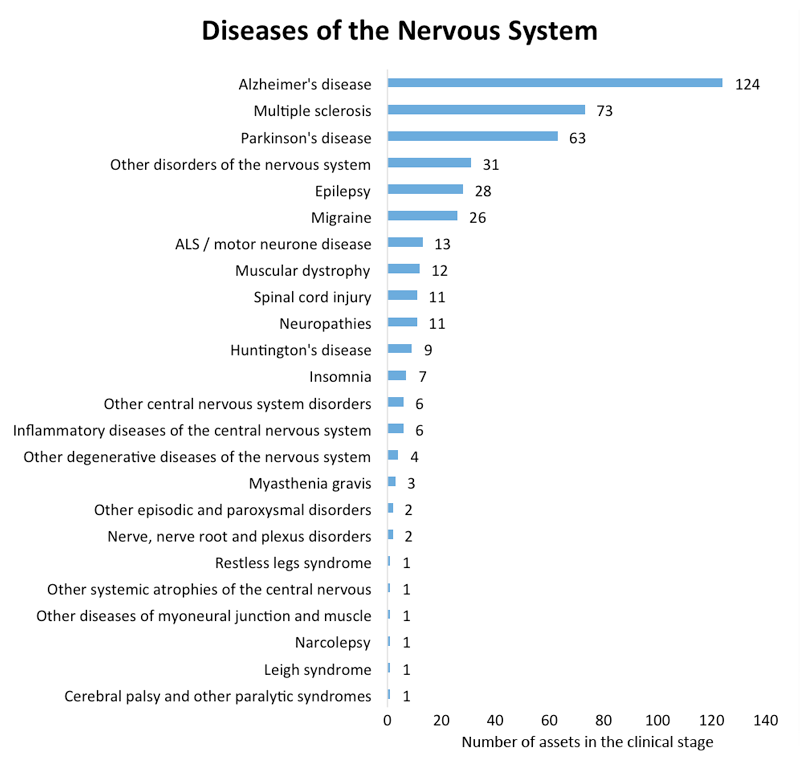
LSN tracks therapeutic assets for two areas of neurology: diseases of the nervous system and mental and behavioral disorders. The former is a far more robust area of innovation at present, with 646 assets in clinical trials. We have been able to determine the specific disease areas that 437 assets are targeting. (See Figure 1.)

Figure-1
Figure 1

For many severe neurological disorders, there is tremendous competition among treatments at present; more than one hundred Alzheimer’s cures are presently in clinical trials, as are dozens of potential treatments for Parkinson’s disease, multiple sclerosis, and epilepsy. However, the pipeline is limited or dry for many rare neurological disorders. Leigh syndrome, a severe pediatric disorder, has only one asset in the clinical stage. For some other indications that we track, including Charcot-Marie-Tooth disease and Steinert disease, no drugs are currently in clinical trials. Potential treatments for these rare diseases could qualify for an orphan drug designation, so an early stage investment could yield not only a life-changing result for thousands of patients but also an opportunity for an investor to benefit from limited competition and a long period of exclusivity after the treatment has received approval.

Less innovation is taking place to address mental and behavioral disorders; only 164 therapeutic assets are in clinical trials. We have been able to determine the disorders that 144 assets are targeting. (See Figure 2.)

Figure 2
Figure 2

There are fewer medtech neurology products in the development stage because they have a shorter development cycle. We have identified and categorized 119 such products that are aiming to treat neurological, psychiatric, and spinal disorders, and in 100 cases we were able to identify the type of device being developed. (See Figure 3.)

figure-3
Figure 3

Some areas of innovation are seeing markedly more new products than others; electromechanical devices (such as neurostimulation devices) form a crowded competitive field, as do various forms of implantable devices, many of which are targeting the spinal care market. There is also a wide variety of neurological diagnostic and imaging technologies in development. By contrast, few inventors are developing technical aids for patients suffering from neurological disabilities.

Neurology innovation is occurring worldwide. The U.S. has the largest number of neurology companies in both the biotech and medtech sectors, while in other respects the distribution of biotech companies is quite different from the distribution of medtech companies. (See Figures 4 and 5.)

figure 4
Figure 4
figure-5
Figure 5

The UK, Japan, and France are among the top five countries that have the highest number of biotech neurology companies, but these countries fall behind Germany, Spain, and Switzerland when counting the number of medtech neurology companies in each country. Canada is a leader in both sectors.

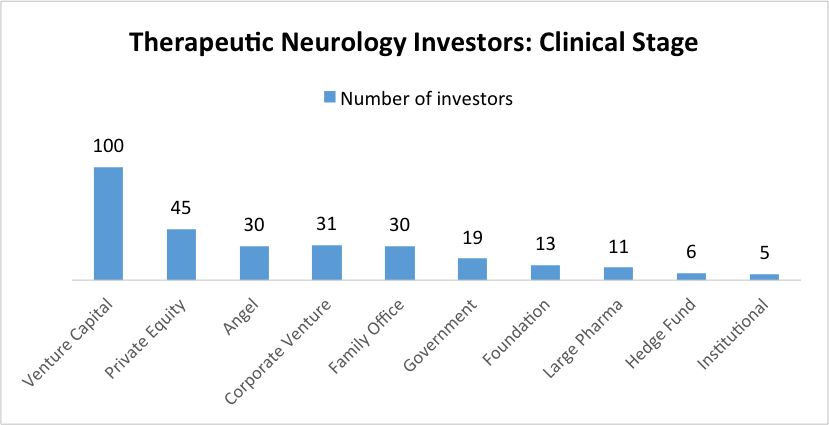
Now, let’s take a look at the investors interested in the neurology space. LSN has spoken with the investment staff at 290 organizations that are open to investing in therapeutics in the clinical stage. (See Figure 6.) We also spoke with 386 organizations that are interested in neurotech devices that are in the development or clinical stages.

figure 6
Figure 6

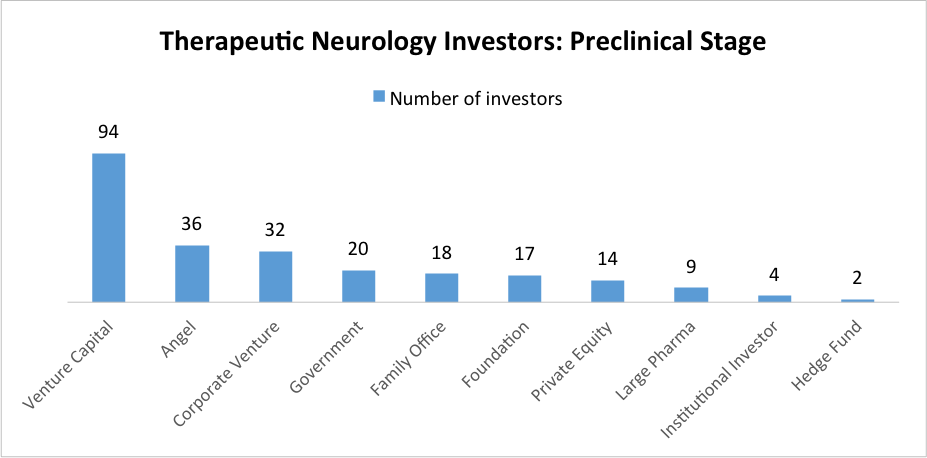
It’s interesting to see that if we look at investors interested in neurology therapeutics in the preclinical stage, we find a different pattern. (See Figure 7.)

figure 7
Figure 7

Venture capital is the largest category of investors in both cases. But at the preclinical stage, angel groups, corporate venture capital funds, and foundations—all of which may be more prepared to take on risky neurology assets in return for the possibility of developing a new cure in the future—play a more prominent role.

On the medtech side, private equity firms show more willingness to get involved in products that have yet to achieve approval. (See Figure 8.) In many cases, these firms are interested in providing funds to companies that are close to receiving approval for their products and need capital for commercialization.

figure 8
Figure 8

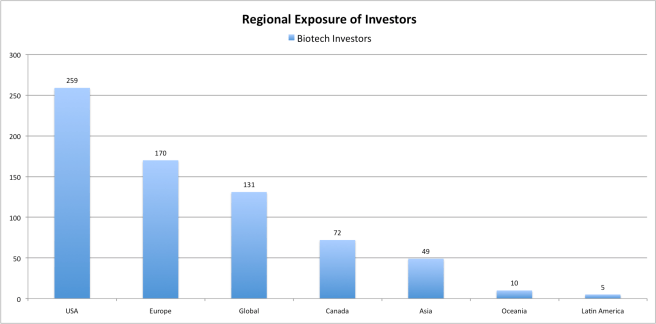
Where are these investors willing to allocate their capital? While many neurology investors are focused on the U.S. and Western Europe, a large number are looking globally, particularly those interested in the biotech sector.

FIGURE-9
Figure 9

In addition to the multitude of global neurology investors, LSN researchers have spoken with investors who are interested in investing regionally around the world.

Both global and local capital provide possibilities for companies in the neurology space. No matter where your company is based, we’ve found investors who would like to see what you’re working on.

Family Offices Investing in Early Stage Therapeutics: RESI Panel Announcement

By Tom Crosby, RESI Conference Manager, LSN

Tom 2RESI has always aimed to bring a diverse pool of investors together to meet life science entrepreneurs, and at past events, our Family Office panels have often stolen the show.  As family offices grow in importance as a source of critical development capital for life science companies, LSN is excited to announce a second panel drawn from this category of investors: Family Offices Investing in Early Stage Therapeutics.

Family offices represent individuals and families with over $100 million in total assets, and therefore invest amounts far beyond angel capital.  As investors seeking both capital preservation and a long-term impact, many family offices have been taken an interest in biotechnology, a sector where far horizons are required and an investment has the power to make a difference for thousands, even millions, of people suffering from a serious disease.  Moderated by John Nelson, Managing Director of Genrich, Inc. the panel includes the following speakers:

Amir Heshmatpour, Founder & Managing Director, AFH Holding & Advisory

Rick Jones, Director, Broadview Ventures

Melissa Krauth, Head, Life Science Investments, Claria Bioscience

Sean Stalfort, Partner, PBM Capital

What are their particular motivations for investing in therapeutic development?  How does the more flexible nature of a family office structure affect their approach to biotech opportunities?  What, in addition to capital, can these groups bring to the table for an early stage company? How does an entrepreneur find a family office that might be interested in biotech and get in touch, and what information do they look for in the initial correspondence?

bb2


Looking For Capital? The Top Three Questions For Fundraising CEOs Before You Start

By Dennis Ford, Founder & CEO, LSN

Dennis book

At LSN, my five business development executives talk to about 35 CEOs each week, all of whom are in fundraising mode.  If we also consider the conferences and seminars we attend, LSN’s business development staff has spoken to close to a thousand fundraising executives since the company was founded.  Now, that is not a bad sample size.  At LSN, we always begin with three questions that will help us net out the status of the entrepreneurs we are starting a dialogue with.

The first question is, “Are you indeed fundraising?”  One would think this question is a binary matter…but it’s not.  The answers range from “Yes, we’re totally dedicated to raising money,” to “We are just sticking with our private network of investors,” to “We plan on starting a campaign soon.” What these answers reveal is how committed you are to raising capital, and that’s why it’s the most important question for us; LSN engages only with dedicated fundraisers.

The second question is, “Do you know how long it will take to raise a financing round, from start to finish?”  This is a bit of a trick question.  From inexperienced entrepreneurs and from executives who haven’t been fundraising as of late, we often hear answers ranging from 3-9 months, which have found is highly optimistic; in our experience, closing a round usually takes 9-18 months.

The third question is, “Do you know how much a 12-month fundraising campaign will cost?”  This question provides some interesting answers.  Many CEOs haven’t drawn up a yearly fundraising budget at all, and when they put pen to paper to quantify the issue, they realize that it will take a lot of money to go out and raise money.  Figure 1 provides the typical cost of the essential components of your campaign:

1
Figure 1

We use these three questions to gauge whether the CEO has done their homework on what it will take to raise a financing round and has a good grasp of the commitment required.  There is a lot more to raising capital than simply declaring that you’re raising capital and then staying within a limited region or a small network.

Asia and Israel in the Hunt for Cardiovascular Innovation

By Michael Quigley, Director of Research, LSN

mike-2

Cardiovascular disease, the leading cause of death in the U.S., represents a massive market for life science products. LSN’s tracks both companies working on new technologies in the cardio space as well as investors looking to fund those technologies through our two data platforms. Looking at both companies and investors can provide a dynamic picture of the space as a whole.

Of the cardio technologies currently in development or in clinical trials worldwide, LSN has identified 561 that are therapeutic and diagnostic products and 238 that are medical devices. We then looked at cardio sub-indications to determine which ones have the most new-product development. (See Figure 1.)

1
Figure 1

For entrepreneurs working in these sub-indications, this figure should provide some insight into the competitive landscape. Products targeting hypertensive diseases, for example, have significantly more competition than products targeting chronic rheumatic heart disease. When seeking capital, it is crucial to understand the products you are competing with and what differentiates yours so that you can convince investors that your opportunity deserves their capital more than others.

The vast majority of therapeutics and diagnostics products and medical devices that are targeting cardio are from companies based in the U.S. However, several other countries are a source of innovation as well. (See Figures 2 and 3.)

2
Figure 2
3
Figure 3

It is interesting to note that while Israel isn’t among the top 11 countries for emerging cardio therapeutics and diagnostics, it is in second place in the medical device space. Asian countries make up three of the top five countries developing cardio therapeutics and diagnostics, while only Japan is in the top 11 for emerging cardio devices. Also worth noting is the significant innovation in both areas from Germany, the United Kingdom, Canada, and Switzerland.

Now let’s take a look at which countries and regions cardio investors are interested in based on their current exposure. (See Figure 4.)

4
Figure 4

Most investors are looking to invest in the U.S, which is in line with where the majority of innovation is taking place for this indication. Investors are also directing their attention globally and to Western Europe, Canada, and Eastern Europe respectively—areas where we also found innovation taking place. An area that appears to have a significant imbalance between innovation and investment interest is Asia, particularly in the therapeutics space. We have recently increased our efforts in this region; however, it still could remain true that the emerging Asian cardiovascular market is currently underserved when it comes to capital.

The types of investors interested life science products targeting cardio are fairly consistent with what we have seen in the life science space as a whole. (See Figure 5.)

5
Figure 5

All ten categories of investors have at least some level of interest in cardio, and as we have noticed for other indications, venture capital, private equity, and family office investors have the most. The interest across all ten categories highlights the importance of looking at all classes of investors when fundraising to help increase your odds for success. We look forward to providing this level of analysis in other indications areas in future issues, so be sure to keep an eye out for the indication relevant to you.

RESI Early Stage Medtech Investor Panel Announced

By Tom Crosby, RESI Conference Manager, LSN

Tom 2Last week, LSN announced the RESI Conference’s new Commercializing Medtech Innovation panel, which will bring insights from investors who focus on devices that are nearing commercialization. This week, LSN is proud to announce another brand new panel in the Medtech Investor Panels track — this time, featuring investors who focus on earlier-stage opportunities. The In Development / Clinical Investors Medtech panel will offer viewpoints and advice from a diverse group of investors.

Moderated by Vicki Anastasi, Vice President & Global Head of Medical Device and Diagnostic Research at ICON, the audience will hear from:

Cary Adams, Founder, Almond Tree Capital

Jeff Sheldon, Managing Director, CitareTX

Ibraheem Badejo, Senior Director, New Ventures, Johnson & Johnson Innovation

Doug Fisher, Partner, InterWest Partners

Panelists will share their opinions on why medical device investments have been surging in 2014, and how entrepreneurs can capitalize on the trend. What is the path of least resistance from prototype to allocation? How do device entrepreneurs identify and qualify organizations that are actively investing early? What are the pros and cons of taking a venture capital investment, and what are the roles of other sources of funding? With a panel drawn from a wide variety of backgrounds, the session will offer an interesting perspective for any device company looking to take its technology to the next level.

bb2

109 Investors from 20 Countries – October Mandate Roundup

By Lucy Parkinson, Senior Research Manager, LSN

lucy 10*10Last week, the LSN research team closed out the first month of the last quarter, tallying and analyzing the investor mandates gathered throughout October. Our researchers spoke with 109 deal-sourcing executives last month. As usual, these investors were highly diverse, hailing from 20 countries and representing 9 investor categories; 12 of the 109 were investors from family offices and private-wealth funds. (See Figure 1.)

Figure 1
Figure 1

LSN analysts continue to find that investors are showing slightly more interest in medical technology than biotech therapeutics and diagnostics. (See Figure 2.) However, most investors are open to funding a variety of life science companies, including those in the supplier and engineering sector (which includes software companies) and R&D service providers. Some are also open to biotech opportunities we class as ”Other,” which includes industrial biotech and agricultural biotech start-ups.

Figure 2
Figure 2

What stage of product development must a company be in to attract these investors? Of the therapeutics investors we interviewed, the greatest number are interested in products that have entered Phase I trials, but many will consider drugs that are earlier or later in the pipeline. (See Figure 3.)

Figure 3
Figure 3

The results were similar for medical devices: most investors are interested in products that have entered the clinical phase. However, we also spoke with many investors interested in devices that have already received FDA approval and are now on the market; many medtech investors see opportunities for devices that have already been proven scientifically and now require capital to build market share. (See Figure 4.)

Figure 4
Figure 4

Finally, where are these investors looking to invest? We found that more than a quarter of the investors we spoke with are willing to invest anywhere in the world. (See Figure 5.) The rest are focusing on one or more specific regions, with the U.S. and Western Europe being the most popular, unsurprisingly. Our researcher at our new office in Thailand, however, reached a number of investors with a specific focus on life science opportunities in Asia or Oceania.

Figure 5
Figure 5

Month after month, LSN researchers connect with a diverse group of investors who are interested in funding life science research, technology, and products. These investors differ greatly in terms of strategy and risk profiles, but all have an appetite for new technologies in the biotech and medtech sectors. If you’re a fit for a firm’s mandate, they may be the right partner to move your company toward commercial success.

The Lure of The Shipping Product, and Why It’s A Compelling Opportunity: RESI Commercializing Medtech Innovation Panel Announcement

By Tom Crosby, RESI Conference Manager, LSN

Tom 2

At the next RESI Conference in January, LSN will expand its Medtech Track. One of several new panels, Commercializing Medtech Innovation will focus on investors who consider later-stage opportunities, such as devices that are about to reach commercialization or those that have recently been approved and begun shipping. In keeping with the goals of the RESI Conference, this session will be compelling for earlier-stage device entrepreneurs as well, as panelists will discuss the nuances of emerging companies building relationships with investors.

Moderated by David Cassak, Managing Partner at Innovation in Medtech, the audience will hear from:

Dennis Purcell, Senior Managing Partner, Aisling Capital

Garheng Kong, Managing Partner, Healthquest Capital

Janice Borque, Managing Director, Hercules Technology Growth Capital

Michael Bianco, General Partner, Life Science Equity Partners

Mark Chin, Vice President, Longitude Capital

Panelists will introduce and cover the areas of the medical technology field where they see the greatest opportunities, and they will discuss how they work with medical technology companies ready to launch a product. How and when should you approach investors who are interested in the product commercialization stage? How do such investors assess your product’s market opportunity? How do you create a path from launch to profitability? Panelists will also discuss preferences for investment structure, region and team requirements, and how to better identify organizations that are actively investing in device companies that are near, or have reached, commercialization.

bb2