Archive | Redefining Every Stage Investments (RESI) RSS feed for this section

July Roundup: 76 Mandates

31 Jul

By Lucy Parkinson, Senior Research Manager, LSN

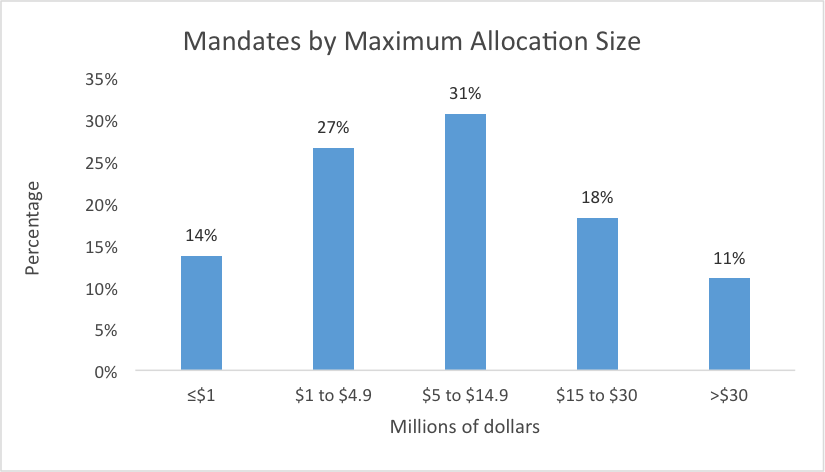
lucy 10*10It’s been a busy month here at LSN, with our researchers gathering 76 mandates from a wide variety of investors between July 1 and July 25. (See Exhibit 1.)


investor type copy

Exhibit 1

If we had focused solely on talking to VCs this month, we would have had about a quarter of the number of investor conversations we actually had.

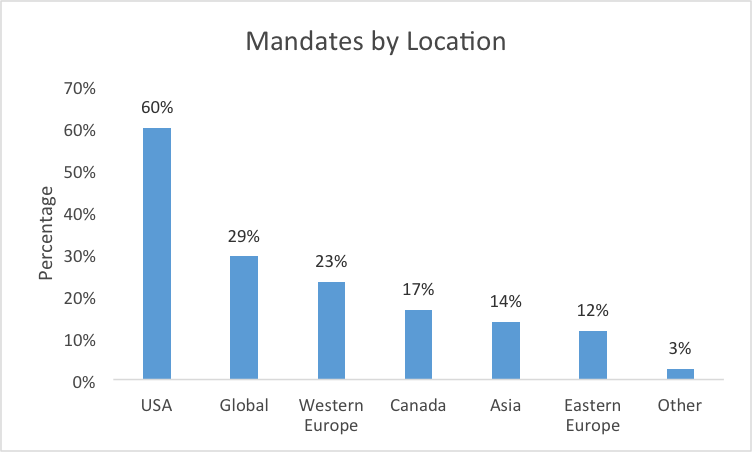
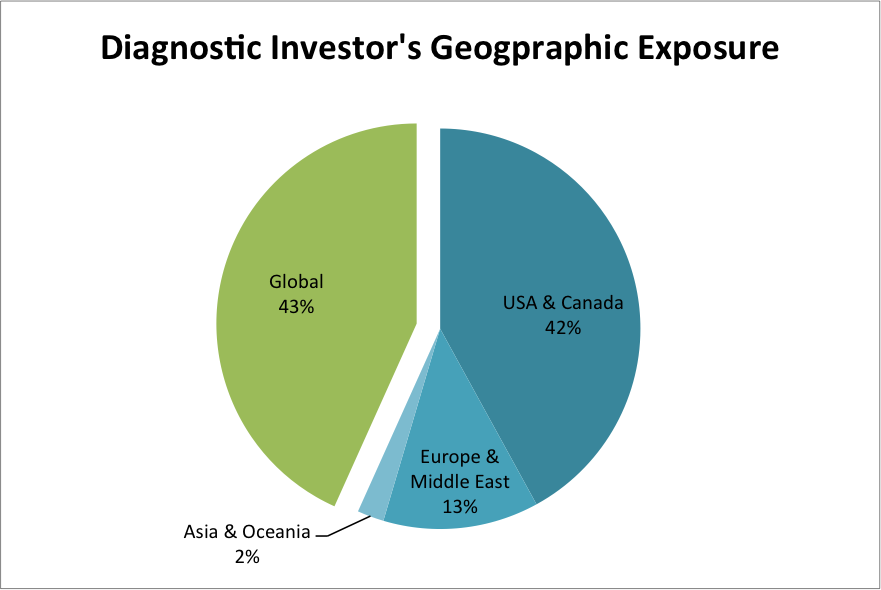
As always, we spoke to many investors who are interested in opportunities globally. Of those investors focused on one or more regions, most were interested in Canada, Europe, or the U.S. (See Exhibit 2.)

Exposure copy

Exhibit 2

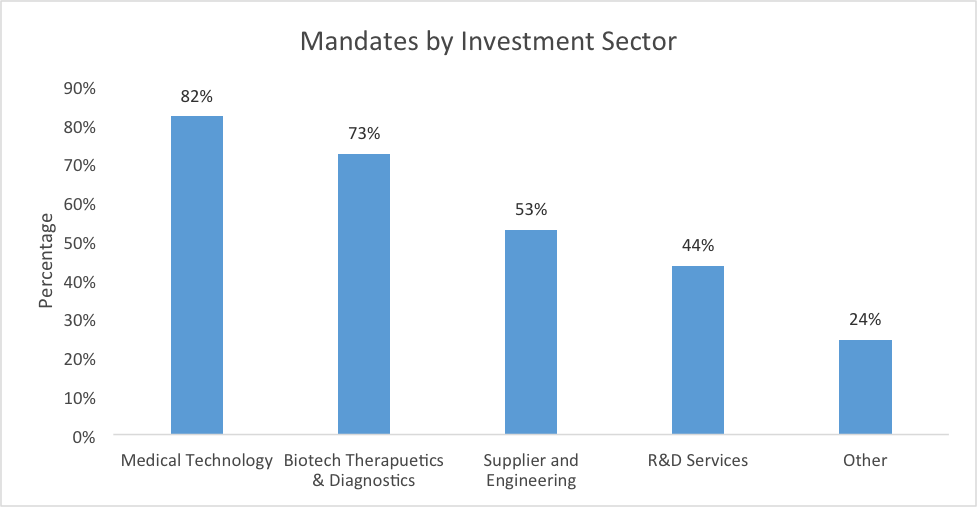
Investors who were interested in medical technology slightly outnumbered those focused on drug development. We also spoke to many investors who were interested in biotech R&D services or healthcare IT and lab engineering. (See Exhibit 3.)

Sectors of Interest

Exhibit 3

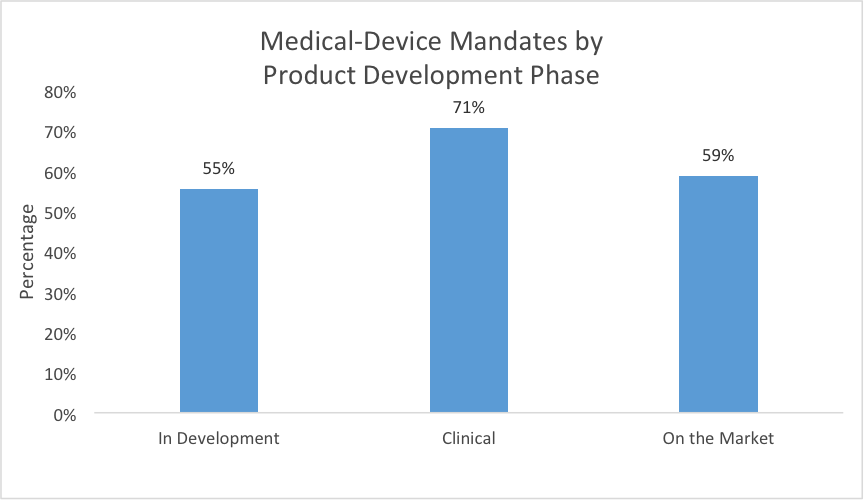
According to MedCity News, CB Insights Venture Capital Activity report confirms a continuing interest in medtech. The report notes that medical devices accounted for most of the deals during the second quarter, followed by biotechnology and drug development companies.

Are you surprised that we’ve had so much success in reaching out to investors during the month of July? In the past two years, we’ve learned that making contact with investors can often be a countercyclical process; while the rest of the business world is winding down for the summer or making the most of a holiday week, investors may have more time to respond to calls and emails and start building a relationship. Summer is no time to take a break from your fundraising campaign. Rather, it’s a great opportunity to follow up with people who haven’t gotten back to you or who expressed initial interest but haven’t taken the next step. The lighter summer schedule may provide the right opportunity to win a moment of an investor’s time.


Engineering the Future of Healthcare: RESI Conference Announces Medical Device Strategics Panel

31 Jul

By Tom Crosby, RESI Conference Manager, LSN

Tom 2

The medtech space currently represents an attractive opportunity for a large number of investors, as recent LSN data shows that there is a steady interest in medical devices. This all-new RESI panel focuses on investors who seek emerging medtech opportunities. LSN has assembled a stellar group of top medtech investors to give attendees a better understanding of how these investors view the market, evaluate a sector and parse early stage medtech firms and technologies.

Moderated by Karthik Ranganathan, Strategic Innovation at Becton, Dickinson & Company, the audience will hear from:

Josh Phillips, Managing Partner, Catalyst Health Ventures

Juan Carlos Serna, Vice President, HPA Ventures

Lawrence Cho, Senior Director, Corporate Strategy & BD, Medtronic

Aaron Sandoski, Co-Founder & Managing Director, Norwich Ventures

Specifically, panelists will introduce and cover  the types and classes of devices they seek to invest in. How do they work with their portfolio companies? What stage of device and level of data are they looking for? What is the role of intellectual property in initial correspondence? Panelists will also discuss preferences for investment size and structure, geographical and team requirements, and how to better identify organizations that are actively investing in early stage medtech companies.

RESI3

Early Stage Investors and Your Website

31 Jul

By Michael Quigley, Director of Research, LSN

mike-2When speaking with investors during the past week, I made a point of asking what information they look for on a life science company’s website in order to determine if they want to have a more in-depth conversation. The responses tended to be very similar despite coming from investors in multiple categories, including traditional VCs and family offices. Here are the six items that were most cited.

A Clear and Concise Description of What a Company Is Trying to Achieve

Your firm’s tagline should be the first thing that catches investors’ attention when they come to your website. In approximately four to eight words, your tagline should describe simply and adroitly your value added. You should elaborate on this in an elevator pitch, which describes your technology and mission in four to six sentences. Both your tagline and elevator pitch should describe your technology in a fundamental way that can be easily understood by people without a scientific background. Having these items supported by a few relevant images or a video is something that can really help investors visualize and better comprehend what it is that makes your investment opportunity interesting. By keeping the initial message as simple as possible, you can grab the interest of investors who may not be scientific experts in your particular field.

Information that Elaborates on the Opportunity

After catching investors’ interest with your tagline, elevator pitch, and visuals, you need to elucidate the market opportunity for your technology. This means clarifying the target market, its size, and any niche area that highlights the unmet need. Many technologies have the potential to target multiple indications and serve more than one market. However, it is very important that you demonstrate which of those markets you are targeting first. The majority of investors look for focused companies that have a clear path to a value-inflection point or exit. I am not advising against mentioning other possible uses for your technology, as these can add value to your opportunity. However, it is imperative that you make your immediate plans clear to investors.

A Company’s Complete Funding History

All of the investors who I spoke with specifically mentioned having a complete funding history available on the website. They said it makes it easier to decide whether or not to have a further conversation. Their preferences differed, however, with some investors looking for well-known institutional investors to already be on board, while other investors, particularly those that classify themselves as very early stage investors, prefer to be one of the first institutional sources of capital so that they can get in while the valuation is low and the cap table is still intact. NIH grants, incubator awards, a Series A round—investors want to know about all organizations that have invested in you and how much you have raised. By showing who has allocated capital to your company, you both establish credibility with investors and give them a better understanding of whether or not you are a fit for their investment mandates.

Management Biographies

A company’s management is arguably its most important asset when garnering interest—and ultimately an allocation—from potential investors. Your website should list every member of your management team with a photo and a short biography that covers their career accomplishments thus far. Again, this establishes credibility by showing investors what the members of your core team have been involved in prior to now. It is also important to note that both successes and failures can establish credibility in the space. Some of the investors I have spoken with specifically mentioned that they like working with management teams that have had an unsuccessful company, as teams often learn more from failure than success. Many investors consider management as important as, and sometimes even more important than, the technology, so by giving them a small window into your management team, you have the chance to directly market one of your most influential assets.

The Origin of the Technology

Investors want to know where your technology came from. Did you in-license the product from a university or did you develop it in house? If the former, which university and how did that relationship come to be? Were there any strong academics working on the technology, and if so, what are their backgrounds? By answering these questions on your website, your story becomes more complete, allowing investors to more fully understand how your company came to be and why the investment opportunity is a good one.

The Replicability of the Results

Although not always available, having your results and data validated by a third party through replication, the gold standard of scientific research, is becoming an extremely valuable piece of information to present to potential investors. If you have this kind of validation, it is crucial that you include it on your website, as the inability to replicate results is becoming a growing problem.

By incorporating these items into your website, you will make the decision process easier for investors, which will in turn earn you responses more quickly and save your campaign valuable time. Additionally, by having this information easily accessible, you have the opportunity to learn why investors are interested in your technology—or why they aren’t. Understanding your strengths and weaknesses lets you further hone your message and improve your ability to market yourself. Your website will likely not be the deciding factor that pushes an investor to make an allocation. However, a good site can save you invaluable time by reaching more investors with increasing effectiveness, which ultimately improves your odds of success.

For more information on website messaging, see our new book, The Life Science Executive’s Fundraising Manifesto, and the “Establishing a Web Presence” chapter.

Bookcover-Front

Virtual Pharma Partners: Guiding Assets to Commercialization

23 Jul

By Lucy Parkinson, Research Manager, LSN

lucy 10*10

There are many investment models used in the therapeutics sector, including the partnership model used by the innovative, hands-on, asset-centric Virtual Pharma groups. These investors, otherwise known as pharmaceutical management companies or pharmaceutical development companies, partner with small biotechs with the goal of building a portfolio of therapeutic assets and efficiently developing them for an exit opportunity. But how do virtual pharmas operate, and why might it make sense to partner with one?

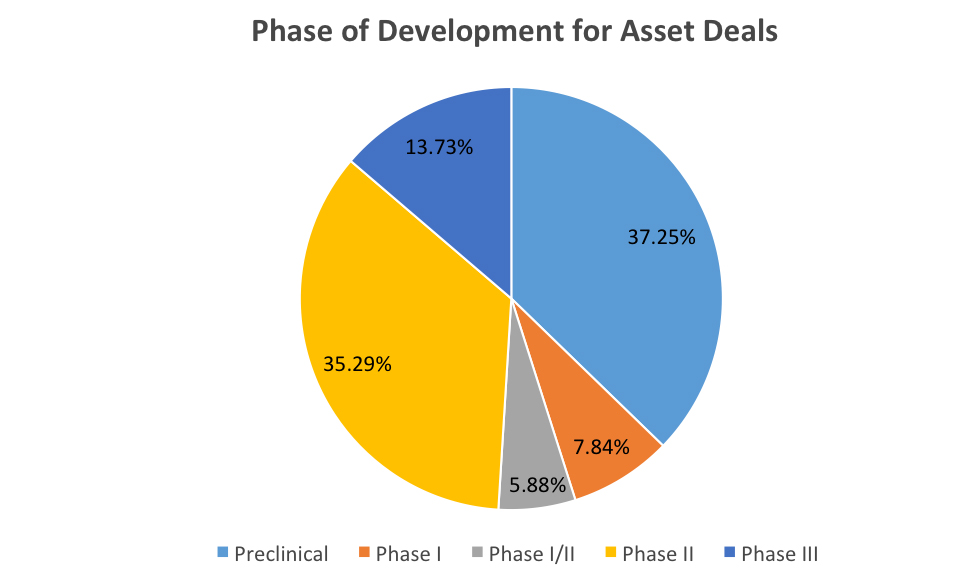
The research team at LSN keeps in contact with virtual pharma groups because, quite simply, they are investors in early stage biotech. Rather than investing directly in companies, virtual pharmas invest in assets (in most cases, by in-licensing and then funding the asset’s development; in a few cases, by acquiring assets completely, often with the original rights owner maintaining a royalty share). Some virtual pharmas have been spun out by an investment firm, such as CMEA‘s Velocity Pharmaceutical Development or NEA‘s Tesaro Bio; others raise their funds independently. In many cases, the virtual pharma firm spins off each asset into a separate company. With their focus on a single asset, these new companies are more streamlined for the purpose of attracting other investors or making later-stage strategic deals.

There are some obvious tactical benefits to considering a virtual pharma partner.

Expertise. For scientist-entrepreneurs with deep research experience but who are new to the world of commercial drug development, it makes sense to partner with a company that specializes in getting drugs to market. Some of the virtual pharmas we’ve contacted specialize in a particular field, such as oncology or dermatology, and they are experts at the regulatory and market issues in that field. Others specialize in a particular part of the development process, such as Phase III trials, and are experts in managing those stages.

Strategic assistance. Virtual pharmas tend to have a very strong awareness of their space, and as one virtual pharma executive told me recently, “We don’t invest in assets that aren’t going to get later-stage funding.” In addition to knowing how to market the asset to investors, virtual pharmas also often have good relationships with CROs and big pharma corporations that can be harnessed to bring the asset through to an exit.

Focus. A virtual pharma director told me that his group generally works with biotech companies that have multiple promising assets. The virtual pharma takes over management of one asset and spins off that asset into a new company with staff focused solely on its development. This allows the biotech company to focus on developing the rest of its pipeline.

Monetization. Although the structure of these partnerships varies (much as big pharma partnerships do), many will involve up-front payments that can be used to finance the development of other programs.

Although the strategies of virtual pharmas are highly varied, there’s one consistent value they all share: it’s all about the asset. Make-or-break factors for other investors, such as where your company is located or whether it’s a privately held or publicly traded company, generally don’t apply. If you’re making a pitch to a virtual pharma investor, you should bear this in mind and keep the focus entirely on what’s unique about your asset, how the research data demonstrates its value, and how a partnership on this asset will make sense for both sides.

Aggregating Early Stage Assets: RESI Conference Announces Virtual Pharma Panel

23 Jul

By Tom Crosby, RESI Conference Manager, LSN

Tom 2One of the newer investor types to the life science arena are virtual pharmaceutical development companies. These firms are aggregating multiple assets and leveraging their internal clinical expertise to shepherd them through the development process. By doing so, these investors can invest in multiple companies, add distinct value, and get rewarded by the companies that succeed.

Moderated by Gene Williams, COO at Immune Pharmaceuticals, the audience will hear from:

Jarrod Longcor, CBO, Avillion LLP

Dennis Goldberg, President, Benu Biopharma

Baiju Shah, CEO, BioMotiv

Andrew Perlman, Managing Director / CMO, Velocity Pharmaceutical Development

Panelists will discuss their day-to-day operations, as well as their individual groups’ investment preferences. How are they funding their projects? What are their mandates for geographical location, management team and total investment size? Do they prefer to take a passive role, or does their firm’s model involve replacing the original management? Panelists will also shed light on their preferred investment sectors, sub-sectors, indications & phases of development – and how they typically structure the ownership of the assets they in-license.

RESI3


Fine-Tuning Your Communication Strategy When Speaking with Investors

23 Jul

By Danielle Silva, VP of Business Development, LSN & Mimi Liu, Research Analyst, LSN 

Danielle 10*10mimi-10-10

Life Science Nation is always looking for ways to improve in the ability to create a compelling dialogue with investors and life science executive alike.  We recently had the opportunity to attend a series of seminars teaching Dale Carnegie’s principles of communication, which are outlined in his book How to Win Friends and Influence People. When we shared the lessons learned about successful communication techniques with the other LSN staff, we all realized these principles and techniques can be applied to building a better rapport with investors. Here are our picks for the top four lessons and how to apply them to fundraising in the life sciences.

Be a good listener. Encourage others to talk about themselves.

A good way to help investors open up is by asking them why they are interested in a particular area and what trends they see in the space. Ask them about their background and how it relates to the areas they are involved in now. Then when it’s time to talk about your technology, you’ll be able to highlight the attributes that fit the investors’ interests. Show genuine interest in investors and you will build strong relationships.

Talk in terms of the other person’s interests.

When speaking with potential investors, discuss how an investment in your company will not only help you (for example, by advancing from the preclinical to the clinical stage) but also how it will benefit them—how it will complement their portfolio. For example, perhaps your project would help diversify the investors’ portfolio or be an attractive add-on acquisition to one of their current investments.

Build a positive personal relationship

At the end of the day, no matter how compelling your technology is, if you can’t get along with investors, they won’t invest. Therefore, it is important to try and avoid sounding overly compassionate, strong headed, or not willing to listen. After all, investors are investing in you and your team as much your technology. Learn how to disagree in an agreeable manner and show respect for others’ opinions.

Make your idea stand out by telling a story

Investors read tons of business plans, watch hundreds of presentations, and speak with thousands of companies every year. When speaking with investors, your ideas need to be not only clear and concise but also well expressed. By creating a compelling narrative it will bring your ideas to life, engage your listeners, and allow the investor to connect on a personal level. This will also allow you to separate yourself from the crowd and ensure that you are grabbing your investors’ attention.

Although there are other Dale Carnegie principles that can be useful when communicating with investors, these four strategies are the most helpful when you’re trying to influence investors’ thoughts and decisions. We encourage you to try them out.

Mapping Out the Early Stage Fundraising Dilemma

17 Jul

By Dennis Ford, Founder & CEO, LSN

Dennis bookAfter decades of government, nonprofit, and private funding of translational scientific research, there is a glut of early stage life science companies with great deal of promising data ready to go on to the next stage of preclinical and clinical development. However, many of these life science start-ups lack the capital to take the next steps toward commercialization for three main reasons.

Developing Relationships with New Categories of Life Science Investors Is a Challenge

The migration of VC dollars to later-stage investments has disoriented early stage fundraising executives, even though a new group of investors has surfaced to fill the early stage life science investment void. How to identify and market to these new investors remains a conundrum for fundraising executives. There is no easy solution to match up the thousands of early stage life science companies looking for capital with the thousands of early stage life science investors who have capital to invest.

A Regional Approach to Fundraising Limits the Chance of Success

Fundraising executives typically are using an outdated playbook. Thus, they are focusing on obsolete investor categories and paying little or no attention to the new categories, which in most cases are better fits. Early stage life science firms are typically confined to a strategy of regional fundraising instead of employing a global investor strategy. Raising capital is a game of finding investors who are a fit for your stage and sector, and like all marketing and sales, it’s essentially a numbers game. By limiting the eligible investors to a region or a country, you are limiting your audience and therefore your probability of success. Canvassing the world substantially increases your chances of finding an investor fit for your stage and sector and obtaining financing.

Poor Branding and Messaging Materials Deter Potential Investors

Compounding the problem is that early stage life science executives typically do not take the time to adequately develop their branding and messaging. Investors are inundated with requests for meetings and have little time to peruse and decipher marketing collateral or a website. It is paramount and the ante into the game to concoct a crisp, cogent brand and message that clearly conveys your team’s and technology’s value proposition. Taking the time to get your messaging right means investors can quickly determine if there is a fit for a particular investment mandate when they do get a chance to look at the materials.  If investors are interested, then they will take a deep dive and go through all your material and your website, so you have to cover all your marketing bases.

Life science executives must address this fundraising dilemma if they hope to commercialize their research.