The Place to Meet Early Stage Investors

By Dennis Ford, Founder & CEO, LSN

Dennis book

LSN’s third Redefining Early Stage Investments (RESI) conference is fast approaching. Held twice a year, this event is the ideal place for scientist-entrepreneurs to meet early stage investors.

The idea for RESI came about while I was traveling and participating in a variety of domestic and international partnering and investor events. Considering the advertisements, I was surprised that so few qualified active investors attended many of the conferences. I was also shocked at the price given the limited investors turned out. The number of investors registered usually ranged from 20 for a medium-sized event to 40 or so for a large event. I knew that LSN could do much better because we had relationships already established with many of the early stage investors and strategic partners that scientist-entrepreneurs were seeking to meet. Thus, RESI was born, and this past March, 142 investors attended RESI.

The LSN investor-outreach process for the upcoming RESI conference has de-emphasized venture capital firms, which headline most life science partnering events. We welcome VCs, but we’ve been reaching out to many other investors with the goal of making both our panel content and our attendees as diverse as possible. By increasing the investor reach, we are broadening the variety of interests in the RESI partnering ecosystem. The investors who attend RESI include angels seeking high-risk, high-return early stage opportunities, foundations hoping to advance breakthroughs to improve patient care, family offices seeking long-term, high-impact investment opportunities, and the corporate development staff from pharma and large medical-device companies looking externally to fill gaps in their pipelines. Exhibit 1 shows the breakdown of early stage investor categories attending our upcoming fall event.
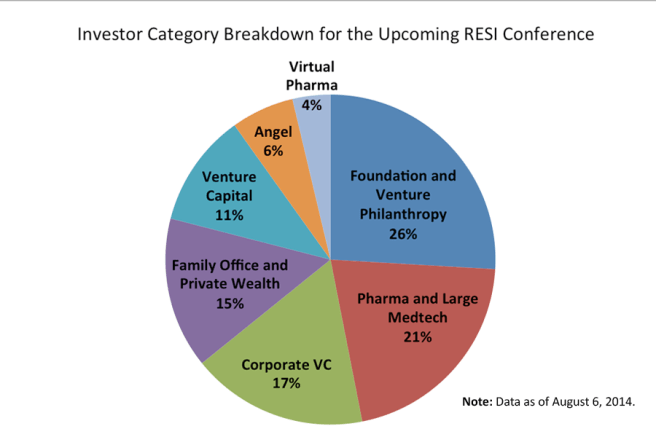
RESI Exhibit 1
Exhibit 1


The next RESI conference will be held at the iconic Fenway Park on September 17. With six weeks left to register, we already have exceeded our forecasts. All told, active investors from ten categories will attend. LSN will be host to 30 RESI Innovation Challenge participants and dozens of emerging life science entrepreneurs who will use our meta-tagged partnering system to connect with investors who are a fit for various industry sectors and stages of development. Using the LSN partnering system, a company executive can arrange meetings with a dozen or more investors in a day.

The majority of companies attending the fall event are in the biotech, diagnostic, and medtech sectors. A wide variety of service providers will also visit RESI, including contract research organizations and those that provide financial and legal services. To further diversify the RESI ecosystem and welcome more early stage device developers to the partnering table, we are hosting a new panel discussion on medtech investment. To see the complete one-of-a-kind content agenda, click here. Going to the panels alone will be an education in the changing landscape of early stage investment. Hope to see you there.


The Case for Small Markets with Large Returns: RESI Conference Announces Orphan Disease Panel

By Tom Crosby, RESI Conference Manager, LSN

Tom 2

In the United States, the orphan disease space has gained significant interest from the investment community due to the expedited regulatory approval process, combined with the lack of current treatment options that address many of these uncommon conditions. A wide range of investor types are targeting these diseases for many different reasons. RESI brings together veterans in the orphan disease space to compare and contrast the strategies and motivations of different investors in the field.

Moderated by Peter Saltonstall, President & CEO at The National Organization for Rare Diseases (NORD), the audience will hear from:

Mark Day, Senior Director, Strategic Evaluation, Alexion

Jean-Marc Quach, Executive Director, The Alpha-1 Project

Chris Adams, CEO, Cydan

Mark Barrett, VP, Head Strategy & BD, Rare Diseases, Genzyme

Panelists will introduce and cover the areas of the orphan disease field they are most involved with and interested in. What stage and level of data are they looking for prior to making an allocation? What is the best way to present an orphan opportunity to a potential investor? The session will outline how orphan disease opportunities are evaluated and valued differently than non-orphan technologies. What is their outlook for investment and scientific advancement for these niche diseases going forward?

RESI3

Corporate VCs Have a Global and Early Stage Focus

By Michael Quigley, Director of Research, LSN

mike-2

As large pharmaceutical companies have cut internal R&D spending, they have established and financed venture capital branches, which have quickly become a critical source of capital for emerging life science companies. In a previous article, we discussed the two types of corporate VCs and why they can be a beneficial source of funding. This article sheds more light on corporate VCs by examining some data points from the last 50 mandates that we received from this group and by making comparisons with the rest of the investor community.

A Global Perspective

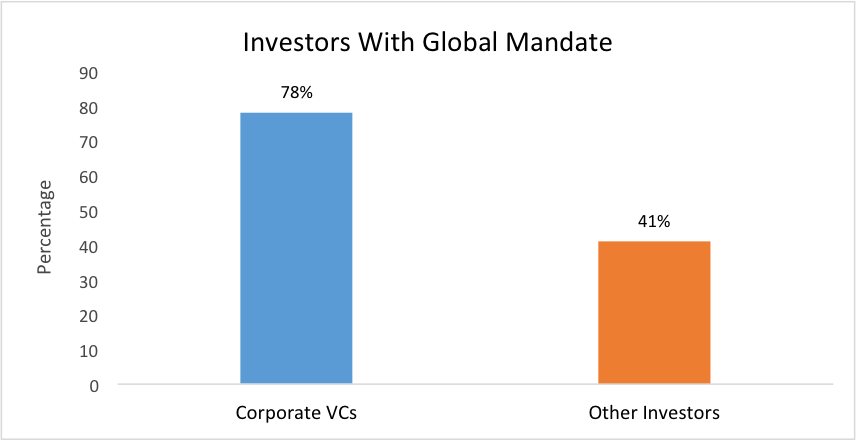
In general, more and more life science investors are pursuing opportunities worldwide; leading the pack are corporate VC players. Of the corporate VCs that LSN has spoken to, 78% have global mandates, compared with only 41% of investors from all other categories combined. (See Exhibit 1.)

Exhibit 1

The global investment focus of large pharma companies makes sense, as the majority operate worldwide. To uncover potential investments, these companies set up multiple offices around the world to act as external innovation engines or feeders for their parent companies.

An Early Focus

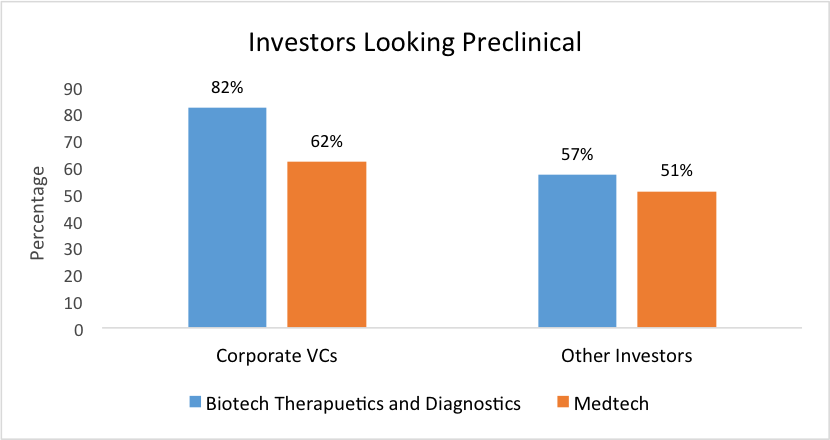
Another data point that can be extrapolated from LSN’s research is that corporate VC investors tend to be interested in companies and products at the earliest stages of development. This is true in the biotech and medtech sectors. For example, 82% of corporate VCs are interested in therapeutic and diagnostic companies that have technology or products in the preclinical stage, compared with 57% of other investors. (See Exhibit 2.)

Exhibit 2

Corporate VCs tend to have a good understanding of the scientific and regulatory hurdles that technologies face; therefore, these investors are more willing to evaluate and allocate to companies in the early stages of development. Additionally, corporate VCs are looking to fill their parent companies’ development pipelines. By identifying opportunities early, they are able to secure equity positions when the valuation of a technology or company is relatively low.

Large pharma companies aren’t the only corporate VCs in the life science space. LSN has also noticed that the venture divisions of a number of high-tech companies, such as Google and Samsung, have a growing interest in the healthcare sector. It is a positive development for the life science space that high-tech corporate VCs are joining large pharma to fill a crucial funding void that is being felt on a global scale.

Hot Life Science Investor Mandate 1: Corporate VC Arm of Hi-Tech Company Seeking Connected Devices Opportunities

The Corporate Venture arm of a Hi-Tech Company current manages a total of $850 million in assets, and is looking to make equity investments ranging from $2-$5 million with the ability to allocate up to $10 million generally in series A-C rounds. The majority of fund’s investment have been throughout the United States although they have and are willing to invest internationally as well. The fund is actively reviewing new opportunities can could make 3-4 investments over the next year.

The Fund is currently interested in sectors of Medical Devices, Diagnostics and Healthcare IT that increase connectivity in the healthcare ecosystem. The fund is particularly interest in verticals of Health and Wellness, Chronic Disease Care, Aging in Place, Telemedicine, Genomics, Patient Monitoring, Clinical Trails Management, Mobile Software Healthcare IT Applications, and Electronic Medical Records Management. The fund is willing to invest in devices with 510k pathways however the fund is not currently considering highly invasive medical devices.

The Fund is looking for privately held companies with experienced management teams. The fund generally looks to take a board or observer seat following investment and is willing to both lead and co-invest.

If you are interested in more information about this investor and other investors tracked by LSN, please email mandates@lifesciencenation.com

Hot Life Science Investor Mandate 2: European VC Seeking Orphan Therapeutics in North America and Europe

A European VC firm has recently closed €75 million and is looking to make its first allocations. The firm is looking to invest in Europe and North America, and typically allocates about €5 million equity to each portfolio company, generally over several tranches. The firm has no set number of allocations that it plans to make over the next 6-9 months but they are actively seeking new opportunities.

The firm invests in therapeutics to treat rare diseases. The firm is agnostic regarding technology type and indication areas pending the targeted market can have expedited regulatory approval through a rare/orphan status. The fund typically invests early but is open to companies with assets ranging from preclinical development through Phase II.

The firm prefers to invest in companies that can present an exit opportunity in 3-5 years, usually through a pharmaceutical industry partnership.

If you are interested in more information about this investor and other investors tracked by LSN, please email mandates@lifesciencenation.com

Hot Life Science Investor Mandate 3: European VC Firm Seeking Global Life Science Investments

A venture capital company founded in 1995 and based in Northern Europe manages approximately €200 in assets, with 2 life science investment funds. The firm makes equity investments into early stage companies of up to €2 million initially and €8-€10 million of the lifetime of the investment. The firm is currently looking for companies located throughout Europe and the US and plans to make approximately 2 investments over the next 6-9 months.

The firm is looking for companies in areas of Therapeutics, Diagnostics, Medical Devices and Biotech Other. For Therapeutics and Diagnostics the firm is looking for companies with platform technologies that are anywhere from 12-36 months pre proof of concept in animal trials. Subsectors of particular interest in this areas include Immunology, Anti-Infectives, Vaccines, Ophthalmology, Orphan Indications, and Biomarkers. In areas of Medical devices the firm looks for companies around 12 months pre-proof of concept and is particularly interested in biomaterials, surface treatments, therapeutic devices, biofilms, coatings, remote patient monitoring and assisted living. In the Biotech Other space, the firm is interested in early stage companies in sectors of Agbio, Industrial Bio, Cleantech, and Nutrition. The firm is also interested in companies that are developing better methods for biosynthesis for biologics. The firm is also interested in Healthcare IT opportunities including Apps, Sensors, Databases and Systems.

 The firm values the company’s technology as it’s 1st priority. The firm is looking for companies with platform technologies that are looking to stay a development company and build a strong pipeline of potential candidates. The firm is willing to help companies complete their management teams and looks to secure a seat on the company’s board following investment.

If you are interested in more information about this investor and other investors tracked by LSN, please email mandates@lifesciencenation.com

July Roundup: 76 Mandates

By Lucy Parkinson, Senior Research Manager, LSN

lucy 10*10It’s been a busy month here at LSN, with our researchers gathering 76 mandates from a wide variety of investors between July 1 and July 25. (See Exhibit 1.)


investor type copy
Exhibit 1

If we had focused solely on talking to VCs this month, we would have had about a quarter of the number of investor conversations we actually had.

As always, we spoke to many investors who are interested in opportunities globally. Of those investors focused on one or more regions, most were interested in Canada, Europe, or the U.S. (See Exhibit 2.)

Exposure copy
Exhibit 2

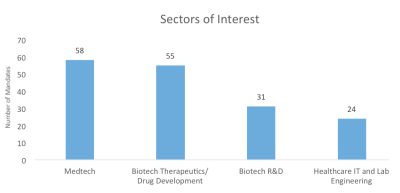
Investors who were interested in medical technology slightly outnumbered those focused on drug development. We also spoke to many investors who were interested in biotech R&D services or healthcare IT and lab engineering. (See Exhibit 3.)

Sectors of Interest
Exhibit 3

According to MedCity News, CB Insights Venture Capital Activity report confirms a continuing interest in medtech. The report notes that medical devices accounted for most of the deals during the second quarter, followed by biotechnology and drug development companies.

Are you surprised that we’ve had so much success in reaching out to investors during the month of July? In the past two years, we’ve learned that making contact with investors can often be a countercyclical process; while the rest of the business world is winding down for the summer or making the most of a holiday week, investors may have more time to respond to calls and emails and start building a relationship. Summer is no time to take a break from your fundraising campaign. Rather, it’s a great opportunity to follow up with people who haven’t gotten back to you or who expressed initial interest but haven’t taken the next step. The lighter summer schedule may provide the right opportunity to win a moment of an investor’s time.